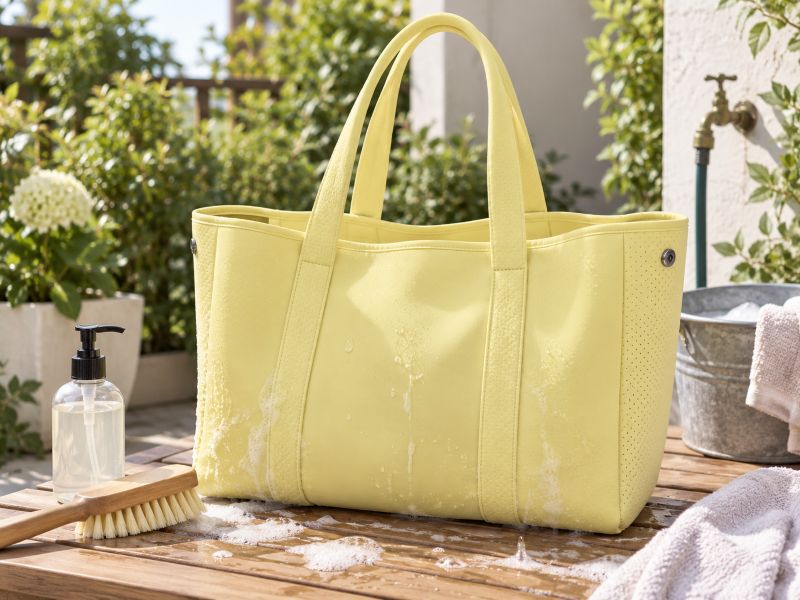
Cleaning a neoprene bag safely begins with choosing a method that suits the finished bag. Neoprene handles water well, but linings, prints, glue, binding, hardware, and internal supports may have very different limits.
In our production tests, a soft tote and a structured neoprene bag rarely get the same care instructions. The safest cleaning method depends on everything built into the product.
This guide covers washing neoprene bags by hand, treating stains, deciding whether a washing machine is suitable, and managing drying. It also explains what brands should check before putting cleaning instructions on a care label.
1. Before Washing Neoprene, Check the Whole Bag
Neoprene bag panels are often composite materials rather than exposed rubber alone. A foam layer may be laminated to an outer fabric, then combined with lining, binding, seams, handles, printing, hardware, or reinforcement.
Because these components may respond differently to water and cleaning products, check the whole bag before washing. The American Cleaning Institute’s guidance on delicate items recommends checking care instructions and testing colorfastness on a hidden area before washing.
Before washing, empty the bag and remove any detachable straps or base inserts. Look for anything that may not handle water well, such as printed or glued details, coated trims, metal hardware, or a stiff internal base.
2. How to Hand Wash a Neoprene Bag in Cold Water
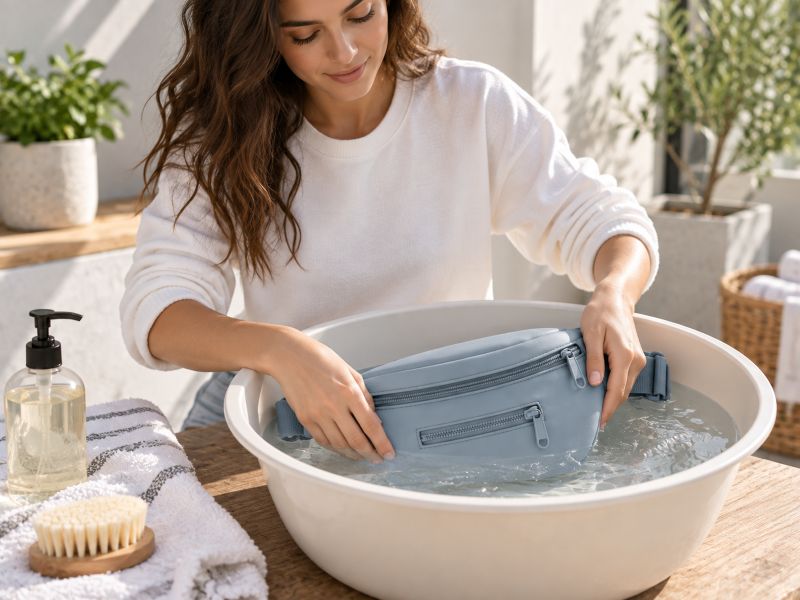
For a bag whose complete construction is washable, a gentle hand wash gives you more control than a washer. You can limit the soak, support the bag’s shape, and keep sensitive areas from sitting underwater longer than necessary.
What You Need Before Washing
You only need a few supplies:
- Cold water or slightly lukewarm water
- A small amount of mild detergent
- A soft white cloth or sponge
- A clean towel
- A basin, sink, or tub
Cold water is a sensible starting point because it places less stress on colored fabrics, prints, adhesives, and bonded components than hot water.
Do not choose the temperature based on the neoprene material alone. For example, the outer panel may tolerate warm water while a printed lining, glued label, or bonded reinforcement may not.
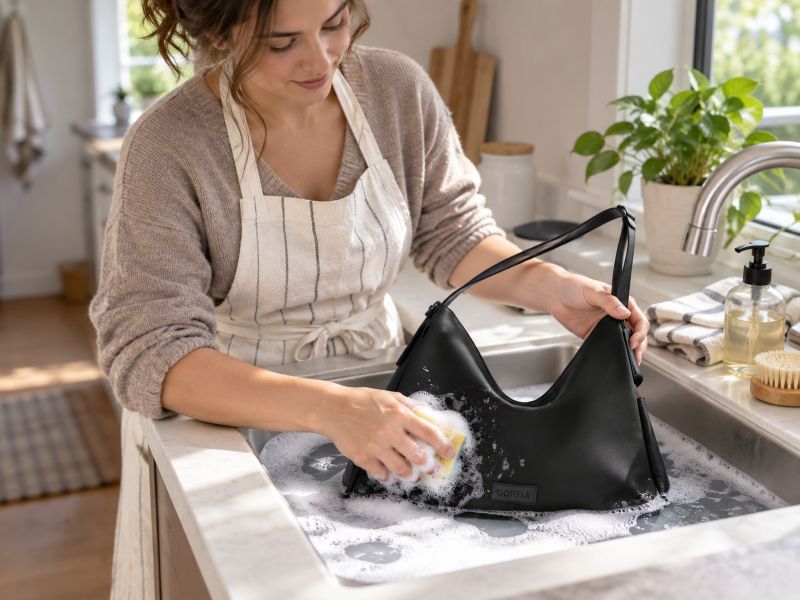
Hand Wash Step by Step
- Fill the basin with cold water and add a small amount of mild detergent.
- Immerse the bag only if the lining, base, printing, glue, hardware, and reinforcement can also tolerate soaking.
- Gently squeeze soft panels instead of rubbing the material against itself.
- Use a soft cloth around handles, openings, bottom panels, and other areas that become dirty through regular wear.
- Rinse with fresh water until no visible detergent remains.
- Gently squeeze out excess water without twisting the bag.
- Press the remaining moisture into a clean towel.
3. How to Remove Stains and Unpleasant Odors
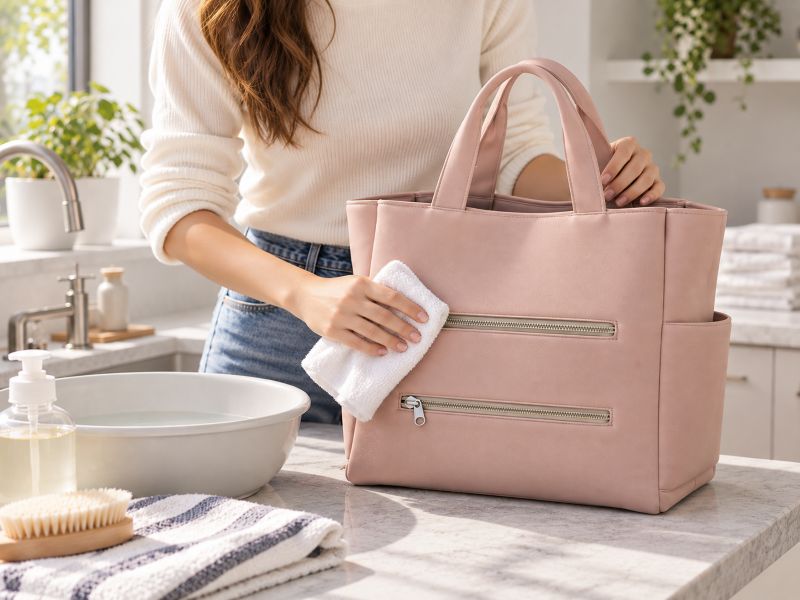
A localized mark usually doesn’t justify soaking an entire bag. Before deciding how to remove stains, check what sits directly behind and around the dirty area.
A stain on a plain soft neoprene panel differs from one over a print, glued decoration, seam, reinforced base, or contrasting lining.
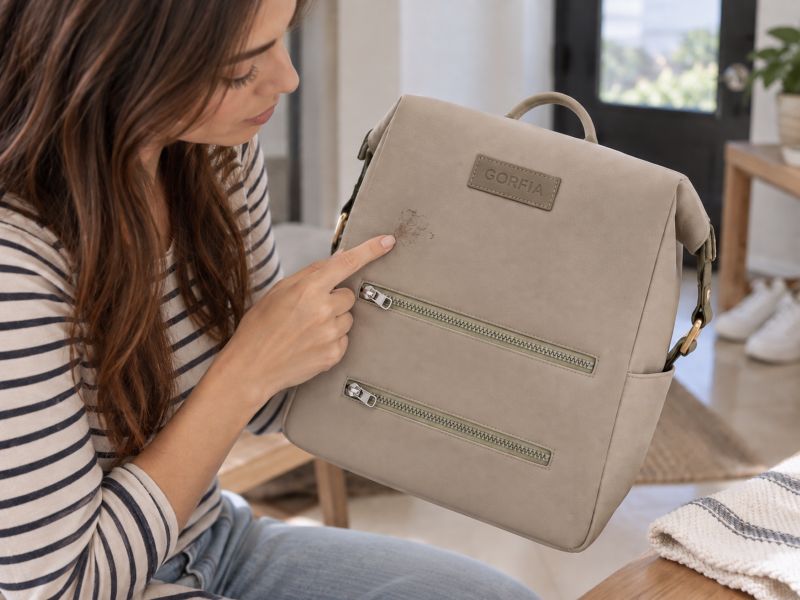
Remove Stains Without Damaging the Surface
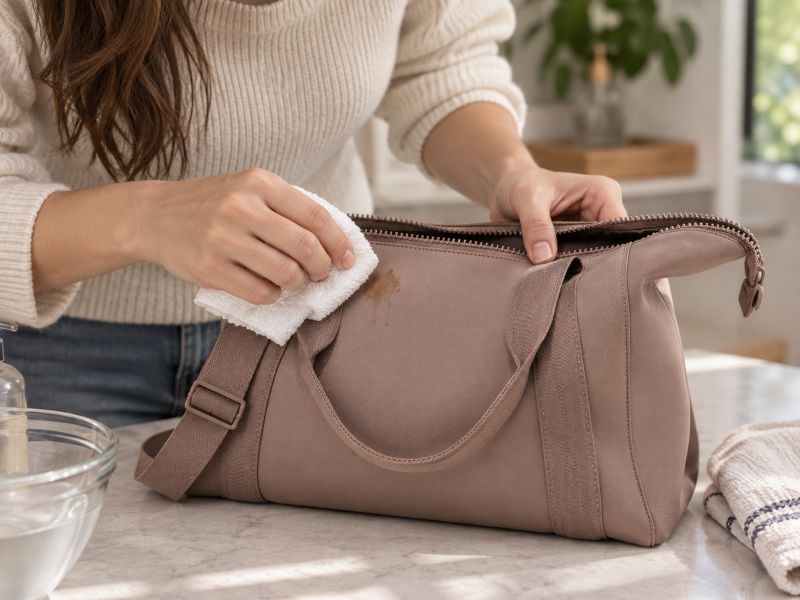
Mix a small amount of mild detergent with cold or slightly warm water. Dampen a soft cloth, then blot or gently wipe the stain.
Avoid hard scrubbing. Friction can change the surface texture or create a lighter-looking patch, especially on printed, coated, or dark fabric.
After treating the stain, wipe the area with another cloth dampened with clean water. After treating the stain, wipe the area with another cloth dampened with clean water. Let it dry before deciding whether you need another treatment.
The American Cleaning Institute’s stain guide recommends treating stains early and repeating treatment when necessary rather than assuming one aggressive attempt is best. For a neoprene bag, that approach is especially useful when stronger chemicals could also reach glue, printing, trim, or lining.
In factory cleaning tests, we prefer treating a stubborn stain two or three times with a mild solution before trying anything stronger.
Removing a stain is not a success if the treatment leaves fading, abrasion, print damage, adhesive marks, or other material damage.
Avoid automatically using strong stain removers, alcohol, acetone, bleach, or other abrasive chemicals. Even if the neoprene remains intact, another part of the finished bag may not.
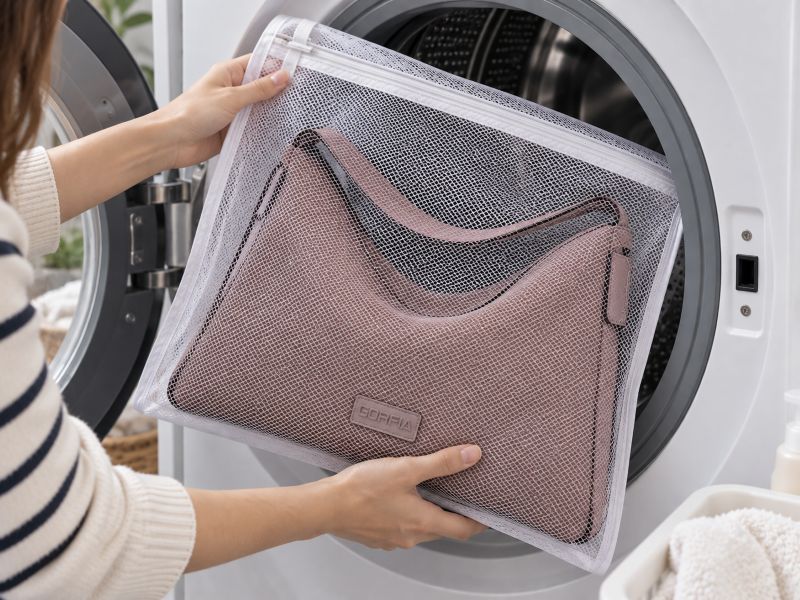
4. Machine Washing Neoprene Bags: Is It Safe?
Machine washing neoprene bags isn’t a universal yes-or-no rule. The answer depends on the complete construction and the care method tested for that specific product.
A simple soft bag with washable lining and secure trims may be designed for a cold gentle cycle. A structured bag with glued panels, heavy hardware, sensitive prints, or an internal board can respond very differently.
Check the manufacturer’s instructions first. If the care label specifically permits a gentle cycle, follow its temperature and detergent directions.
When the construction is uncertain, avoid machine washing neoprene bags with:
- Stiff or cardboard bases
- Glued decorations
- Bonded reinforcement
- Heavy metal hardware
- Sensitive printing
- Leather or coated trims
- Complex internal structures
A washing machine creates repeated agitation and spinning. Those forces act not only on the neoprene but also on seams, binding, handles, laminated layers, zippers, glue, and reinforcement.
For brands, care instructions should also be based on testing, not assumptions about the base fabric. As a broader textile-care benchmark, the FTC’s Care Labeling Rule requires covered apparel care instructions to be supported by reliable evidence or testing. Bags are a different product category, but the principle still applies: test the finished construction before approving a wash method.
5. The Drying Process: Protect Shape and Construction
The drying process can affect the bag almost as much as washing. After the final rinse, gently squeeze soft areas without twisting them. Lay the bag against a clean towel and press lightly so the towel absorbs retained moisture.
Reshape the base, sides, opening, and gussets while the bag is still damp. Then let it air-dry in a well-ventilated area, away from prolonged direct sunlight and strong heat.
The aim is not only to dry the neoprene surface. A finished bag can retain moisture in laminated fabric, lining, seams, binding, pockets, reinforcement, and the spaces around inserted components.
A thin soft tote may dry within a few hours in good airflow. A larger lined or structured bag can take considerably longer.
Do not store the bag until every layer feels dry. Avoid hanging a heavy wet bag from narrow handles. The added water weight can pull on handle attachments or distort the opening while the construction is soft.
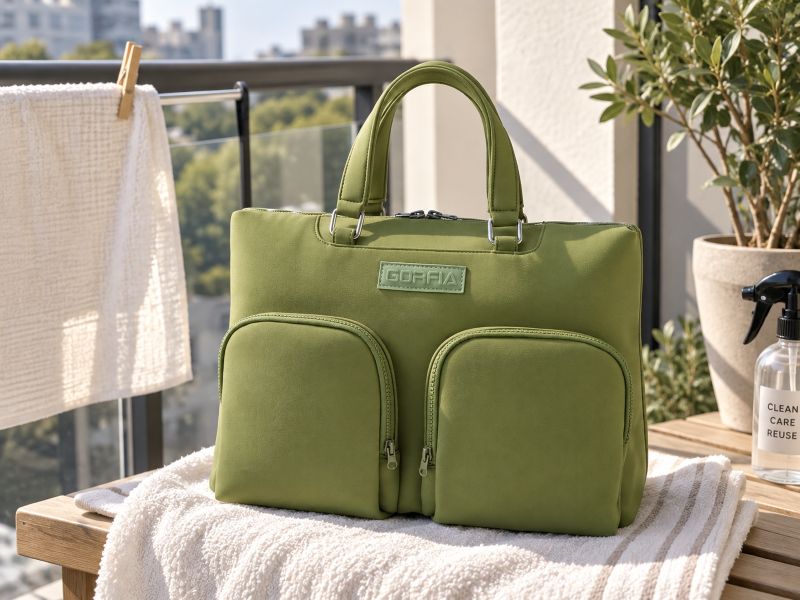
Check the Lining, Seams, and Reinforcement Before Storage
The outside of a neoprene bag can feel dry while moisture remains deeper inside.
Open pockets and compartments so air can reach the lining. Check seams, bound edges, bottom corners, and any internal base because these areas can dry more slowly than a flat outer panel. For a bag with removable inserts, dry the bag and insert separately. Don’t put a damp base back inside just because the outer shell already feels dry.
Quick Cleaning Guide by Bag Construction
| Bag construction | Preferred cleaning method | Main risk |
| Simple soft neoprene tote | Gentle hand wash | Stretching or seam stress |
| Bag with one small stain | Spot clean | Unnecessary soaking |
| Printed neoprene bag | Hidden-area test + gentle cleaning | Fading or print change |
| Bag with glued decoration | Limited spot cleaning | Adhesive deterioration |
| Bag with cardboard reinforcement | Avoid full immersion | Warping and shape loss |
| Lined neoprene bag | Hand wash if approved | Different drying rates |
| Bag with substantial hardware | Limit soaking | Finish or attachment damage |
| Structured neoprene bag | Spot clean unless washing is approved | Shape distortion |
FAQs
Can you wash neoprene with soap?
Yes, if the finished bag permits washing. Use a small amount of mild soap or detergent and rinse with fresh water until the residue is gone.
Can you use cold water when washing neoprene?
Yes. Cold water is the safer default for many finished neoprene bags because it reduces unnecessary stress on colored fabrics, bonded layers, prints, and adhesives.
Can neoprene go in the washing machine?
Sometimes, but only when the finished bag is designed and tested for machine washing. If it contains sensitive trim, reinforcement, glue, heavy hardware, or an internal base, hand washing or spot cleaning may be safer than machine washing.
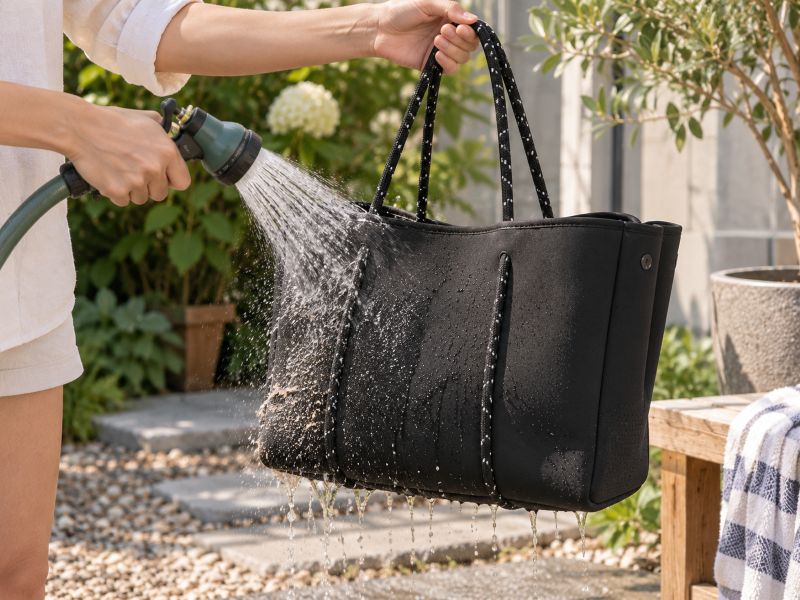
Can I rinse a neoprene bag with a garden hose?
A low-pressure garden hose can help rinse loose sand or dirt from a simple beach or outdoor tote when the entire construction is water-tolerant.
Do not use a strong spray on seams, zippers, prints, glued components, hardware, lining, or internal reinforcement. For structured or multi-material bags, a damp cloth or controlled rinse in a sink gives you more control.
Can you tumble dry a neoprene bag?
Do not tumble dry unless the care label specifically permits it.
Heat and tumbling can affect bonded components, reinforcement, trims, and the bag’s shape even when the neoprene exterior looks unchanged.
Conclusion
Before you wash a neoprene bag, find the part of the construction that is least tolerant of water. That single check usually tells you whether to immerse the whole bag, hand-clean it with limited water, or treat only the affected area.
When in doubt, use cold water, mild cleaning, and controlled air drying. A slower, gentler method is easier to repeat than repairing faded printing, weakened glue, or a distorted base.
If you also own fabric totes, Gorfia’s guide to washing canvas tote bags shows why cleaning decisions need to change with the bag’s material and construction.
Develop a Neoprene Bag That Is Easier to Care For
If easy cleaning matters to your customers, consider it before the bag reaches production. Material combinations, printed details, reinforcement, hardware, and internal structure can all affect how the finished bag responds to washing and drying.
For a new design, test the finished sample using the cleaning method you plan to recommend. Before finalizing the care instructions, check for color change, shape loss, weakened bonding, and slow-drying areas. If you are developing a neoprene bag and want to review these details before production, contact Gorfia to discuss your design.