
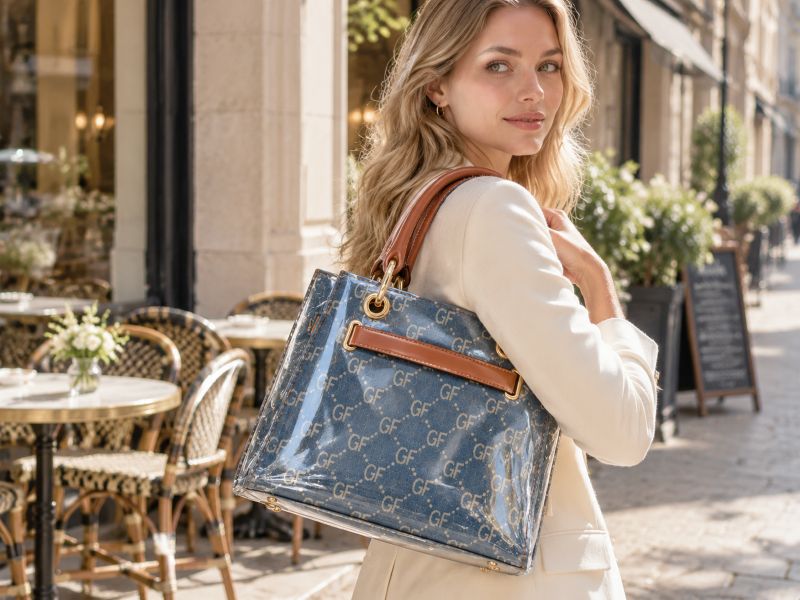
If you need a bag with clean lines, strong waterproof protection, and a versatile, modern look, PVC is one of the most capable materials in the fashion world.
For over 20 years, Gorfia has consistently built high-performance synthetic accessories and fashion carry goods. We make the best of vinyl polymers and know how to prevent common problems most producers face.
In this complete guide, we explain how PVC compares to other bag materials, share styling guides, and offer expert tips for building a premium, luxury-grade finished PVC bag that modern buyers love.
What Vinyl Delivers in Modern Handbag Design
Polyvinyl chloride (commonly called PVC or vinyl) is a durable, versatile thermoplastic polymer widely used across industries, from architectural pipes and resilient flooring to high-fashion accessories and rugged daily utility bags.
In its base chemical state, raw polyvinyl chloride is rigid. Still, polymer manufacturers blend it with specialized plasticizers to create supple, flexible sheets and panels tailored for high-end bag construction.
In the modern accessory and handbag market, PVC material typically takes two distinct forms:
1. Clear Optical Film and Transparent Sheeting
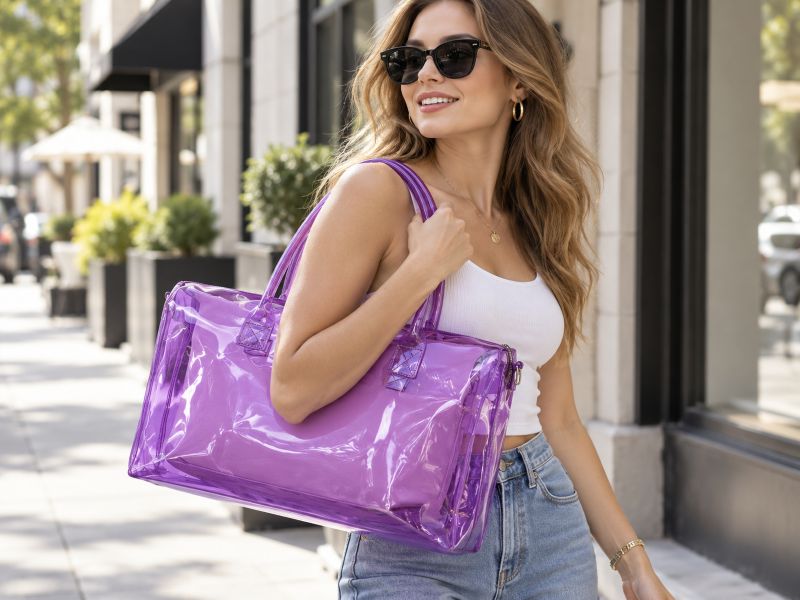
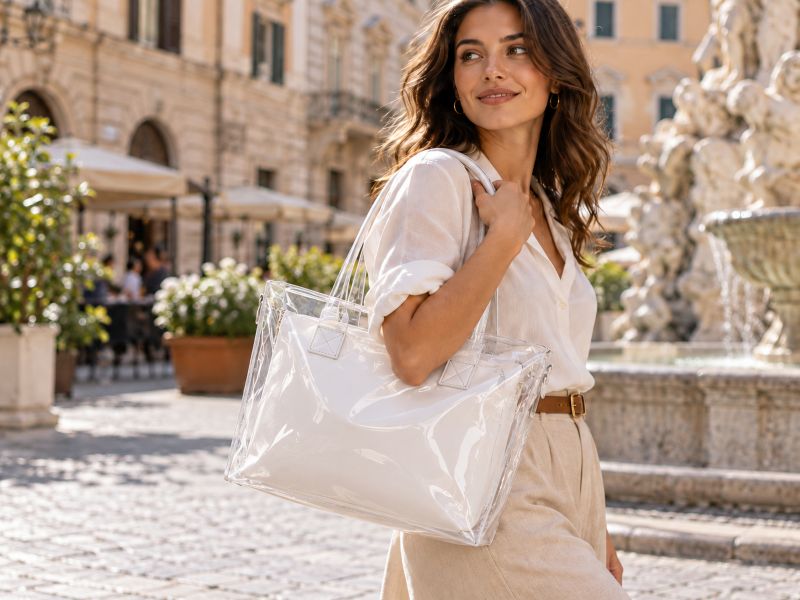
Clear optical film is an unbacked, transparent polymer sheet ranging from 0.3mm to over 1.0mm thick.
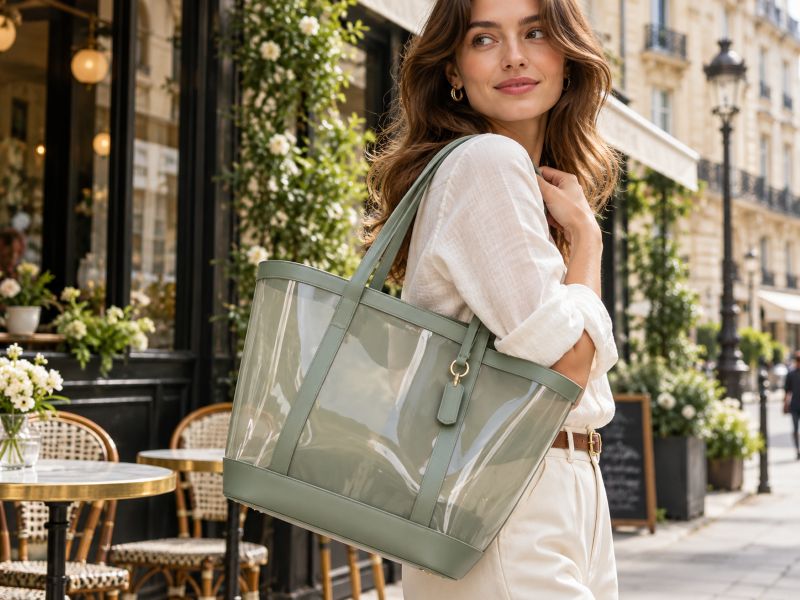
Designers prefer this option for clear bag collections, transparent clear totes, venue-approved clear backpacks, waterproof cosmetic pouches, and protective inner pouches for luxury travel.
2. Supported PVC Synthetic Leather
Supported synthetic leather bonds a textured, tough PVC surface coat to a woven cotton, knitted polyester, or non-woven fabric backing.
This composite delivers the rich pebble-grain texture and drape of traditional leather alongside total moisture impermeability and structural durability.
Material Showdown: PVC Vs. Other Bag Materials
Choosing the right synthetic means understanding how PVC performs under real-world environmental stress compared to Polyurethane (PU), genuine leather, and heavy woven cotton canvas.
Synthetic and Natural Material Performance Matrix
| Performance Metric | PVC Material (Vinyl) | PU (Polyurethane) | Genuine Leather | Heavy Cotton Canvas |
| Water Resistance | 100% Waterproof | High (Porous base) | Low (Stains/Absorbs) | Low (Absorbs moisture) |
| Structural Rigidity | High (Sturdy shape) | Moderate (Soft) | High to Low (Varies) | Low (Collapses) |
| Abrasion Resistance | Excellent & Tough | Moderate | Moderate to Poor | Moderate (Fraying) |
| Surface Cleaning | Wipe clean easily | Easy (Delicate skin) | Requires Conditioner | Hand wash / Shrinks |
| Hydrolysis Defense | Immune to peeling | Vulnerable over time | Immune to peeling | Immune |
| Relative Unit Cost | Cost effective / Cheaper | Moderate range | Premium / High cost | Budget to Moderate |
The Core Advantages of PVC Bags
- Total Liquid and Dirt Barrier: PVC is naturally non-porous, meaning water, surface dirt, oil spills, and cosmetic leaks cannot penetrate the sturdy outer shell.
- Superior Abrasion Resistance: The hard-wearing exterior resists surface scratching from car keys, office desks, and everyday friction.
- Architectural Shape Retention: PVC maintains crisp architectural silhouettes and geometric gussets without collapsing inward over time, making it ideal for structured totes and modern backpacks.
- Zero Risk of Hydrolysis: Unlike cheap PU alternatives that peel or flake in humid climates, PVC stays intact through years of active storage.
- Cost-Effective Manufacturing: Compared to genuine hides and technical woven composites, PVC offers a cost-effective foundation for growing fashion brands.
Considerations When Choosing PVC
- Temperature Sensitivity: Standard-grade film can become rigid in sub-zero conditions unless formulated with cold-crack-resistant additives.
- Breathability: Because the material forms an airtight barrier, it suits exterior shells, cosmetic pouches, travel packing organizers, and structured shopping carryalls better than close-fitting clothing or performance shoes.
Factory-Floor Engineering: Solving Critical PVC Production Challenges
Many production headaches for PVC bags arise on the factory floor, not from end-user wear after delivery.
When bag brands hit unexpected defect rates during mass production, the root cause is almost always thermal calibration and adhesive handling during PVC panel assembly.
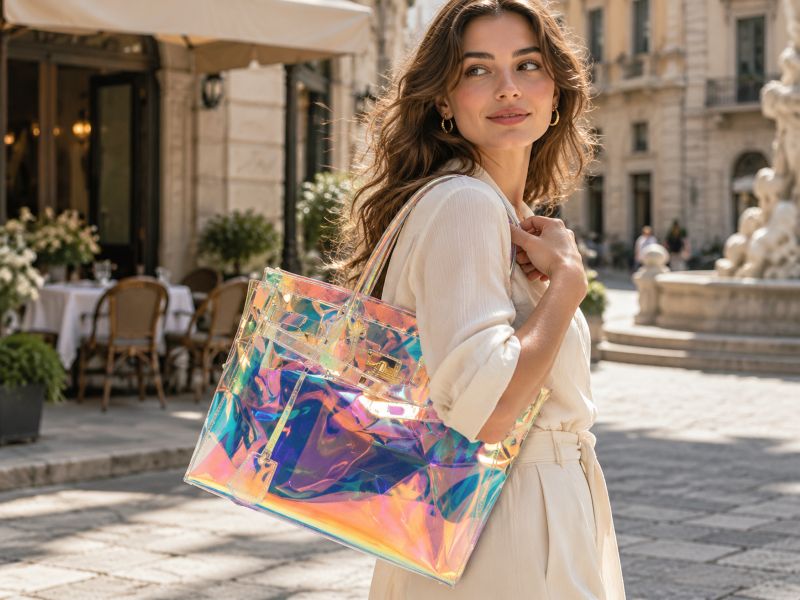
The Pitfall: Inconsistent Heat-Press Embossing and Rushed Bonding
A key factory-side challenge arises when handling heat-press embossing and adhesive-bonding workflows for PVC bag components.
On the production floor, operators often try to speed up output by reusing identical settings across all PVC panels for both heat-press embossing and glue application.
However, incoming PVC panels for one bag naturally vary slightly in thickness.
If you apply a single fixed temperature-time setting for embossing, thinner PVC sections will get faint burn marks, while thicker pieces fail to produce crisp, well-defined logos.
Meanwhile, when workers rush the gluing step to keep up with line speed, glue coating ends up uneven across layered parts.
Thick pooled glue cannot fully dry before downstream processing.
After heat-press work is finished, residual undried glue trapped between layers may seep out.
It leaves smudges right on the heat-embossed surfaces and ruins the finished logo texture.
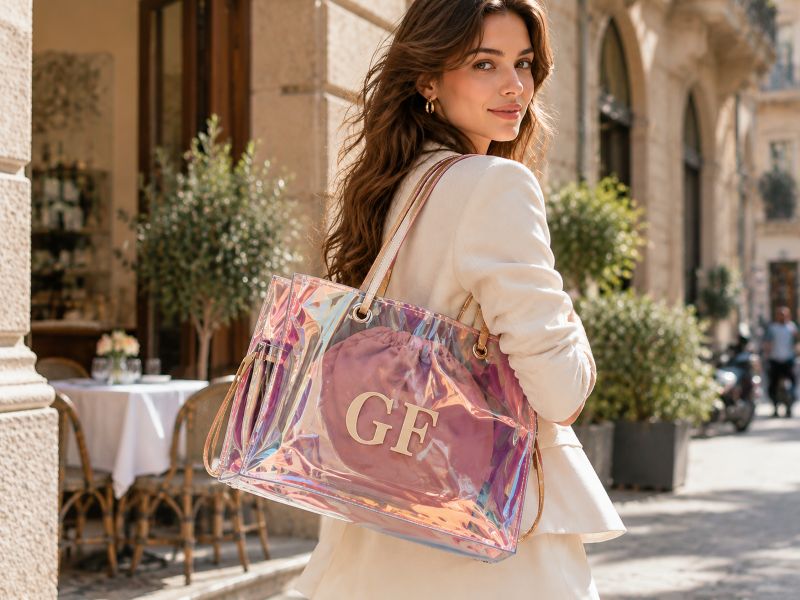
How We Prevent PVC Defects
Our proven factory fix addresses both linked issues together.
Before starting bulk production, we first sort all cut PVC panels by actual thickness using precision digital calipers.
We run pre-production test pieces using the current batch of material to calibrate dedicated heat-press temperature and hold-time values separately for thin and thick panels.
After gluing each layered component, we move all parts onto drying racks to enforce a mandatory resting dwell-time.
Only once the adhesive is fully cured do the panels move forward for calibrated heat-press embossing or final assembly where components are sewn and fitted with heavy-duty zippers.
This sequenced process prevents thermal burn damage from hot stamping and stops uncured glue from leaking out to mar the finished embossed surfaces.
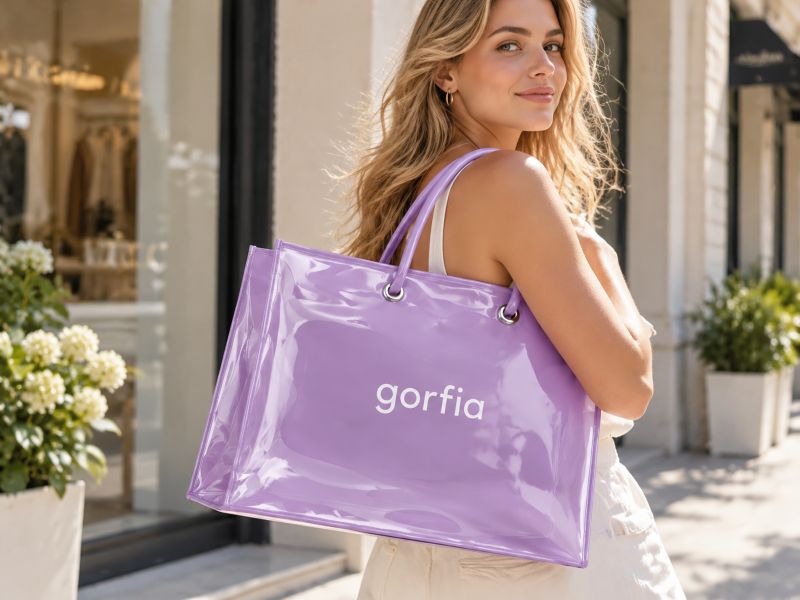
Sourcing Checklist: How Brands Spot Superior PVC Bags
When evaluating factory samples or setting up safety checks for an upcoming production run, keep these quality benchmarks at hand:
- Eco-Friendly and Non-Toxic Formulations: Ensure your supplier follows new industry regulations, such as avoiding banned phthalates, and complies with REACH, RoHS, and California Prop 65 standards to keep products safe and eco-friendly for retail sale.
- Anti-UV Stabilizers: Request UV-inhibiting additives in transparent films to prevent yellowing or loss of optical transparency when exposed to direct sunlight.
- Cold-Crack Additives: Specify dynamic cold-crack resistance ratings down to -15°C so clear vinyl totes and backpacks remain flexible during winter shipping.
- High-End Branding Execution: Verify whether your factory specializes in high-precision screen printing, foil debossing, or UV printing that bonds cleanly to smooth synthetic surfaces without peeling.
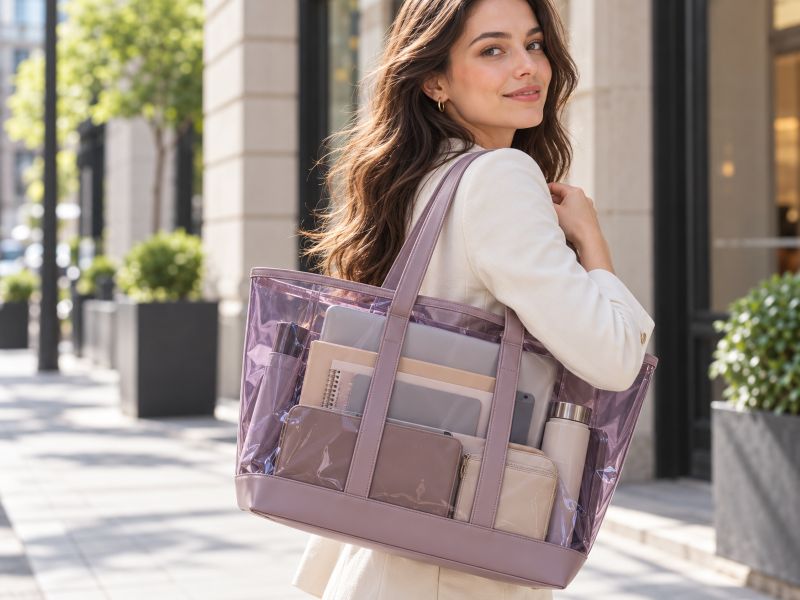
PVC Bag Care and Maintenance Tips
High-grade vinyl requires very little maintenance, allowing customers reuse and long-term enjoyment of their favorite bags:
- Routine Surface Cleaning: Wipe down the bag using a soft, damp cloth and lukewarm water mixed with a drop of mild soap to remove dust, makeup smudges, or fingerprint grease.
- Preventing Sun and Heat Discoloration: Avoid leaving clear vinyl exposed to intense direct sunlight on car dashboards or directly against radiator heaters, as extreme ambient heat softens thermoplastic polymers.
- Preventing Color Transfer: Store light-colored or clear bags away from unwashed raw denim clothing and dark genuine leather goods to prevent dye migration.
Selecting the right synthetic film is only one part of creating a successful accessory line. To scale your collection effectively, check out our guide on Strategic Approaches for Successfully Expanding Handbag Lines with OEM/ODM Solutions.
Scaling Your Custom PVC Bag Line
PVC delivers the ultimate combination of structural rigidity, 100% waterproof protection, and cost-effective scalability for modern accessory collections.
By specifying compliant, UV-stabilized resins and partnering with an OEM manufacturer experienced in precise thermal calibration and adhesive curing, brands can reliably produce durable, defect-free custom PVC bags that meet international retail standards.
Frequently Asked Questions
PVC Vs. TPU: What is the Difference?
While both PVC and TPU deliver excellent visibility, PVC is more cost-effective, holds structural box shapes more firmly, and resists everyday surface scratching. TPU (Thermoplastic Polyurethane) is softer to the touch, highly elastic in sub-zero temperatures, and offers alternative recycling pathways, though it costs more in raw materials.
How can brands eliminate chemical plastic odors from custom PVC orders?
Harsh plastic odors come from low-grade plasticizers. Specifying non-toxic, low-VOC, phthalate-free formulas and allowing adequate ventilation time before final packaging and shipping helps ensure bags arrive odor-free.
Can custom PVC bags be fully customized?
Yes. Manufacturers can apply custom artwork through rotary screen printing, digital UV printing, hot foil stamping, and high-frequency welded badge applications across both clear and backed vinyl surfaces.
Are PVC tote bags durable enough for heavy daily shopping?
With reinforced perimeter stitching, wider seam allowances, and cross-stitched webbing handles, a PVC tote bag is exceptionally durable and can carry 20 to 30 pounds of groceries, books, or gym gear.
Conclusion
If you need a bag that is 100% waterproof, holds its shape, and keeps production costs down, PVC is one of the smartest choices for your brand. It won’t peel in humidity like cheap PU, and it gives you a modern, wipe-clean look that lasts.
The real secret to high-end PVC bags is your factory’s attention to detail. Testing panels for thickness, ensuring glues are fully dried, and using non-toxic, UV-safe materials will protect your brand from common defects like burn marks or yellowing.
When you are ready to scale your collection with custom clear totes, pouches, or synthetic leather bags, work with an experienced manufacturer who controls the process from start to finish. Contact our team at Gorfia today to review your designs and start your first samples.
Build Better PVC Bags with Gorfia
Transforming innovative bag concepts into commercially successful retail products requires an OEM partner that understands material chemistry, thermal calibration, and precision assembly.
At Gorfia, our engineering team ensures every bag meets rigorous international quality standards.
Ready to manufacture your next custom PVC handbag, cosmetic pouch, or clear tote collection?
Contact us for a free consultation and a review of factory samples.