
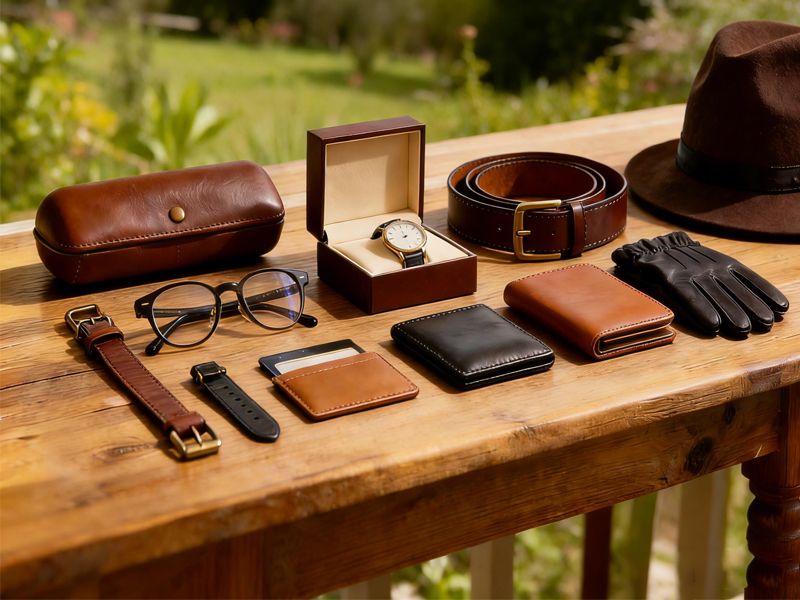
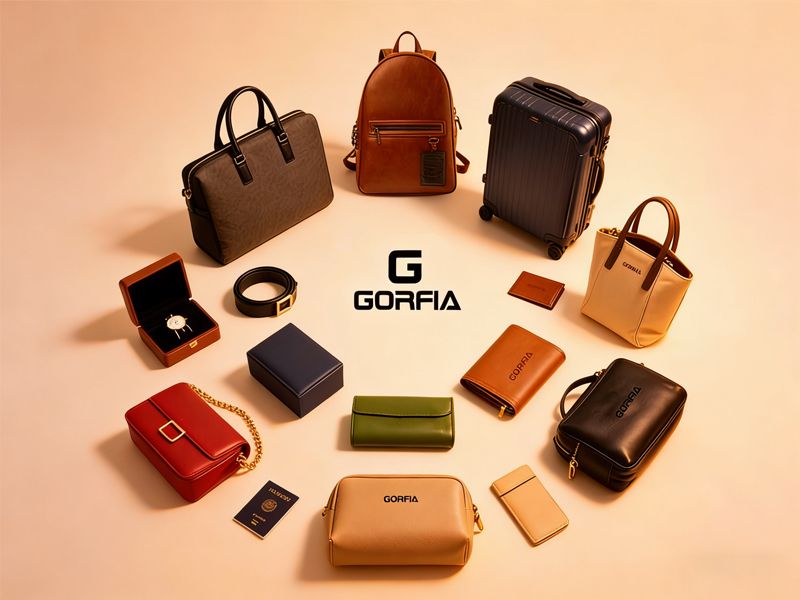
Struggling with high replacement costs or inconsistent branding in corporate leather gifts?
Our experience shows that choosing the right leather and applying thoughtful customization can cut replacement costs by up to 40% while keeping your brand consistent.
In this guide, we cover leather types, customization techniques, supplier evaluation, and risk management. Read on to make smarter, cost-effective gifting decisions.
B2B Leather Bag Procurement: Choosing the Right Leather for ROI and Brand Consistency
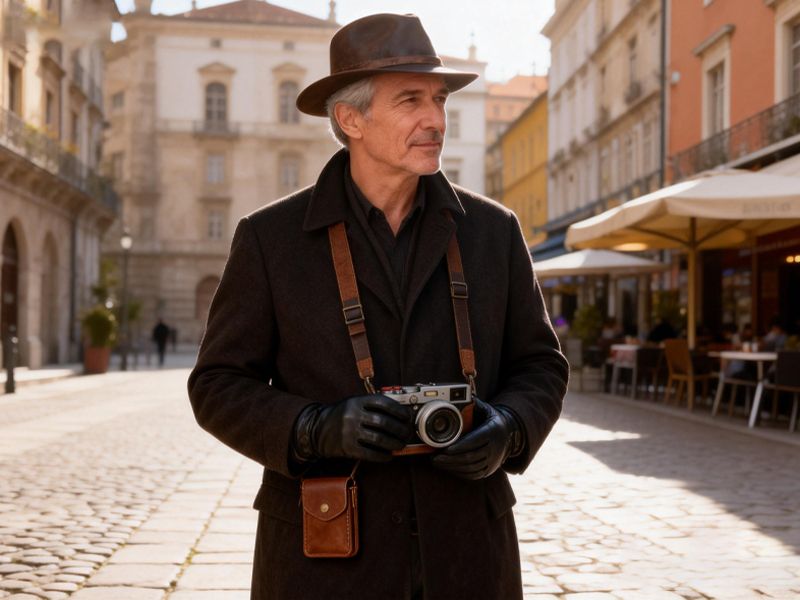
The leather you choose affects ROI, price, and brand perception. High-quality leather delivers longer-lasting performance while ensuring a consistent look and feel that strengthens trust and reliability.
Smart leather selection protects margins, supports brand image, and aids growth. See the table below for a comparison of leather types.
| Leather Type | Durability Level | Expected Replacement Cycle | Approx. Unit Cost |
| Full-grain leather | Very High | 5–10+ years | High |
| Top-grain leather | High | 3–7 years | Medium–High |
| Genuine leather | Moderate | 2–4 years | Medium |
| Bonded leather | Low | 1–2 years | Low |
| PU / Synthetic leather | Low–Moderate | 1–3 years | Very Low–Low |
By selecting the most appropriate leather, you not only guarantee the longevity of the product but also transform your procurement strategy. The leather type can affect your prices, supplier decisions, and even lead times.
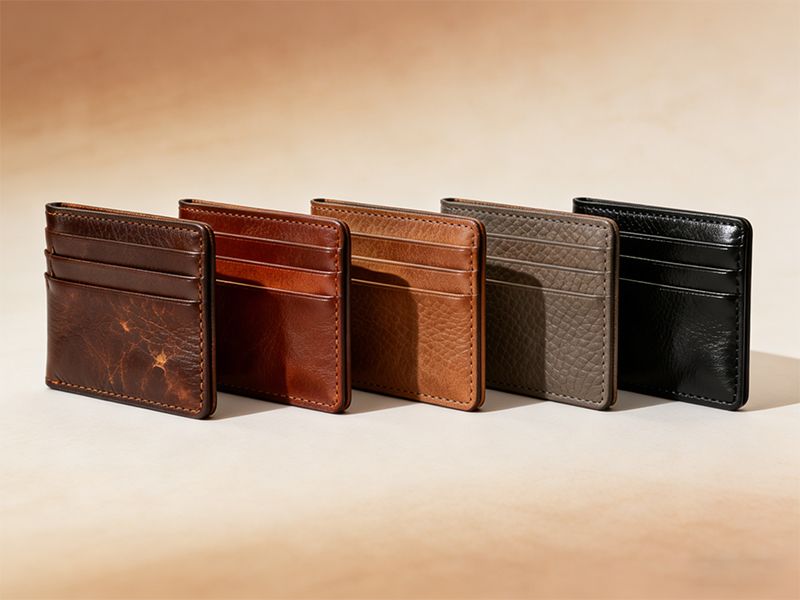
B2B Corporate Leather Gifts: Key Factors in Procurement and Lead Times
When planning corporate gifts or large-scale branded merchandise, the decision extends beyond product selection. You need to deep dive into the psychology behind corporate gifting.
To save you time and effort, here are some important factors to consider. These factors include the minimum order quantity, expected durability, and pricing. You should also consider the branding requirements and, most importantly, the reliability of the manufacturing partner.
Minimum Order Quantities (MOQ)
You need flexible MOQs, meaning the minimum number of products you can purchase depends on the material type and level of personalization. Among leather types, full-grain leather tends to have a lower MOQ, as it is a premium material and is often made in limited batches.
On the other hand, you can get embossed leather with the ability to sustain larger-scale orders at competitive pricing. This way, you can order a quantity that meets both your branding and budget requirements.
Durability Expectations
For high-use items like belts and travel accessories, hide provides 5–7 years of durability—even with daily use.
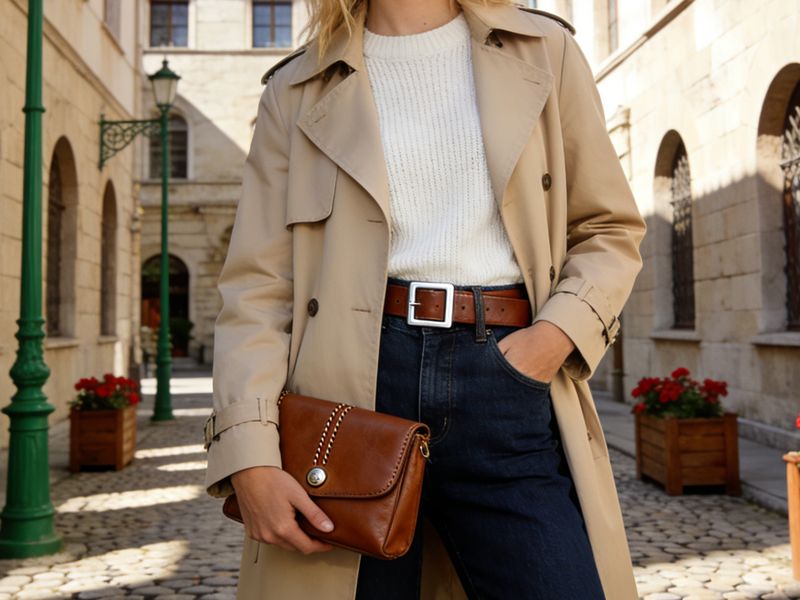
For premium gifts, full-grain leather offers 10–15 years’ longevity, reducing warranty issues and replacement costs when matched to intended use.
Supply Chain Stability
A stable supply chain ensures your corporate gifting orders move smoothly from raw materials to finished goods without disruption. For bulk products, consistency in sourcing, availability of materials, and predictable production planning matter most.
When a supplier maintains stable upstream relationships, it helps preserve consistent color, texture, and finish across large batches and reduces last-minute shortages that cause delays.
A partner with strong supply chain stability gives you more predictable timelines and greater confidence for large campaigns and repeat reorders. If you are unable to find a suitable supplier, check this article on top-custom B2B leather goods manufacturer in china.
Production Lead Time
Production lead time—the total time from start to finish of your order—is determined by order size, customization complexity, and leather type. Cutting, stitching, edge finishing, hardware attachment, and packaging all add time, and multiple SKUs (stock keeping units, or variations such as color or size) or color variants increase setup and approval cycles.
For planning purposes, note that top-grain and embossed leathers typically produce faster than highly finished full-grain or calf leather, which requires longer handling and approval.
B2B Leather Options: Balancing Procurement Efficiency and Brand Image
Leather isn’t just a material you choose for your corporate reward program. The type you select impacts procurement, durability, and brand consistency.
There are different types of leather with variable sourcing requirements, lead times, and performance levels. These variations will influence price, reliability, and the type of impression you leave on your clients and partners.
Therefore, it is important to understand the strengths and limitations of each leather.
Full-Grain Leather (Premium B2B Gifting Programs)
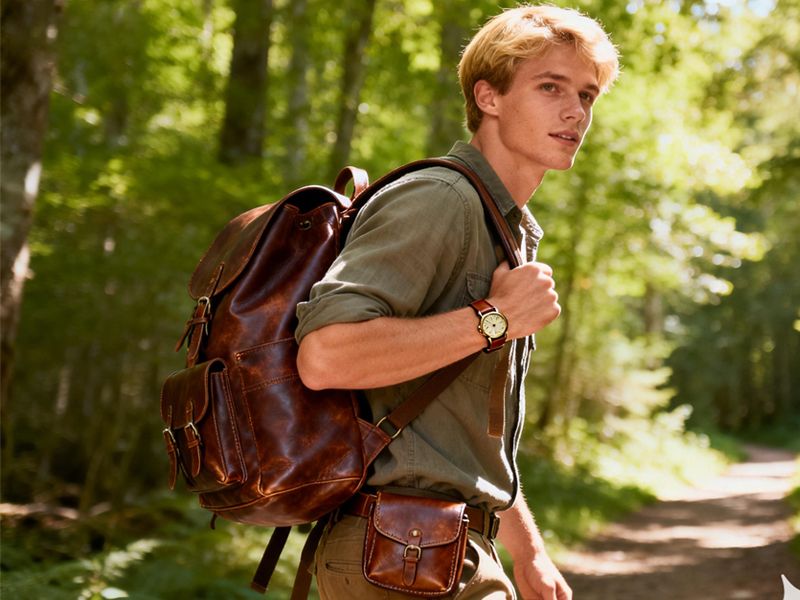
Full-grain leather is our top recommendation. It is a strategic procurement choice for high-value gifting programs that target executives, long-term partners, and board members.
Full-grain leather uses the whole hide, delivering longevity, consistent performance, predictable quality, and a developing shine with age. This helps reduce warranty risk, improve inventory turnover, and maintain brand consistency for repeat orders.
- Cost: Top in the tier. Most suitable for premium programs with high budgets.
- Order Volumes: Most suitable for exclusive, premium, and small volumes.
- Brand Consistency: Supports blind debossing and deep embossing.
- Brand Signal: Conveys authenticity, long-term value, and prestige.
If the procurement objective is to deliver a high-value brand experience through gifts, full-grain leather is the most suitable. With a lifespan of 10-15 years and superior scratch and abrasion resistance, the products will reinforce brand positioning and signal long-term value to recipients.
Top-Grain Leather (Large Corporate Programs)
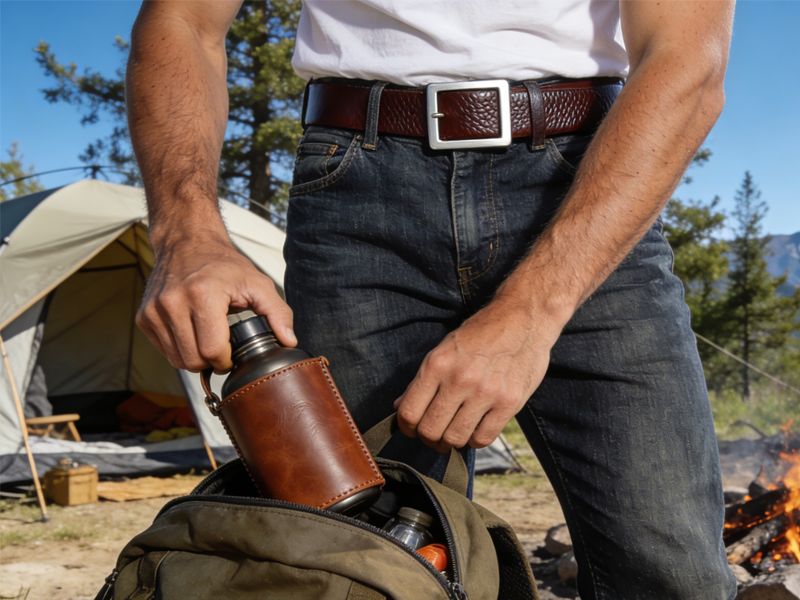
Top-grain leather is cost-efficient. Its polished finish ensures consistent quality at an affordable price—ideal for large-scale gifting or promotions. Standardization simplifies repeat orders and inspections.
- Cost: Medium- to high-budget programs seeking to balance quality with price.
- Order Volumes: Medium to large, but with consistency.
- Durability and Warranty Risk: Great performance that lowers replacement or warranty issues
- Brand Consistency: Supports emboss, foil, and stamp.
- Brand Signal: Consistently reliable, professional, and high-quality, making the brand seem credible.
For programs that require consistent quality over recurring gift cycles, top-grain leather provides the perfect balance of appearance, durability, and cost efficiency.
Calf Leather (Premium Small Accessories)
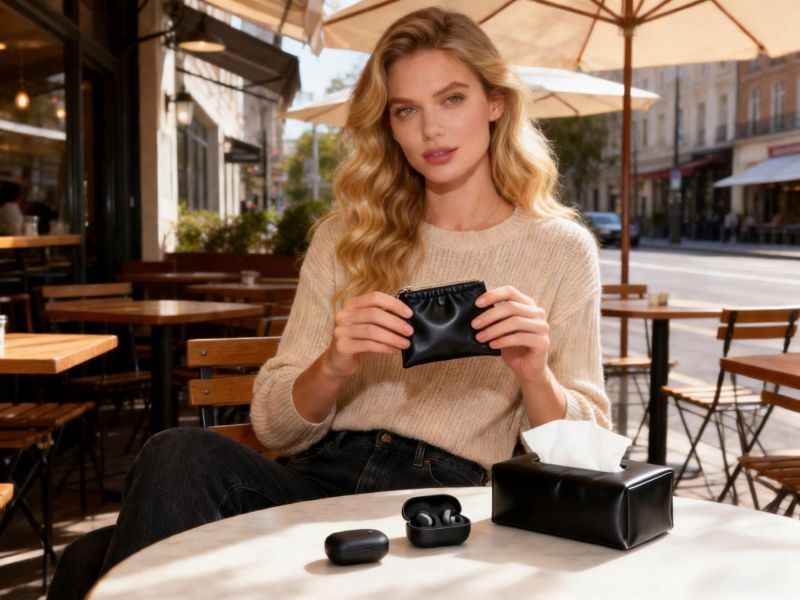
For small products like a woman’s wallet, calf leather is the premium option. It has a soft and refined texture, which makes high-end detailing easy. This is important for small leather goods as their surface quality is highly visible.
Its smooth finish and controlled grain facilitate manufacturing, enabling the production of products that meet high corporate standards. For more ideas, see our list of everyday accessories.
- Cost: Premium. Suitable for high-end programs seeking high-quality output.
- Order Volumes: Small to Medium without compromising on quality.
- Durability and Warranty Risk: Soft and fairly durable. Ideal for lifestyle products with a low risk of structural failure.
- Brand Consistency: Supports intricate and detailed embossing.
- Brand Signal: Sophisticated, boutique aesthetics that elevate value.
If your gifting programs require products with visual refinement and high quality, this leather type will deliver a luxurious experience.
Hide Leather (High-Durability Items)
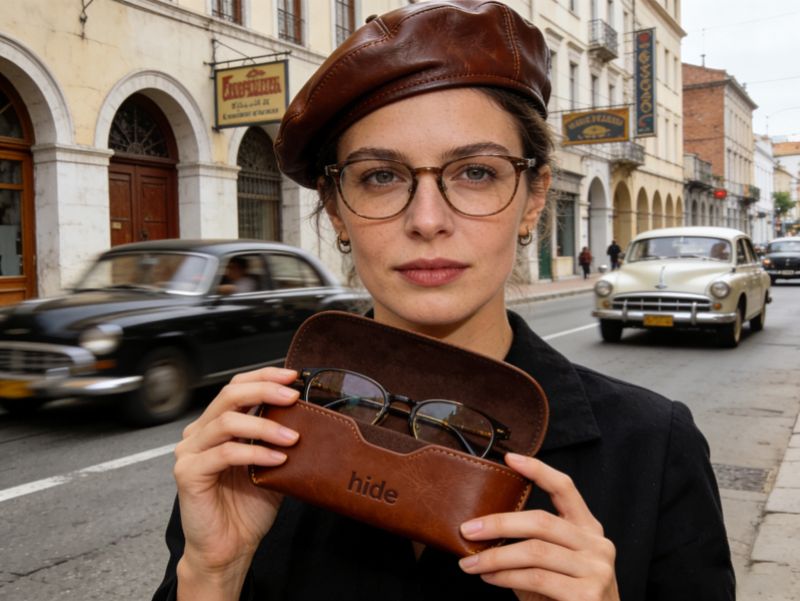
Hide leather excels for items needing heavy or frequent use. Its strength suits belts, travel pieces, and other frequently handled accessories—minimizing wear complaints and maximizing lifespan.
- Cost: Moderate. Perfect for programs seeking durability without a premium budget.
- Order Volumes: Medium to Large. Ensures stable supply and consistent output
- Durability and Warranty Risk: Great for high-endurance everyday items.
- Brand Consistency: Supports deep embossing and stamping.
- Brand Signal: Reliability, strength, and longevity.
This is the most suitable option for your gifting program if you plan to make products that will experience daily wear and tear. To ensure minimal degradation and dependable long-term performance, hide will be great.
Suede (Soft-Touch, Premium Feel)
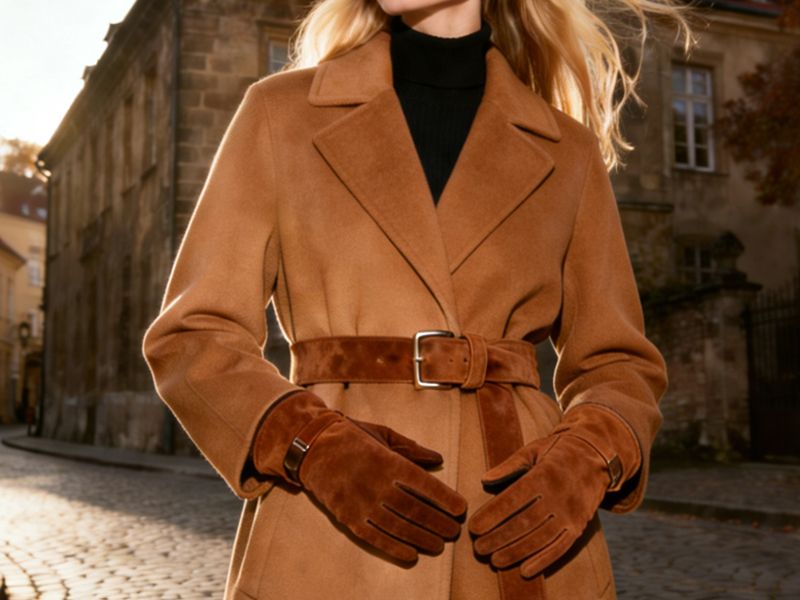
Suede suits premium, tactile gifting. Its velvety surface elevates gift value, making it ideal for items that emphasize feel and elegance, like wallets or accessories. It accepts custom laser or embossed detailing with care.
- Cost: Premium option for programs prioritizing touch, luxury, and exclusivity.
- Order Volumes: Small to medium volumes to maintain quality and consistency.
- Durability and Warranty Risk: Moderate durability; requires careful handling to avoid scuffs and marks. Ideal for lifestyle items and luxury accessories with low structural stress.
- Brand Consistency: Supports subtle embossing, laser detailing, and color consistency across batches.
- Brand Signal: Sophisticated, tactile, and premium. Perfect for programs that emphasize luxury and a high-touch experience.
If you are looking for a leather type that delivers a soft touch and premium feel for exclusive gifting programs, suede is a reliable choice for creating memorable, high-value impressions.
Quick Comparison of Popular Leather Types
Here’s a quick overview to help you choose the right leather:
| Leather Type | Durability | Look / Texture | Most Suitable For | Price Level |
| Full-Grain | ⭐⭐⭐⭐⭐ | Natural, develops patina | Luxury gifts, executive sets | High |
| Top-Grain | ⭐⭐⭐⭐ | Smooth, refined | Corporate gifts, bulk orders | Medium |
| Genuine Leather | ⭐⭐⭐ | Uniform, affordable | Budget-friendly giveaways | Low |
| Suede | ⭐⭐⭐⭐ | Soft, velvety | Luxury small items, high-touch gifts | High |
| Calf Leather | ⭐⭐⭐⭐ | Soft, supple | Luxury small items (wallets, purses) | High |
| Hide Leather | ⭐⭐⭐⭐⭐ | Thick, robust | Large items (bags, belts, briefcases) | High |
The Customization Workflow
By customizing your leather goods, you can enhance brand consistency, cost efficiency, and operational timelines. For gifting programs, decisions must be based on leather-specific constraints, scalability, and workflow approvals to ensure quality and minimize risks.
Below is a structured workflow that aligns branding choices with procurement objectives.
Logo Methods and Leather Compatibility

The approach and techniques for enterprise-level personalization include embossing, debossing, foil stamping, or laser engraving.
- Emboss/Deboss: For embossing and debossing, leather of appropriate thickness is necessary. Depth calibrations may be required to ensure each imprint is uniform.
- Foiling: Color transfers vary depending on the leather’s finish. We recommend a pre-production proof, as the leather’s finish will affect the color transfer during foiling.
- Laser Engraving: We recommend test runs to avoid uneven burns during engraving.
Procurement Value: To select the right method for laser engraving, we highly recommend a laser test engraving. The correct method ensures uniformity and consistency, reducing rework, lowering warranty claims, and improving overall logo alignment.
Cost Implications and Budget Alignment
Customization cost depends on:
- Method complexity: Techniques like foiling and laser engraving tend to take longer and cost more at the equipment level.
- Leather type: Full-grain and thicker hides may require longer setup or adjustments to the pressure.
- Batch size: With small batches, the cost per unit and setup costs tend to be higher; however, larger orders take advantage of economies of scale.
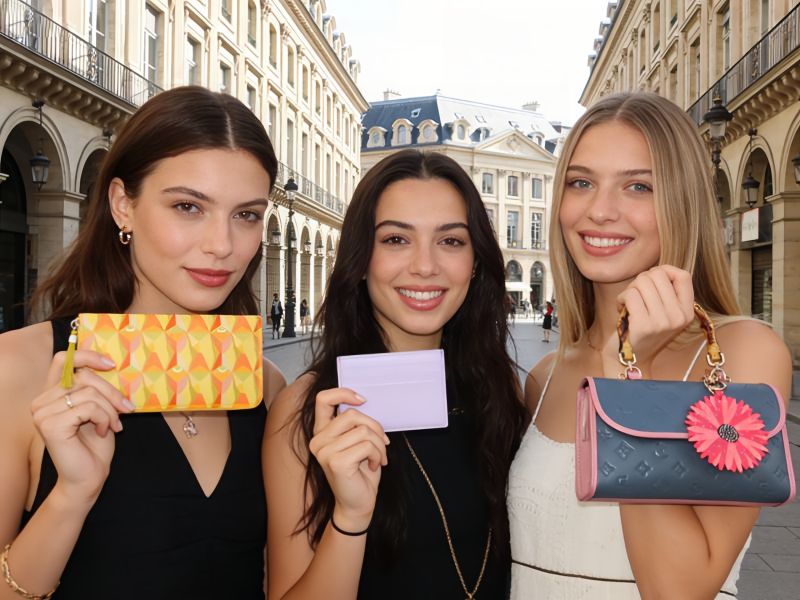
Procurement Value: For larger gifting projects, balancing the materials cost, method, and batch size gives teams the ability to predict budgets accurately. This improves ROI while retaining quality for the brand.
Production Lead Time and Approval Cycles
For a medium-sized order consisting of 500-1,000 units, it usually takes 3–4 weeks, but for larger orders of 5,000–10,000 units, it typically takes 6-8 weeks.
Enterprise suppliers typically work with structured approval cycles, which include:
- Pre-production samples for logo and leather approvals.
- Staged quality assurance checkpoints to maintain quality and consistency across the various batches.
- Clear scheduling to support delivery and align with the organization’s internal procurement calendar.
Procurement Value: These structured processes minimize the rework and thus lower the risk on your end. They also ensure timely delivery for larger gifting programs, which preserves brand reputation and consistency.
Packaging Options and Scalability
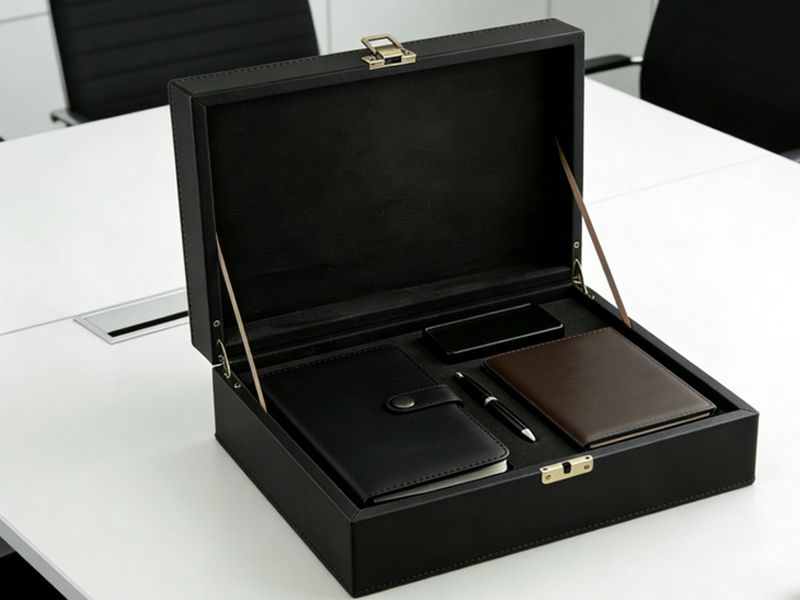
Suppliers typically package finished products in protective, brand-ready packaging that scales to bulk orders. Suppliers will offer you:
Packaging Solutions: Suppliers provide air-shielded wrapping, branded wrapping, and display boxes with protective interleaving, ensuring products arrive in pristine condition.
Procurement Value: With uniform protective packaging and careful logistics, you will ensure reduced damage and enhanced procurement value.
B2B Outcome: The logo method, prices, production, delivery, and packaging work together to ensure low risk and scalable corporate gifts programs for strong brand presence. If you are having a hard time, take help from these brand solutions.
How to Evaluate and Select a Corporate Leather Gift Supplier
Choosing the right supplier is key to large-scale corporate gifting. The suppliers you choose shape product quality, brand consistency, prices, and shipping reliability.
Assess Manufacturing Capabilities
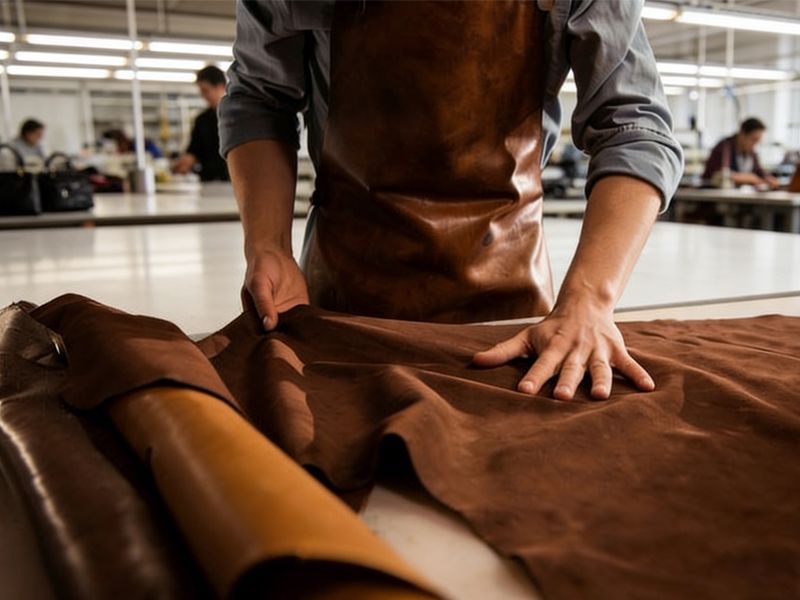
Ensure the supplier can execute the customization techniques you need. Try to find an experienced manufacturer that meets your specifications efficiently across all orders.
Batch Flexibility and Volume Support
Long-term reliable partners maintain consistency, even for large-volume orders.
Production Stability & Times
Make sure the supplier fits the timelines you need. This will help you rule out material shortages and delays, keeping your gifting programs on schedule.
Track Record & Assurance
A good supplier should provide information about their relationships with large companies and their quality control measures. If you choose an established supplier, it will reduce risk. Hence, you can ensure the best items even when orders are repeated.
You should also learn about the best procurement steps you can take to play your role in the process. Here is an article to help you explore the best procurement practices.
Risks and Recommendations for Corporate Leather Gifting
When dealing with large-scale corporate leather-goods gifting, there is significant brand risk and operational inefficiency. When completing large orders, frequent obstacles include inconsistent product quality, batch-to-batch color differences, and difficulty meeting timelines.
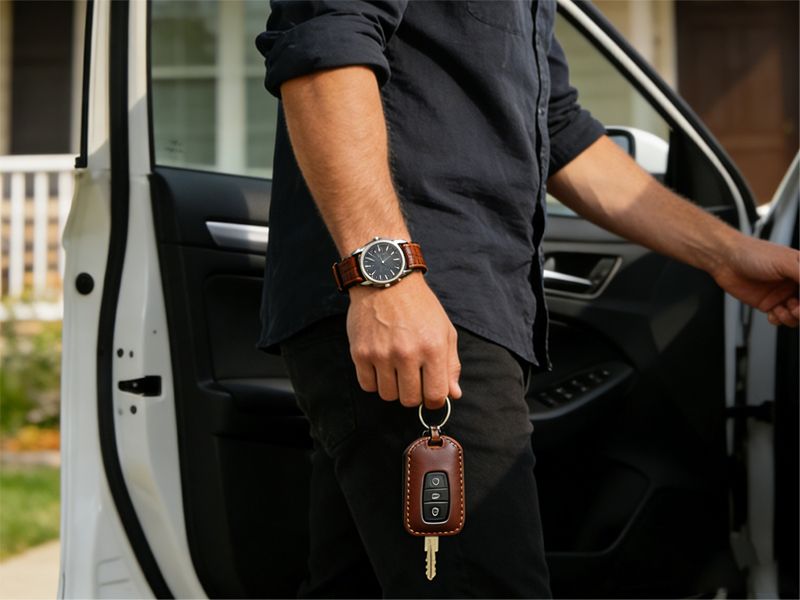
If such oversights are left unchecked, the rework will spiral out of control. This will lead to higher prices, delivery delays, and even returns. This will impact the ROI and even the brand’s reputation. Here are some risks and recommendations to avoid them:
Quality Control
You need to ensure regular inspections are conducted to check the evenness of texture, stitching, and finishes. This helps decrease variability and protects your company’s image.
Color Stability
For color stability across production, dyes should be tested. Use color-matching processes and keep consistency for embossed patterns or foiled logos.
High-Volume Challenges
Partner only with suppliers who can deliver high-quality runs on time for high-volume orders. To learn more, check out this article on the best men’s messenger bag bulk order guide for businesses.
Suppliers that are careful about these risks streamline procurement and deliver an excellent gifting experience. If you carefully plan with a reliable supplier, your brand can maintain standards.
The partnership will provide leather goods that will make your gifting strategy a success.To know more about supplier relationships, check this article about 5 tips for supplier relationship.
FAQs
1.Which leather type is best for corporate gifting?
Full-grain leather is considered the best for premium gifts, while top-grain leather is used for consistent large orders. Hide leather can be used for products that need higher durability.
2.How does customization affect cost and timelines?
More intricate designs, produced through methods such as foiling and laser engraving, take longer to produce and increase the price. Personalizing larger batches also results in lower unit pricing. However, the lead time for most bulk batches is 3 to 8 weeks, depending on volume.
3. How do I ensure consistent quality across large orders?
Choose a supplier that has stable sourcing, strict QC, color-matching, and pre-production samples. These will ensure the branding design’s texture and color remain uniform.

Conclusion
These customization guidelines illustrate how leather selection and personalization methods influence brand consistency, cost efficiency, and operational workflows.
With that in mind, choose the leather type and select personalization methods that best match your enterprise-level needs and complexities when planning your gifting programs.
For more information on corporate gifting and customization options, check out our article on Card Holder Sourcing for B2B Success.
Transform Your Corporate Gifting Strategy with Gorfia
To support reliable and scalable gifting programs, Gorfia has designed and mastered high-quality, customized leather products, along with effective supply chain management and business integration.
Our 20 years of experience in the leather industry allow us to deliver uniform results on both small and large-volume orders, seamlessly preserving your brand value while scaling to volume.
Work with us:
- Contact our team and design gifting tailored to your needs, along with workflow optimization.
- Access our catalog to view our leather products, lifestyle items, and accessories.
- Request a quote to get an estimate for your intended volume order, with feedback on the expected duration.