
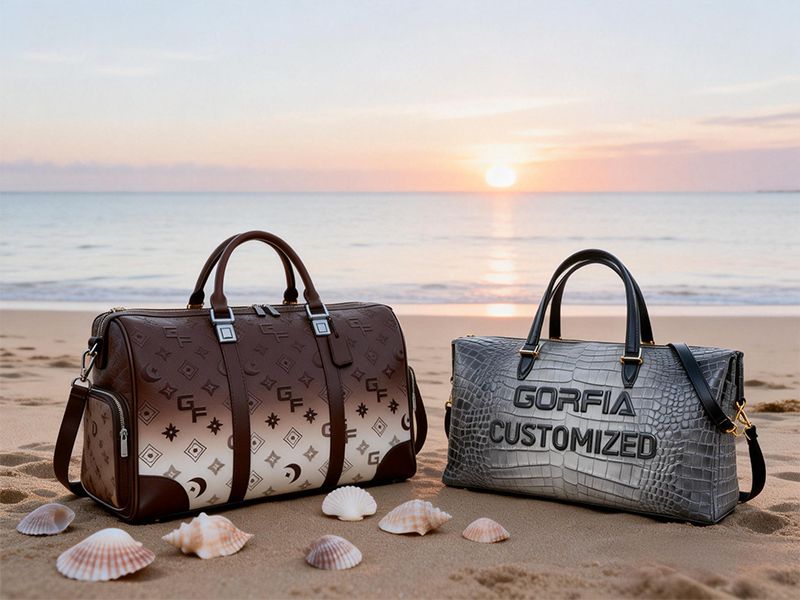
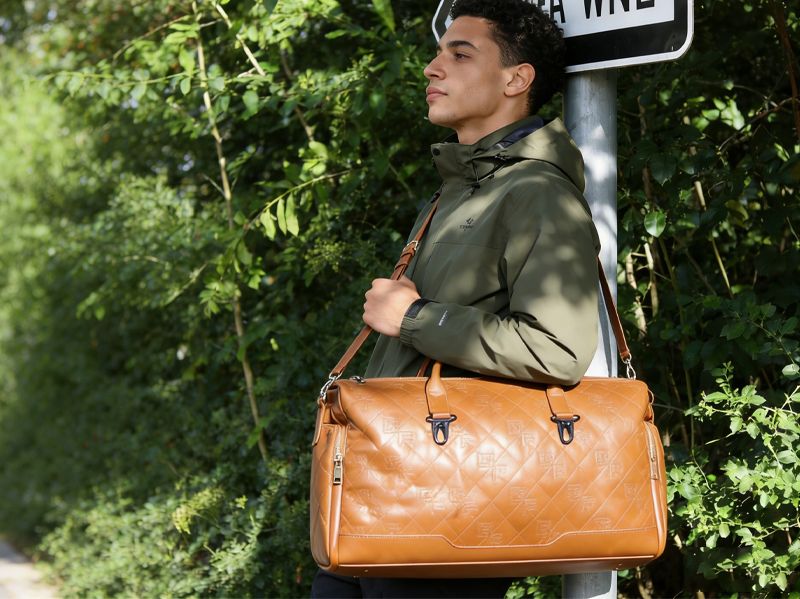
When sourcing travel bags at scale, B2B buyers often struggle with inconsistent SKUs, high costs, and operational complexity. Fortunately, duffel bags provide a single, versatile option with standardized sizing and bulk-order support, making them easier to manufacture, brand, and manage.
From our experience, buyers who check duffel bags for sourcing, customization, and risk control reduce errors and protect margins.
In this guide, you’ll see practical ways to test men’s duffel bags and ensure consistent quality. By following these steps, you can simplify operations, scale efficiently, and lower sourcing risk.
What Are the Main Types of Travel Bags?
- Suitcases – Structured luggage for longer trips, ideal for organized packing and bulk storage.
- Backpacks – Hands-free bags suited for everyday travel or short trips.
- Carry-on bags – Compact, airline-compliant bags designed for convenience and quick boarding.
- Duffel bags – Flexible, multi-purpose bags that support versatile travel and bulk orders.
Travel Bag Category Comparison: Reduce B2B Sourcing Risk & Operational Costs
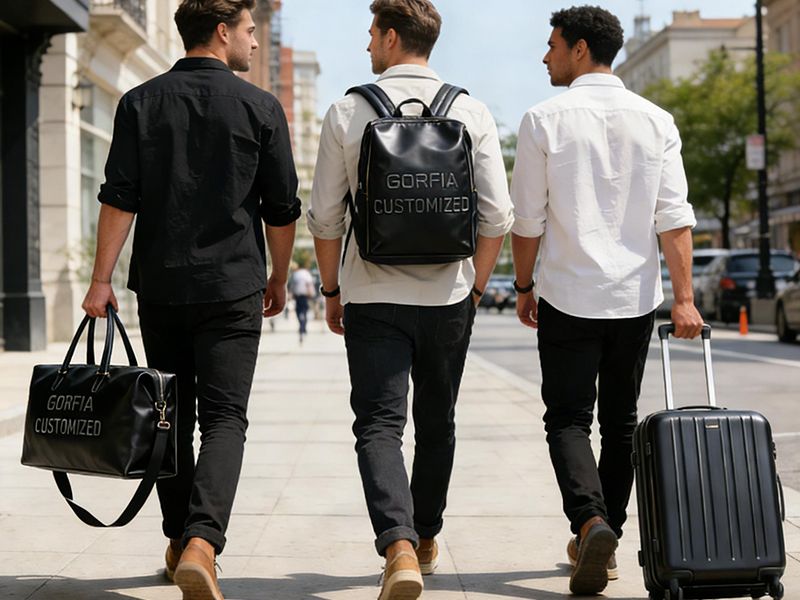
Selecting the wrong types of luggage increases sourcing risk. It also leads to inventory fragmentation and higher operational costs in B2B programs.
Travel Bag Categories and Procurement Impact
| Travel Bag Type | Key Characteristics | B2B Sourcing Impact |
| Suitcases | Hard or soft shells, multiple sizes, wheel systems | High SKU complexity, longer lead times, stricter QC |
| Carry-On Bags | Compact, airline-size dependent | Compliance risk, regional size variations |
| Backpacks | Ergonomic, multi-compartment | Narrow use cases, difficult standardization |
| Duffel Bags | Soft-sided, flexible, simple structure | Scalable, easy customization, consistent branding |
Suitcases
Wheeled luggage, such as suitcases, introduces high operational risk in B2B programs.
Different shell constructions, sizes, and wheel systems, including four wheels, instantly expand SKUs. This increases production lead times, complicates quality control, and raises customization error rates. As SKU complexity grows, inventory risk increases. This leads to overstock, fulfillment delays, and higher return volumes. At scale, these factors make suitcases hard to standardize for bulk orders.
Their complex construction, materials, and design variations add to the challenge. This makes managing production, quality, and consistency especially tricky for large shipments.
A clearer breakdown of these differences can help reduce category-level risk. To learn more, check this article on hard vs soft luggage. It also covers their implications for retail and wholesale programs.
Carry-On Bags
Carry-on bags appear attractive. But their demand does not offset the sourcing complexity in B2B programs. They introduce hidden standardization risks in B2B procurement. Variations in shape and structure prevent specification consistency across bulk orders. For buyers, this increases sampling costs, extends approval timelines, and raises defect risk.
Also, frequent airline policy changes create ongoing compliance uncertainty. Carry-on designs that work in one region may not comply in another. This forces size variations that fragment SKUs and limit repeat bulk orders.
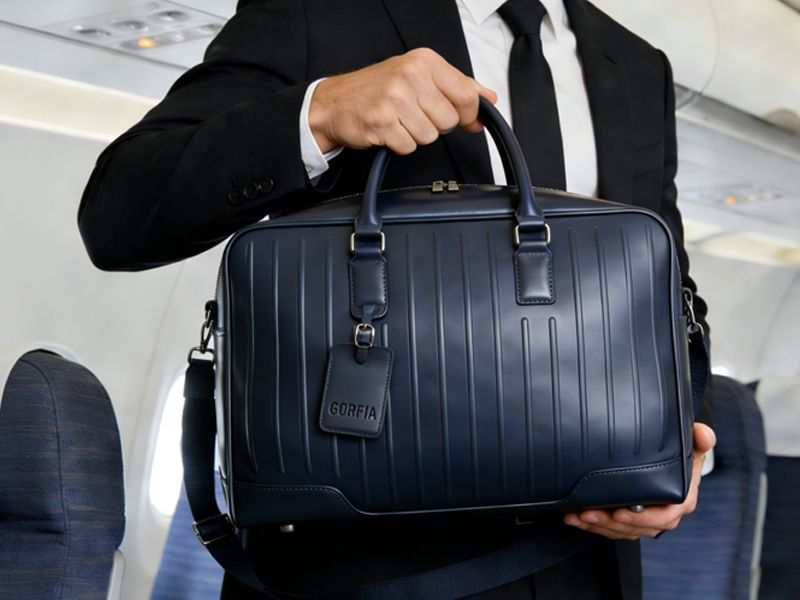
Backpacks
Choosing backpacks confines you to narrower use cases in B2B distribution.
Their designs vary a lot, which increases development costs and complicates quality control. These differences make it difficult to standardize specifications without compromising usability.
From a procurement standpoint, this variability increases development and sampling costs. Buyers often need multiple prototypes to accommodate different use cases. It also raises quality control risk. This is because ergonomic performance is harder to measure and replicate at scale. Non-wheeled and wheeled backpacks expand SKUs. This adds pressure to inventory planning and warehouse management.
Hence, backpacks are less suitable for large corporate, promotional, or wholesale programs. They are usually positioned as niche products rather than scalable core SKUs.
Duffel Bags
Duffel bags use standardized, soft-sided construction. This supports predictable production, easier quality control, and repeat sourcing across large volumes. Their standardized construction allows B2B duffel bag suppliers to maintain consistency. This applies even in large volumes.
This limits SKU proliferation and simplifies quality benchmarking across repeat orders. This makes duffel bags a core SKU for corporate travel and wholesale programs. They work well for repeat bulk sourcing.
B2B View: Types of Travel Bags and Procurement Impact
| Travel Bag Type | Key Characteristics | B2B Sourcing Considerations |
| Suitcases | Hard or soft sided luggage, multiple sizes, two wheeled bags | High SKU complexity, stricter quality control, compliance challenges |
| Carry-On Bags | Compact, variable shapes, airline-specific sizes | Standardization difficulties, design adjustments needed, regional variations |
| Backpacks | Ergonomic, multiple compartments | Narrow use cases, less adaptable for bulk distribution |
| Duffel Bags | Soft-sided, flexible, carry-on compliant | Simple structure, scalable, easy customization, consistent branding |
Why Duffel Bags Are a Strategic B2B Product
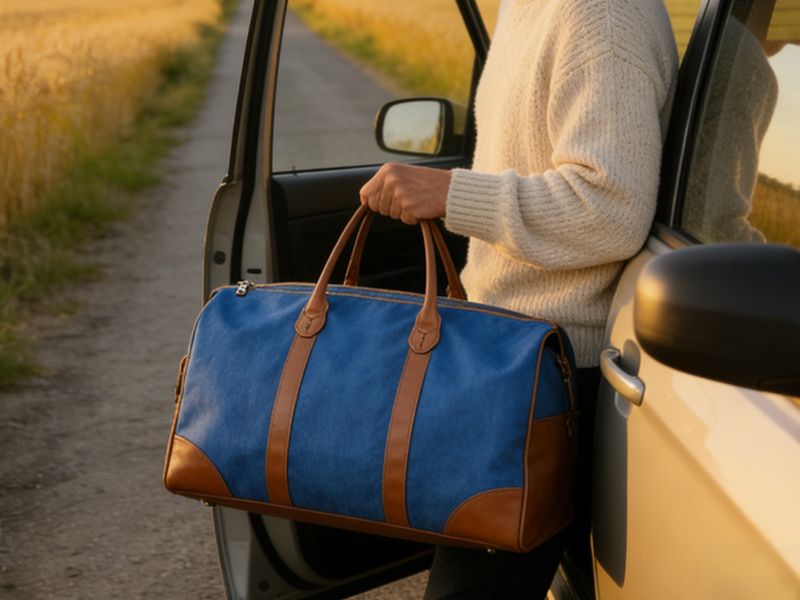
When evaluating duffel bags for B2B sourcing, practical design shapes cost control. It also affects supply chain stability and scalability. Trend-driven features may support short-term sales. But they often increase SKU complexity and sourcing risk at scale.
We focus on duffel bags because they rely on a stable core structure. This allows you to maintain consistent specifications while serving many market segments. For distributors and brands like yours, duffel bags become a low-risk, high-utility category. It makes them suitable for bulk orders and repeat sourcing.
There are four main reasons why duffel bags perform as a strategic B2B product:
Consistent Demand Across Markets
When you invest in a product category, unstable demand creates inventory risk. It also causes cash-flow pressure and forecasting errors across B2B supply chains. Unlike luggage designed for long vacations or extended trips, duffel bags are different. They support a wide range of everyday uses. You can use them for short trips, weekend getaways, gym use, family trips, and daily casual travel. This drives stable, year-round turnover across corporate, retail, and wholesale channels.
This consistency reduces inventory risk and supports year-round replenishment planning.
Bulk Procurement Efficiency
B2B sourcing has hidden costs. One of them comes from managing too many specifications across large orders.
With uniform dimensions and a straightforward structure, duffel bags reduce that burden. It simplifies demand forecasting and reduces specification errors in samples and production. It also lowers defect rates in bulk orders. Consistent designs also shorten approval cycles and reduce the need for repeated revisions.
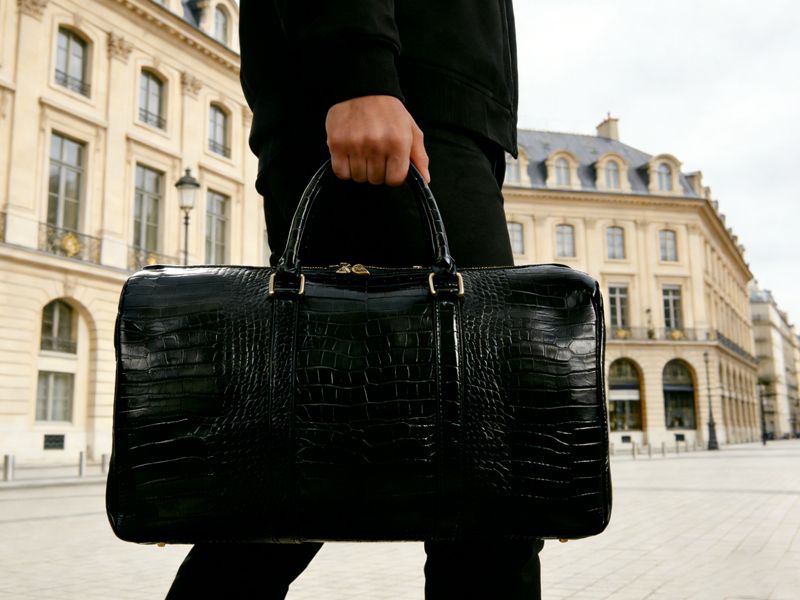
Cross-Market Compliance
Selling across regions creates compliance risk when product dimensions vary by market. For B2B buyers, this leads to fragmented inventory. It also increases return rates and shipping delays.
Extra design changes raise sourcing and development costs. Manufacturers design many carry-on duffel bags for travel that meet airline carry-on limits.
This allows B2B duffel bag suppliers to standardize on a single core size for bulk orders.
For corporate travel bags and global programs, standardized carry-on sizing supports faster distribution. It also enables scaling with fewer operational constraints.
Feature Adaptability
Product differentiation does not need structural complexity. Duffel bags offer built-in adaptability. This helps brands and buyers address many market needs through a single core design.
What you can change without redesign:
- Compartments and pocket layouts
- Linings, closures, and hardware
- Material weights and finishes
Why this matters for B2B buyers:
- Faster SKU variation without new tooling
- Reduced development and inventory risk
- Easier alignment with regional or channel-specific requirements
Lightweight material options improve efficiency by lowering shipping costs. They also support resale or redistribution without an added logistics burden. Duffel bags allow feature-level customization without sacrificing manufacturing or distribution efficiency. This makes them well-suited for global B2B sourcing and inventory planning.
Duffel Bags as Carry-On Travel Bags

Carry-on compliance affects inventory planning and cross-border distribution. Airline carry-on restrictions introduce measurable dimensional constraints that affect sourcing decisions. It also simplifies cross-market distribution and limits the need for different size variations. For brands and B2B buyers, carry-on–compatible designs support predictable inventory. They also make sourcing and logistics smoother.
Next, we’ll look at three key reasons for their popularity as carry-on options:
Carry-On Size Considerations
When evaluating carry-on compliance for sourcing, size is a key factor. It acts as a risk-control factor, not a design preference. Airlines base acceptance on dimensional limits, not aesthetics or rigid structure. Most major airlines define carry-on eligibility by maximum dimensions. This makes it important to select products that fall within those limits. This is to reduce the risk of non-compliance across different markets.
For B2B buyers, this enables standardization on one core size across regions. Fewer size variants reduce production complexity and lower inventory fragmentation. They make fulfillment more predictable across different channels.
Construction Type and Risk Reduction
Construction immediately affects risk once a product leaves the factory. Soft-shell travel bags without rigid frames adapt to space constraints. This reduces fit-related damage.
What this means for B2B buyers:
- Fewer in-transit damages and returns
- Lower replacement and after-sales costs
- More predictable distribution performance
Lightweight construction improves efficiency by lowering freight costs. It also reduces strain during repeated handling across logistics nodes.
Soft construction improves the reliability of carry-on–compliant designs. This allows you to use the bags as main travel products, not secondary ones.
Size compliance and flexible construction reduce regulatory risk and improve reliability at scale.
Customization Options in Duffel Bag Manufacturing
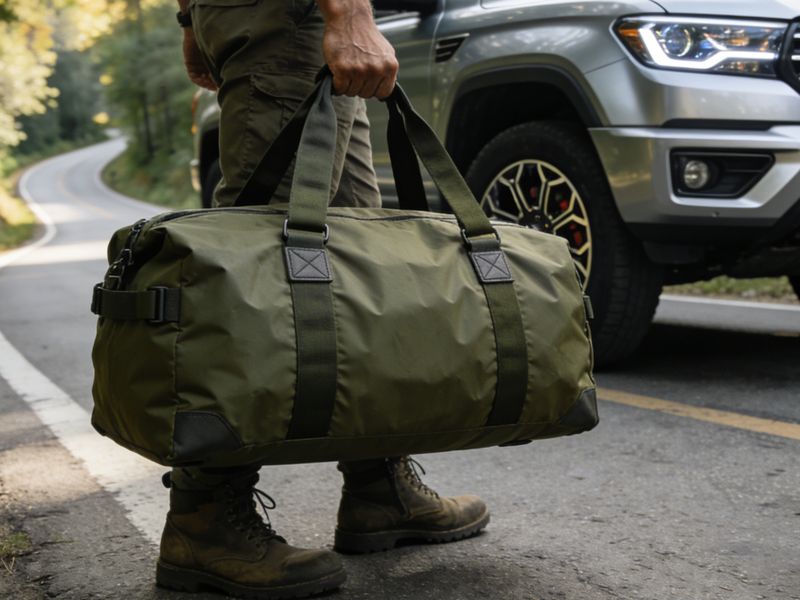
In B2B sourcing, customization must support scale without disrupting production. It is a commercial need. As a brand or distributor, you may consider the shape or size of duffel bags. But you are more focused on how you can customize them.
Material Selection
From a sourcing view, material choice affects durability, pricing, and return risk. Choosing leather, canvas, synthetic, or hybrid fabrics affects product performance. It also determines how the product meets different customer segments and use cases.
Leather is usually used for premium and corporate programs. Canvas and synthetic materials work better for lifestyle, travel, and utility markets. Choosing the right material for your segment helps maintain consistent quality. It also reduces post-sale issues and supports repeat orders.
Hardware and Components
For B2B buyers, component selection is a long-term decision aimed at controlling costs. Zippers, buckles, shoulder straps, and reinforcement points take the most stress during use. They are common failure points in bulk orders.
Reinforced stress areas and standard hardware also ensure consistent production. This helps scale orders without adding variability that can affect quality.
Internal Structure and Lining
Internal construction affects how well a product performs in the market. Defining pockets, linings, or padding in advance reduces design mismatches. This ensures the product meets end-use requirements.
For B2B programs, these configurations ensure consistency across large shipments. They also reduce post-sale issues like storage space, protection, or moisture exposure. You achieve this without changing the external design or increasing SKUs.

Branding and Functional Customization
Branding customization allows you to differentiate products without introducing structural risk. Logo placement, embroidery, labels, and controlled color variations can be incorporated into standardized production.
From a B2B perspective, this approach maintains brand identity while keeping production efficient. By limiting customization to defined, repeatable elements, you support scalable orders. This approach also avoids unnecessary complexity in sourcing and quality control.
Branding Without SKU Risk
Brand differentiation can be achieved through:
- Logo placement
- Embroidery or labeling
- Controlled color variations
B2B Services That Support Reliable Duffel Bag Sourcing
Sourcing men’s duffel bags at scale is not straightforward. It requires more than selecting a design or negotiating pricing. Before production begins, buyers must ensure that the sourcing infrastructure itself is reliable. This stage assesses operational readiness, supplier capability, and supply chain visibility.
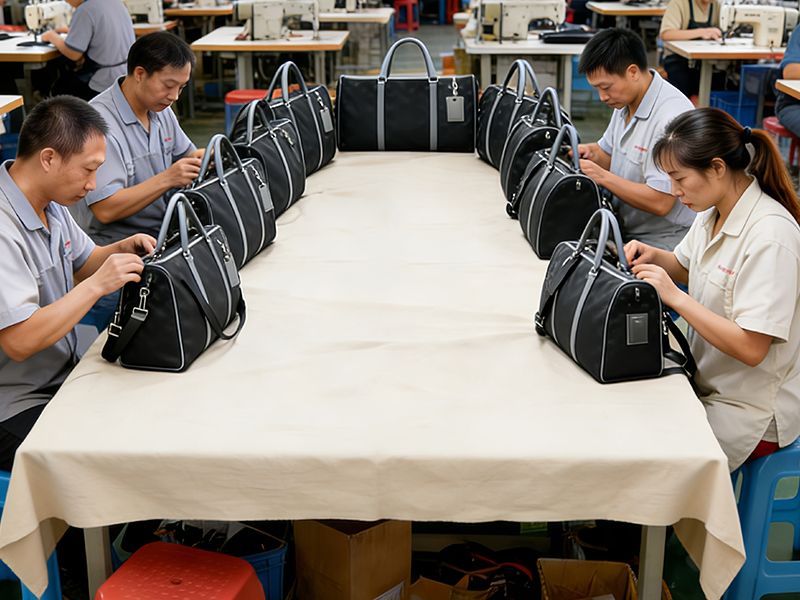
Factory Inspection
Pre-production factory inspections help confirm that facilities can handle bulk orders. This includes reviewing machinery, labor capacity, workflow organization, and general operating conditions. Verifying these factors early reduces the risk of delays and quality inconsistencies. Once brands place orders, it also helps reduce production bottlenecks.
Supplier Sourcing
Identifying the right manufacturing partner is the first step in reducing sourcing risk. Suppliers with proven production capacity, export experience, and compliance systems are more reliable. They are more likely to deliver consistent results across repeat orders. For B2B buyers, proven performance matters more than one-time samples.
Storage and Inventory Coordination
Finished goods are not always shipped immediately after production. Local storage options in China enable buyers to securely hold products. You can do this until shipping schedules are finalized. The flexibility improves inventory planning. It also helps prevent disruptions in retail or wholesale distribution.
Video & Photos for Inspection and Marketing
Visual documentation provides real-time visibility into production progress. Photos and videos support internal quality reviews. They confirm manufacturing stages and help with marketing preparation. For B2B buyers managing remote sourcing, this transparency strengthens oversight. It does so without requiring an on-site presence.
Before production begins, buyers must ensure that the sourcing infrastructure itself is reliable. This stage focuses on operational readiness, supplier capability, and supply chain visibility. Once these are in place, quality control becomes essential. After-sales support is also key to protecting your investment and ensuring consistent orders.

Quality Control & After-Sales Support
- In-Process Quality Checks
Check materials, stitching, components, and assembly during production. This prevents defects and ensures consistency across bulk orders. - Pre-Shipment Verification
Confirm quantities, finishes, branding, and workmanship match approved samples. This ensures goods meet standards before leaving the factory. - Post-Delivery Support
Establish procedures to efficiently manage hidden defects, missing parts, and packaging issues. This minimizes disruption to inventory flow. - Ongoing Quality Accountability
Maintain inspections, feedback, and corrective actions across production cycles. This ensures long-term supplier reliability and scalable sourcing.
FAQ
What are the main kinds of travel bags?
The main luggage types include suitcases, carry-on bags, travel backpacks, and duffel bags.
Among them, duffel bags stand out because their versatility allows easy positioning across multiple SKUs and use cases.
Are duffel bags suitable as carry-on bags?
Yes, Most duffel bags meet airline carry-on size limits, and their soft structure helps them fit into overhead bins more easily than suitcases. From a product strategy standpoint, carry-on compatibility also supports smoother cross-border sales.
Why are duffel bags popular for men’s travel?
Duffel bags are versatile products that suppliers can offer across multiple SKUs and sales channels. Their spacious, flexible design supports consistent demand across corporate, retail, wholesale, and mixed travel use cases.
How do duffel bags compare to suitcases?
Compared to structured suitcases, duffel bags are lighter and easier to carry. The suitcases are more protective, but the duffel bags are flexible packing solutions.
What should buyers consider when sourcing duffel bags?
Buyers should check the quality of materials, customization capabilities, supplier reliability, and quality control processes. Using B2B services, such as inspections, helps reduce sourcing risks. Structured order follow-ups ensure consistency.

Conclusion
For B2B buyers, sourcing duffel bags for men is a supply chain decision, not a design exercise. Focusing on supplier reliability, material consistency, and disciplined quality control minimizes risk. It also enables scalable, repeatable success across retail, corporate, and wholesale channels.
When assessing duffel bag sourcing, buyers should focus on three procurement checkpoints. First, how do you define specifications? Second, how do you verify quality? Third, how suppliers support growth. It is important to rely on informed material standards.
You may also explore guides on durable material selection and leather quality standards to support more informed sourcing decisions.
For a practical reference, see this overview of a B2B leather goods manufacturer and its production standards.
Your Duffel Bag Sourcing Strategy
We have over 20 years of experience in leather goods manufacturing, supporting duffel bag programs that require scale, consistent quality, and customization—without adding operational risk.
Whether you’re planning small-batch development or large-volume production, we work with you early to align specifications, timelines, and quality standards.
Explore our product catalog or request a quote to see whether our manufacturing setup fits your sourcing needs.