
New parents quickly realize a diaper bag is essential—but choosing the right style is where things get complicated. Totes slip off shoulders. Messenger bags dig into one side after an hour. A bag that looks great at home quickly becomes a hassle when you’re juggling a stroller, car seat, and a crying baby.
Backpack diaper bags solve a specific problem: they keep your hands free without sacrificing capacity. According to the American Academy of Pediatrics, hands-free carrying improves mobility and makes it easier for parents to manage daily tasks, which is exactly why backpack-style diaper bags have become the preferred choice for modern parents.
But not all diaper backpacks are built the same, and choosing the wrong one can quickly turn convenience into frustration. Let’s break down what actually matters—before you spend money on the wrong one.
What Is a Backpack Diaper Bag & Why Parents Prefer It
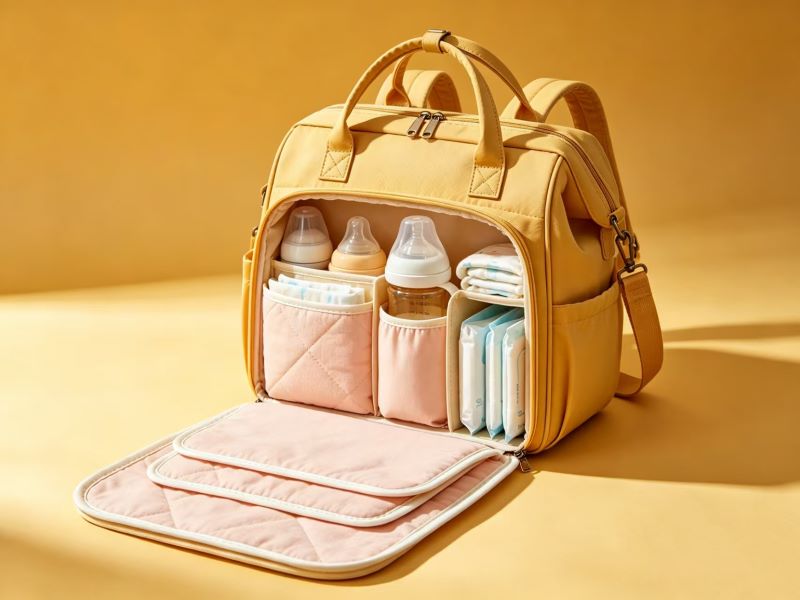
A backpack diaper bag is a baby carry bag built around a backpack frame. It has the shoulder straps and back panel of a regular backpack but is organized internally for diapering, feeding, and baby care — with dedicated pockets for bottles, wipes, diapers, a changing pad, and parent essentials.
The difference from a traditional diaper bag is mostly structural. Traditional diaper bags are usually totes or shoulder bags; they carry a lot but create uneven weight distribution. A backpack spreads the load across both shoulders, which matters when you’re carrying it for hours at a time.
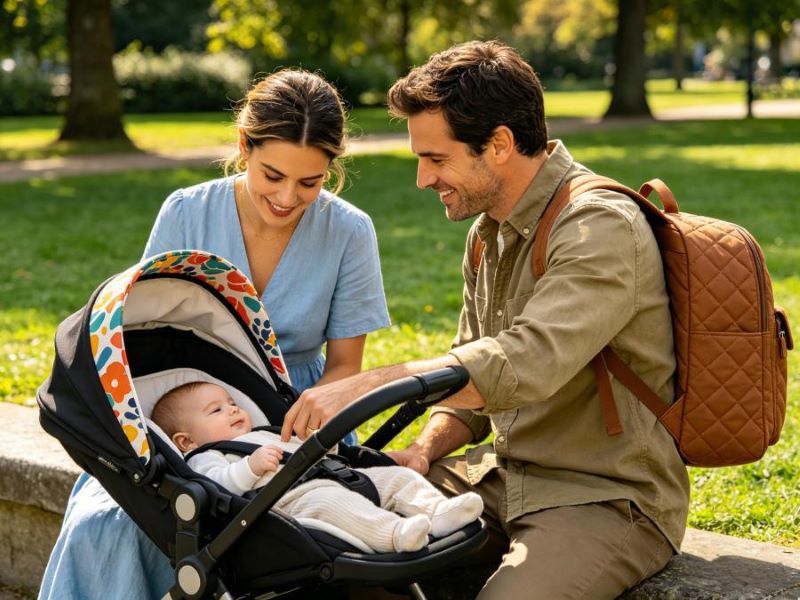
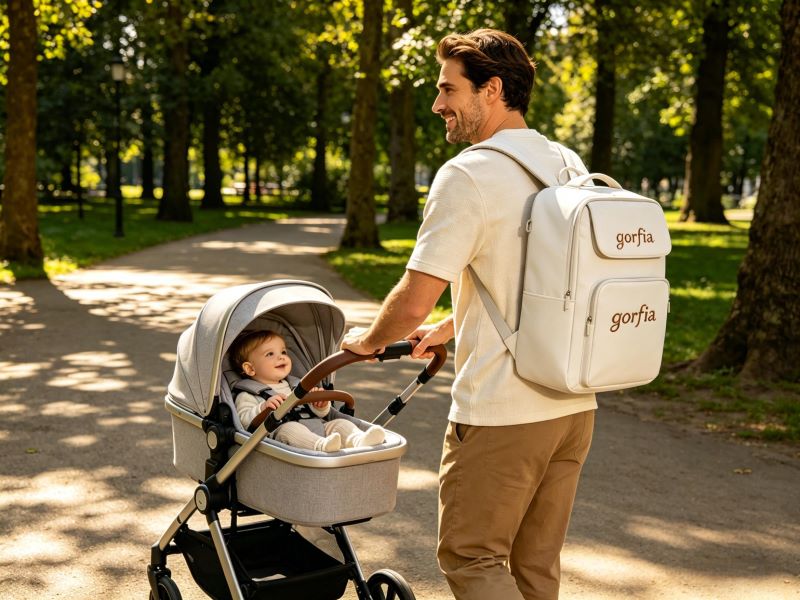
Backpack diaper bags work best for parents who are physically active, travel frequently with young children, or simply need both hands free during a typical day. Dads tend to adopt them faster than moms, partly because a well-designed backpack diaper bag carries without reading as a “mom bag” — though that distinction matters less than it used to.
For families with multiple young children or those who take long outings, the capacity and carry comfort of a backpack typically outperform those of other diaper bag styles.
Backpack vs. Other Diaper Bag Styles
Backpack vs. Tote Diaper Bags
Tote diaper bags are wide-mouthed and easy to dig through — you can see everything at once. That’s their main advantage. The disadvantage is that they hang off one shoulder, which quickly becomes tiring, and they tend to fall off stroller handles. If your outings are short and you’re mostly going from car to destination, a tote works fine. For anything longer, the backpack wins on comfort.
Backpack vs. Messenger Diaper Bags
Messenger diaper bags cross the body, which is more stable than a shoulder tote. They’re also easier to swing around to the front when you need quick access without having to take the bag off. The limitation is capacity — most messenger-style bags are narrower and shallower than backpacks. They also cause asymmetric fatigue over a full day of carrying.
How to Choose a Backpack Diaper Bag: Features That Actually Matter for Daily Use
Organization & Pocket Layout (Easy Access Matters)
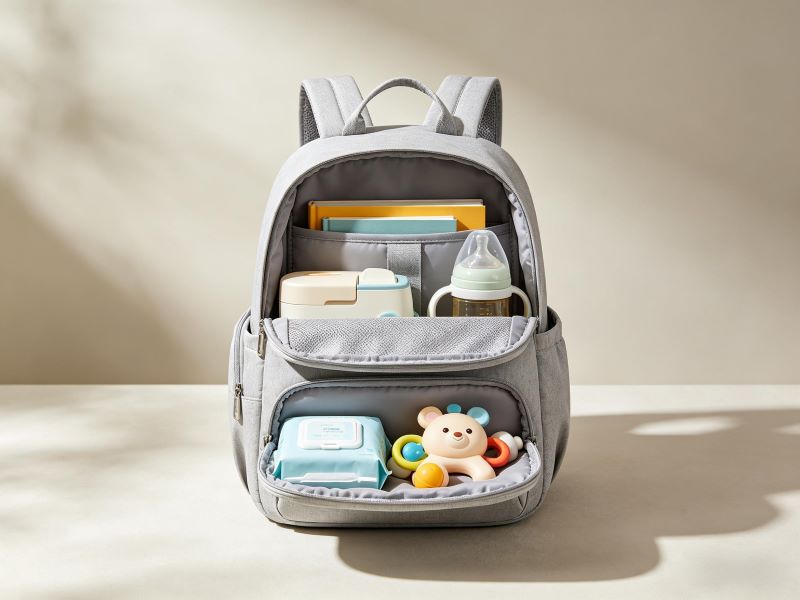
A single-compartment bag quickly becomes hard to manage. Look for a dedicated diaper and wipes section, a separate main compartment for clothing and larger items, small zippered pockets for items you reach for often, and at least one exterior pocket for your phone, keys, or a snack.
Insulated Bottle Pockets (Keep Bottles Ready)
Not all bottle pockets are insulated. If you’re formula feeding or pumping, insulated bottle pockets are worth prioritizing — they keep bottles at a temperature for 2 to 4 hours, which matters on longer outings. Check whether the pockets are deep enough for a full-size bottle and whether they can be accessed one-handed.
Changing Pad (Comfort & Cleanliness)
Most backpack diaper bags include a fold-out changing pad. Check the thickness — thin pads that feel like cardboard are technically functional, but uncomfortable for the baby and awkward to use on hard surfaces. A padded, wipe-clean changing pad is the better option. Some brands sell the changing pad separately; factor that into the total cost if it’s not included.
Size & Capacity (Choose the Right Fit)
Choose size based on outing length and your child’s needs. Newborns need more supplies than older babies, so parents in the first few months generally need a larger bag. A volume of around 20 to 30 liters covers most use cases. Going bigger than that makes the bag unwieldy when it’s not completely full; going smaller means you’ll leave essentials behind.
Comfort & Straps (All-Day Carry Support)
Padded shoulder straps are the minimum. A padded back panel and a chest or sternum strap make a real difference when the bag is fully loaded. Wider straps distribute weight better than narrow ones. If you plan to carry the bag for hours, try it on with the contents before buying — a bag that feels fine empty can be uncomfortable at full capacity.
Materials & Durability (Built for Daily Use)
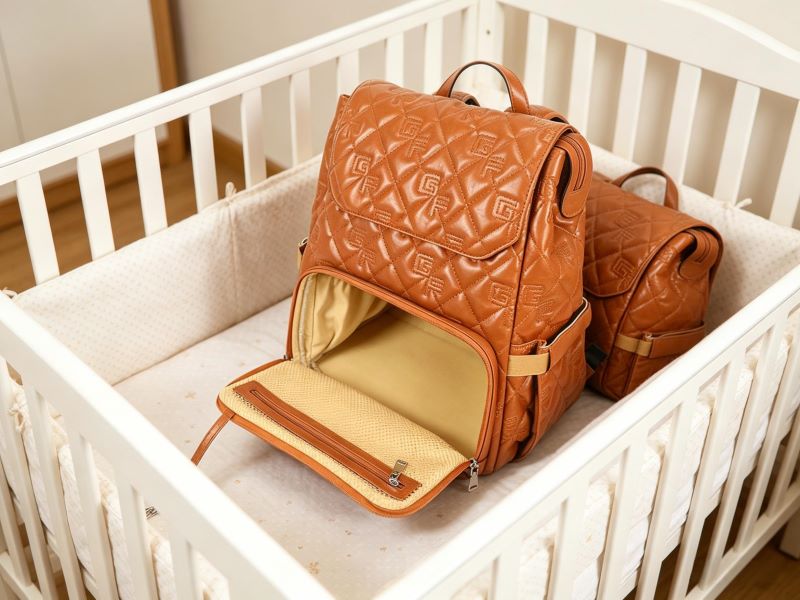
Most backpack diaper bags are made of nylon or polyester. Both are lightweight and easy to wipe clean. For parents who need something more weather-resistant, look for a water-resistant coating or a wipe-clean interior lining. Leather-trimmed options exist and look more polished, but they’re heavier and require more care.
Stroller Straps & Extra Features (Small Details Matter)
Stroller attachment straps clip the bag directly onto the stroller handles, which is useful when you don’t want to carry it. Not all backpack diaper bags include them — check before buying. Other useful features include a key clip inside a pocket, a luggage sleeve for sliding the bag over a rolling suitcase handle when traveling, and a wet/dry pocket for soiled clothes or wet swim items.
How to Pack a Backpack Diaper Bag: Checklist & System for Stress-Free Outings
Packing a diaper bag seems simple—until you’re searching for a diaper one-handed. A little organization up front saves a lot of frustration.
Place heavier items closest to your back — this keeps the bag balanced and reduces strain. That means wipe packets, a full water bottle, or a change of clothes for yourself should go in the back section. Lighter items — extra bibs, a hat, an extra outfit for the baby — go in front compartments.
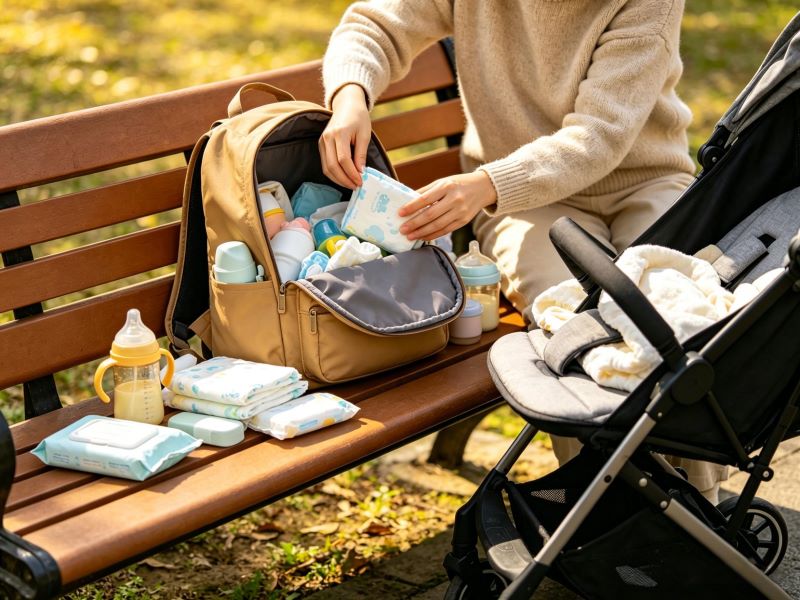
Keep diapers and wipes in the same dedicated section, not scattered through the bag. Quick-access items like your phone, a pacifier, and the changing pad should be in exterior or top pockets — places you can reach in under five seconds without putting the bag down. Bottles go in the side pockets, ideally with the cap facing up.
A simple newborn essentials checklist for a half-day outing: 4 to 6 diapers, a full pack of wipes, 2 outfit changes for the baby, 2 to 3 prepared bottles or formula, a burp cloth, a changing pad, a small first aid kit, and one small personal item for yourself. For longer outings, scale up the diapers and add a light blanket.
Best Backpack Diaper Bags by Use Case: Travel, Daily, and Newborn Picks
Focus on features that match your routine rather than specific products.
For new parents handling the full newborn load: prioritize capacity (25 liters or more), a thick changing pad, and multiple internal compartments. You will be carrying a lot in the early months.
For minimalists who want a lighter carry once the baby is past the newborn stage, a slimmer 15 to 20 liter bag with two or three dedicated pockets is enough. Look for one that doubles as an everyday bag so you’re not carrying two bags when baby-free.
For travel and long outings: prioritize a luggage sleeve, a waterproof or water-resistant exterior, a chest strap for stability, and insulated bottle pockets. A bag that doubles as a personal item on a flight lets you avoid checking an extra bag.
For working parents who need to carry work items alongside baby gear, look for a bag with a dedicated laptop sleeve and enough structure to carry a notebook flat. Some diaper backpacks are designed specifically for this dual-use case.
Can You Use a Regular Backpack as a Diaper Bag? Here’s What Parents Actually Find Out
Yes, and plenty of parents do. A regular backpack in the 20-30 liter range can carry everything a baby needs. The practical limitations come down to organization and features. A regular backpack typically has two or three compartments with no dedicated structure for diapers, wipes, or bottles. That means more time searching and more items getting mixed up.
What’s usually missing: insulated bottle pockets, a built-in changing pad, a wet/dry separation compartment, and stroller attachment straps. You can work around most of these with packing cubes, a separate wet bag, and a standalone changing pad — but at that point, you’re adding bulk and cost to approximate what a purpose-built diaper backpack already includes.
Many parents find it works for occasional use, but switch to a dedicated diaper backpack once they realize how much the organization features matter day to day.
Comparison and Buying Checklist
A well-specified diaper backpack covers all of the following. Use this as your baseline before buying — or, if you’re sourcing at volume, as a minimum feature spec for your product brief.
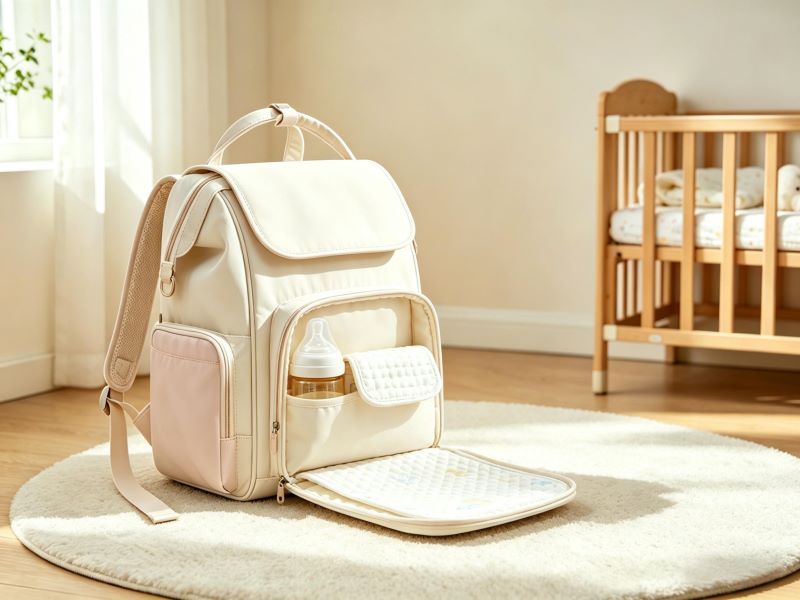
A good backpack diaper bag has dedicated pockets for diapers, wipes, and bottles — not a single open compartment that mixes everything together. Bottle pockets should be insulated and deep enough to hold a full-size bottle upright. The changing pad should be included rather than sold separately, and thick enough to use comfortably on hard surfaces.
Shoulder straps need to be padded, and a sternum or chest strap should be present for loaded carries. Without it, a fully packed bag shifts and pulls on longer outings. Capacity should match the buyer’s typical outing length — 20 to 25 liters covers most use cases without the bag sitting half-empty.
The material should wipe clean easily, since a diaper bag will encounter spills, leaks, and worse on a regular basis. Stroller attachment straps are worth including as a standard feature, not an afterthought.
For parents who travel, the bag should fit under an airline seat or in an overhead bin. And the listed price should include the changing pad — bags that sell it separately tend to obscure the real cost of ownership.
On price: diaper backpacks range from under $40 to over $200. A mid-range bag ($60 to $120) covers most functional needs. Spending more makes sense if the bag needs to work in professional settings or last across multiple children.
When choosing a diaper bag, it’s easy to get overwhelmed by endless features. To help you prioritize, we’ve broken down the must-have, nice-to-have, and budget-friendly skip features in a simple table below — so you can pick a bag that fits your daily needs without overspending.
Diaper Bag Features: Must-Have vs. Nice to Have vs. Skip
| Feature | Priority | Why It Matters |
| Dedicated diaper/wipes pocket | 🔥 Must Have | Fast one-handed access in urgent moments — shared compartments slow you down |
| Insulated bottle pockets | 🔥 Must Have | Keeps milk at temperature for longer outings; non-insulated works only for short trips |
| Padded shoulder straps | 🔥 Must Have | Prevents shoulder pain when carrying 5–8 lbs for extended periods |
| Included changing pad | 🔥 Must Have | Saves $15–30 and avoids carrying an extra loose item |
| Sternum/chest strap | 👍 Nice to Have | Improves stability for walking, commuting, or active use |
| Stroller attachment straps | 👍 Nice to Have | Lets you hang the bag instead of carrying it all the time |
| Wet/dry separation pocket | 👍 Nice to Have | Keeps dirty or wet items separate — useful for travel or long days out |
| Laptop sleeve | 👍 Nice to Have | Good for working parents who carry both baby gear and a laptop |
| Luggage sleeve | 💡 Skip If Budget Is Tight | Only useful if you travel frequently with a suitcase |
| Leather trim / premium finish | 💡 Skip If Budget Is Tight | Aesthetic upgrade, but doesn’t improve function |
Focus on the ‘Must-Have’ features first — they’ll save you time and frustration on every outing. The “Nice to Have” options are great for specific lifestyles (like frequent travel or long walks), while the “Skip” features can help you stay on budget.
FAQs
Does anyone still carry a diaper bag as an adult?
Yes, many parents keep using a diaper backpack beyond the baby stage—it’s a roomy, well-organized bag. Its structure works for gym, work, or travel, making it a long-lasting everyday essential.
What do you call a baby backpack?
The most common term is a diaper bag backpack or backpack diaper bag. Some brands use “baby bag” or “nappy bag backpack.” They all refer to the same product category: a backpack designed with internal organization for baby care essentials.
Are expensive diaper bags worth the money?
Over two years of daily use, a higher-quality bag often costs less per use than a cheap one. Durable materials, reliable hardware, and lasting organization justify the price.
What’s typically in a diaper bag?
Core diaper bag essentials include diapers, wipes, a changing pad, spare outfits, bottles or formula, a pacifier, burp cloth, snacks, a small first aid kit, and a few parent items. The list evolves as the baby grows.
Can a diaper backpack work for travel?
Yes, many parents use a diaper backpack as a flight personal item. It must fit under the seat—most 20–25L bags qualify, but always check airline size limits.
What should always be in your bag?
Beyond baby essentials, pack a spare pacifier, a snack, and a phone charger. Don’t forget your own needs—otherwise you’ll have a full diaper bag and a dead phone.
Final Thoughts: Choosing a Bag That Fits Your Routine
Choosing the right diaper bag comes down to how you actually use it day to day—not just how it looks on paper. Features like pocket layout, balanced storage, and long-term durability tend to matter far more than size alone, especially if you’re using the same bag across different situations.
If you’re also thinking beyond daily use—like which styles actually perform well in retail or wholesale markets—you might want to take a look at this guide.
Work With Us
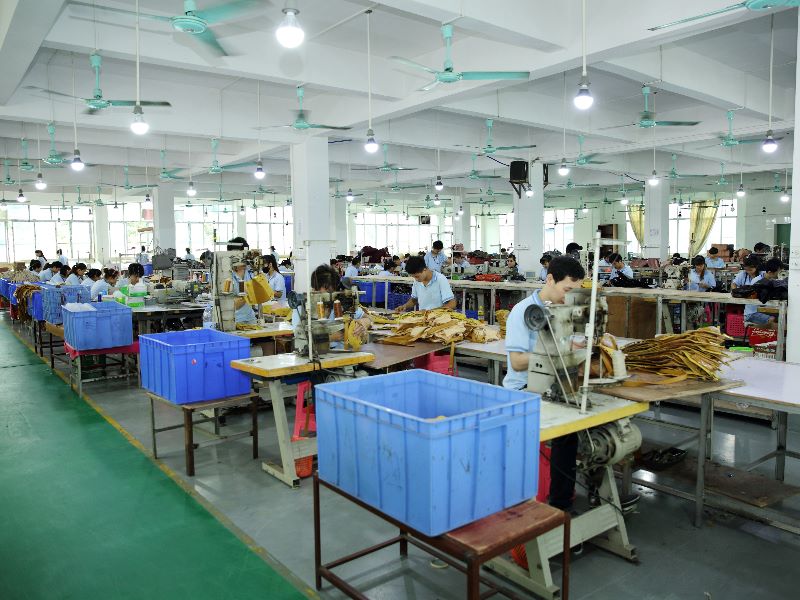
Gorfia supports brands developing baby bags and functional carry products — from material selection through to OEM and private label production. We help you build a product that holds up to real parent use, not just looks good in a sample photo. If you’re ready to discuss your development requirements or request a quote, get in touch with our team.