
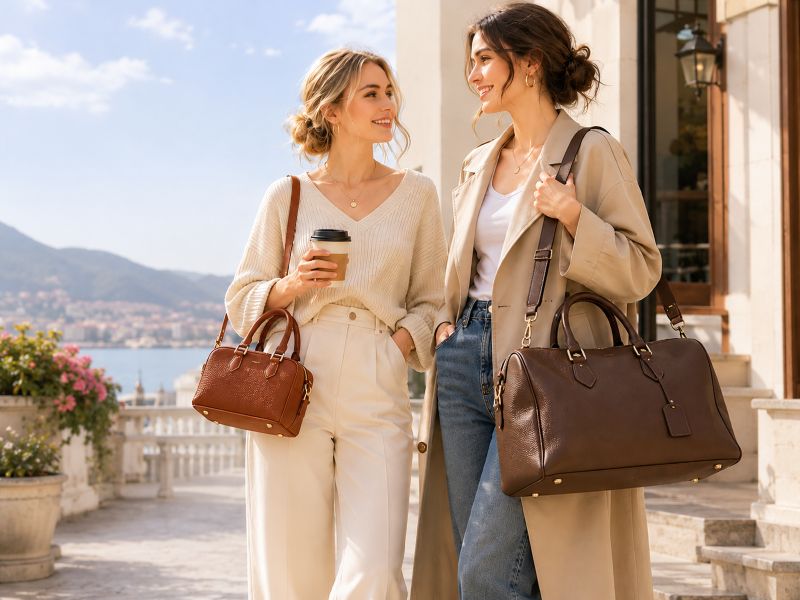
The Boston bag is having another moment, although most people are not calling it that. You see the silhouette everywhere: on compact zip-top handbags, elongated underarm styles, and polished everyday bags paired with relaxed denim or tailored outfits.
Yet many shoppers still confuse Boston bags with duffle bags. In fashion and handbag development, Boston bag sizes are also closely considered in production planning and structural design.
While the two shapes may look similar at first glance, Boston bags are defined by their structured silhouette, balanced proportions, and distinctive rounded top, which makes them a recurring reference point in both design development and handbag production, especially within structured leather collections.
This guide will break down what defines a Boston bag, how different sizes affect styling and functionality, and why the silhouette continues to appear across both luxury and contemporary fashion.
How Boston Bag Size Changes the Look
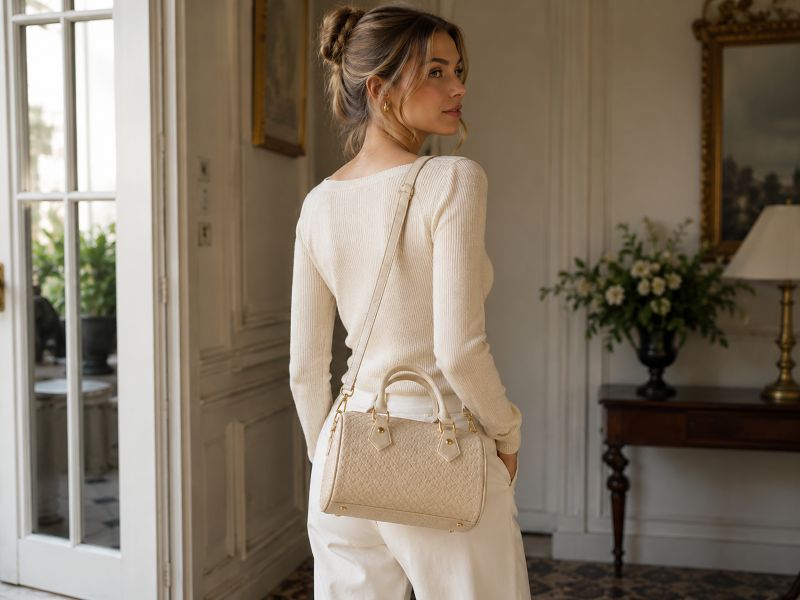
21–23 cm Boston Bags for Everyday Styling and Retail Use
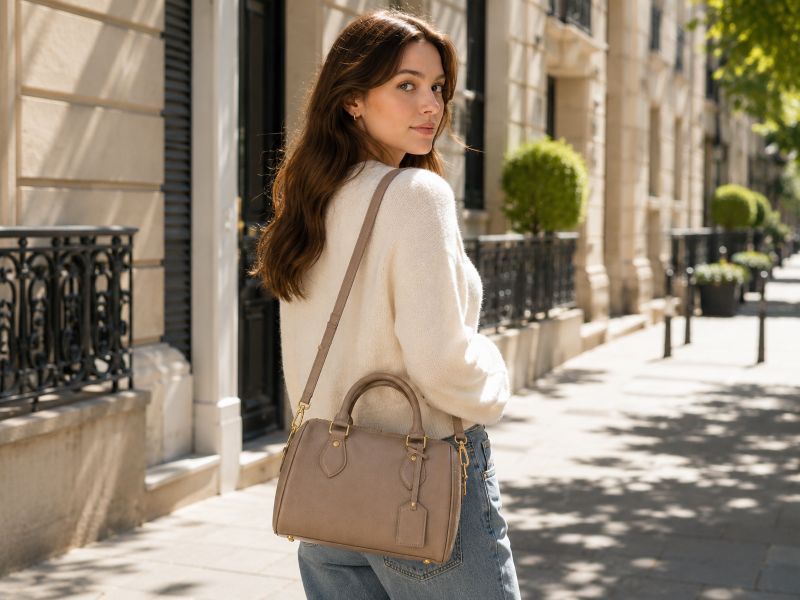
This is probably the most wearable category.
You get enough space for keys, sunglasses, small accessories, and daily items without the silhouette becoming oversized. Many brands add a crossbody strap here because it gives the bag more flexibility. The size works with dresses, knitwear, relaxed tailoring, and casual summer outfits.
For many women, this range ends up being the easiest to use day after day.
Visually, this size often feels the most balanced. It is large enough to create the signature Boston silhouette without overwhelming the outfit. For many people, this proportion works naturally with everyday wardrobes because the bag remains noticeable while still feeling lightweight and easy to style.
Many contemporary brands adopt this size as a core SKU in both retail collections and small-scale production planning.
23–25 cm Boston Bags for Private Label Use
The difference sounds small on paper. It is not.
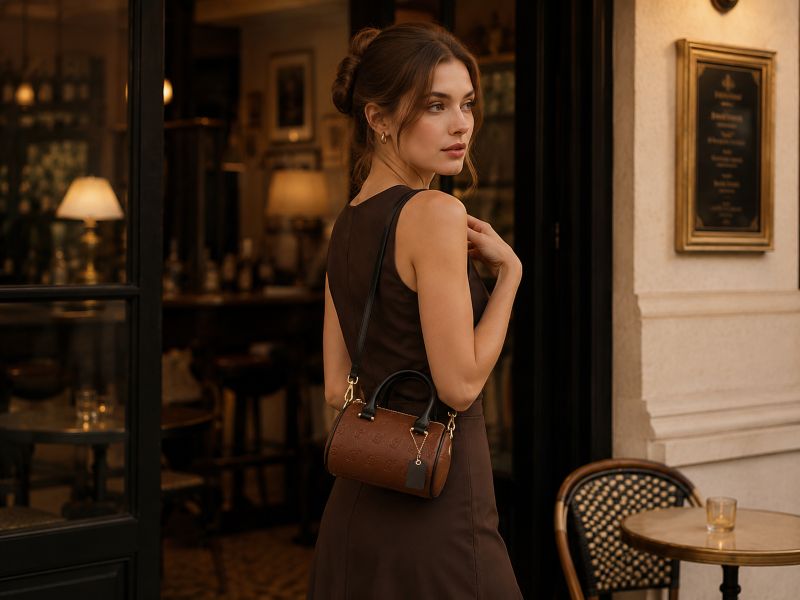
A few extra centimeters completely change the proportions. The longer silhouette feels stronger under the arm and sits naturally as a compact shoulder bag. That shape works particularly well in men’s collections because it looks clean without feeling overly delicate.
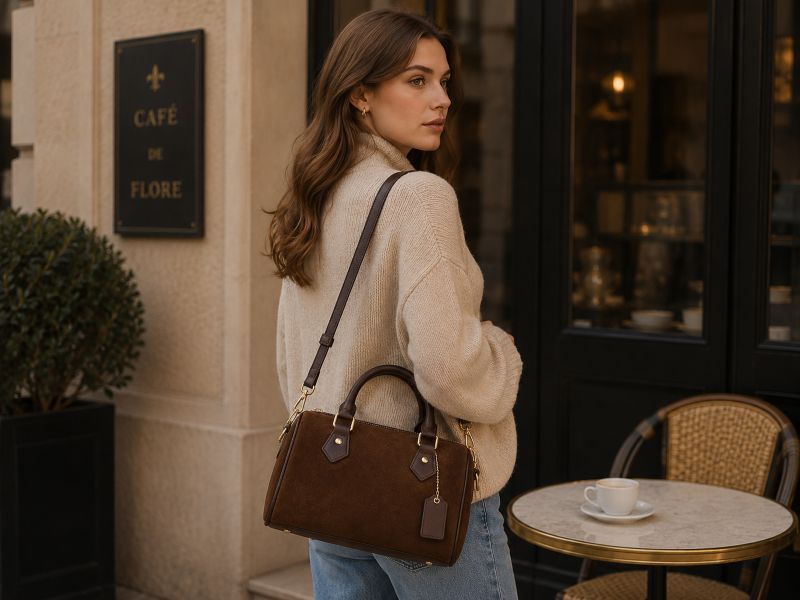
Brown tones, textured leather, and soft suedetend to perform especially well here. In many private label collections, this size is often developed as a key variation for shoulder and underarm positioning.
Although the size increase appears small, the visual effect is much stronger. The additional length creates a more elongated silhouette, which is one reason this size frequently appears in contemporary fashion collections. The proportions feel more directional and fashion-focused compared to smaller everyday versions.
40 cm Boston Bags for Travel Collections
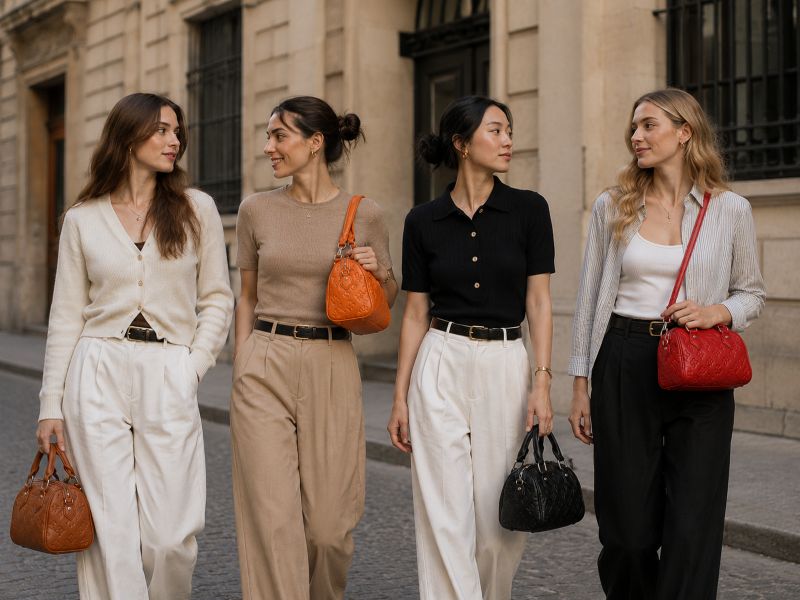
At 40 cm, the silhouette starts leaning toward travel-inspired fashion. The bag becomes more roomy, but it still avoids looking overly bulky.
These styles work especially well with oversized outerwear, relaxed tailoring, and airport-ready outfits.
At this size, the bag begins to shift from accessory to statement piece. The larger proportions create stronger visual presence and pair particularly well with oversized coats, relaxed tailoring, and layered travel outfits. The silhouette becomes part of the overall styling rather than simply a practical carry item.
Because of this shift in visual impact, this size is also frequently considered in seasonal planning for travel-inspired handbag collections, especially when brands are developing more expressive, oversized silhouettes.
This size is frequently considered in seasonal production planning for travel-inspired handbag collections.
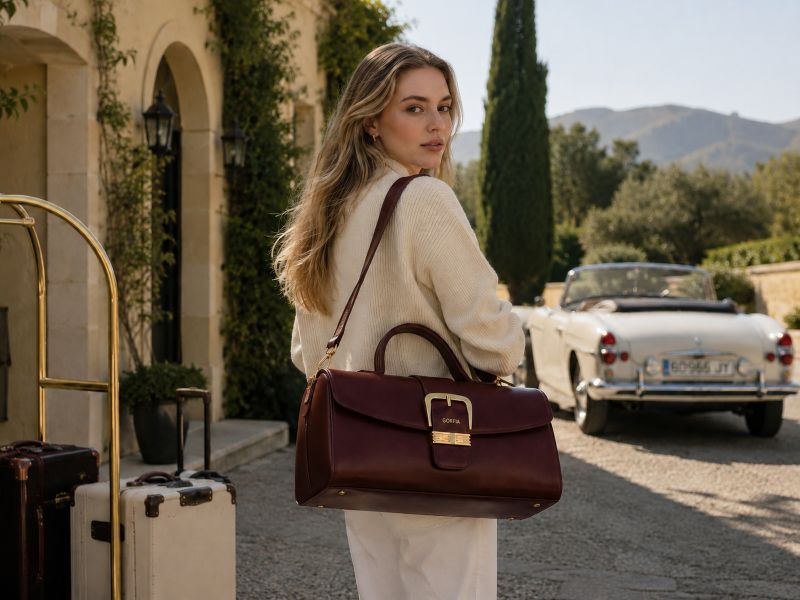
55 cm Boston Bags for Structured Travel Use
Larger 55 cm styles move even further into travel aesthetics. Unlike traditional travel bags, they maintain stronger structure and cleaner proportions. The visual impact comes from the silhouette rather than logos or decorative accessories.
The visual focus moves almost entirely to the silhouette itself. Because of the larger scale, shape retention becomes much more important. When executed well, oversized Boston bags can feel sophisticated and intentional rather than bulky, which explains their continued popularity in luxury travel styling.
At this scale, production considerations such as reinforcement and material selection become increasingly important.
Case Example: Size Adjustment for Daily Use
Many of the challenges in Boston bag development are not related to size, but to construction. Rounded silhouettes place additional stress on curved zipper lines, making wrinkle control and shape retention more difficult than many brands initially expect.
In real development practice, many of the challenges in Boston bag production are related to structural balance rather than visual design. These include adjusting seam allowances along the curve, balancing reinforcement materials to prevent excessive stiffness, and carefully controlling stitch density to reduce tension buildup during assembly. In some designs, our pattern makers also slightly modify the zipper curvature to help the opening remain smooth while maintaining the signature Boston bag silhouette.
These construction details may not be visible to consumers, but they play a major role in achieving cleaner lines, smoother zipper operation, and better long-term shape retention.
Boston Bag Sizes at a Glance
| Size | Visual Effect | Best For |
| 18 cm | Compact & Delicate | Evening Wear |
| 21–23 cm | Balanced & Versatile | Everyday Use |
| 23–25 cm | Elongated & Fashion-Forward | Underarm Styling |
| 40 cm | Relaxed & Statement-Making | Weekend Travel |
| 55 cm | Bold & Travel-Oriented | Large Carry Needs |
Materials Change the Personality of a Boston Bag
Leather Creates Stronger Structure
Leather naturally supports shape retention.
A structured leather Boston bag feels polished and works especially well for workwear, smart casual outfits, and daily wear. Material selection often affects both appearance and durability, which is why many brands now invest more heavily in detailed bag material guides.
Suede Softens the Look
Suede changes the mood completely. The same silhouette can feel softer, more relaxed, and slightly slouchy when produced in suede rather than leather.
That texture works naturally with knitwear, casual outfits, and denim styling. Fashion trend reports have also highlighted growing interest in suede handbags because they add texture while keeping a refined appearance.
Hardware Changes Visual Balance
Many people underestimate hardware weight. Heavy zippers, oversized pulls, and decorative handles can completely change how the bag hangs from the shoulder.
The smaller the bag becomes, the more noticeable that effect feels.
Choosing the Right Boston Shoulder Bag for Your Style
- For Everyday Wear: A 21 cm or 23 cm size usually offers enough space for keys, sunglasses, small accessories, and daily essentials without feeling bulky.
- For Work and Smart Casual Outfits: Structured leather styles pair especially well with tailored clothing and polished everyday wardrobes.
- For Travel-Inspired Styling: A 40 cm or 55 cm version creates stronger visual presence while remaining practical.
- For Evening Looks: Smaller metallic versions often feel more appropriate than larger carry-focused designs.
What Actually Makes a Boston Bag a Boston Bag?
Many handbags borrow elements of the Boston bag, which can make the category confusing. If you are trying to identify a true Boston bag, it helps to look beyond branding and focus on three things: the overall shape, the construction details, and the way the bag behaves when carried.
The Shape Is Usually the First Clue
Most people recognize a Boston bag before they know its name.
The defining feature is the rounded top combined with a horizontal body. Unlike a typical tote, which often appears taller and more open, a Boston bag sits wider than it is high.
Some versions look sharp and structured. Others feel softer and slightly slouchy. Despite these variations, the curved profile and balanced proportions remain easy to recognize.
If you are comparing different styles, the overall shape is usually the quickest way to identify a Boston bag.
The Construction Helps Maintain Its Character
A classic Boston bag typically features a curved zipper opening and a structured body that helps maintain its signature silhouette. Unlike more open carry styles, the construction is designed to preserve the bag’s proportions even when it is filled with daily essentials.
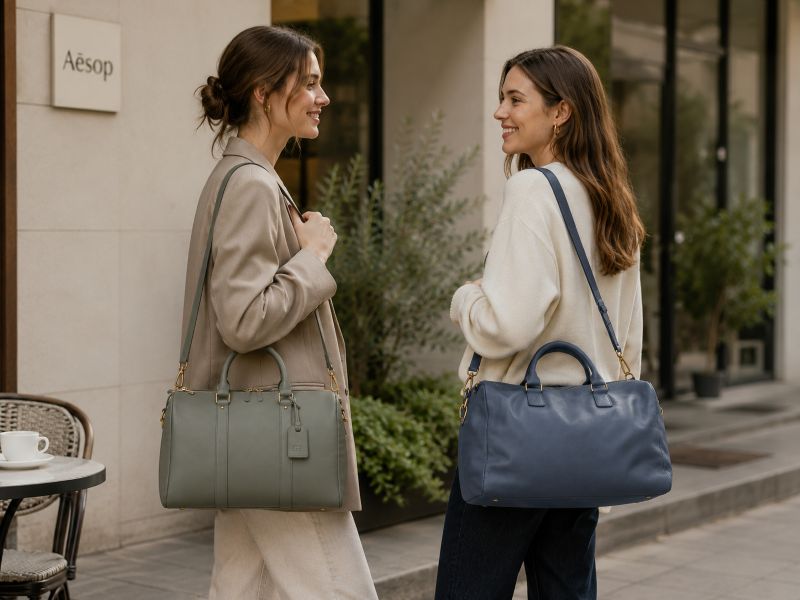
The Carry Experience Feels More Polished
The difference becomes most noticeable once the bag is carried regularly. Boston bags tend to feel more adaptable across different settings, working equally well with casual outfits, office wear, and weekend styling. This versatility is one reason the silhouette has remained relevant across changing fashion trends.
Boston Bag vs Duffle Bag: Similar Shape, Different Personality
One Prioritizes Shape, the Other Prioritizes Capacity
At first glance, the two silhouettes can look surprisingly similar. Both are wider than they are tall, and both are commonly carried by hand.
The difference appears once they are used.
A duffle bag is designed around storage. The body expands to accommodate whatever is packed inside. A Boston bag takes the opposite approach. The structure comes first, and the contents fit within the intended shape.
As a result, Boston bags are often favored for commuting, city outings, and polished everyday styling, while larger duffle bags remain more closely associated with travel and sports use.
That design choice creates a very different visual impression, even when the two bags hold a similar number of items.
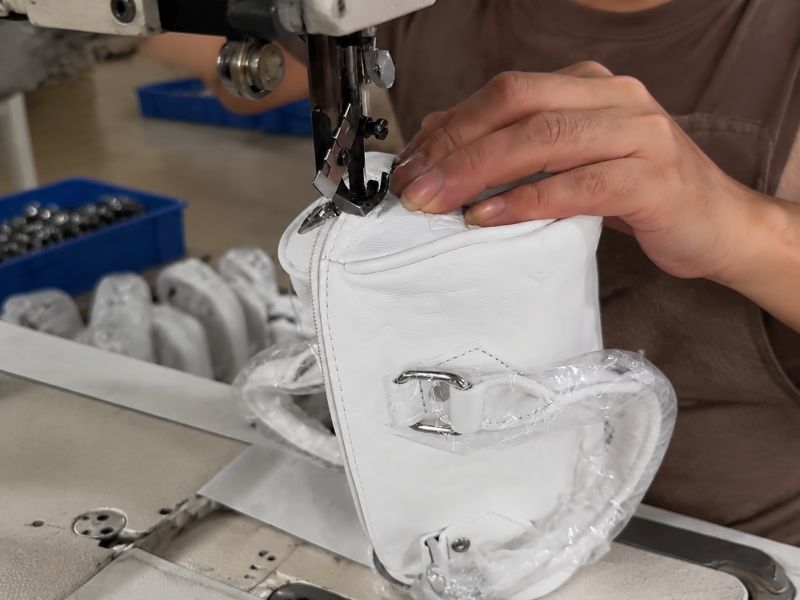
Product Development Insights Most Articles Never Discuss
Drawing on more than 20 years of handbag manufacturing and product development experience, we have found that many of the challenges associated with Boston bags are not immediately visible during the design stage.
Structure balance is usually the hardest part. From a development perspective, Boston bags are more complicated than they appear. The rounded body requires careful balance between reinforcement and flexibility. Too much structure makes the bag stiff. Too little causes collapse.
Finding that balance usually takes testing.
Curved zipper construction creates challenges. The zipper line follows a curve instead of a straight path. Poor construction often creates uneven tension around the opening. Some bags become difficult to access. Others lose their shape after extended use.
Many brands now focus more heavily on construction quality during development through detailed bag manufacturing insights.
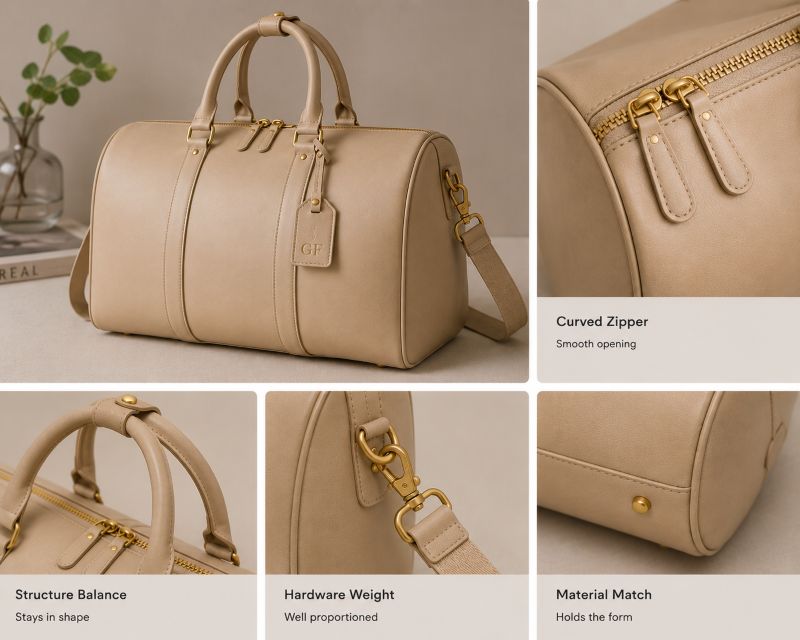
Hardware weight must match the size. One common mistake appears repeatedly in new collections. Oversized hardware on compact bags often throws off visual balance. An 18 cm Boston bag reacts very differently to hardware weight than a 40 cm version.
Materials should match the intended shape. Not every material performs equally across every size. A soft suede body may work beautifully at 23 cm but struggle to maintain proportions at 55 cm without reinforcement.
Likewise, heavily structured leather can sometimes feel too rigid in smaller silhouettes.
Materials & Shape
| Size | Recommended Structure Level | Hardware Weight | Material Considerations | Common Development Mistake |
| 18 cm | High | Light | Leather, metallic finishes | Oversized hardware distorts shape |
| 21-23 cm | Medium | Medium | Leather, suede | Strap attachment imbalance |
| 23-25 cm | Medium-high | Medium | Structured leather | Over-reinforced body feels stiff |
| 40 cm | Medium | Medium-heavy | Leather, canvas blends | Insufficient base support |
| 55 cm | High | Heavy-duty | Reinforced leather constructions | Shape collapse under load |
FAQs
Are Boston bags the same as duffle bags in production terms?
No. Boston bags focus more on silhouette, structure, and appearance, while duffle bags prioritize storage and utility.
What size Boston bag works best for everyday use?
Most shoppers find 21 cm and 23 cm styles offer the strongest balance between practicality and styling.
How do I choose the right Boston bag size?
Choose a size based on how you plan to use the bag. Smaller styles work well for evening wear and light daily carry, while larger sizes are better suited to commuting, travel, and statement styling.
What makes a Boston bag different from other handbags?
A Boston bag is typically identified by its rounded top, horizontal body, structured silhouette, and zip-top construction. These features help create its distinctive shape.

In a Nutshell
The appeal of the Boston bag still comes down to proportion, structure, and carry experience. Small changes in size completely shift how the silhouette feels, which is why the category continues evolving across fashion, travel, and everyday styling.
For brands and shoppers alike, understanding shape often matters more than simply choosing a larger or smaller bag — if you’re curious how Duffle bags approach capacity and carry‑on fit differently, check out this guide.
Develop a Boston Bag Collection That Actually Feels Balanced
For brands developing structured handbag collections, Boston bag sizing is often a key part of balancing design intent and production feasibility. We support OEM and ODM development for structured handbag collections.
Let’s build your next Boston bag collection together.