
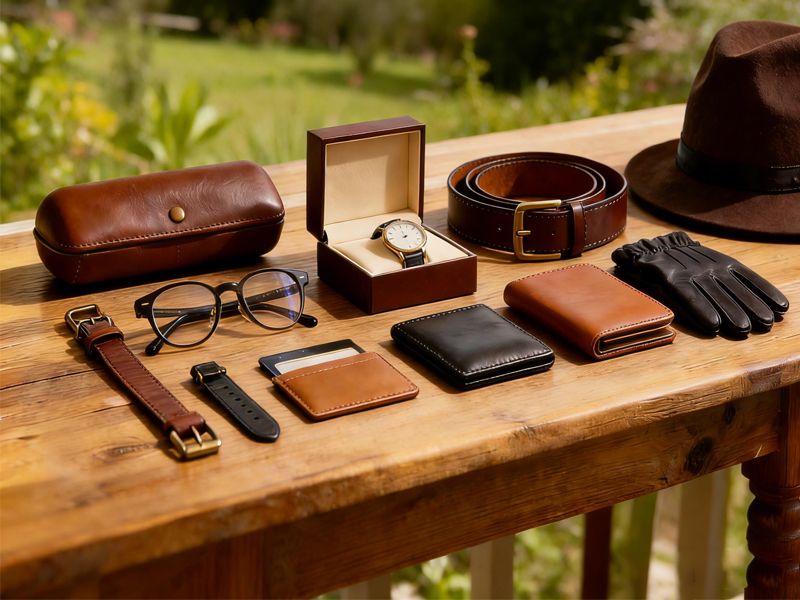
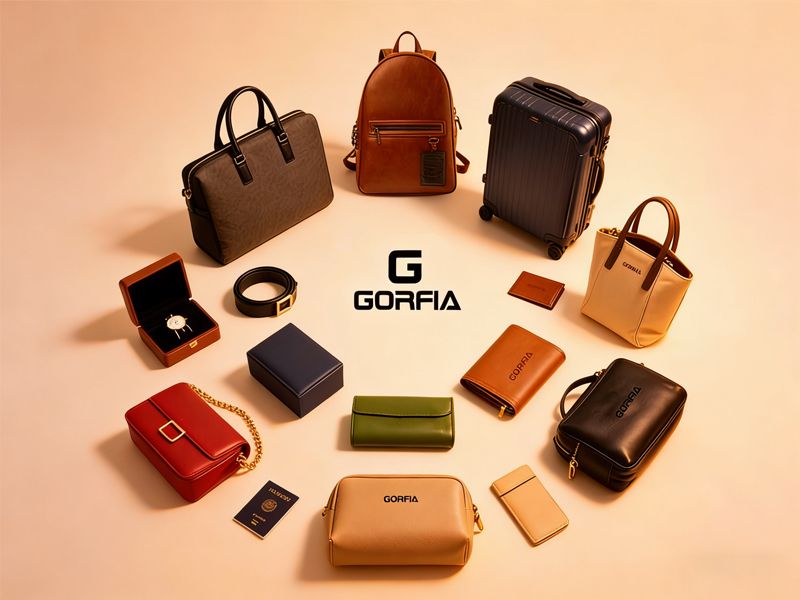
Corporate leather gifts can quietly drive up costs and create brand inconsistency when materials and production aren’t aligned.
In many B2B gifting programs, items like business card holders, pocket sized accessories, backpacks, and toiletry bags are produced in batches for clients, employees, and teams—where small inconsistencies can quickly turn into cost and quality issues.
For procurement teams, this impacts total cost of ownership, reorder reliability, and brand consistency. Based on 20+ years of manufacturing experience and work with global B2B clients, these insights reflect real production practices.
Here’s how to choose the right leather, manage customization, and evaluate suppliers without adding unnecessary cost or risk.
Choosing the Right Leather for B2B Corporate Gifts

Why Leather Choice Affects Cost, Durability, and Brand Image
The leather you choose affects ROI, pricing, and brand perception. High-quality leather delivers longer-lasting performance while ensuring a premium and natural appearance that strengthens trust and reliability.
| Leather Type | Durability Level | Typical Use Duration | Approx. Unit Cost |
| Full-grain leather | Very High | Long-term use with proper care | High |
| Top-grain leather | High | Durable for regular use | Medium–High |
| Genuine leather | Moderate | Suitable for mid-term use | Medium |
| Bonded leather | Low | Short-term or low-use scenarios | Low |
| PU / Synthetic leather | Low–Moderate | Short- to mid-term use depending on conditions | Very Low–Low |
The right material should also support different performance needs, including durability, weight control, and water resistant protection when required.
Key Procurement Factors for Corporate Leather Gifts
MOQ, Durability, and Supply Chain Reliability
In corporate leather procurement, MOQ, product lifespan, and delivery reliability are mainly driven by material choice and production execution.
Leather grade, surface treatment, and customization complexity affect setup time, tooling, and quality control. These factors directly impact production efficiency at scale.
Embossed and standardized leather finishes support batch consolidation and tooling reuse, making them more suitable for larger-volume orders with predictable MOQ structures. Durability varies significantly by material choice.
Thicker, heavy-duty leathers are better suited for high-wear items, while full-grain leather offers superior long-term performance for premium gifting programs, helping reduce replacement frequency and warranty risk over time.
Supply chain stability remains essential for maintaining consistent color, texture, and finish across large or repeat orders, while supporting predictable lead times for enterprise gifting campaigns.
Production Lead Time
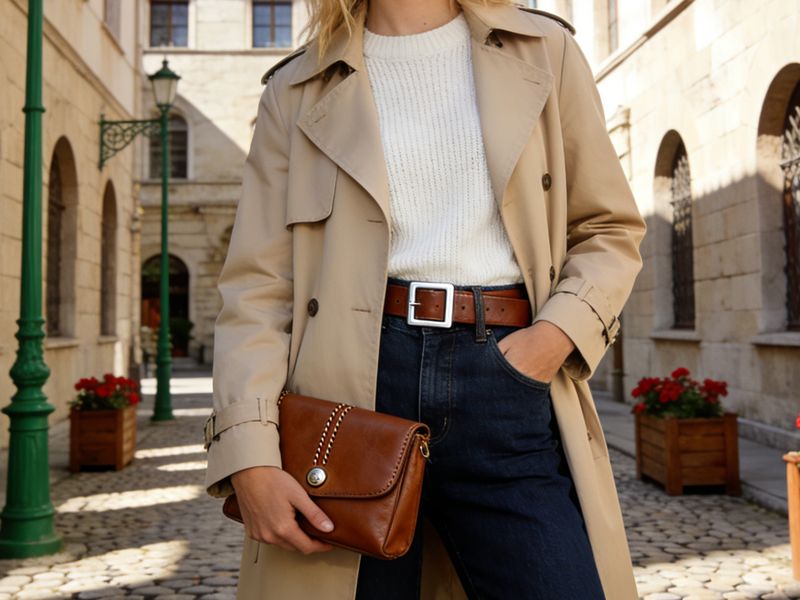
Production lead time—the total time from start to finish of your order—depends on order size, customization complexity, and leather type.
Each step, includes:
- cutting, stitching
- edge finishing
- hardware attachment
- packaging
- adds time
Multiple SKUs (such as color or size variations) or different color options also increase setup and approval cycles.
For planning purposes, note that top-grain and embossed leathers typically produce faster than highly finished full-grain or calf leather, which requires longer handling and approval.
Clear timelines and structured workflows make bulk ordering made easy, even when coordinating approvals across systems that may open in a new window during internal review processes.
Common Leather Types for B2B Corporate Gifts
Full-Grain Leather for Premium Corporate Gifts
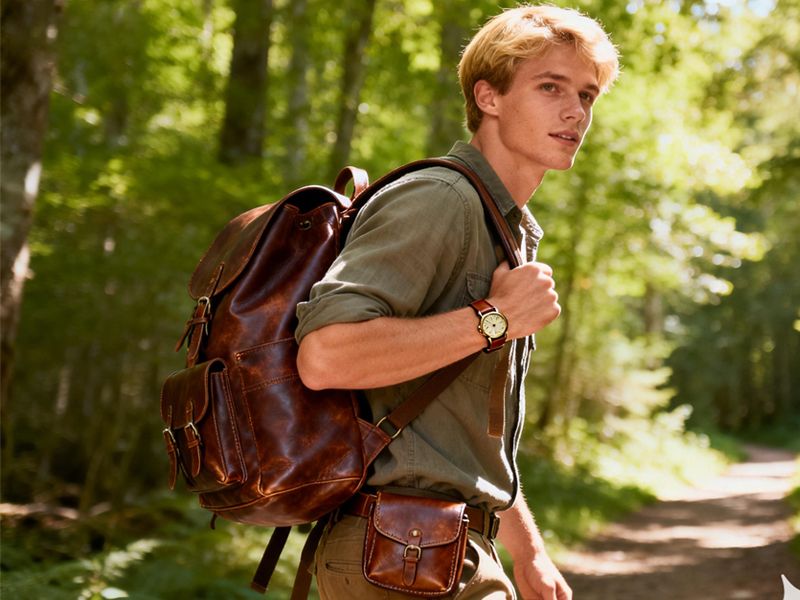
Full-grain leather is our top recommendation. It is a strategic choice for high-value gifting programs aimed at executives, long-term partners, and board members.
- Cost: Top in the tier. Most suitable for premium programs with high budgets.
- Order Volumes: Most suitable for exclusive, premium, and small volumes.
- Brand Consistency: Supports blind debossing and deep embossing.
- Brand Signal: Conveys authenticity, long-term value, and prestige.
For high-value gifting programs such as executive bags or professional portfolios, full-grain leather supports a premium brand experience while maintaining long-term consistency across gifting cycles.
Its long lifespan and strong resistance to wear make it a reliable choice for items intended to represent lasting partnerships and senior-level brand touchpoints.
Top-Grain Leather for Large-Volume Programs
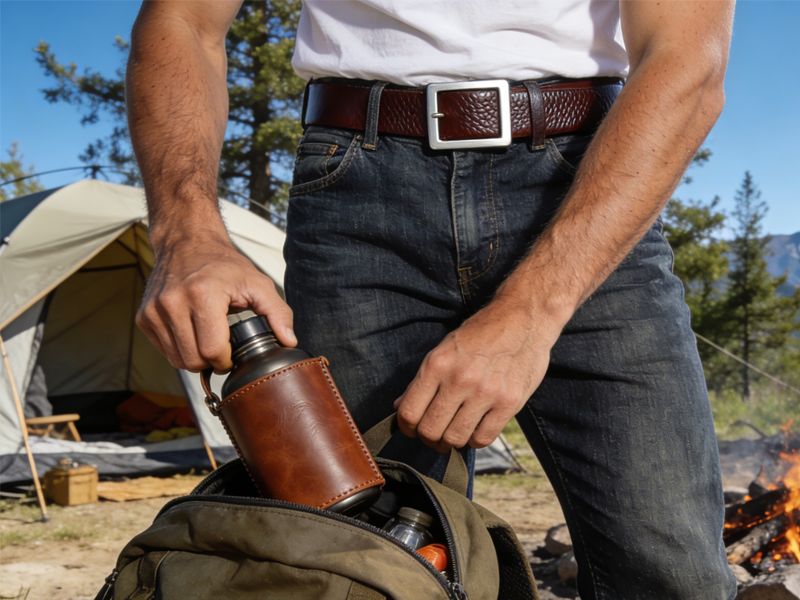
Top-grain leather is cost-efficient. Its polished finish offers an affordable option, making it suitable for large-scale gifting or promotions. Its standardized finish also makes repeat orders and inspections easier.
- Cost: Medium- to high-budget programs seeking to balance quality with price.
- Order Volumes: Medium to large, but with consistency.
- Durability and Warranty Risk: Great performance that lowers replacement or warranty issues
- Brand Consistency: Supports emboss, foil, and stamp.
- Brand Signal: Consistently reliable, professional, and high-quality, making the brand seem credible.
For programs that require consistent quality over recurring gift cycles, top-grain leather provides the perfect balance of appearance, durability, and cost efficiency.
Calf Leather for Small Premium Accessories
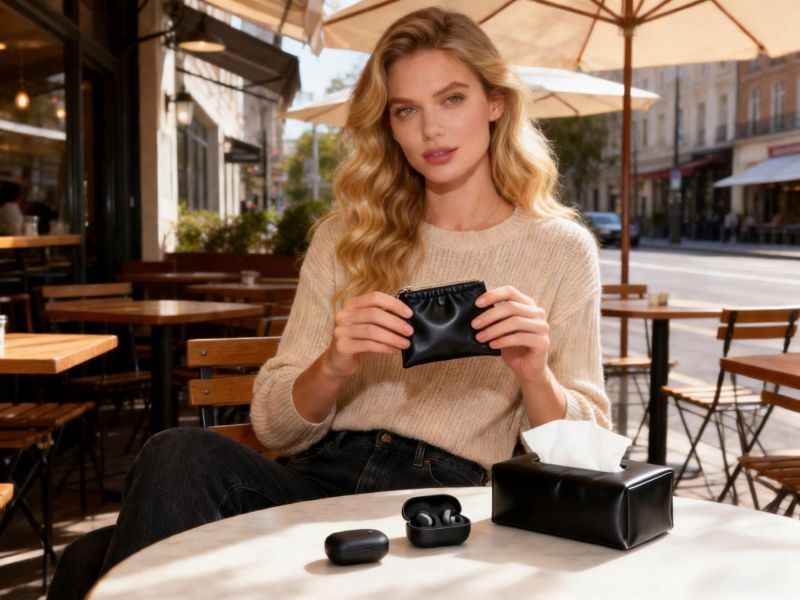
For small products like a woman’s wallet, calf leather is the premium option. It has a soft and refined texture, which makes high-end detailing easy.
- Cost: Premium. Suitable for high-end programs seeking high-quality output.
- Order Volumes: Small to Medium without compromising on quality.
- Durability and Warranty Risk: Soft and fairly durable. Ideal for lifestyle products with a low risk of structural failure.
- Brand Consistency: Supports intricate and detailed embossing.
- Brand Signal: Sophisticated, boutique aesthetics that elevate value.
If your gifting programs require products with visual refinement and high quality, this leather type will deliver a luxurious experience.
Heavy-Duty Leather for High-Durability Items
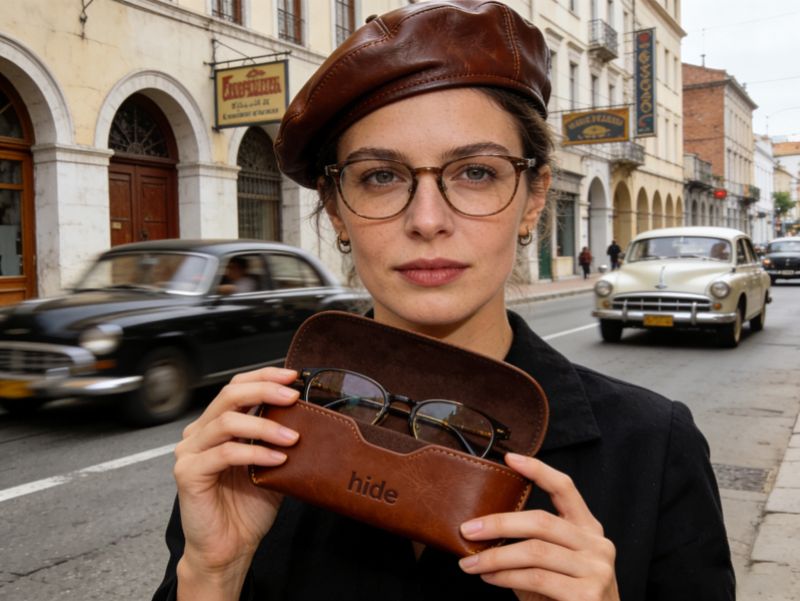
Thicker, heavy-duty leather works well for items that face frequent or high-intensity use. Its strength makes it suitable for belts, travel bags, and other high-contact accessories, helping reduce wear and extend product lifespan.
- Cost: Moderate. Perfect for programs seeking durability without a premium budget.
- Order Volumes: Medium to Large. Ensures stable supply and consistent output
- Durability and Warranty Risk: Great for high-endurance everyday items.
- Brand Consistency: Supports deep embossing and stamping.
- Brand Signal: Reliability, strength, and longevity.
To ensure minimal degradation and dependable long-term performance, thicker, heavy-duty leather is a more reliable choice.
Suede Leather for Soft-Touch Gifts
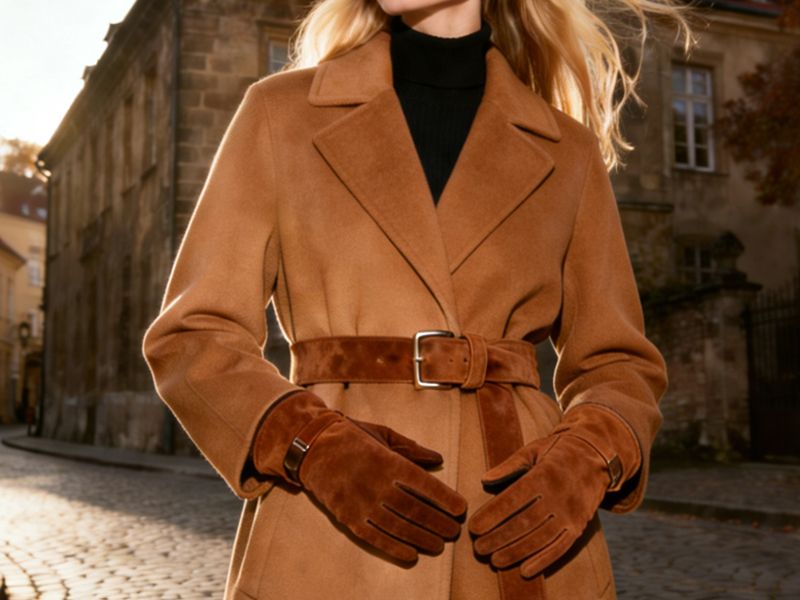
Suede suits premium, tactile gifting. Its velvety surface elevates gift value, making it ideal for items that emphasize feel and elegance, like wallets or accessories. Customization options are more limited, with debossing and subtle branding preferred over laser engraving.
- Cost: Premium option for programs prioritizing touch, luxury, and exclusivity.
- Order Volumes: Small to medium volumes to maintain quality and consistency.
- Durability and Warranty Risk: Moderate durability; requires careful handling to avoid scuffs and marks. Ideal for lifestyle items and luxury accessories with low structural stress.
- Brand Consistency: Supports subtle embossing, laser detailing, and color consistency across batches.
- Brand Signal: Sophisticated, tactile, and premium. Perfect for programs that emphasize luxury and a high-touch experience.
If you are looking for a leather type that delivers a soft touch and premium feel for exclusive gifting programs, suede is a suitable choice.
Quick Comparison of Leather Types
Here’s a quick overview to help you choose the right leather:
| Leather Type | Durability | Look / Texture | Most Suitable For | Price Level |
| Full-Grain | ⭐⭐⭐⭐⭐ | Natural, develops patina | Luxury gifts, executive sets | High |
| Top-Grain | ⭐⭐⭐⭐ | Smooth, refined | Corporate gifts, bulk orders | Medium |
| Genuine Leather | ⭐⭐⭐ | Uniform, affordable | Budget-friendly giveaways | Low |
| Suede | ⭐⭐ | Soft, velvety | Luxury small items, high-touch gifts | High |
| Calf Leather | ⭐⭐⭐⭐⭐ | Soft, supple | Luxury small items (wallets, purses) | High |
| Heavy-Duty Leather | ⭐⭐⭐⭐⭐ | Thick, robust | Large items (bags, belts, briefcases) | High |
Customization Options for Corporate Leather Gifts
By customizing your leather goods, you can enhance brand consistency, cost efficiency, and operational timelines. For gifting programs, decisions must be based on leather-specific constraints, scalability, and workflow approvals to ensure quality and minimize risks.
Some clients also work with internal or external AI designer tools to preview logo applications or product concepts before sampling. In these cases, we can translate AI-generated designs into production-ready samples, adjusting materials, construction, and logo methods to ensure manufacturability.
Below is a structured workflow that aligns branding choices with procurement objectives.

Logo Methods and Leather Compatibility
The approach and techniques for enterprise-level personalization include embossing, debossing, foil stamping, or laser engraving.
- Emboss/Deboss: For embossing and debossing, leather of appropriate thickness is necessary. Depth calibrations may be required to ensure each imprint is uniform.
- Foiling: Color transfers vary depending on the leather’s finish. We recommend a pre-production proof, as the foil results vary depending on leather coating, finish, and processing conditions during foiling. Color results, including tones like regatta blue, may vary depending on leather finish and require testing.
- Laser Engraving: We recommend test runs to avoid uneven burns during engraving.
Procurement Value: To select the right method for laser engraving, we highly recommend a laser test engraving. The correct method helps improve consistency when properly tested for the selected leather type, reducing rework, lowering warranty claims, and improving overall logo alignment.
Customization Costs and Budget Planning
Customization cost depends on:
- Method complexity: Techniques like foiling and laser engraving tend to take longer and cost more at the equipment level.
- Leather type: Full-grain and thicker, heavy-duty leather may require longer setup
- Batch size: With small batches, the cost per unit and setup costs tend to be higher; however, larger orders take advantage of economies of scale.
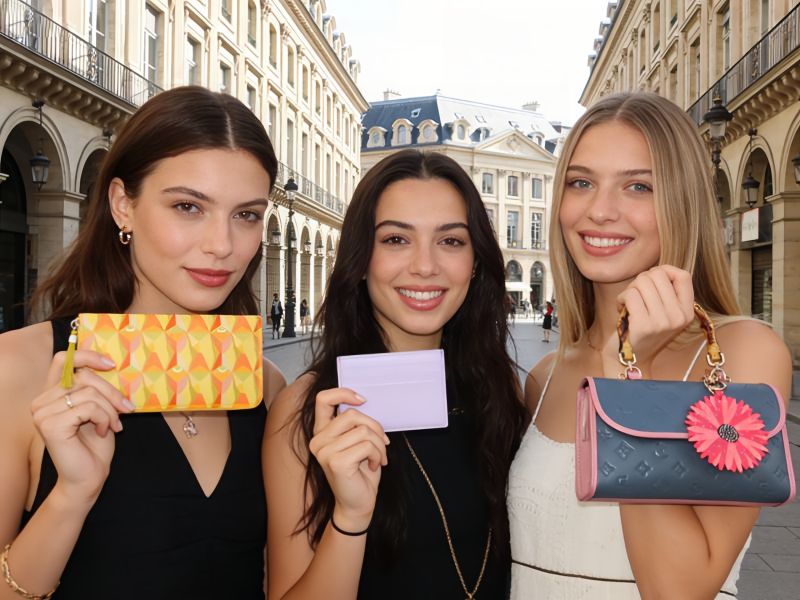
Procurement Value: For larger gifting projects, balancing material cost, method, and batch size helps teams predict budgets more accurately.
Approval Process and Production Timelines
Production timelines vary depending on order size, product complexity, and customization requirements. Mid-sized orders may take several weeks, while large-volume programs typically require longer production cycles.
Enterprise suppliers typically work with structured approval cycles, which include:
- Pre-production samples for logo and leather approvals.
- Staged quality assurance checkpoints to maintain quality and consistency across the various batches.
- Clear scheduling to support delivery and align with the organization’s internal procurement calendar.
Procurement Value: These structured processes minimize the rework and thus lower the risk on your end. They also ensure timely delivery for larger gifting programs, which preserves brand reputation and consistency.
Packaging Options for Bulk Orders
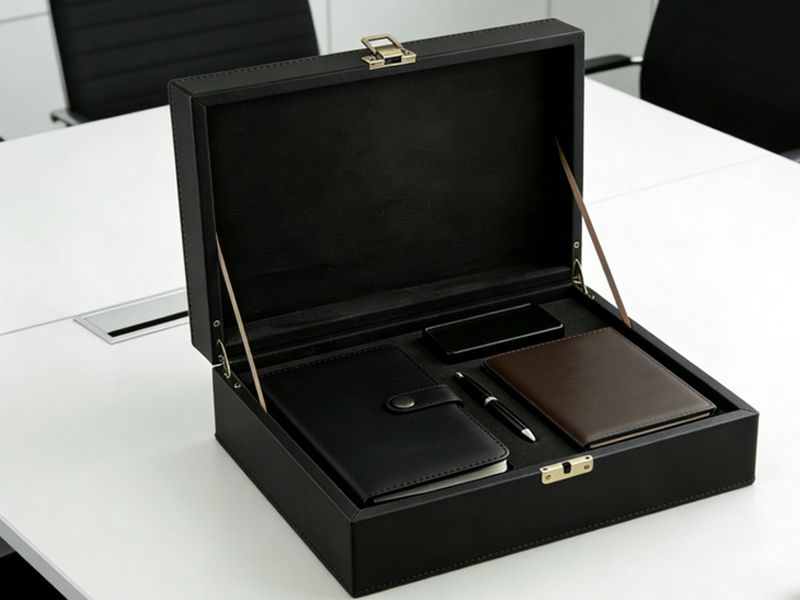
When giving a gift at scale, packaging plays an important role in both protection and brand presentation.
Packaging Solutions: Suppliers provide air-shielded wrapping, branded wrapping, and display boxes with protective interleaving.
Procurement Value: With uniform protective packaging and careful logistics, you will ensure enhanced procurement value.
How We Handle Manufacturing and Customization for B2B Orders
In our production process, customization is managed based on material compatibility, logo requirements, and order volume.
For logo applications, we use methods such as embossing, debossing, screen printing, embroidery, hot stamping, and woven labels. The method is selected based on product type and detail level, with pre-production sampling used to confirm accuracy before bulk production.
For premium projects, hardware logos are developed through molding and finishing processes to ensure consistency in color and durability.
With over 20 years of manufacturing experience and a self-owned factory, we support both small-batch development and large-volume production. Our annual capacity reaches up to 1.2 million units, allowing stable output across repeat orders.
We also handle projects with tighter timelines. Smaller runs can move through faster development cycles, while bulk orders follow structured production schedules. For international clients, door-to-door DDP delivery is commonly used to simplify logistics. Our goal is to reduce friction in production so projects don’t stop midway due to misalignment, while ensuring each product is fit for its intended use.
How to Choose a Corporate Leather Gift Supplier
The suppliers you choose affect product quality, brand consistency, pricing, and shipping reliability.
Manufacturing Capabilities
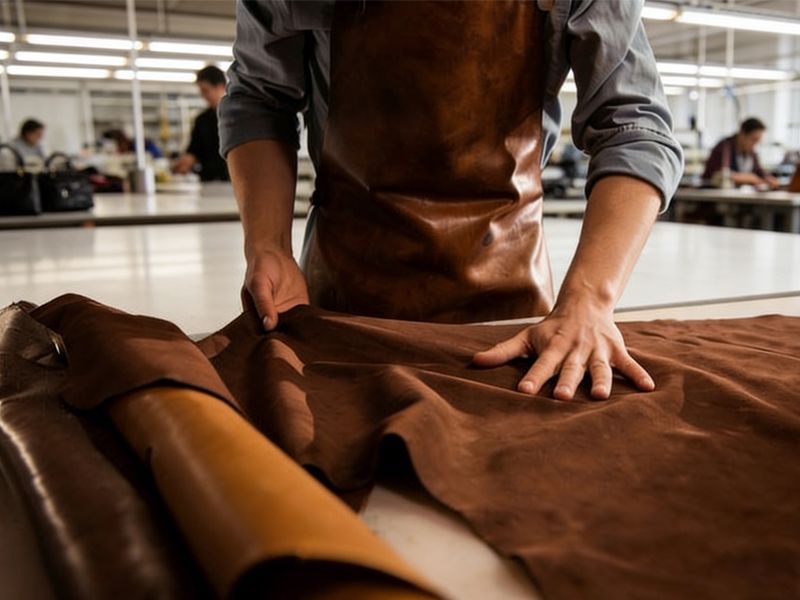
Ensure the supplier can execute the customization techniques you need. Try to find an experienced manufacturer that meets your specifications efficiently across all orders.
Volume and Batch Flexibility
Long-term reliable partners maintain consistency, even for large-volume orders.
Production Stability and Lead Times
Make sure the supplier fits the timelines you need. This will help you rule out material shortages and delays, keeping your gifting programs on schedule.
Track Record and Quality Assurance
A good supplier should provide information about their relationships with large companies and their quality control measures. If you choose an established supplier, you can ensure the best items even when orders are repeated.
This applies across categories such as men’s leather goods, backpacks, and toiletry bags, where consistency matters.
Common Risks in Corporate Leather Gifting
Large-scale corporate leather gifting often comes with brand risk and operational inefficiency. In large orders, common issues include:
– inconsistent product quality
-color differences between batches
-difficulty meeting timelines
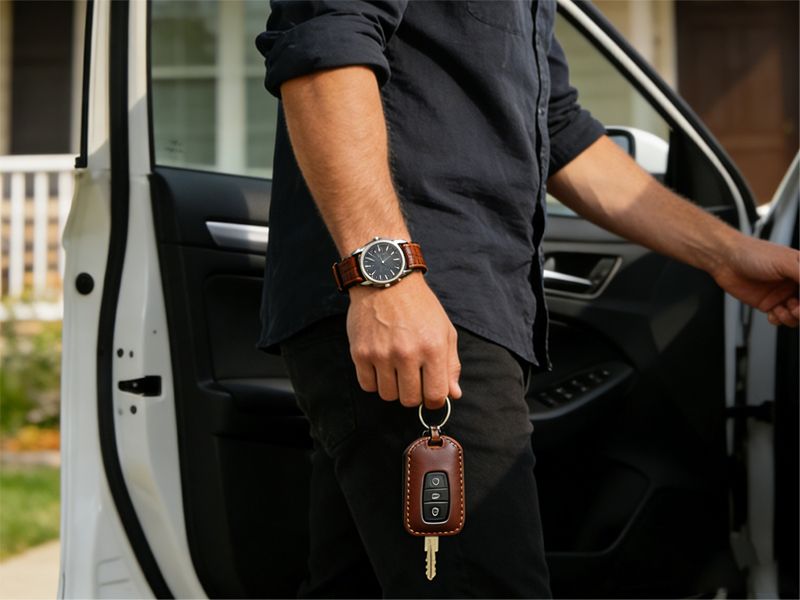
If such oversights are left unchecked, the rework will spiral out of control. This will lead to higher prices, delivery delays, and even returns. Here are some risks and recommendations to avoid them:
Quality Control Issues
You need to ensure regular inspections are conducted to check the evenness of texture, stitching, and finishes. This helps decrease variability and protects your company’s image.
Color Consistency Problems
For color stability across production, dyes should be tested. Use color-matching processes and keep consistency for embossed patterns or foiled logos.
High-Volume Production Risks
In high-volume leather gift programs, execution risk increases significantly if suppliers lack experience in managing large production runs. Delays and batch variability are common issues when capacity planning, quality control, or material sourcing are not aligned with volume requirements.
Suppliers with proven high-volume capabilities and structured production controls help streamline procurement, and maintain consistent standards across batches for large-scale programs.
For long-term success in high-volume partnerships, learn how to nurture and re-energize stale supplier relationships with actionable strategies from industry experts.
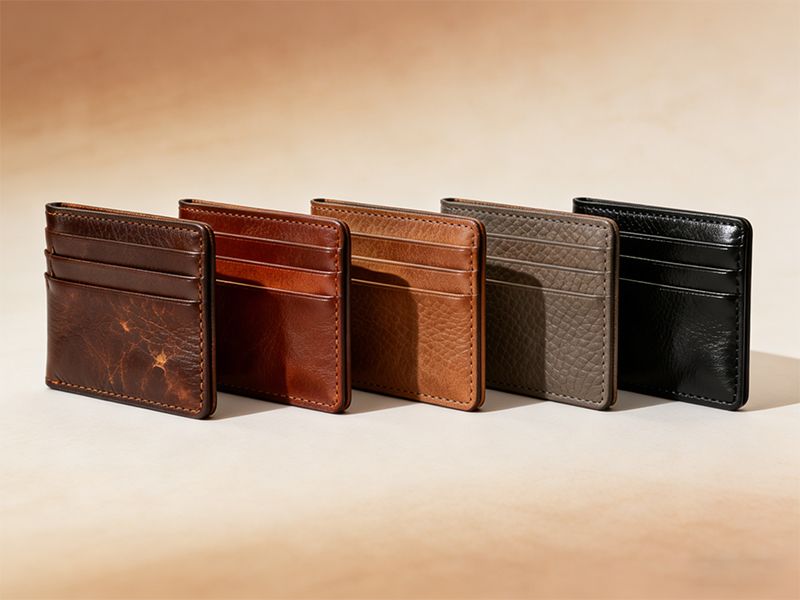
In addition to production capability and quality control, sustainability and compliance standards increasingly influence supplier evaluation in corporate leather gifting.
Certifications related to material traceability, environmental management, and social compliance help procurement teams ensure alignment with internal sourcing policies.
FAQs
Where is the best place to order custom promotional items?
The best place is a reliable manufacturer that supports custom logo options, flexible MOQs, and consistent production quality. Working directly with a factory helps control cost, lead time, and customization accuracy.
What are some gift ideas for corporate executives?
Premium leather products like executive bags, portfolios, and personalized leather gifts are popular for corporate executives. These items emphasize quality, durability, and brand positioning.
What are good corporate gift ideas for media agencies?
Practical items like custom leather bags, business card holders, and pocket sized accessories work well for media agencies. These products balance branding visibility with daily usability for clients and internal teams.
What is a door gift and a corporate gift?
A door gift is a small item given at events, while a corporate gift is usually higher-value and used for clients, employees, or business partners. Corporate gifts often focus more on branding, quality, and long-term use.

Conclusion
These customization guidelines illustrate how leather selection and personalization methods influence brand consistency and operational workflows.
With that in mind, choose the leather type and select personalization methods that best match your enterprise-level needs and complexities when planning your gifting programs.
For more information on corporate gifting and customization options, check out our article on Card Holder Sourcing for B2B Success.
Transform Your Corporate Gifting Strategy with Gorfia
Corporate buyers should work with suppliers that combine material expertise, structured customization workflows, and integrated supply chain execution. This helps ensure consistent quality, protect brand standards, and support reliable scaling across both small and large B2B orders.
Gorfia operates with these principles in mind, supporting corporate gifting programs that require consistency, scalability, and long-term execution reliability.
Work with us:
- Contact our team and design gifting tailored to your needs, along with workflow optimization.
- Access our catalog to view our leather products, lifestyle items, and accessories.
- Request a quote to get an estimate for your intended volume order, with feedback on the expected duration.