

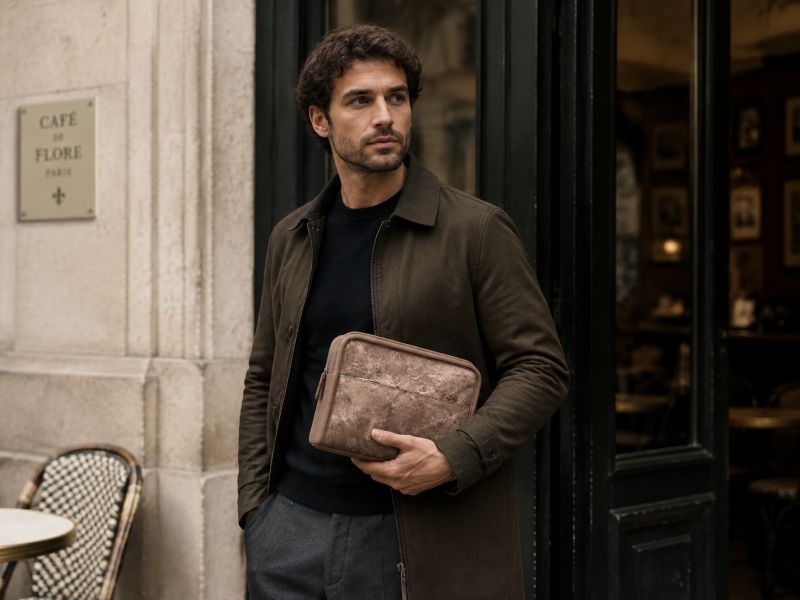
A men’s clutch bag solves a common carrying problem: pockets are often not designed for multiple hard items.
A clutch provides a practical middle ground between a wallet and a larger bag. It offers enough space for essentials while staying smaller and easier to carry than a messenger bag or briefcase.
This guide explains how to choose or design a men’s leather clutch bag by covering design, leather materials, construction, reinforcement, internal organization, carrying comfort, testing, and care.
Why Men’s Clutch Bags Work for Different Settings
Today, men’s leather clutch bags are increasingly used across different settings, from business meetings and travel to formal events and daily outings. Their clean appearance and streamlined profile make them a practical choice for men who want a refined alternative to traditional shoulder bags.
Depending on the design, some styles may also be described as men’s leather pouches, especially when they focus on carrying personal essentials in a compact format. Different designs offer different levels of organization, structure, and carrying comfort, allowing brands to create options for various customer needs.
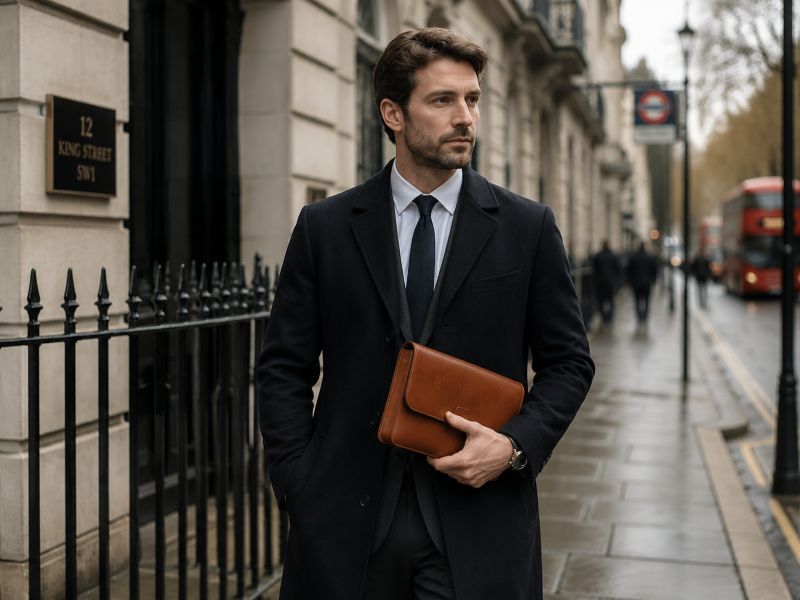
Designing a Men’s Leather Clutch Bag for Function and Comfort
Balancing Size, Capacity and Internal Organization
The usable space of a men’s clutch bag depends on more than its outer dimensions. Internal construction choices can significantly change how much the bag can actually hold.
Gusset depth affects expansion when you add thicker items. A shallow gusset may cause pressure on the front and back panels, while a deeper structure allows better organization without excessive bulging.
Reinforcement thickness also impacts capacity. Backing boards, foam padding, and base inserts improve structure but reduce available internal space.
Other factors, such as folded edges, seam allowance, pocket construction, and zipper opening size, also influence usable volume. A well-designed clutch balances internal capacity with a slim appearance.
Internal organization affects usable space just as much as the bag’s external size. Every card slot, divider, zipper pocket, and folded edge takes up space that could otherwise hold larger items.
A well-planned layout balances organization with capacity. Too many compartments create unnecessary thickness, while a simpler layout often provides more flexible storage and easier access.

Choosing Materials and Reinforcement for Shape Retention
Soft leather can feel good in the hand but may lose its shape once the clutch is loaded. Instead of adding stiff backing across the entire bag, we usually focus reinforcement on areas that need it most, such as the bottom and corners. This helps control bulging without making the clutch unnecessarily rigid.
During sampling, we also check how the leather reacts after repeated bending and gripping. If creases remain after the pressure is released, we may adjust the leather thickness or reinforcement before production. This gives a better indication of how the finished clutch will hold its shape than judging the leather from a flat swatch alone.
Selecting Closures and Carrying Features
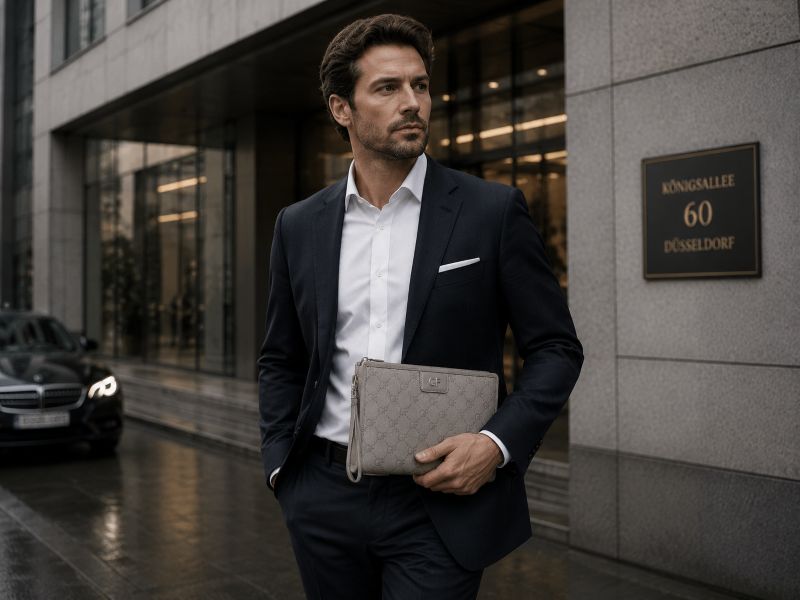
The right closure should protect the contents while allowing quick access. Zippers are a popular choice for everyday security, while magnetic or envelope-style closures suit more formal designs. A wide zipper opening also makes it easier to reach items without forcing the bag open.
A detachable wrist strap adds convenience when carrying the clutch for longer periods. During development, it’s equally important to reinforce the strap attachment and choose low-profile hardware that won’t add unnecessary weight or make the clutch uncomfortable to hold.
Men’s Leather Clutch Styles and Their Best Uses
The right clutch style depends on how and where you’ll use it. Soft leather designs work well for everyday carry, while structured, zippered, or document clutches offer more support, security, and organization for business or travel.
| Clutch Type | Best For | Key Benefit |
| Soft Leather Clutch | Everyday use | Comfortable grip and lightweight feel |
| Structured Clutch | Business | Better shape retention |
| Envelope Clutch | Formal occasions | Sleek, minimalist appearance |
| Zippered Men’s Clutch | Travel & daily use | Added security and easy organization |
| Document Clutch | Business travel | Fits papers, tablets, and larger essentials |
Design Details for a Refined and Versatile Look
A men’s leather clutch bag doesn’t need excessive decoration to stand out. Clean lines, quality leather, precise stitching, and well-finished edges often create a more refined look than oversized logos or heavy hardware.
Small design details should support the bag’s purpose, not distract from it. For business settings, subtle hardware and smooth leather create a professional appearance. Casual styles can introduce textured leather or contrast stitching, but keeping the design balanced helps the clutch remain versatile over time.
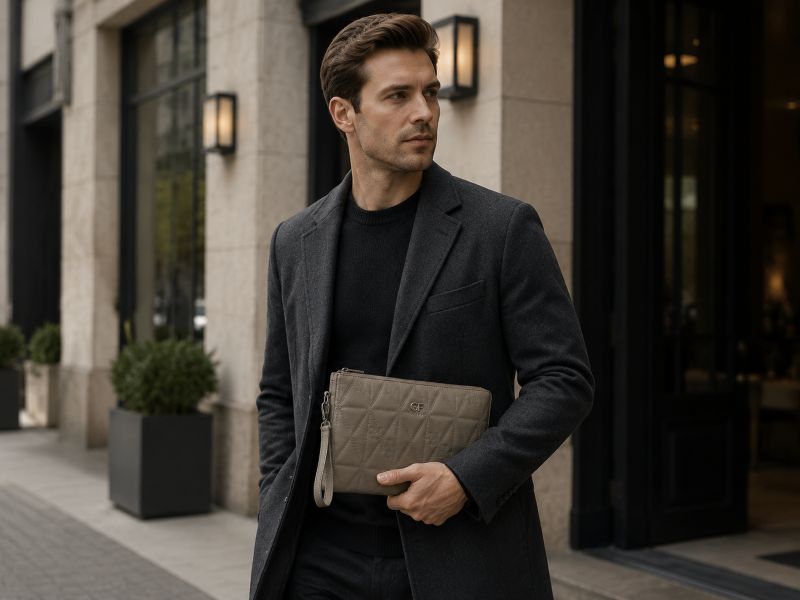
Testing and Quality Validation Before Production
Before mass production, conduct load testing on a men’s leather clutch bag to identify potential issues with shape retention and overall construction.
Brands should also validate the product’s performance through repeated-use testing before moving into bulk production. These checks help identify weaknesses early and improve the design before bulk production.
Loaded Shape Test
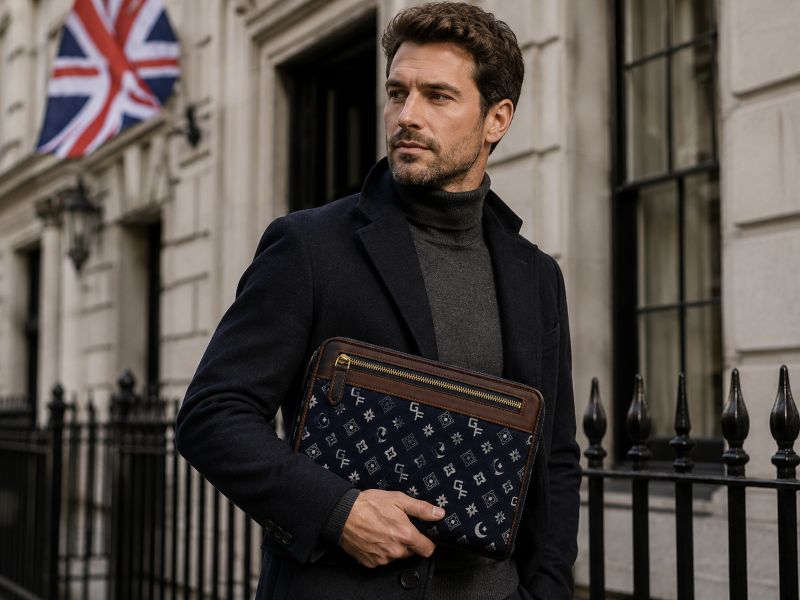
Load the clutch with the items it is designed to carry and check for center bulging, corner collapse, or edge distortion. Softer leather may flex more under load, while firmer leather generally retains its shape better. If distortion is excessive, the leather, reinforcement, or internal structure may need further refinement.
Zipper Opening and Access Test
Open and close the zipper repeatedly while the clutch is fully loaded. If larger items are difficult to insert or remove, the zipper opening may be too narrow even though the internal dimensions appear sufficient.
Wrist-Strap Load Test
Apply repeated load to the wrist strap and attachment points. Any movement, stretching, or loose hardware may reduce long-term durability during daily use.
Grip Comfort and Shape Recovery Test
Hold the loaded clutch as you would in normal use. Check whether the leather develops permanent grip marks, excessive creasing, or loses its shape after you release the pressure.
Testing a fully assembled prototype under these conditions helps identify performance issues before bulk production, resulting in more consistent product quality and fewer manufacturing defects.
How to Maintain Shape and Leather Condition
Proper care helps a men’s leather clutch bag maintain both its appearance and structure. Avoid overloading the bag, as excessive weight can stretch the leather and gradually affect its shape.
Store the clutch with light internal support when not in use, clean it according to the leather type, and condition genuine leather when needed. Paying extra attention to frequently gripped areas and corners can also reduce visible wear over time.
FAQs
What is a men’s clutch bag?
A men’s clutch bag is a compact handheld bag designed to carry everyday essentials such as a phone, wallet, keys, cards, and travel documents. It offers more storage than a wallet while remaining smaller and more streamlined than a briefcase or messenger bag.
What size should a men’s clutch bag be?
The ideal size depends on what you carry every day. A compact clutch suits essentials, while a larger design works better if you regularly carry documents, a passport, or additional accessories.
Is a leather clutch practical for everyday use?
Yes. A well-designed leather clutch offers organized storage without the bulk of a larger bag. Choosing the right size and avoiding overloading will make it more comfortable for daily use.
What type of leather is best for a men’s clutch?
Full-grain leather is often preferred because it’s durable, develops character over time, and holds its shape well. However, the best choice also depends on the clutch’s size, structure, and intended use.
Should a men’s clutch be soft or structured?
A good clutch should balance both. It should feel comfortable in the hand while having enough structure to prevent bulging or losing its shape when carrying everyday essentials.
What is the difference between a men’s clutch, wrist bag, and document pouch?
A men’s clutch is designed for everyday essentials and is carried by hand. A wrist bag usually includes a wrist strap for added convenience, while a document pouch is typically larger and intended for carrying paperwork, tablets, or business documents.
What to Check Before Choosing or Producing a Men’s Clutch
A quality men’s leather clutch bag succeeds when its design and function work together.Before buying or approving production, check the bag with real everyday items, test its comfort when loaded, and pay close attention to the leather, hardware, and reinforcement. These simple checks help ensure the clutch performs well and keeps its shape over time.
If you’re still deciding whether a clutch is the right choice, our article on finding the right balance of space and function in men’s bags compares different men’s bag styles to help you choose the most practical option.
Men’s Leather Clutch Manufacturing Support
Whether you’re looking for a reliable product or developing a new collection, choosing the right materials and construction makes all the difference. Gorfia can help bring your ideas to life with custom leather clutch design, sampling, and production support. Explore our homepage or contact our team to order your next men’s leather clutch project.