
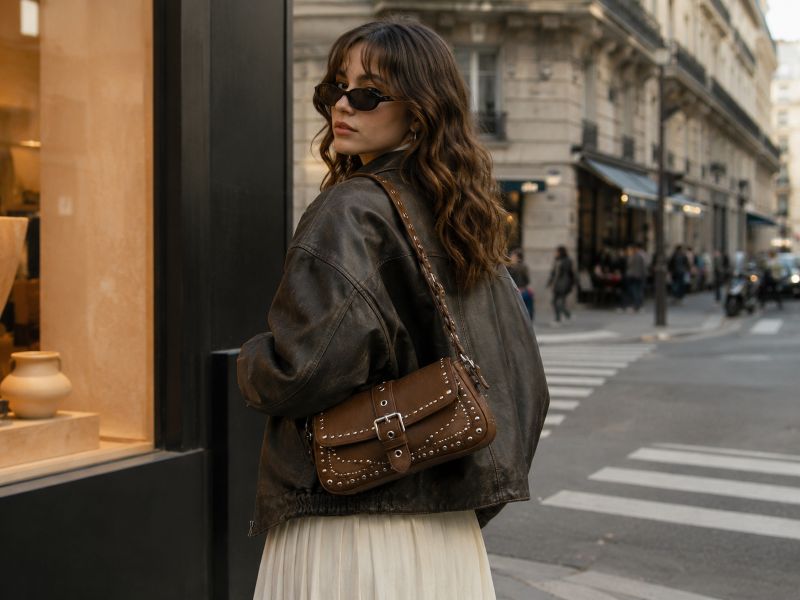
Studded purses add personality to familiar bag shapes, but good design goes beyond eye-catching hardware. Material, stud placement, weight, and construction all affect comfort and durability.
Studded bags have returned across runways and street style, from boho suede styles to structured leather handbags. In our own testing, repeated loading and bending caused enlarged stud holes and wrinkling on a soft PU bag.
In this guide, you’ll learn how to compare leather, suede, and PU, check stud quality and placement, and choose a bag that works beyond the trend. We’ll also cover what brands should test before bulk production.

Why Studded Purses Are Back in Style
From Y2K attitude to everyday fashion
Studded bags now span Y2K, boho, indie, and rock-inspired styles rather than one fixed aesthetic. Their return was especially visible in 2025, when studded details spread across handbags, shoes, and clothing, including pieces from Isabel Marant.
The look has carried into 2026 too. Studded accents appeared among Spring/Summer 2026 handbag trends, alongside elevated hardware and chain details.
Small details can change a familiar bag
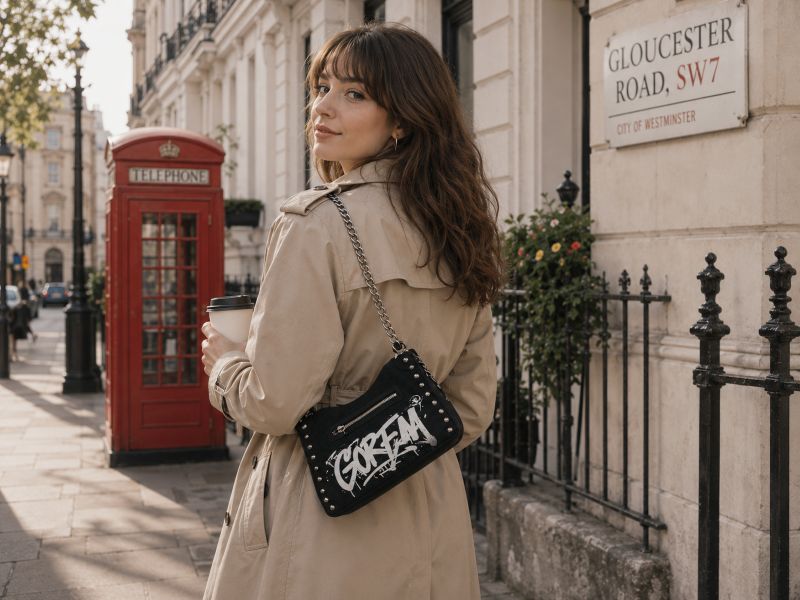
You do not need hundreds of studs to get the effect. Silver hardware can make a black bag feel sharper, while spaced studs on suede create a softer direction.
If you are comparing different women’s bag styles, focus on where the detail sits as much as how much of it there is. Shoulder, crossbody, tote, and mini bag shapes all respond differently to hardware placement.
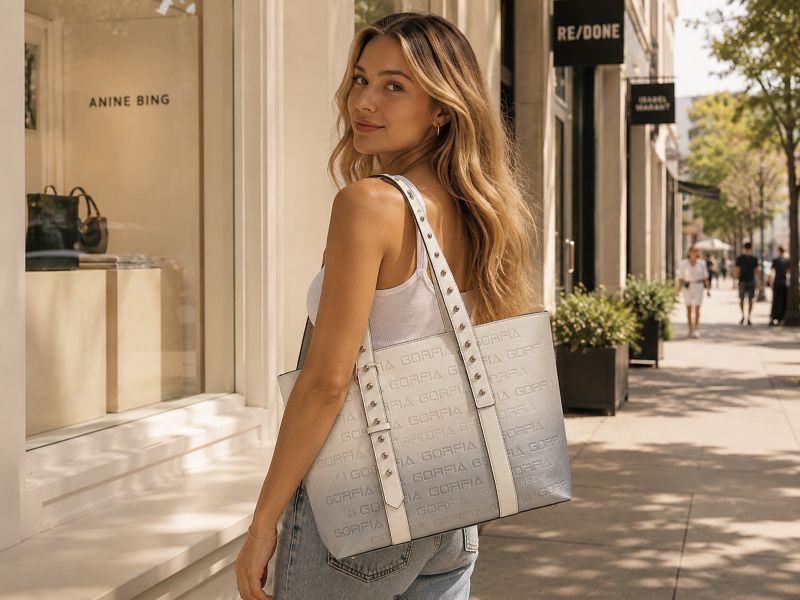
Which Studded Bags Suit the Way You Carry Them?
Shoulder and crossbody bags
A crossbody moves against the hip, so raised studs on the back or lower side can become uncomfortable or catch delicate clothing. Flatter hardware or wider spacing often works better in areas that touch the body.
Tote, bucket, and hobo bags
Larger bags offer more room for stud patterns, but more metal adds weight. If a tote already carries a laptop, phone, travel essentials, and daily items, dense hardware can make it tiring to carry.
Slouchy bags also fold more. Studs placed too closely across a flexible panel can increase stress where the material bends.
Clutches and evening bags
For evenings or nights out, keep tall or sharp studs away from the main grip area. A statement clutch still needs to feel good in the hand.

Leather Studded Bag Materials
Leather vs. suede vs. PU
A leather studded bag can offer good structure and hardware support, but thickness and softness still matter. Soft studded leather bends more around each attachment point than a firmer panel.
Suede gives studs a softer, boho-inspired look. PU offers plenty of finish and color options, but flexible PU can wrinkle or stretch around holes if placement and reinforcement are poor.
Why black studded leather is versatile
Black creates strong contrast with silver, gunmetal, brass, or gold-tone studs. It can easily move from summer evenings to fall outfits without making the rest of the look feel punk-inspired.
| Material | Best for | Main advantage | What to watch |
| Leather | Everyday, structured bags | Shape and support | Softness and hole distortion |
| Suede | Relaxed, boho bags | Rich texture | Flexible panels and care |
| PU | Trend-led collections | Finish and color choice | Wrinkling around studs |
What Makes Studded Handbags Durable?
The material around the stud can fail first
A stud can stay attached while the surrounding material weakens. Enlarged holes, puckering, dents, or wrinkles are warning signs, especially near openings and folds.
Material strength therefore matters as much as attachment quality. The ISO double-edge tear test for leather provides a useful technical reference because it measures how leather resists tearing under load.
Stud size, spacing, and stress work together
Large or densely placed studs add weight and leave less material between holes. Openings, corners, folds, handles, and strap connections need extra attention because they already move or carry load.
Using a longer or tighter stud alone does not fix weak material around the placement area.
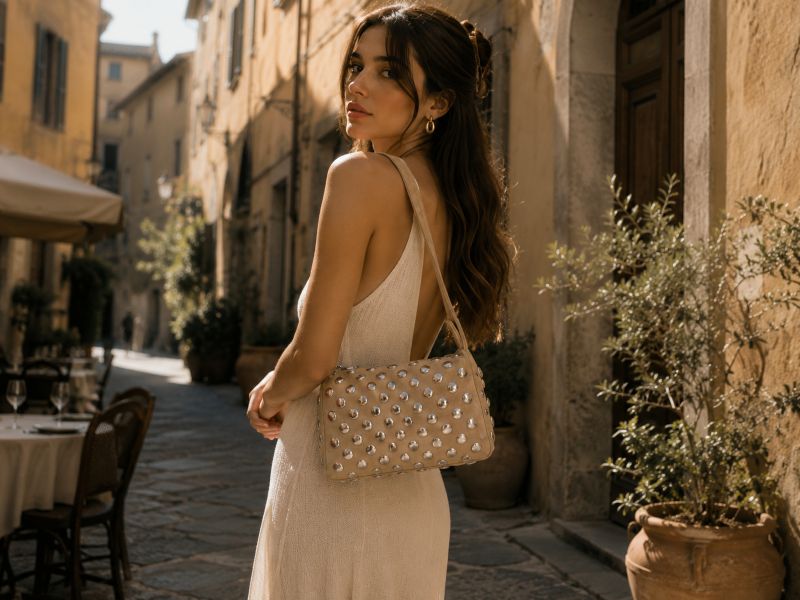
What we learned from a soft PU studded bag
We once tested a soft PU studded bag that looked secure at first. After loading and repeated bending, some stud holes grew larger and the surrounding material wrinkled near the opening and sides.
Instead of stiffening the whole bag, we added thin reinforcement behind stud-heavy, high-stress areas and adjusted the spacing. The revised sample spread stress better without losing its soft feel.
The lesson is simple: the weak point is not always the stud. It can be the surrounding material.
Studded Leather Placement: When More Is Not Better
All-over studs vs. focused decoration
All-over studs create a stronger impact, but they also add weight and more attachment points. Edge, belt, handle, or panel-focused patterns can give plenty of personality with less hardware.
Using different stud sizes can also create visual rhythm without filling every inch.
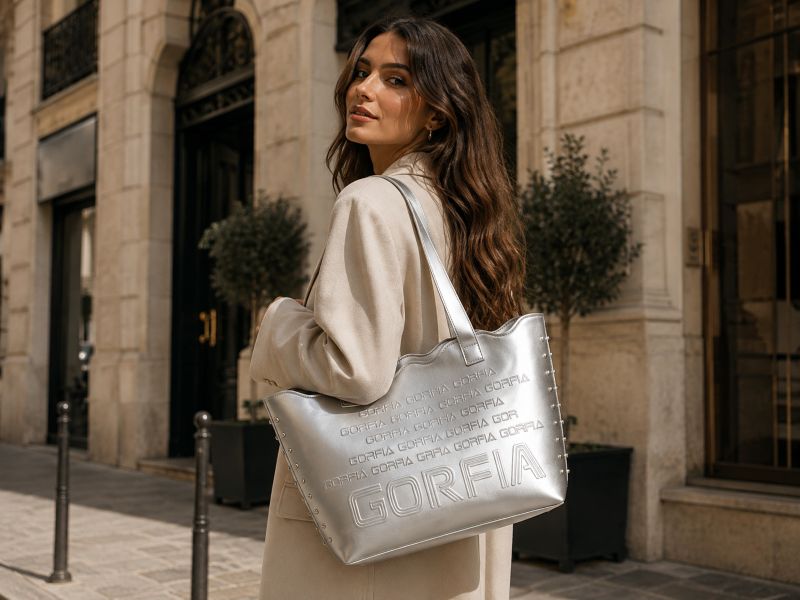
Leave room around folds and openings
Flexible areas need space to move. If studs sit too close to a fold, corner, or opening, repeated movement can pull the material in several directions.
Also check what touches your hands, hip, and clothing. Good placement should improve style without reducing functionality.
How to Style and Care for Studded Purses
Match the hardware to your wardrobe
Black leather with silver studs works well with denim, neutral clothing, and simple dresses. Suede with warmer metal leans more boho, while minimal stud details can fit polished work outfits.
Choose the scale and density that match what you already love to wear.
Care for the material and metal
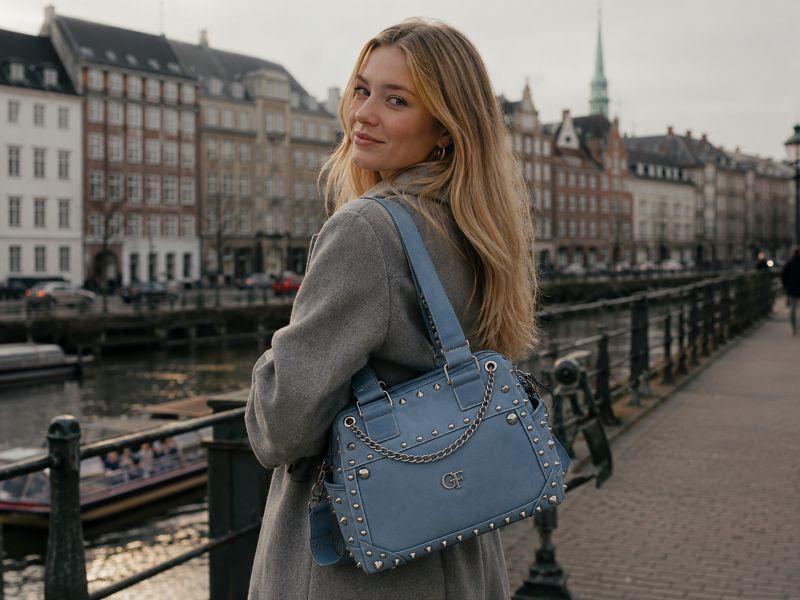
Clean the bag according to the base material, rather than treating leather, suede, and PU the same. Avoid aggressive rubbing on plated hardware, and do not store a heavily studded panel pressed against another surface.
Guidance on caring for leather with metal components also notes that metal parts can contribute to deterioration where they contact leather. Gentle handling and sensible storage can help reduce avoidable damage.
What to Check Before Buying a Studded Purse
Inspect the surface, not just the studs
Look for consistent hardware with no obvious pulling, enlarged holes, deep dents, or wrinkles. Check the stud edges for roughness, then inspect openings, corners, and flexible side panels closely.
A bag can look good from a distance while showing early stress around individual attachment points.
Test comfort, weight, and shape
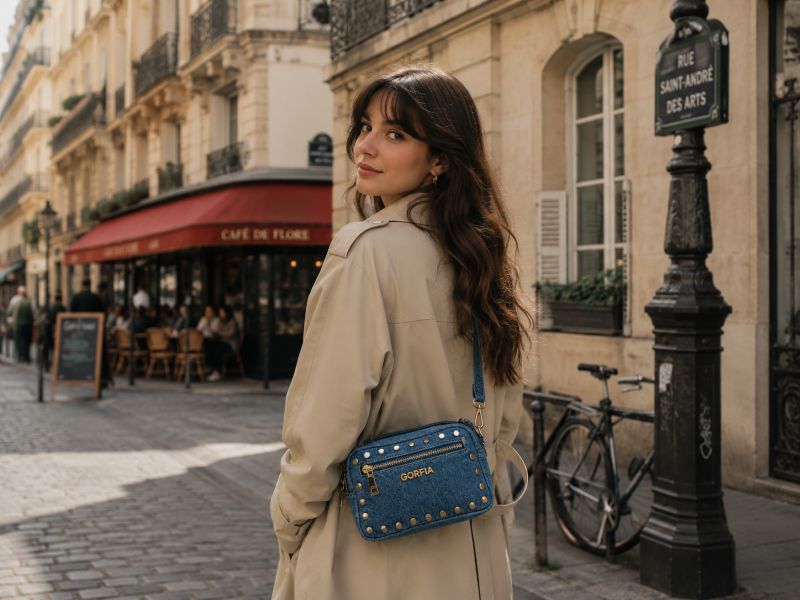
Try the bag the way you plan to carry it. A crossbody should not scrape the hip, and a shoulder bag should not put raised hardware against the arm.
Add your normal essentials if possible. The bag should still feel balanced and keep its intended shape when loaded.
What Brands Should Check When Developing Studded Handbags?
Brands should approve stud diameter, stem length, weight, finish, spacing, and base material together. If the material is soft, test local reinforcement before stiffening the whole panel.
For brands working through a custom bag development program, make this decision during sampling rather than after the decorative pattern is locked.
A placement template helps control spacing and mixed stud sizes across a collection. Pay extra attention to openings, side folds, corners, handles, and strap attachment zones.
Designers can also use sample development support to check whether a pattern that looks balanced on a flat panel still works after assembly.
Test the complete loaded bag
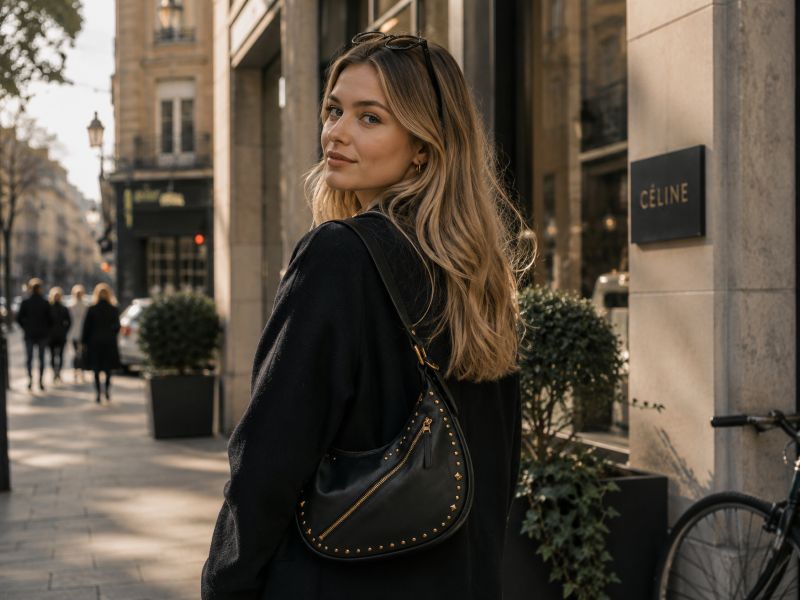
A stud pull test is useful, but it does not show how the finished product behaves in use. Load the sample, repeat normal bending, check shape retention, and inspect the material around each stud afterward.
For leather, tear-strength testing adds another material check. For plated studs, inspect the surface finish, edges, and attachment quality.
Before bulk production, record the approved stud type, placement, reinforcement, and sample result. This gives design, sourcing, and production teams one clear reference instead of relying on appearance alone.
FAQs
Are studded handbags still in style?
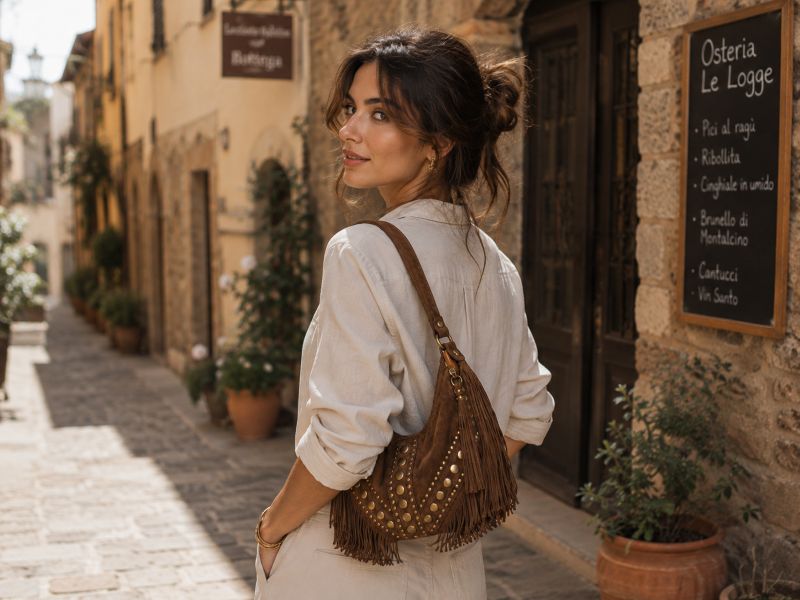
Yes. Studded details returned strongly in 2025, and stud-accented handbags continued appearing in 2026 trend coverage. Current styles range from subtle hardware to bold decoration.
Are studded leather purses heavy?
They can be. Weight depends on the bag size, leather thickness, stud material, stud size, and how densely the studs are placed.
Can studs damage clothing?
Raised or rough-edged studs can catch delicate clothing, especially on areas of the bag that regularly rub against the body.
Do studs fall off leather bags?
They can, but attachment failure is not the only problem. The leather or PU around a stud hole may stretch, wrinkle, or tear even while the stud remains attached.
Is leather or suede better for a studded bag?
Neither is always better. Leather often gives more structure, while suede creates a softer look. Choose according to the bag shape, intended use, and stud placement.
Conclusion
A studded purse should still feel like a good choice after the first impression wears off.
Before buying, carry it with your usual essentials and look closely at the areas around the studs. If the bag stays comfortable, keeps its shape, and shows no pulling or wrinkling around the hardware, the design is doing its job.
Still deciding which material suits you best? Our guide to real vs. faux leather for handbags can help you compare durability, feel, and everyday performance before choosing your next bag.
Develop Your Studded Bag with Gorfia
Ready to Develop Your Studded Bag Collection?
Great studded bag design comes down to the details—from material selection and stud placement to reinforcement and construction. Explore Gorfia’s custom bag development to see how we support brands in turning design concepts into well-developed, production-ready products.
Ready to move from concept to sample? Contact our team to discuss your specifications, customization options, and next steps.