
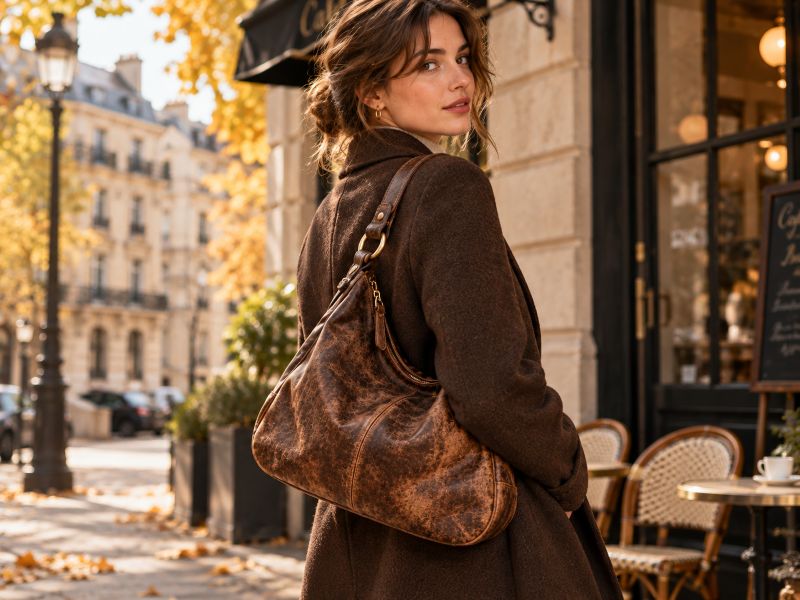
A distressed leather bag is meant to look as though it already has a story. Uneven color, light scratches, creases, and softened areas create its lived-in character, but they can also make the leather harder to judge. The challenge is knowing whether a visible mark is part of the intended finish or signals early material damage.
Within brand teams, product, buying, and QA staff can have different views on where to draw the line for acceptable distressing.
This guide explains how to tell them apart, what to check as the leather changes with use, and how brands can define acceptable variation before production.
What Makes Distressed Leather Handbags Different?
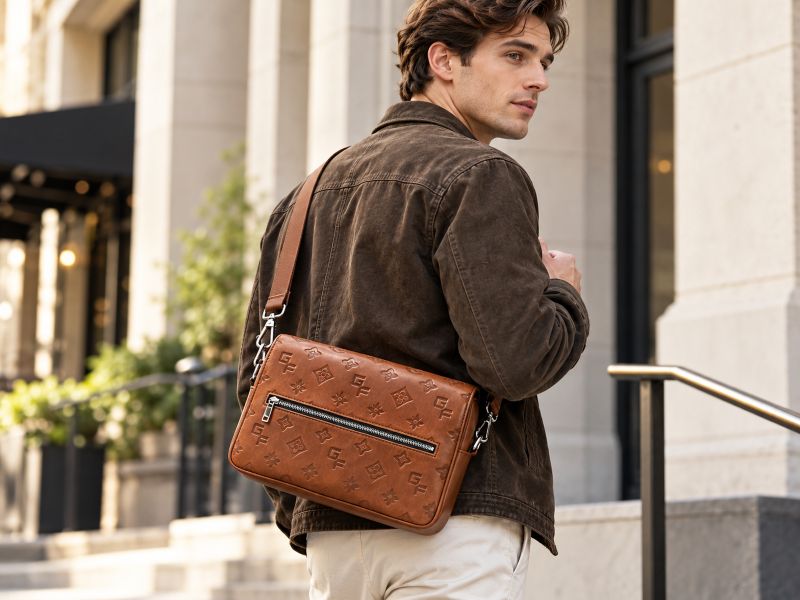
Distressed leather is a broad style of leather finish designed to look aged, worn, or less uniform than polished leather. The effect may come from dyeing, waxes, oils, rubbing, buffing, or other finishing techniques. Small scratches, creases, tonal shifts, and grain variation may therefore be part of the intended look rather than something the owner needs to hide.
Different leather structures and finishes respond differently to rubbing, flexing, moisture, and everyday wear. Full-grain, corrected-grain, aniline, pigmented, and pull-up leathers have different surface characteristics, as explained in this leather industry terminology guide. Because distressing is applied to these different surfaces, two bags may look similar when new but develop different levels of patina, tonal variation, or surface wear over time.
Distressed Leather or Actual Damage?
Instead of judging the mark by appearance alone, check how the surface behaves. Start by checking whether the variation sits only in the finish or affects the leather underneath. Then gently flex the area. Normal distressed variation should generally move with the leather, while cracking that opens further when you flex it deserves closer attention.
Lightly rub the area with a clean, dry cloth. If the finish starts lifting, flaking, or separating from the base material, that points more toward damage than intentional distressing. Finish peeling and delamination are recognized leather-performance failures because they involve separation between the surface coating and the leather substrate.
Finally, watch whether the affected area stays stable. A superficial mark that stays unchanged may be part of the distressed finish. A crack, peeled edge, or weak spot that keeps spreading with gentle handling should be treated as a quality concern.
Distressed Finish vs Normal Aging vs Leather Damage
| What You See | Intended Distressing | Normal Aging | Possible Damage |
| Color variation | Present from the start | Develops gradually with use | Sudden or severe color loss |
| Light scratches | May be part of the finish | Can increase gradually | Deep cuts affecting the leather |
| Creases | May be intentionally visible | Increase at repeated flex points | Cracks open when flexed |
| Surface feel | Uneven but stable | May become smoother or polished | Finish lifts, flakes, or separates |
| Change over time | Mostly stable | Gradual | Continues spreading or worsening |
How to Choose a Distressed Leather Bag
Choose the Level of Distressing
Start by judging the visible intensity of the finish, not the leather color alone.
A lightly distressed bag usually has low tonal contrast, faint scuffing, softer crease lines, and relatively even edges. A heavily distressed finish shows stronger light-to-dark variation, more obvious scuffs, deeper creases, and greater edge wear.
Intensity alone, however, does not determine whether the finish is well controlled. Look at how these effects are distributed across the bag. Distressing should appear consistent with the intended design rather than becoming unusually concentrated on one panel or contact area.
Then consider whether visible scuffing comes from the intended finish or from surface wear. Repeated abrasion can cause marring and color change, so evaluate changes that develop through rubbing separately from the distressing already present when the bag was made.
How Bag Shape Changes the Distressed Finish
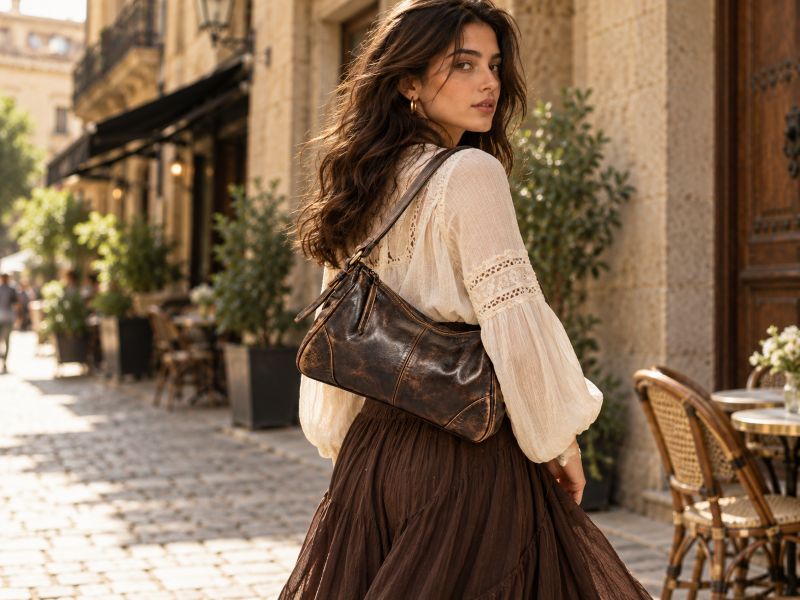
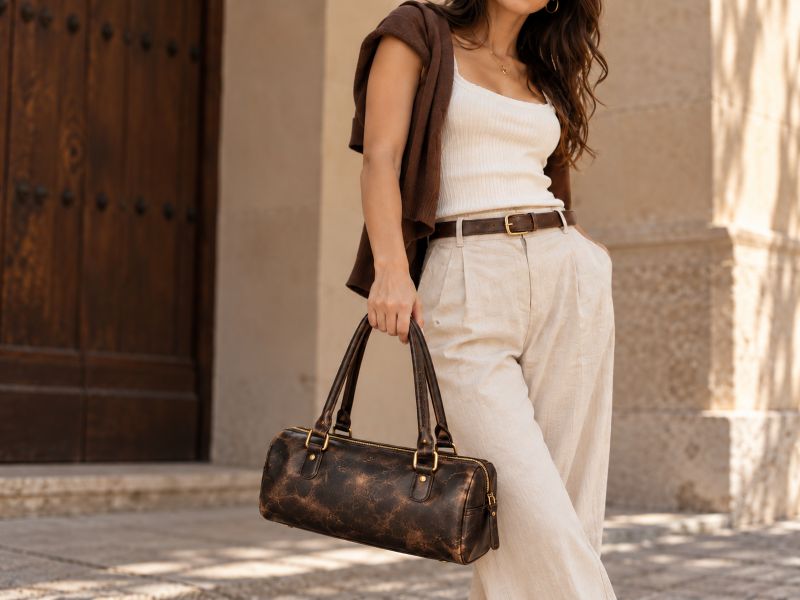
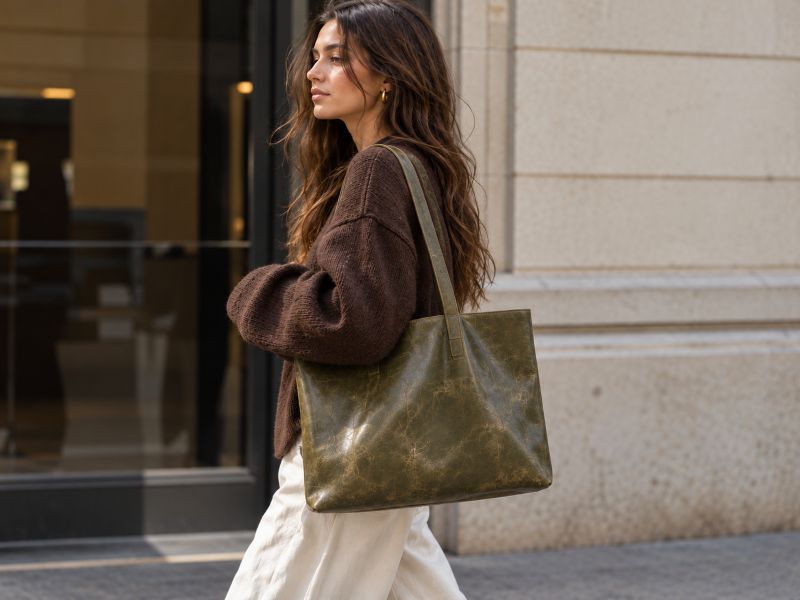
Bag shape changes how distressed leather is seen and how it wears. A large tote exposes broad, uninterrupted panels, so tonal variation and scuffing are easier to notice across the surface. A smaller shoulder bag breaks the leather into tighter areas, which can make the same distressing feel more controlled.
Structure matters just as much as size. On a rigid bag, distressing stays easier to compare across flat panels. On a soft or slouchy bag, folds, shadows, and flex points can make the same finish appear more varied.
For structured styles, check whether the finish looks balanced across larger panels. On softer bags, focus on fold lines, corners, and repeated flex points, where the surface changes more with use. Repeated flexing can reveal cracking or other finish failures in leather, so these areas deserve closer inspection.
Where Distressed Leather Bags Show Wear First
A distressed leather purse continues to change through handling, friction, and flexing. Over time, the color may deepen, the grain may smooth, and creases may become more visible. These changes tend to appear first in high-contact areas such as handles, corners, openings, and the back panel.
Top handles may gradually darken and smooth, while the back panel can develop more polish where it repeatedly touches clothing. These changes can be part of normal use, while rapid color loss, peeling, or deep cracking deserves closer inspection.
Friction can also cause marring or color transfer when the finish lacks sufficient resistance, making high-contact areas useful indicators of how the leather performs in use.
How to Care for Distressed Leather
Do not try to remove every mark from distressed leather, as some scratches, tonal variation, and creasing are part of the intended finish. Before cleaning, check the bag’s care instructions and make sure the product suits that type of leather. If you are unsure how the finish will react, test the product on a small hidden area first.
Professional handbag care advice also warns against common household cleaning methods, as unsuitable products can damage certain leather finishes. Use a soft cloth for light surface dirt and avoid aggressive rubbing. Test any product on a hidden area first, especially on aniline, pull-up, or heavily distressed leather.
For storage, avoid crushing the bag’s shape. If it has a removable strap, place the strap inside or beside the bag rather than wrapping it tightly around the body.
What Brands Should Check Before Production
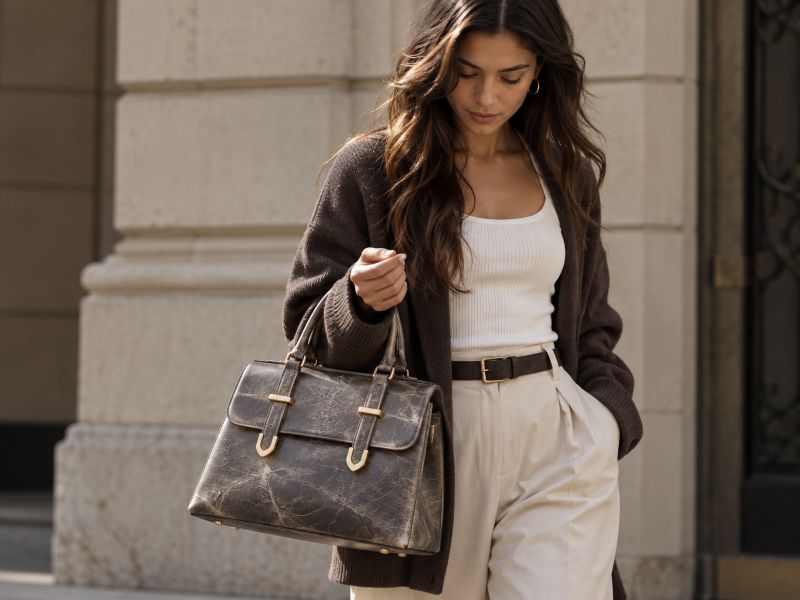
For brands, the main challenge is turning an approved distressed look into a standard that production and QC teams can repeat. Because variation is part of the design, the specification should define what may vary and what must remain consistent.
Turn the Approved Finish Into a Production Reference
Do not approve a distressed finish from a small leather swatch alone. Review production-size panels after stitching and shaping, as waxed or pull-up leather can show stronger color contrast where the material folds or stretches.
For the approved sample, document acceptable distressing placement, photograph key panels under fixed lighting, and keep matching leather cuttings as references. This gives production and QC a practical standard to compare later batches against.
Define Acceptable Variation Ranges
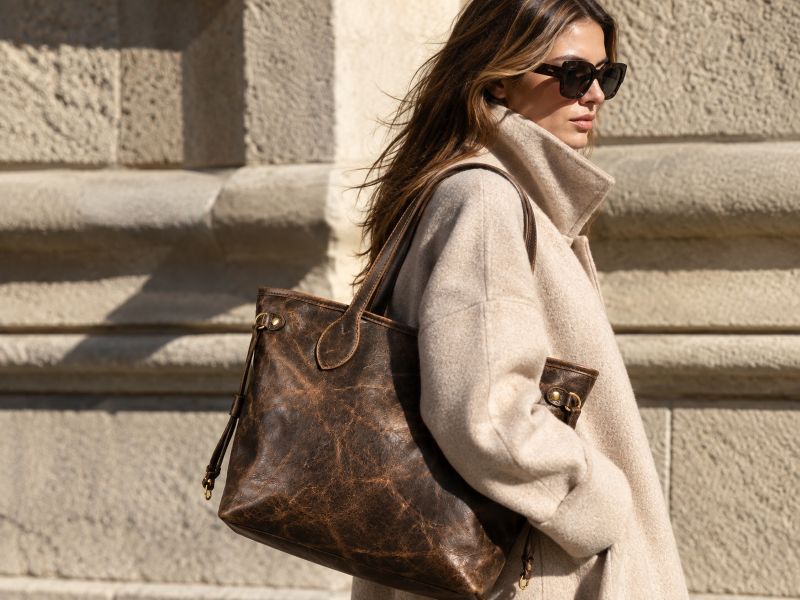
Instead of asking bulk production to match one bag exactly, establish an acceptable visual range. This can include the lightest and darkest acceptable tone, grain variation, scuff intensity, and degree of creasing. Experts recommend agreed standards such as color windows and grain references so inspectors have clear upper and lower limits rather than relying on subjective judgment.
A small reference set of approved examples can be more useful than written terms such as “medium distressed.”
Add Performance Checks to the Visual Standard
Appearance approval should not replace performance testing. Where the leather has a substantial surface finish, check that the coating remains attached during handling and flexing. A suitable method for heavily finished leather is the peeling and delamination test, which evaluates whether the finish film separates from the underlying leather. Also test rubbing, flexing, and the high-contact areas relevant to the actual bag design.
Compare Pre-Production Samples Side by Side
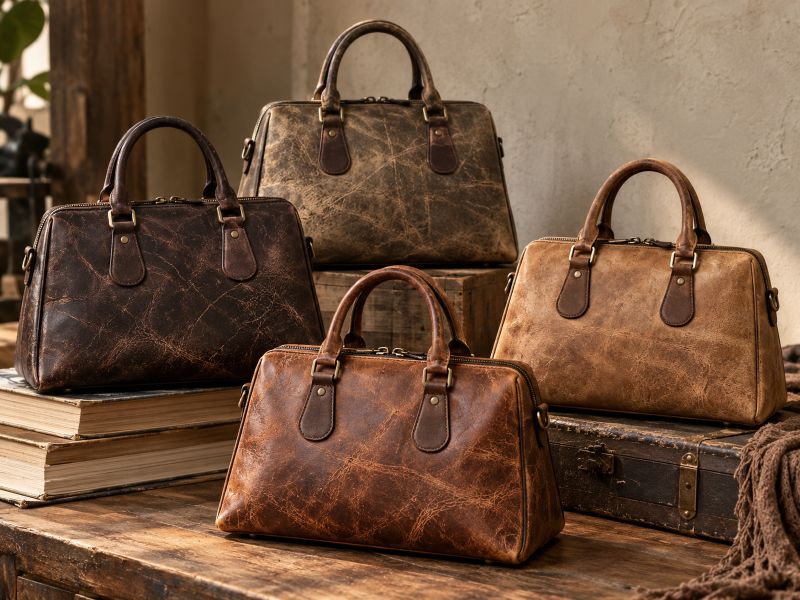
Before bulk production, review several bags together under the same lighting. Compare overall distressing level, panel-to-panel color balance, hardware placement, pocket position, and finished shape. Side-by-side review makes production drift easier to detect than inspecting each bag in isolation.
The final QC reference should include the approved sample, examples of acceptable variation, performance requirements, and clear rejection criteria. This gives sourcing, production, and inspection teams one shared standard for the entire run.
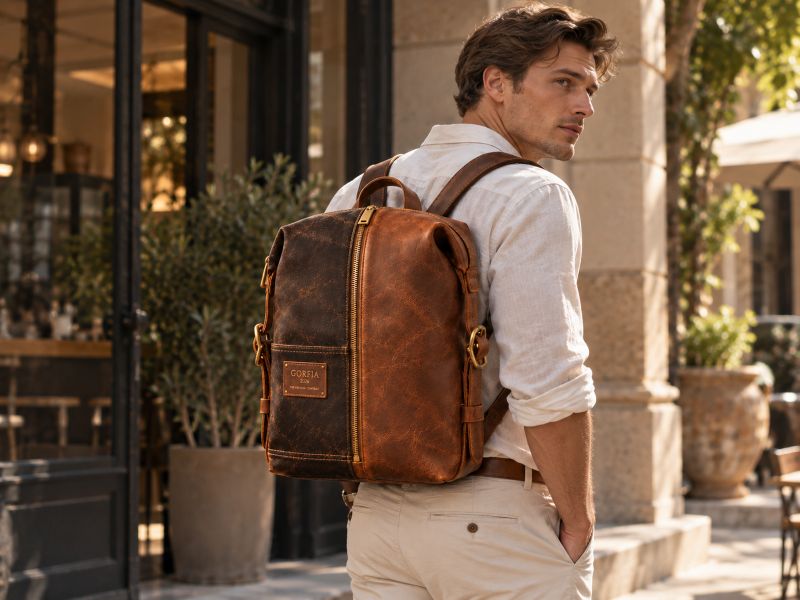
FAQs
Is distressed leather supposed to look scratched?
Yes. Light scratches and uneven color can be part of the intended distressed leather finish. Deep cracks, peeling, or weak areas are different.
Does distressed leather get better with age?
It can develop more character as handling creates additional patina, smoothing, and tonal variation. The result depends on the leather and finish.
Should a distressed leather shoulder bag have an adjustable strap?
An adjustable strap can make a shoulder bag more versatile. Make sure the buckle, rings, and attachment points are strong enough for the intended load.
Is a removable strap the same as a detachable strap?
Usually, yes. Both terms describe a strap you can remove from the bag. What matters most is the clip quality and attachment strength.
Do top handles age faster on distressed leather?
Often, because top handles receive frequent hand contact, gradual darkening and smoothing can be normal; rapid peeling or severe color loss is not.
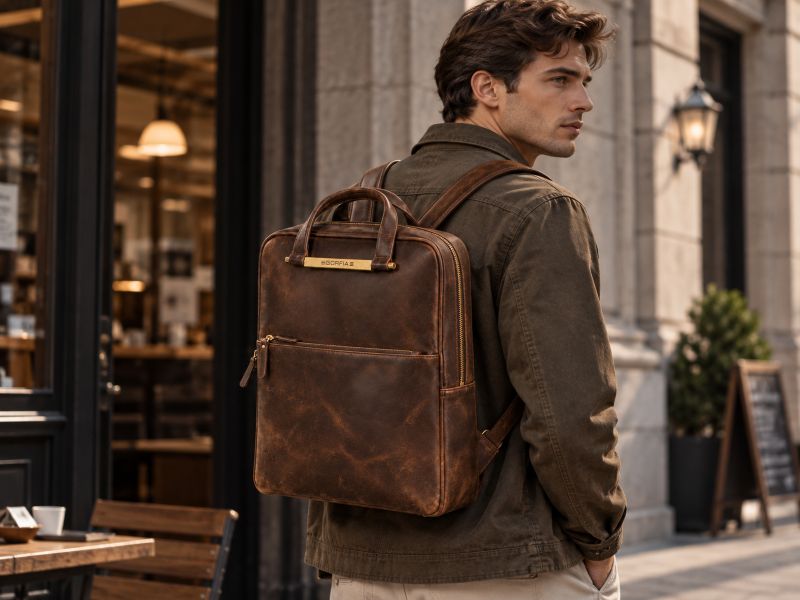
Conclusion
A good distressed leather bag does not need a perfectly uniform surface. What matters is whether the variation looks intentional and whether the leather remains sound beneath the worn effect. If the finish develops character without hiding peeling, cracking, or weak construction, the lived-in look is doing its job. For more material-focused guidance, Gorfia’s leather comparison guide can help you understand how different leather and faux-leather options behave as bags develop.
Develop a Distressed Leather Bag With Gorfia
If your brand is developing a distressed leather collection, Gorfia can support material selection, sampling, finish approval, and production preparation. Contact the Gorfia team to discuss the distressed finish and construction details you want to validate before bulk production.