
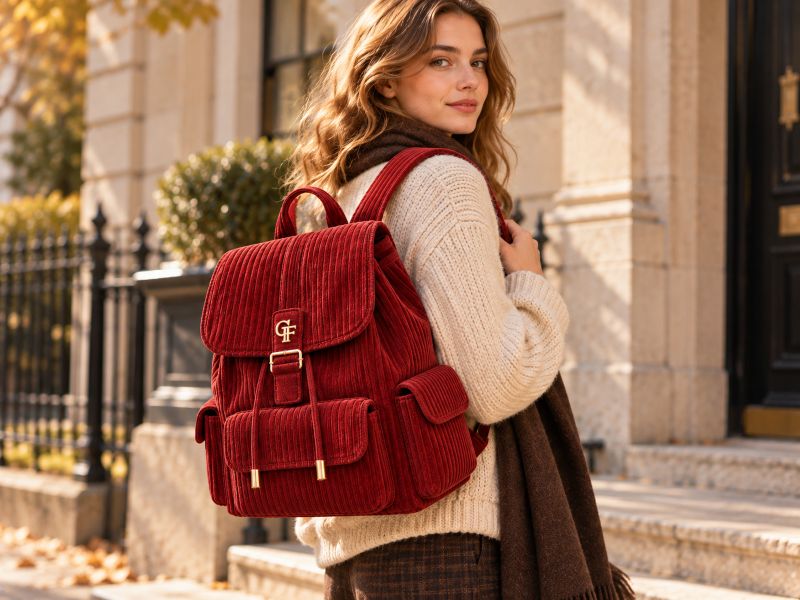
Corduroy bags add a distinctive ribbed texture and vintage-inspired feel to crossbody bags, purses, and corduroy tote bags. Each bag style uses the material differently, from compact everyday designs to larger totes with more carrying space.
However, a corduroy bag’s quality goes beyond its outer fabric. Design and construction also shape its appearance, durability, and everyday use. These factors matter to both buyers and brands.
How Fabric Selection Affects Corduroy Bag Quality
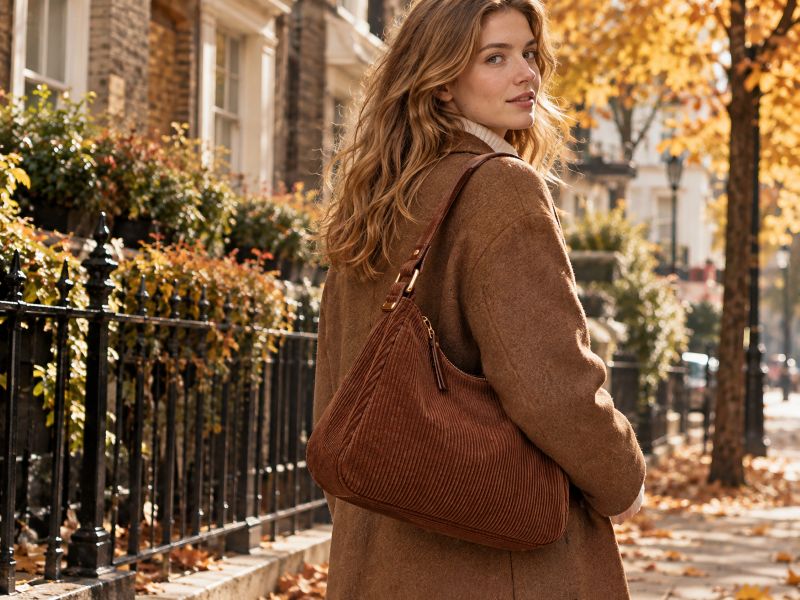
Choosing corduroy for a handbag starts with the look you want. The width of the raised ribs, known as wale size, can make a noticeable difference. Fine-wale corduroy gives smaller corduroy handbags a cleaner, more subtle look, while wider ribs add a stronger texture that often suits larger totes and casual styles.
Next, consider fabric weight. Lighter corduroy works well for soft, relaxed bags because it drapes more easily. Heavier fabric can give a bag more shape, although the final result also depends on how the bag is made. For a structured design using soft corduroy, an extra layer of support may help it hold its form.
The fabric backing matters when making the bag. A firmer backing helps keep seams and pockets stable, especially where hardware attaches. A lighter backing allows the material to bend more naturally.
One detail worth checking is the direction of the ribs. Corduroy’s surface texture catches light differently depending on the direction of the ribs, so two panels made from the same fabric may look slightly different in color. For brands, checking the fabric on a finished sample is often more useful than judging it from a small swatch alone.
What Makes a Corduroy Bag Look Premium?
Internal structure often determines whether a corduroy bag looks refined or more like a simple fabric tote. The goal is to create enough definition around the base, opening, and main panels while preserving the softness and visible corduroy texture.
Because corduroy is naturally soft, the bag structure can use lining, interfacing, and selective support instead of making the entire body rigid. The right balance creates a cleaner silhouette while keeping the surface texture as part of the design.
This balance is especially important when developing a premium product. Structure should complement the intended shape and corduroy material, not change the soft character that makes the fabric distinctive.
Construction Techniques for Durable Corduroy Handbags
Corduroy bags often wear most around straps, pockets, and other frequently handled areas. These parts need strong seams and proper reinforcement to prevent the fabric from stretching or weakening over time.
The raised ribs of corduroy can also wear down from repeated rubbing, especially where the bag rubs against clothing or other surfaces. Checking the fabric’s abrasion resistance helps brands understand how well it may hold up during daily use.
Small design details can also make a difference. For example, placing hardware or closures where they constantly rub against the corduroy may flatten the ribs or leave visible marks. Adjusting their position and protecting high-contact areas can help the bag keep its original texture for longer.
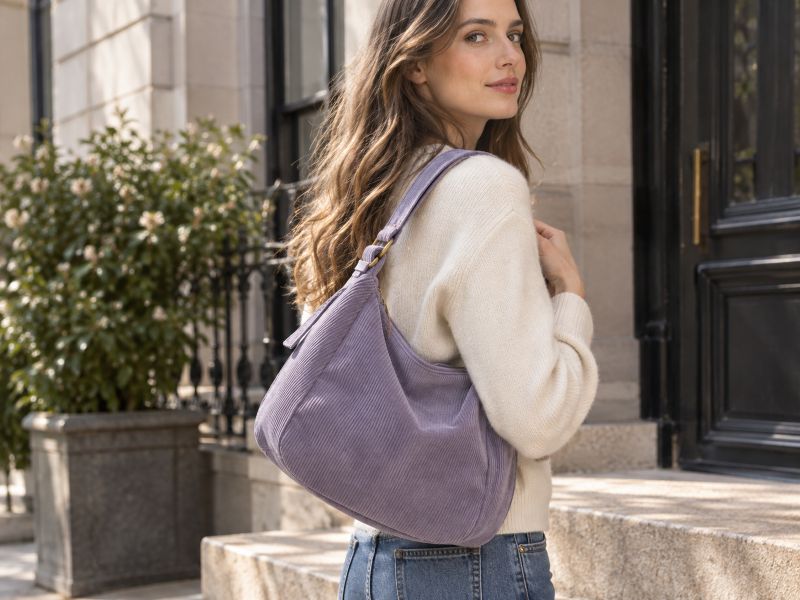
Corduroy Crossbody Bag Case Study
During the sample development of one corduroy crossbody bag, the first sample looked attractive when empty. After carrying daily essentials, the lower corners softened, and the body lost some of its original shape.
The issue stemmed from insufficient support in the base area, not the corduroy fabric itself. We adjusted the internal construction around the base and side panels while keeping the upper body flexible.
The revised sample retained its shape better during use without losing the soft texture expected from corduroy.
Popular Corduroy Bag Styles and Design Directions
Corduroy works across bag shapes, from a compact crossbody to a larger corduroy tote, because its textured surface can look relaxed or structured. The best bag design depends on intended capacity, carrying style, and support needs.
| Corduroy Bag Style | Recommended Structure | Key Construction Focus | Best For |
| Crossbody Bag | Light to medium | Strap reinforcement and stable pockets | Everyday casual use |
| Corduroy Tote Bag | Medium | Base support and reinforced handles | Larger carrying capacity |
| Purse / Handbag | Medium to structured | Stable opening and clean finishing | Refined fashion collections |
Corduroy Crossbody Bags
Corduroy crossbody bags work well for compact everyday designs where comfort and accessibility are priorities. Adjustable straps, secure closures, and well-positioned pockets can make smaller styles practical without adding unnecessary bulk. Because crossbody bags put more pressure on specific areas, fabric weight and backing choice are especially important for balancing softness and structure.
Corduroy Tote Bag Design
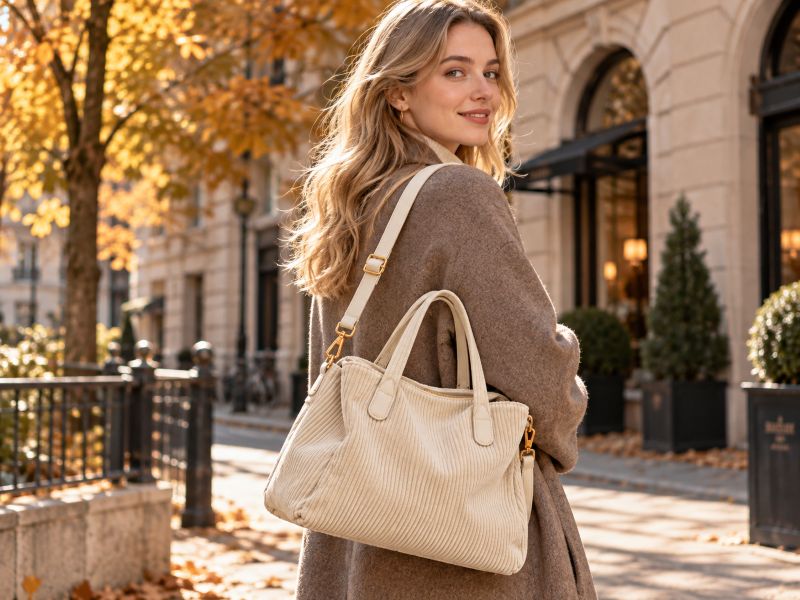
A corduroy tote bag provides more room for work, shopping, or everyday accessories. This bag style can use a wider opening for easier access, while handle length and pocket placement should match how the corduroy tote bag is intended to be carried and organized. The larger surface area also makes wale direction and fabric consistency more visible, which can affect the collection’s final appearance.
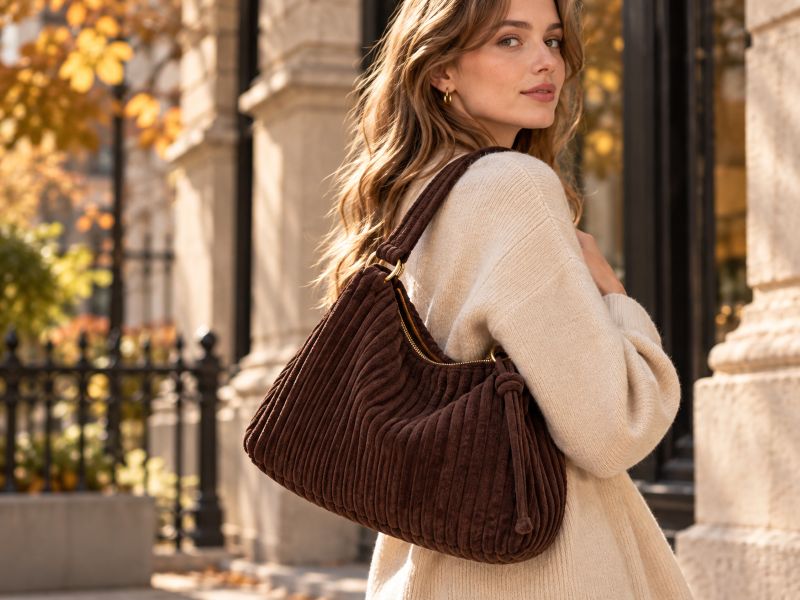
Corduroy Purses and Handbags
Smaller corduroy purses and handbags allow more emphasis on silhouette, hardware, closures, and finishing details. Designers can also use the direction and scale of the corduroy ribs as a visible design feature, especially on smaller panels where the texture is more noticeable.
Corduroy Bag Colors and Styling Trends
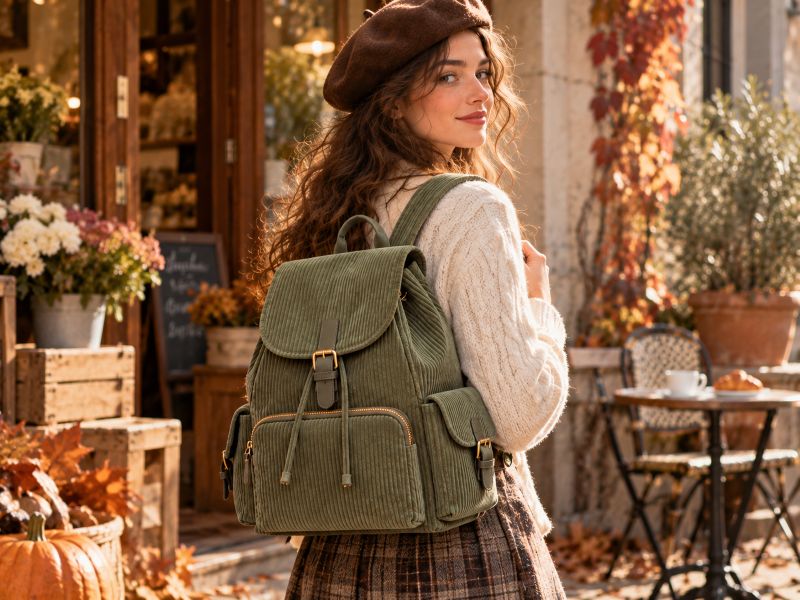
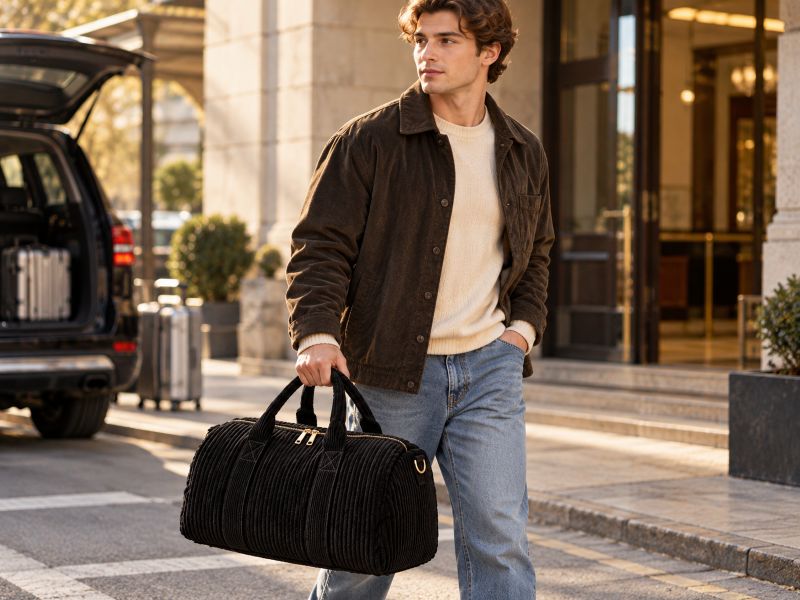
Corduroy is especially popular in autumn and winter collections because its textured surface pairs naturally with seasonal clothing and layered looks. For a corduroy tote bag or smaller bag style, brown, beige, olive green, black, and burgundy can emphasize the fabric’s warm, casual, and vintage-inspired feel.
Color can also shape how a corduroy tote bag fits within a collection. Neutral shades can suit an everyday corduroy tote bag, while deeper seasonal colors can create a more distinctive bag for brands targeting trend-focused customers.
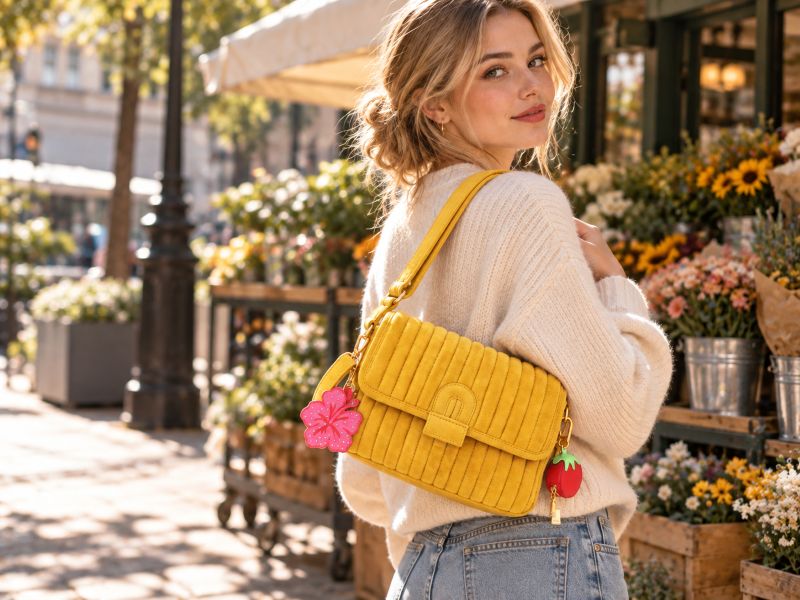
Manufacturing Checklist for a Corduroy Tote Bag
Before mass production, brands should confirm that the approved corduroy matches the sample in fabric weight, wale size, surface appearance, and backing. Consistency matters because visible changes in rib width or texture can alter the finished collection’s appearance.
For a corduroy tote bag, the approved sample should establish the final bag dimensions, hardware, lining, pocket placement, closures, and stitching details. These specifications give production teams a clear reference for quality control when checking each finished bag.
Corduroy also requires attention to fabric direction during cutting and assembly. Keep the wale direction consistent across visible panels unless a contrasting direction is an intentional part of the bag design.
FAQ
Is a Corduroy Tote Bag Suitable for Year-Round Use?
Yes. Though corduroy is typically linked to fall‑winter styling, it works year‑round. Lighter‑weight fabric and pale tones soften its seasonal feel, while heavy wide‑wale versions stay best for cooler months.
How Should You Clean a Corduroy Tote Bag?
Always follow the bag’s care instructions based on fabric, lining, hardware and construction. Handle the wale surface gently to prevent flattening from hard rubbing.
Does a Corduroy Tote Bag Attract Lint?
Yes, its textured wale surface shows lint more than smooth fabrics. Gentle regular brushing helps manage loose fibers, with darker hues showing lint most noticeably.
Can brands customize corduroy bags?
Yes. Brands can customize a corduroy tote bag or other bag style with different colors, linings, hardware, pockets, and branding details. Material selection and sample development help determine which combination works best for the intended bag.
Conclusion
Corduroy gives bag designers a distinctive combination of texture, softness, and visual character. Choosing the right wale size, fabric weight, and silhouette allows these qualities to become part of the design rather than simply using corduroy as an alternative outer fabric.
For brands, the next step is to develop and evaluate the complete product before production. Whether developing a compact crossbody or a corduroy tote bag, the finished bag should reflect the intended market, carrying style, and visual direction while preserving the characteristics that make corduroy distinctive.
Develop Your Corduroy Tote Bag with Gorfia
As a corduroy bag manufacturer, Gorfia helps brands develop custom corduroy bags from material selection and sample development through production. Depending on the intended design and market, brands can explore custom colors, hardware options, and logo customization to create a more distinctive collection.
Explore our homepage to learn more about our manufacturing capabilities or contact us to discuss your corduroy tote bag design and production requirements.