
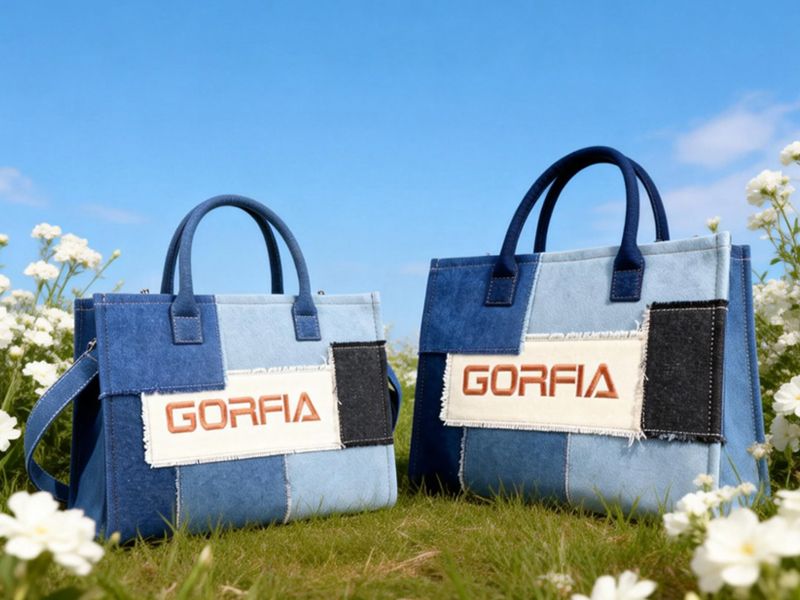

Scaling patchwork handbags can help B2B brands offer distinctive products while maintaining quality across larger production runs.
For over twenty years, we have developed technical workflows and multi-stage inspections to minimize defects and maintain batch consistency for our global partners.
If your patchwork bags look great in samples but fall apart at scale, the issue is often not the design itself.
It’s how production is controlled across materials, stitching, and structure. You will learn how to identify production risks early, protecting both your margins and your brand’s reputation across every order.
Let’s explore the specific processes that make high-volume patchwork production a reliable success for your brand.

Discover the Strategic Value of Patchwork Bags for Your Brand
Patchwork bags can help differentiate a product in a crowded handbag market. Consistent production supports more predictable product quality across batches. If quality shifts between batches, the brand value breaks. Consistency is what protects pricing, margins, and perception.
Most production failures start early. Inconsistent material batches lead to uneven panels. Misaligned patches weaken seams. Weak seams cause structural collapse after limited use. What begins as a small control issue ends as a product failure.
Details like zigzag stitching and raw-edge finishes are not decoration. They signal correct pattern engineering and controlled assembly. Clean edges show proper seam allowance. Even stitching indicates calibrated machinery and stable processes, supporting consistent construction quality.
Ignoring these decisions carries real risk. The wrong factory increases defect rates and slows scale. Returns rise. Timelines slip. Margins shrink. Over time, inconsistent supply limits growth and erodes brand trust.
In the sections below, this checklist breaks down the production steps that matter most. It shows how to evaluate suppliers before quality becomes a liability.
Step 1 — Fabric Planning & Material Sourcing for Batch Consistency

Patchwork production relies on multiple materials coming together into a single product. Any variation in texture, thickness, or color multiplies across the design. That makes patchwork far more likely to lose control at the material stage. The first critical stage of manufacturing involves technical planning around materials. It’s important and directly determines the final product’s cost, texture, and durability.
Selection of Outer Fabrics
The choice of outer material defines the product’s durability and textural aesthetic. For B2B production, batch consistency is non-negotiable. High-volume orders must look identical to protect brand uniformity.
Leather & Alternatives
Genuine leather delivers premium appeal and develops a natural patina over time. It also demands higher stitching precision during patchwork assembly. Leather exposes cutting errors and seam misalignment immediately. Choosing leather sets a higher technical standard for the factory.
Vegan leather, PU leather, and suede offer greater control at scale. They help minimize color and texture variations across batches, supporting more predictable results at scale. These alternatives often present better yield optimization in pattern cutting.
Canvas and denim are common choices for casual patchwork bags. They offer strength and wear resistance on their own.
In patchwork, these materials introduce added complexity. Multiple fabric pieces can fade at different rates. Variations in weave or dye lot disrupt color consistency across panels.
Mixing fabric weights creates local sagging or uneven stretch over time.
When you choose a partner, make sure they source canvas and denim from certified mills.
This keeps quality uniform across your entire order. Consistent weight and weave matter.
Strong colorfastness matters too. These controls prevent minor material flaws from weakening the structure or affecting the look of your collection.
Colorfastness should meet industry-standard guidelines to reduce the risk of fading. Material weight is typically controlled to maintain consistency across batches. For example, specifying 10oz or 12oz canvas controls stiffness and strength.
Engineering the Inner Lining for Function and Feel
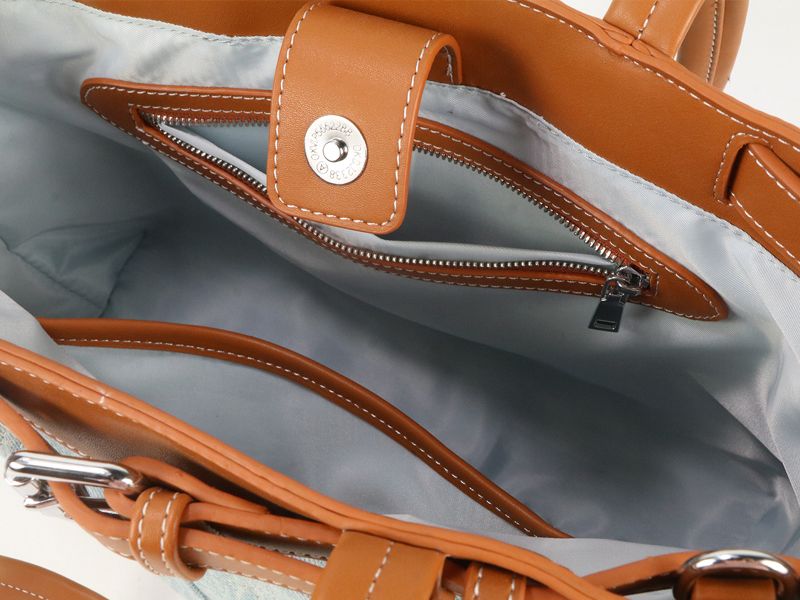
The lining shapes how the bag feels in your hand. It also affects long-term durability and daily performance.
Material Options
In patchwork construction, material choice carries a higher risk. Multiple fabric pieces of varying weights and textures amplify structural issues. Small inconsistencies spread across the entire bag.
Uneven thickness weakens seams. Weight differences cause local sagging or stretching.
Texture mismatches affect stitch tension and long-term durability. Because of this, material selection in patchwork is a structural decision, not a styling one.
Branding Opportunity
The lining offers more than function. It creates space for custom prints, woven labels, or subtle logos. This turns the interior into a branded experience without weakening the structure.
Data-Driven Color Combinations for Market Appeal

Patchwork magnifies market risk when color decisions are made without data. Poor color planning weakens brand recognition and limits repeat performance across collections. At scale, this inconsistency hurts sell-through and increases markdown pressure.
The solution is data-driven color selection. Manufacturers must base color decisions on market demand, trend validation, and buyer behavior. Pantone systems and market analytics provide an objective framework for decision-making. This removes guesswork from material procurement and production planning.
When the color strategy is controlled, business results improve. Brand identity stays consistent across releases. Returns caused by a mismatched expectation drop. Products perform better at retail and in wholesale channels. For B2B buyers, data-informed color planning can help align production with market trends, supporting more predictable product launches and consistent brand presentation.
Step 2 — Pattern Making & Construction Planning

Precise pattern engineering converts creative concepts into scalable production models. These technical blueprints ensure structural stability across complex geometric layouts.
Industrial Pattern Development for Patchwork
Pattern development determines whether patchwork production scales or breaks. Layout decisions affect material waste, labor time, and defect rates. Complex or poorly planned layouts increase cutting loss. They slow the assembly and raise the risk of misaligned panels. At volume, these inefficiencies inflate unit costs and reduce throughput.
Well-engineered patterns reduce risk in patchwork handbag manufacturing. They control waste by optimizing panel sizes. They also support repeatable stitching and stable assembly.
As a result, production lines run faster, and costs stay predictable. For your brand, precise patterns matter. They create clean alignment and balanced layouts. This signals quality and ensures every batch meets the same visual and structural standard.
Choosing the right pattern strategy protects margins. It supports efficient production and delivers consistent brand quality at scale.
Construction Planning by Technique
Choosing the wrong construction technique creates hidden production costs. Some methods are slow assembly. Others depend too heavily on operator skill. At scale, this leads to rework, uneven quality, and missed delivery targets.
The solution is deliberate technique planning. Each construction method must match the design, material behavior, and production volume. Simpler stitch structures scale faster and reduce labor dependency. More complex woven or layered techniques require tighter controls and higher-skilled operators.
This decision affects efficiency and brand quality. Well-matched techniques improve line speed and reduce defects. They produce bags that hold shape and perform under use.
Inconsistent techniques increase returns and damage brand trust.
For B2B buyers, the rule is clear. Choose construction methods that balance visual impact with production stability. In high-volume patchwork bag production, this balance protects margins. It also supports reliable scaling and consistent quality across every batch.
Step 3 — Precision Cutting & Block Arrangement
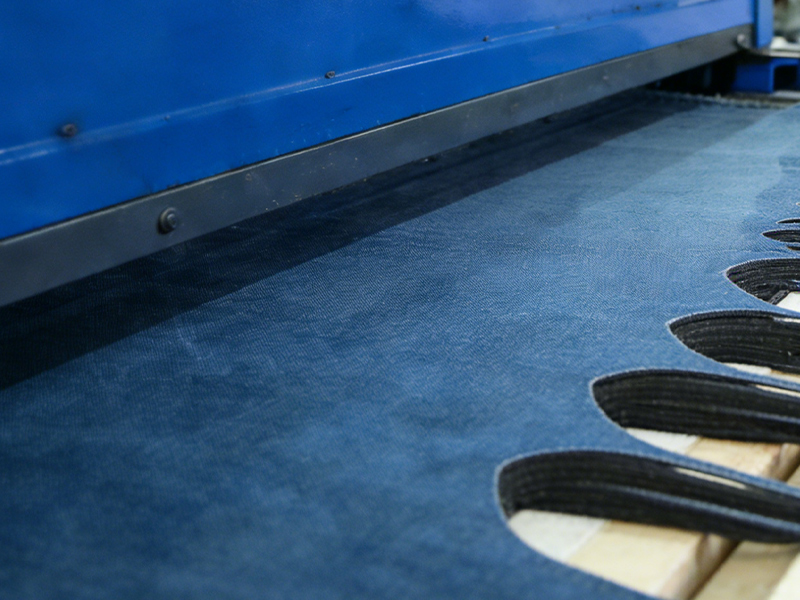
High-accuracy cutting and systematic arrangement eliminate assembly errors during mass production. These processes ensure that every component fits perfectly while maximizing material efficiency.
Cutting Precision for Diverse Materials
High-volume production depends on cutting accuracy. Even small errors at this stage lead to costly failures later in assembly. When cuts drift out of tolerance, panels stop aligning, and defects multiply.
To protect your investment, your manufacturer must match cutting technology to each material. Leather requires clicker presses or laser cutters to follow natural grain lines and reduce waste. Denim and canvas demand CNC cutting machines, which support fast production. It maintains millimeter-level precision.
Fit also depends on timing and process control. All inner components should be cut at the same time using the same digital patterns. This synchronized approach keeps every piece aligned during final assembly with structural integrity.
| Cutting Method | Best Use Case | Pros | Cons |
| Clicker Press / Die Cutting (Leather) | Repeat leather designs | Consistent shapes Controlled pressure Reliable for standardized designs | High tooling cost Low flexibility for frequent design changes |
| Laser Cutting (Leather & Synthetics) | Precision-focused designs | High precision Clean edges Minimal material waste | Slower cutting speed Higher operating cost Not suitable for thick stacks |
| CNC Cutting (Canvas & Denim) | High-volume textile production | High speed Excellent repeatability Scalable for bulk runs | Requires stable fabric tension Poor setup can cause drift errors |
| Manual Cutting (Sampling / Small Runs) | Prototyping or low volume | Low setup cost High flexibility for design testing | Inconsistent accuracy Not scalable High labor risk |
For B2B production, cutting decisions directly affect cost control and scalability. The wrong method increases waste and limits volume growth.
Block Arrangement and Layout Optimization
This stage transforms individual components into a physical patchwork design. Technicians arrange cut blocks using the master layout. This preserves visual balance and smooth color flow.
Systematic organization keeps every unit consistent across the production run.
Different styles need different cutting adjustments. Woven designs require precisely cut strips. Square patch styles need extra allowance for clean seams.
| Layout Strategy | Best Use Case | Pros | Cons |
| Standardized Master Layouts | High-volume, repeat production | Faster operator training Fewer assembly errors Consistent output across batches | Limited flexibility for custom or seasonal designs |
| Randomized Patch Layouts | Artisanal or design-led collections | Strong handcrafted appeal High visual uniqueness | Higher error risk Slower assembly More difficult quality control |
| Symmetrical / Geometric Layouts | Scalable, structured designs | Better structural balance Easier to scale Predictable stress distribution | Can feel less handcrafted if overused |
| Weight-Balanced Layout Planning | Load-bearing or structured bags | Reduces sagging and long-term distortion Improves durability | Requires upfront engineering Additional testing time |
For B2B buyers, layout decisions determine scalability. Well-planned layouts reduce defects and protect brand consistency. Poor layout choices limit growth and increase long-term returns.
Step 4 — Industrial Stitching & Patchwork Assembly
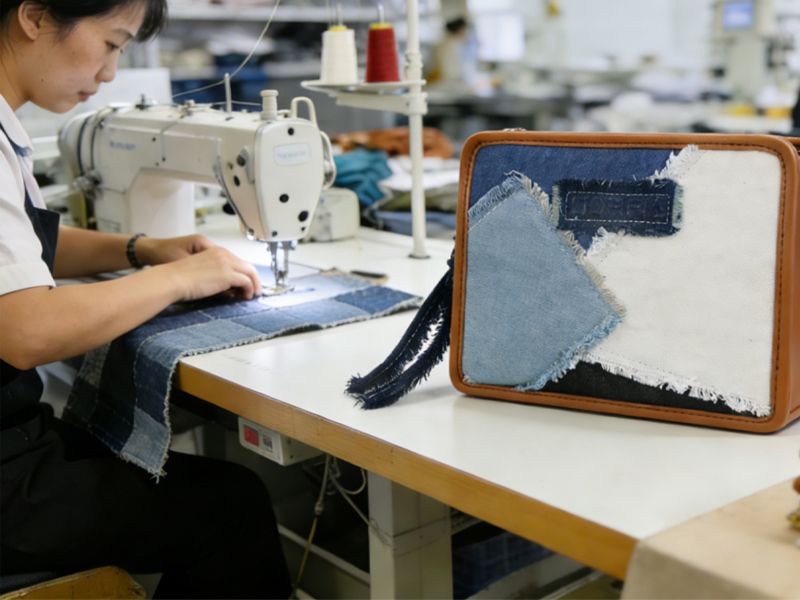
Transitioning from a beautiful sample to a thousand perfect units requires engineering. Advanced stitching techniques secure multi-layered materials and prevent premature seam failure. This section highlights the common assembly traps to avoid and the technical solutions that keep your customers coming back.
Problem: Why Stitching and Assembly Fail at Scale
Improper stitching and weak assembly methods trigger costly setbacks in your patchwork production.
Choosing an inappropriate stitch can increase the risk of seam failure and affect durability under heavy use.
At the same time, poorly calibrated machine settings worsen the issue by causing puckering and visible panel misalignment. As these errors compound, uncontrolled assembly sequences create glaring differences between batches.
At scale, these issues trigger rework, increase defect rates, and slow delivery schedules. They also compromise brand appearance. Customers notice uneven seams, loose joints, and early wear, which leads to higher return rates. Over time, brand trust erodes.
Solution: Controlled Stitching, Machinery, and Process Discipline
A disciplined combination of specialized machinery keeps your patchwork designs durable and consistent. We use specialized feeding systems to manage the thickness of a patchwork bag. These systems grip the fabric from both the top and bottom. So, materials stay stable and do not slide or bunch during assembly. This process remains the same even at high production speeds.
Your choice of stitching also directly impacts the bag’s lifespan:
- Reinforced Straight Stitches: These provide maximum strength for the seams that carry the most weight.
- Zigzag Stitches: These allow the fabric to “breathe” and stretch slightly without the thread snapping.
- Bar Tacks: These are concentrated, tight stitches used to double-reinforce high-stress areas like handle attachments.
Following a consistent assembly sequence and using standardized threads helps make production more predictable, supporting more uniform quality across units.

What This Delivers for B2B Buyers
Disciplined stitching and assembly methods streamline your entire supply chain by cutting down on rework and wasted material. These efficiencies allow production lines to move faster and more predictably, ensuring batch consistency even across large orders.
For your brand, the payoff is a more reliable product. Bags look uniform across every shipment, while structural failures and return rates drop.
This stability protects margins and supports long-term scaling. It also preserves brand quality in competitive retail and wholesale environments.
Choosing the Right Stitching Approach
Based on Material
- Leather: Use walking-foot or compound-feed machines with reinforced straight stitches
- Mixed textiles: Combine straight and zigzag stitches to balance strength and flexibility
Based on Style
- Structured totes: Prioritize reinforced seams and bar tacks at stress points
- Soft or casual styles: Allow controlled flexibility with zigzag stitching where needed
Based on Production Volume
- High volume: Favor standardized stitch programs and fixed assembly sequences
- Low volume or testing: Allow limited flexibility, but expect higher labor costs
A manufacturer’s stitching capability reflects the maturity of its operation. Working with a capable partner helps maintain quality and manage costs more effectively.
Step 5 — Bag Body Assembly and Structure Finalization

Structural engineering defines the bag’s silhouette and physical resilience during use. Proper internal reinforcement ensures the product retains its premium shape and functional integrity.
Creating a Structured Patchwork Bag
Some floppy bags signal weak manufacturing and poor durability. Structure should be engineered, not improvised.
Factories use foam stabilizers, fusible interfacing, or flexible boards. These materials sit between the outer shell and inner lining. They lock in shape and improve strength. This approach reinforces the bag’s body without adding unnecessary weight, solving a common challenge in patchwork production: weak structure can lead to collapse or early wear, which increases returns.
A well-engineered internal structure enhances the bag’s shape and stability, contributing to consistent presentation in retail environments.
Reinforcement methods must match the bag’s material and intended use. Structured patchwork bags benefit from foam stabilizers or rigid interfacing to maintain shape under load. Soft or casual designs require lighter reinforcements to avoid stiffness and distortion.
Heavier materials and load-bearing styles need reinforced seam zones and stress panels. Lighter fabrics require balanced reinforcement to prevent sagging without adding weight. Incorrect reinforcement choices lead to silhouette collapse, seam stress, and early wear.
For B2B buyers, proper reinforcement selection protects structural integrity at scale.
It ensures consistent shape across batches, reduces returns, and supports long-term brand performance. Proper structure remains a core benchmark of high-end manufacturing quality.
Step 6 — Hardware Installation and Final Details
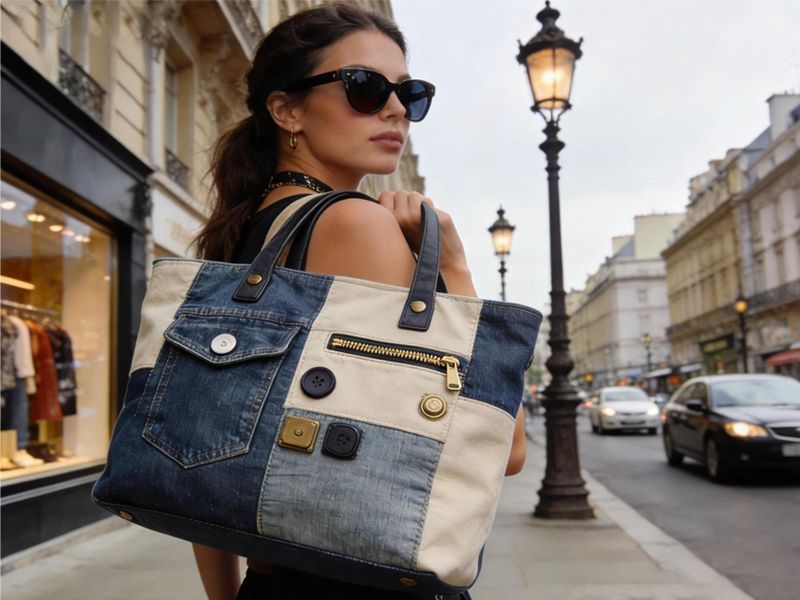
Hardware serves as the functional anchor of the bag, where mechanical precision meets daily utility. Expert installation prevents the most common post-purchase failures and ensures long-term operational reliability.
Installing Durable Bag Hardware
Hardware is a common failure point when installed poorly. Patchwork seams vary in thickness and demand precise mounting.
Technicians secure rivets, eyelets, and strap anchors through reinforced zones. Leather backings help distribute weight evenly. This reinforcement prevents tearing at high-stress connection points.
High-grade zippers, magnets, and buckles reduce dead-on-arrival defects. They protect your brand reputation. They also lower the administrative cost of returns.
Durable hardware extends product lifespan. It increases the perceived value of your patchwork bag line. Reliable components ensure smooth operation and long-term performance. This keeps your brand competitive in the market.
Step 7 — Rigorous Quality Inspection & Brand-Centric Packaging
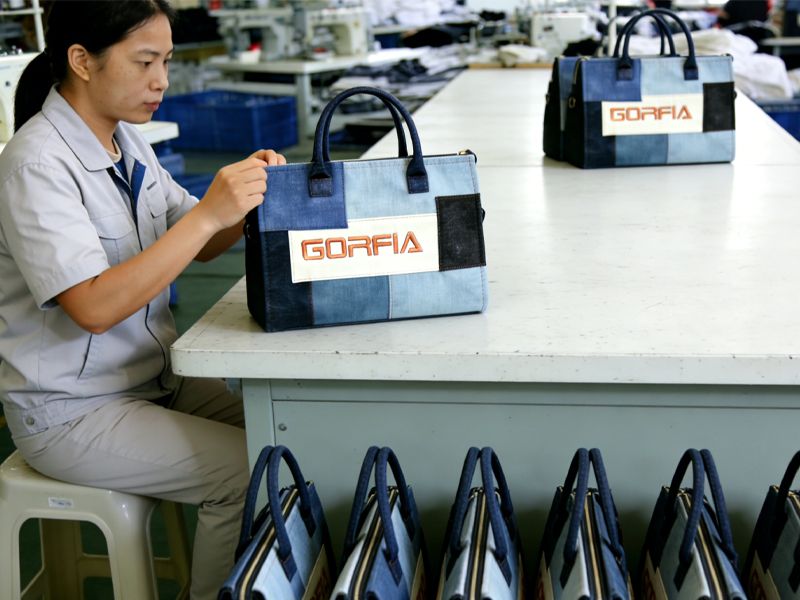
Final inspection and packaging act as the ultimate safeguard for your production investment. These processes ensure that the product arrives at your warehouse in the exact condition it left the factory floor.
Multi-Stage Quality Control for Bulk Orders
Scaling patchwork production multiplies small defects rapidly. Isolated issues like stitching flaws, weak hardware, or shape distortion escalate into batch-wide failures, shipping delays, and expensive returns.
This risk is mitigated by integrating quality control into every production stage. The process involves inspecting patch alignment, stitching accuracy, and material performance as the bag is assembled. Final inspections verify structure, seam strength, and hardware function before shipment. For bulk orders, statistical sampling methods, such as AQL standards, maintain precision without impeding output.
This multi-stage approach catches defects early. It protects batch consistency, reduces rework, and lowers the costs associated with returns and replacements.
Decision Guidance for B2B Buyers
- Choose factories that inspect during production, not only at the end
- Confirm they use measurable QC standards, not visual checks alone
- Ask how defects are flagged before full batch completion
Strong QC systems protect your margins and your brand reputation.
Packaging that Protects and Promotes
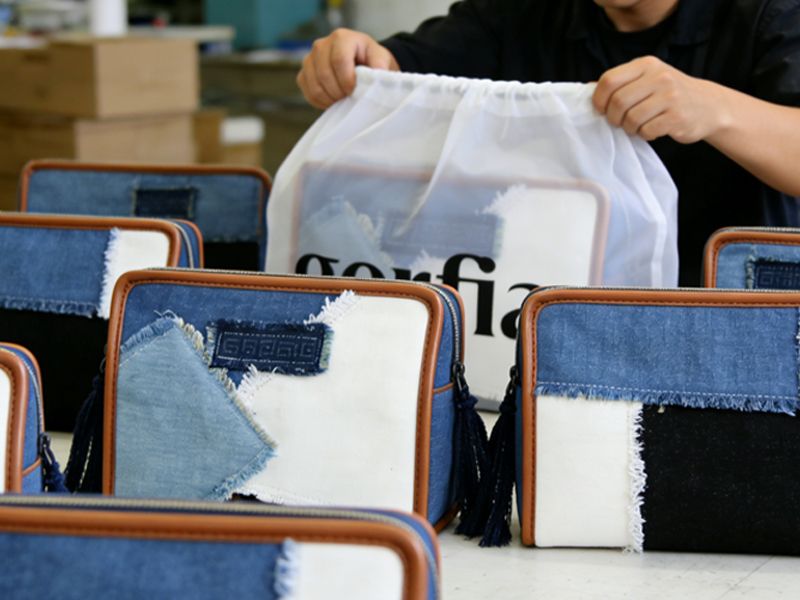
Packaging failures often show up after production is complete. Crushed structures, deformed silhouettes, or scuffed surfaces erase weeks of quality control. Poor packaging also weakens brand perception before the product is even used.
We design packaging to serve two purposes. First, it protects the bag’s structure through storage and transit. Second, it reinforces your brand presentation at delivery.
Protective options include polybags, acid-free tissue, and internal shapers to prevent collapse. Retail-ready solutions such as branded boxes and dust bags preserve shape and elevate presentation. Each option is selected based on material, structure, and shipping distance.
For you, the value is operational clarity. Products arrive shelf-ready. Handling time drops. Transit damage and replacements decrease.
Decision Guidance for B2B Buyers
- Use structural packaging for bags with reinforcement or rigid silhouettes
- Choose retail-ready packaging when selling directly or supplying premium channels
- Balance the protection level against shipping cost and handling frequency
Packaging decisions directly affect time-to-market and brand trust. The right strategy protects both.
Our End-to-End Service Capabilities for B2B Partners

We work as an extension of your team. Each service area is built to reduce risk, control cost, and support scale.
1. Supply Chain & Material Control
- We source materials through a vetted global supply chain
- Materials meet compliance and technical requirements
- Lead times stay predictable
- Cost efficiency is achieved without lowering specifications
2. Pattern Development & Prototyping
- Our pattern makers develop precise production-ready patterns
- Prototypes are built for fast review and approval
- Costs are validated early, not after production starts
3. Scalable Production Management
- We operate production lines built for both low MOQs and bulk orders
- You can test new designs before committing to volume
- Capacity adjusts to market growth and seasonal demand
4. Quality Control & Inspection
- We apply multi-stage inspections based on agreed standards
- Each order is verified before shipment
- Defects are controlled before they reach your warehouse
5. Logistics & Compliance Support
- We manage storage, shipping, and export documentation
- International logistics stay compliant and organized
- You avoid operational bottlenecks
6. Communication & Long-Term Partnership
- We maintain responsive, transparent communication
- Production status stays clear at every stage
- Decisions are aligned with your business goals
Every service is designed to reduce defects and maintain predictable production. Costs are managed efficiently, and quality consistency is supported across batches.

Frequently Asked Questions
Here are some common questions that might be on your mind right now.
What is the difference between a DIY patchwork bag and a factory-made patchwork bag?
DIY patchwork bags are one-off pieces. They focus on creativity, not scale. Factory production focuses on consistency and durability. It is built for cost efficiency at volume.
Manufacturers use industrial machinery and standardized quality control. This allows them to produce thousands of identical units. Each bag is produced to meet common retail quality standards.
What affects patchwork bag pricing in bulk orders?
Several factors influence unit cost. Material choice plays a major role. Genuine leather and premium canvas carry different cost structures. Design complexity also matters. More intricate patchwork layouts increase labor time. Hardware quality impacts pricing. Order volume and custom branding requirements also affect the final cost.
How do I start custom patchwork bag manufacturing?
Start by sharing your design concept. Define your target price and required quantities. A qualified manufacturer guides material selection for OEM production. They develop a prototype for approval. Once approved, they provide a detailed quote and production timeline.
What is the typical patchwork bag production timeline?
Sample development usually takes 7 to 10 days. Bulk production typically requires 30 to 45 days. Timelines vary by design complexity and order size. Material availability can also affect scheduling.

Conclusion
Scale your patchwork production with confidence by applying technical standards to your next collection.
Choosing a partner who masters every stage—from material discipline to final inspection—is one of the most effective ways to protect your margins.
Now that you understand these quality controls, use them to evaluate your current suppliers and align your design goals with production reality. Start today by reviewing your technical requirements to ensure every batch meets these high-performance standards.
To ensure your next patchwork collection maximizes profitability, check out our detailed blog on tote bag dimensions and how they impact B2B sales.
Read our bulk B2B bag production checklist guide.
Launch a Flawless Patchwork Handbag Line With Gorfia
Scaling a patchwork line benefits from a partnership with a manufacturer experienced in precision and reliability. This helps support consistent quality from the first sample to the final shipment.
Gorfia offers this partnership. For over 20 years, we’ve helped brands launch and scale with confidence through reliable high-volume production, full customization, and strict quality control. The result is a streamlined process where your timelines are predictable, and your product integrity is assured.
If you’re ready to introduce your patchwork bag product line, the next step is simple.
Request a consultation and free quote. We’ll guide you through the process and help you move forward with clarity and control.