
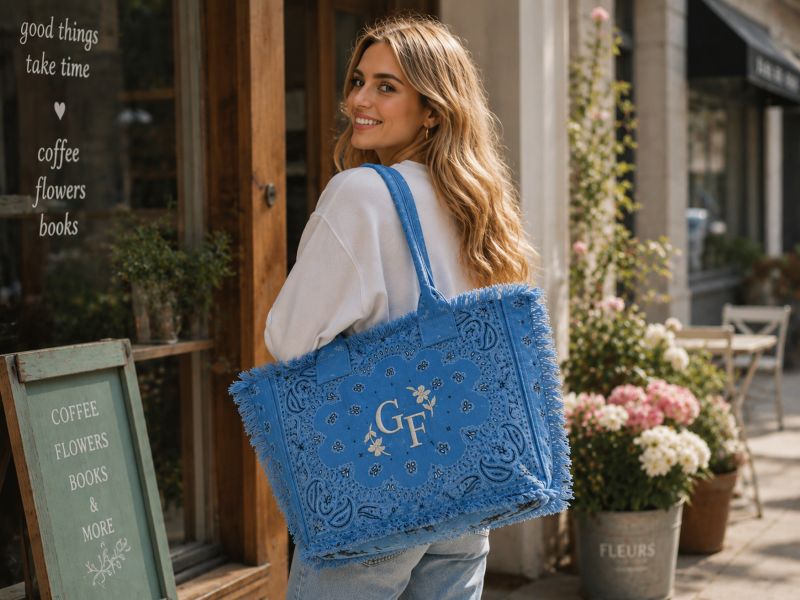
Bandana tote bags seem to be everywhere right now. From social media feeds and street style photos to designer collections and local boutiques, the familiar paisley print has found its way onto one of the most practical bag styles on the market.
The momentum is backed by more than fashion buzz. According to recent market forecasts, the global tote bag market is projected to grow from $5.54 billion in 2024 to $7.52 billion by 2029. We have seen similar momentum ourselves, driven by increased inquiries and orders from retail and private-label clients.
Bandanas are not new, but the context around them has changed. The Y2K revival, social media influence, and demand for expressive accessories have helped turn bandana prints into a recognizable trend across multiple markets.
When runway trends and everyday carry land on the same product at the same time, something real is happening.
From sourcing and print selection to sizing, styling, and private-label considerations, this guide explores the current state of the bandana tote bag market.
What Makes a Bandana Tote Bag Different?
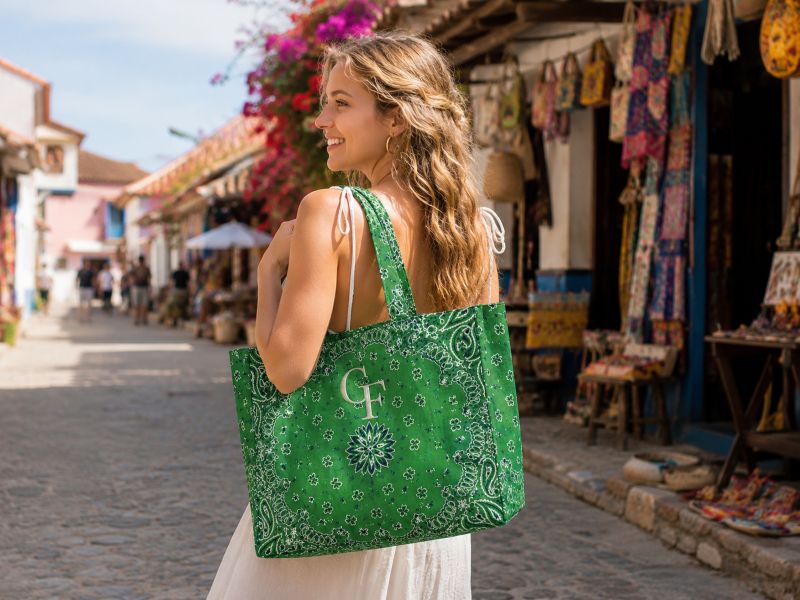
Bandana tote bags combine the practicality of a standard tote with the visual identity of the classic bandana print. The pattern may cover the entire bag, appear as a central graphic, or be used as a border detail, giving the product a stronger visual presence than a plain canvas tote.
Part of the appeal comes from the cultural recognition of the bandana pattern itself. Paisley motifs have appeared across workwear, Western wear, and elements of Vintage Americana culture for decades, making the design familiar to a wide range of consumers.
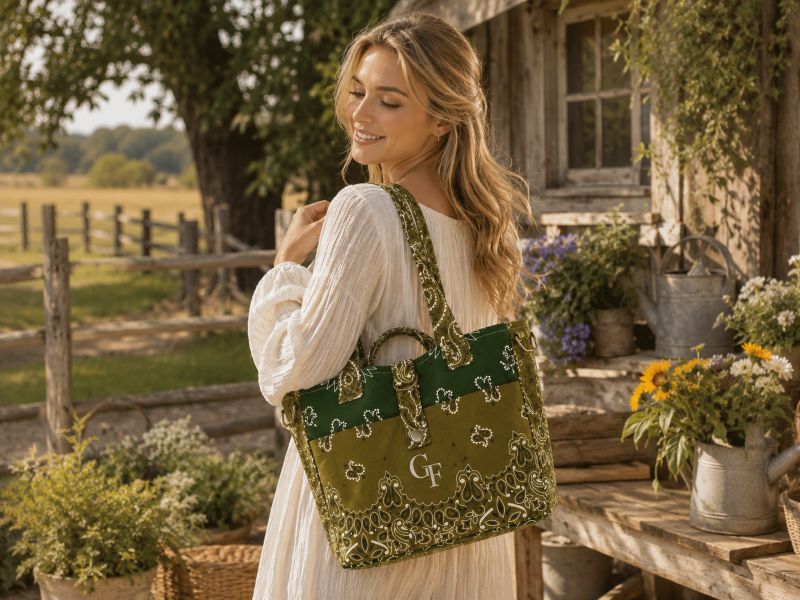
Modern bandana tote bags also benefit from improved construction. Better-performing styles typically feature reinforced straps, stronger stitching, finished interior seams, and functional pockets, delivering both visual appeal and everyday practicality.
Why Bandana Tote Bags Are Popular
Visual Identity at Point of Sale
Bandana prints are visually distinctive in a market where plain and neutral totes dominate shelf space. For retailers, that contrast has practical value. A printed bag draws attention at the point of sale and tends to photograph well for e-commerce listings and social content.
Pattern-driven purchases also follow a different buying logic than utility purchases. Consumers selecting a bandana tote are responding to the design first, which shortens the decision cycle and reduces the need for extensive product copy to close the sale.
Functional Specifications That Support Daily Use
Visual appeal alone is not enough to drive repeat use. The bandana tote bags that perform best usually have wider straps for better weight distribution, enough space for daily essentials, panels that help the bag keep its shape, and secure closures. Buyers should view these features as basic requirements, not premium extras.
Buyers should also consider the size of the opening, as it affects everyday accessibility.
Styling Flexibility Across Seasons
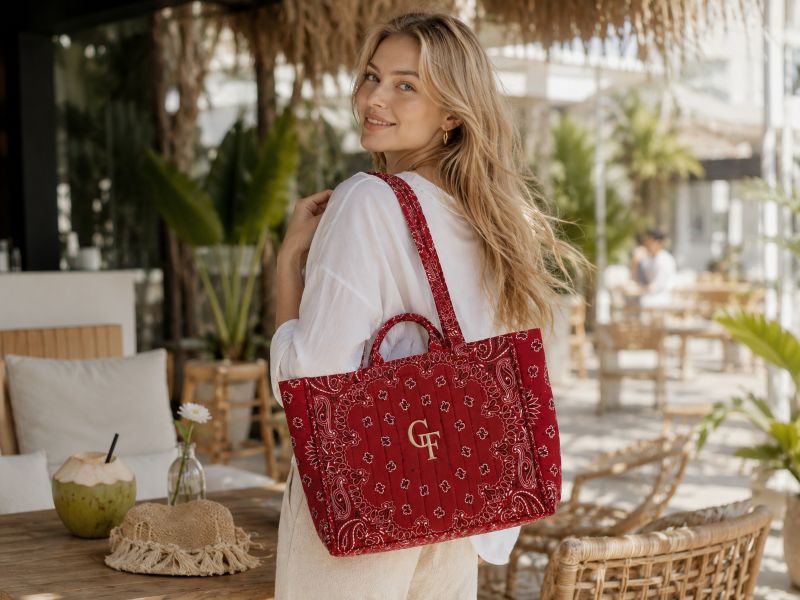
The warm tones and geometric structure common to bandana prints transition across summer and autumn assortments without requiring separate SKUs. That cross-season usability reduces markdown risk and extends the product’s shelf life within a single buying cycle.
Differentiation from Standard Canvas Totes
Plain canvas totes occupy a commoditized segment with limited margin potential. Bandana tote bags offer comparable carry capacity with stronger shelf presence and higher perceived value, which supports better pricing positioning.
Popular Bandana Tote Bag Styles
Comparison of Popular Bandana Bag Styles
| Style | Typical Size | Best Use | Consumer Appeal |
| Patchwork Tote | Large | Daily Carry | Design-focused shoppers |
| Oversized Tote | Large | Work & Travel | Practical users |
| Mini Carry Bag | 25–30 cm | Crossbody / Shoulder Carry | Trend-conscious consumers |
| Reversible Tote | Medium-Large | Multi-purpose Use | Value-oriented shoppers |
| Shoulder Bag | Small-Medium | Fashion Styling | Style-focused consumers |
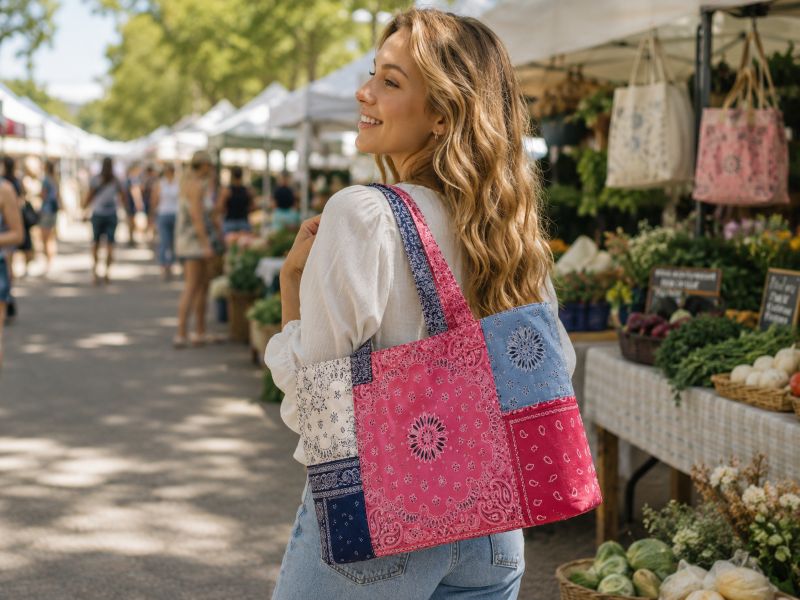
Patchwork Bandana Totes
Patchwork designs combine multiple bandana patterns cut into panels and stitched together, producing visible construction complexity. These command higher price points because the manufacturing process is more labor-intensive. The approach appeals to collectors and design-forward retailers, and the added production difficulty typically supports stronger margins for brands willing to execute it properly.
Oversized Everyday Totes
The workhorse of the category. Large enough for serious daily carry, with heavy canvas, reinforced side seams, and usually a centered or all-over bandana print. These are the styles retailers restock consistently because of their functional appeal and accessible price points.
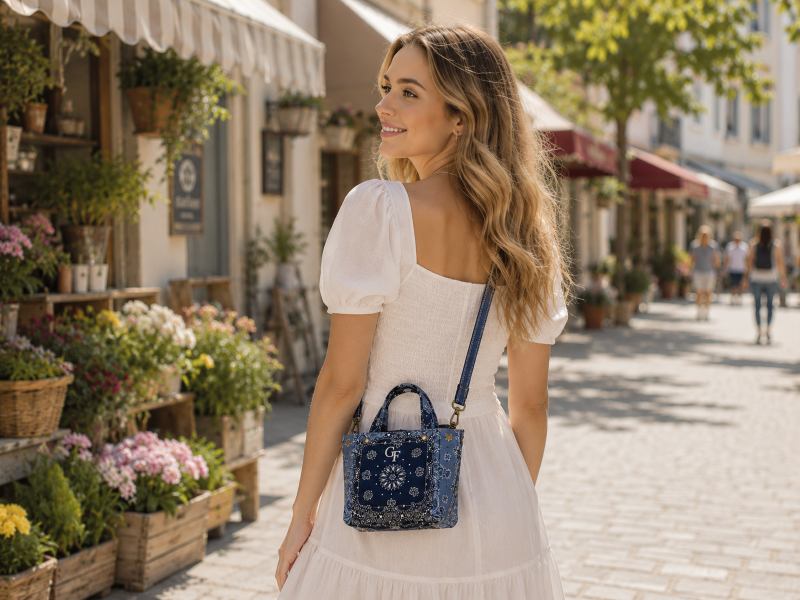
Mini Bandana Carry Bags
25 to 30 centimeters wide, designed for crossbody or shoulder carry. Many styles also include a long strap option that can be attached or removed depending on the intended use, giving consumers greater flexibility between shoulder and hands-free wear. The smaller format causes the bandana print to read as an accent rather than a primary statement. These perform well as secondary bags and appeal to consumers who want the bandana aesthetic without full carry volume.
Reversible Bandana Bags
Reversible designs combine two looks in a single product, often pairing a bandana-print exterior with a solid-color reverse side. This approach increases perceived value without requiring entirely separate SKUs and appeals to retailers looking for greater assortment flexibility.
Bandana Shoulder Bags
The shoulder bag format gives bandana prints a more fashion-forward role than they typically have on larger totes. With a smaller silhouette, the paisley pattern becomes a focal design element rather than a supporting detail.
Many brands use bandana shoulder bags to introduce the print trend in a way that feels easier to style, especially for consumers who want the character of a bandana bag without the size of a full tote.
How Brands Develop Bandana Tote Bags
Choosing Fabrics and Bandana Patterns
Most successful bandana tote bags are made from 12- to 14-ounce cotton or cotton-blend canvas. This weight is strong enough to help the bag maintain its shape while remaining comfortable to carry.
The type of print also affects both cost and market positioning. Licensed vintage patterns appeal to shoppers who enjoy nostalgic styles. Original designs give retailers something exclusive to offer. Remixed patterns provide a balance between the two. Many brands use a mix of all three options across different collections.
Balancing Print Placement and Functionality
Print placement affects both visual outcome and downstream manufacturing complexity. All-over prints deliver maximum visual impact but require tighter alignment controls during production.
Centered prints create a clear focal point with fewer complications. Border or trim placements minimize fabric use while maintaining the bandana reference.
Placement also affects interior usability. A poorly positioned print can visually compromise inside pockets and make the overall design appear unplanned. Intentional placement coordinates the exterior print with the interior layout from the start.
During sample development, pattern placement is often marked with chalk before cutting. Fabric pieces may be folded and aligned on the right side or wrong side depending on the print layout. Even small adjustments at this step can affect how borders, trim details, and focal graphics appear on the finished bag.
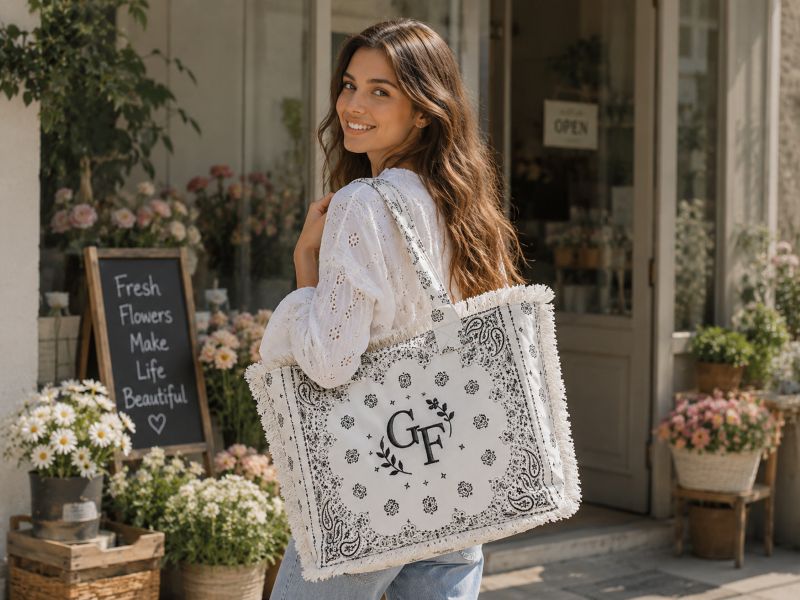
Special attention is often paid to trim corners, where print alignment is most noticeable.
Construction Details That Affect Quality
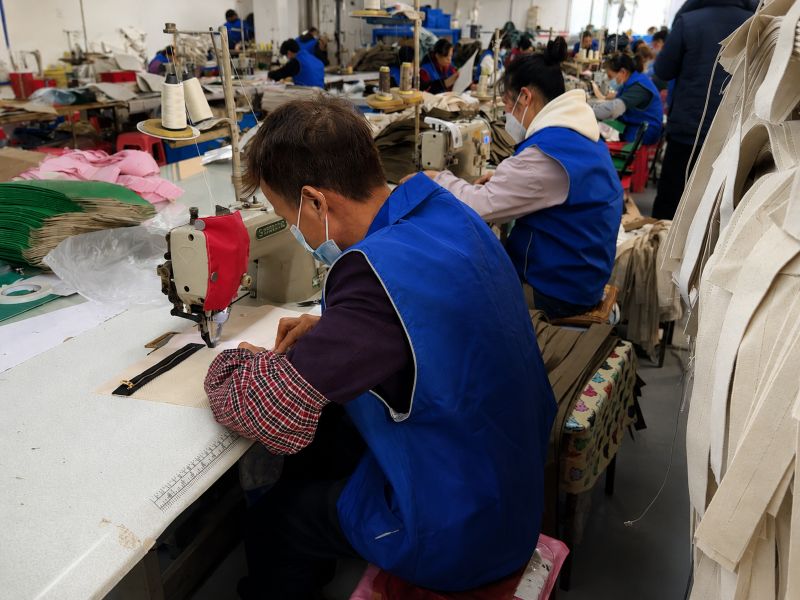
The details that determine a bag’s durability are often underweighted in initial product briefs. Seam strength, stitch precision, stitch length, thread quality, strap length adequate for shoulder carry, and top-edge finishing all influence long-term performance. A clean seam helps protect high-stress areas, while proper stitch density reduces the risk of distortion after repeated use.
Manufacturers also evaluate seam allowance specifications during development, since insufficient allowance can reduce durability over time.
Particular attention is also given to top raw edge treatments and other exposed raw edge areas to reduce fraying during long-term use.
Customization Opportunities for Brands
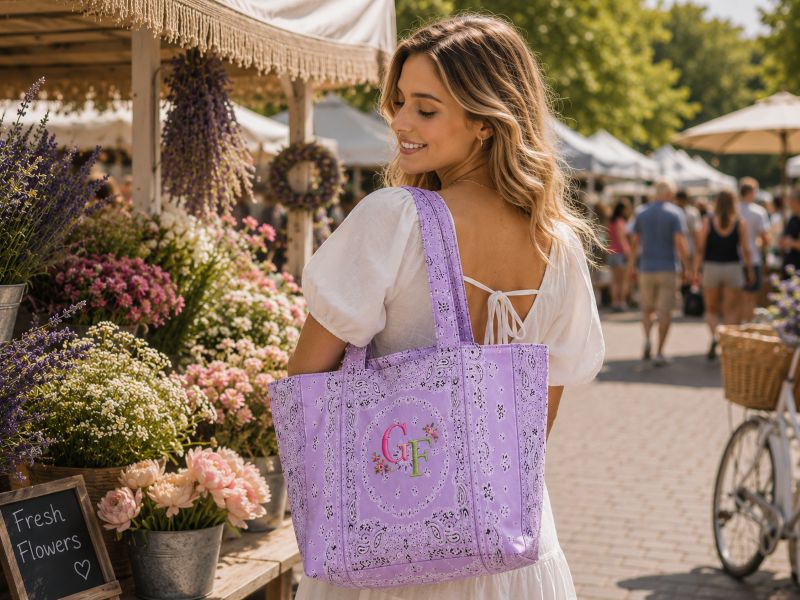
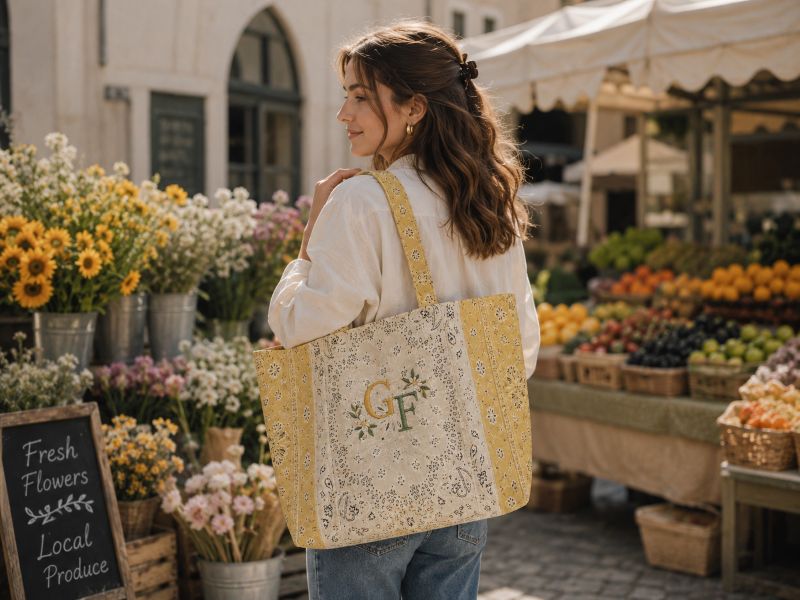
Modern retail benefits from defined customization options rather than unlimited flexibility. Custom color variations, embroidered initials, different hardware finishes, optional interior linings, and sustainable material upgrades are all viable within a structured offering.
Limiting customization to three to five defined options increases average selling price without creating unmanageable complexity in the production schedule. This approach allows brands to offer product differentiation while maintaining production efficiency and cost control.
Additional supplies such as specialty trims, embroidery options, and reinforcement materials can further differentiate a collection without significantly increasing production complexity.
How Consumers Use and Style Bandana Tote Bags
Everyday Casual Looks
The relaxed, heritage-inspired look of bandana prints pairs naturally with denim, linen, and other casual fabrics. Many people carry a bandana tote bag to add color and character to everyday outfits without making them look overly styled.
Weekend and Travel Use
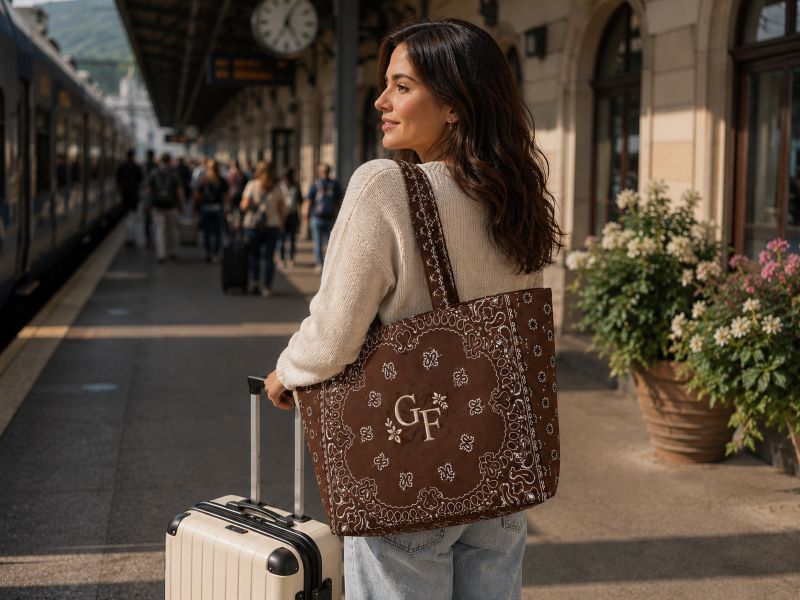
Bandana tote bags work well for weekend outings and short trips. They offer enough space for daily essentials while standing out more than a plain canvas tote. The print adds visual interest without reducing practicality.
Statement Styling
Some consumers build outfits around the main colors in the bandana print. Instead of treating the bag as a finishing touch, they use it as the starting point for the entire look.
Minimal Wardrobes with a Single Pattern Accent
In minimalist wardrobes, a bandana tote bag is often the only patterned piece in an outfit. The mix of neutral clothing and a classic paisley print helps the bag stand out without overpowering the overall look.
Seasonal Styling
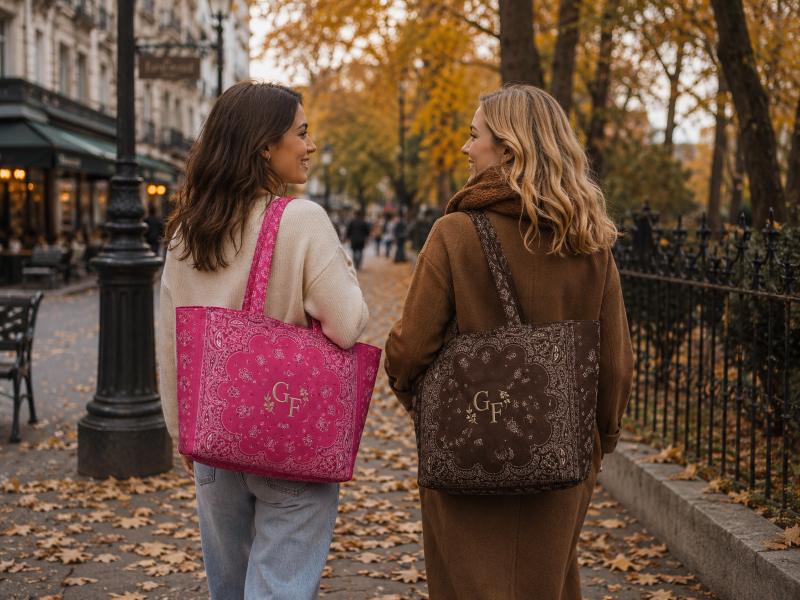
Bandana prints are especially popular in spring and summer. Their connection to outdoor living, vintage Americana, and relaxed dressing makes them a natural fit for warmer seasons. Darker color combinations can also work well in autumn collections.
Both approaches convert to sales across different customer segments.
FAQs
What is a bandana tote bag?
A bandana tote bag is a tote bag that incorporates traditional bandana-inspired prints, most commonly paisley patterns. The design combines the practicality of a tote with the visual identity of the classic bandana.
Why are bandana tote bags so popular?
The bandana tote bag addresses a specific consumer need: a bag that serves a functional purpose while reflecting personal taste. The print delivers a visual personality that a plain canvas lacks, while standard tote construction provides genuine carrying capacity.
What outfits work best with a bandana tote bag?
The print complexity of most bandana designs means the bag pairs across a wide range of clothing styles, from casual denim and summer linen to tailored trousers and minimalist wardrobes. It also transitions across seasons without requiring a style adjustment.
What materials are commonly used for bandana tote bags?
Cotton canvas at 12 to 14 ounces is the category standard. Some brands incorporate linen blends or recycled content to position themselves for sustainability. Hardware for straps and closures is typically made of wood, metal, or composite materials, depending on the price tier.
Can brands create custom bandana tote bag collections?
Yes. Options include custom print production, color modifications, monogramming, and specialized construction.
Conclusion
Bandana tote bags occupy a defensible position in a commoditized market: a product with cross-seasonal utility, recognizable print heritage, and enough style range to support multiple price tiers.
For retailers and brand owners, the category offers stronger margin potential than plain canvas, provided construction quality matches the visual promise of the print.
The market opportunity is real. Whether it becomes a profitable product line depends on how seriously sourcing and manufacturing decisions are taken.
Ready to Build Your Bandana Tote Bag Line?
Gorfia manufactures bandana tote bags for retailers and private-label brands in a range of print variations and material combinations. Whether you are launching a new collection, expanding into tote bags, or testing seasonal limited editions, we can execute it.
Get in touch with our team to discuss your bandana bag project. Share your concept, your target market, and your production requirements, and we will take it from there.