

If you are sourcing materials for bags, apparel, or accessories, recycled fabric has likely become part of the conversation. As more brands focus on sustainability, buyers are looking for materials that balance environmental goals with product quality and performance.
Choosing the right recycled fabric is not always straightforward. Different materials offer different strengths, costs, and production requirements.
In this guide, we will look at the main types of recycled fabrics, how they are made, their benefits and limitations, and what buyers should consider before choosing a material.
What Is Recycled Fabric
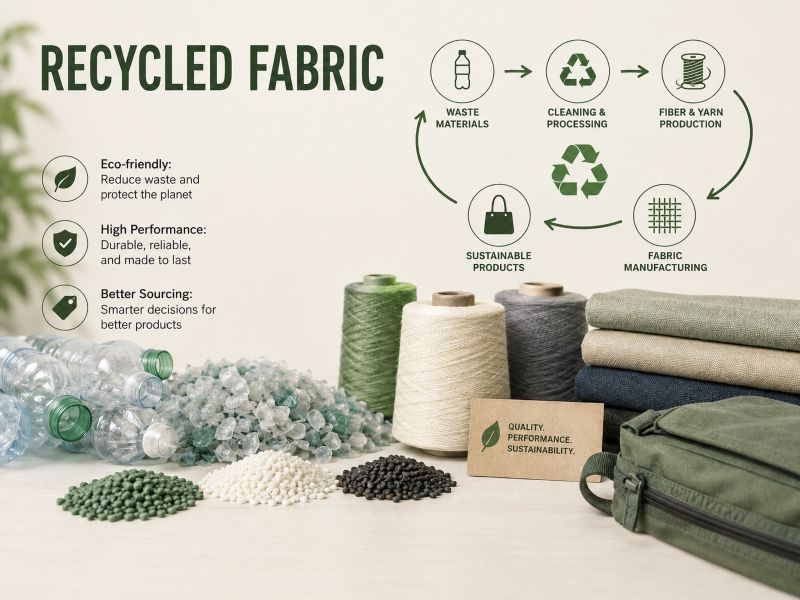
Recycled fabric is made from waste rather than new raw materials. Common sources include plastic bottles, old clothing, textile scraps, fishing nets, and industrial waste. These materials are processed and turned into new textile fibers.
Unlike virgin fabric, recycled fabric gives existing materials a second life. For brands and manufacturers, sustainability is only one factor. Durability, color consistency, and material quality can also affect sourcing decisions and product performance.
Types Of Recycled Fibers And Fabrics
Several recycled fabric options are available today, with polyester, nylon, cotton, and wool being among the most widely used. Each material offers different benefits and is suited to different products.
The table below provides a quick comparison of some of the most common recycled fabric options used in bags and apparel.
| Material | Common Source | Key Benefits | Common Uses |
| Recycled Polyester (rPET) | Plastic bottles | Durable, water-resistant | Backpacks, tote bags |
| Recycled Nylon | Fishing nets, nylon waste | Strong, flexible | Travel bags, backpacks, outerwear |
| Recycled Cotton | Textile waste, old clothing | Reduces textile waste | Tote bags, shopping bags, accessories |
| Recycled Wool | Wool garments, textile waste | Warm, durable | Handbags, pouches |
Different recycled materials offer different advantages. Some are chosen for performance, while others are mainly valued for reducing waste. Knowing the differences can help you choose the right material for your product.
Recycled Polyester Fabric (rPET)
Among recycled materials, rPET is one of the most common choices for bags, apparel, and accessories. It is usually made from cleaned plastic bottles, which are turned into new textile fibers.
Because of its durability and water resistance, recycled polyester is often used for backpacks, tote bags, luggage, and bag linings. If you are sourcing rPET fabric, quality can vary between suppliers, which may affect durability and performance.
Recycled Nylon Fabric
Many recycled nylon fabrics are produced from discarded fishing nets and various nylon-based waste materials. It is commonly used for backpacks, travel bags, and performance luggage because of its strength and flexibility.
Recycled nylon is made by turning nylon waste into new fibers. However, quality, lead times, and costs can vary between suppliers.

Recycled Cotton And Organic Cotton
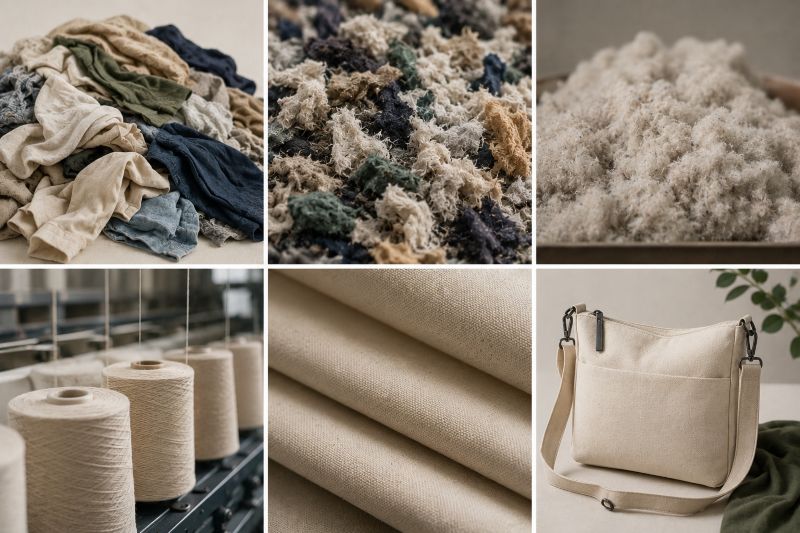
Manufacturers create recycled cotton from discarded textiles, fabric scraps, and used garments.
Recycled cotton and organic cotton are different materials. Organic cotton is grown, while recycled cotton is made from existing materials. Recycled fibers are often blended with other fibers to improve strength and durability.
Recycled Wool And Other Recycled Fibers
Recycled wool is made from old wool garments and textile waste. The material is processed into new yarn and is often used for handbags, pouches, felt bags, and specialty accessories.
Other recycled fibers include recycled acrylic, recycled leather, and regenerated cellulose fibers. These materials are often used in specialty products, linings, and fabric blends.

Benefits And Limitations Of Recycled Fabric
How Recycled Fabric Is Made
The process starts with collecting and sorting materials such as plastic bottles, textile waste, fishing nets, and industrial scraps. The materials are then cleaned and turned into fibers.
The fibers are made into yarn through mechanical or chemical recycling. Dyeing and finishing may also be added to improve durability, appearance, and performance.
If you are sourcing recycled fabric, these steps can affect product quality as much as the recycled content itself.
Key Benefits
Many brands choose recycled fabric to reduce waste and use fewer new raw materials. For example, recycled polyester can be made from plastic bottles, while recycled cotton can help reduce textile waste.
Recycled fabrics may also use less water and energy than virgin materials. In some cases, they can also lower carbon emissions.
If you are sourcing recycled materials, look beyond sustainability claims. Material quality, durability, and product lifespan can have a major impact on overall environmental benefits.
Common Limitations
Recycled fabric has benefits, but it also has some limits. For example, recycled polyester and recycled nylon may still release microplastics during washing.
You may also see differences in color or fabric quality between suppliers. Some recycled fibers cannot be recycled forever, and certain recycling methods still use chemicals.
How Brands Use Recycled Fabrics
Many fashion brands are using more recycled materials. As a result, buyers are paying closer attention to supplier transparency and recycled content claims.
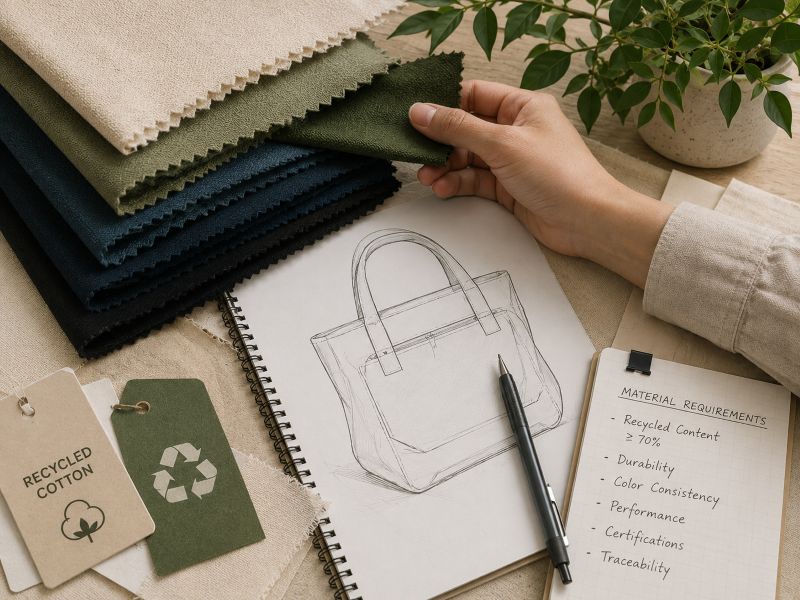
If you are sourcing recycled fabric, check supplier certifications, traceability, and production capabilities. Clear material requirements can also help improve product consistency.
Certifications And Supplier Evaluation
If you are sourcing recycled fabric, certifications can help verify recycled content and supplier claims. One widely used standard is GRS.
Another commonly used certification is RCS, which helps verify recycled content throughout the supply chain.
Many buyers also look for OEKO-TEX certification when evaluating fabric safety and testing requirements.
Before choosing a supplier, ask about material traceability and production quality. Ordering samples can also help you evaluate fabric performance before bulk production.
Choosing The Right Recycled Fabric For Your Product
Recycled fabric is widely used for backpacks, tote bags, travel bags, bag linings, and other accessories. Recycled polyester is a common choice for backpacks and tote bags, while recycled nylon is often used for products that face heavier wear.
Choose the fabric based on your product needs. Lightweight materials may suit activewear, while thicker fabrics often work better for structured bags. Gentler washing can also help reduce fiber shedding.

Example: Using Recycled Polyester in Bag Production
A common example is the use of recycled polyester (rPET) in backpacks and tote bags. Many manufacturers choose rPET because it offers good durability and water resistance while helping brands meet sustainability goals.
In production, however, recycled content alone does not guarantee quality. Buyers still need to check fabric weight, coating quality, color consistency, and overall construction to ensure the finished bag performs as expected.
Future Trends And Innovations
Recycled fabric technology continues to improve. One emerging approach is textile-to-textile recycling, where discarded garments are processed into new textile fibers.
More bio-based nylon alternatives are also expected in the future. At the same time, rPET fabric is expected to remain a popular choice for backpacks, tote bags, travel bags, and other accessories.
FAQs
Why is everyone getting rid of polyester?
Many companies are seeking alternatives to virgin polyester because it relies on newly sourced, fossil-based resources. However, this does not mean polyester is disappearing. In many cases, recycled polyester (rPET) is being used as an alternative because it can still offer durability and water resistance.
What fabric is recyclable?
Many fabrics can be recycled, including polyester, nylon, cotton, and wool. However, recyclability often depends on material composition, fabric blends, and local recycling systems. Single-material fabrics are usually easier to recycle than blended textiles.
What fabrics can’t be recycled?
Some blended fabrics, heavily coated textiles, or materials made from mixed fibers can be harder to recycle. Recycling options may also depend on local collection and processing systems.
What is recycled fabric called?
Recycled fabric may be called by different names depending on the material. For example, recycled polyester is often called rPET fabric, while recycled nylon may be described as regenerated or recycled nylon.
What are some recyclable fabrics?
Common recyclable fabrics include polyester, nylon, cotton, and wool. Some materials are easier to recycle than others, especially when they are not mixed with multiple fiber types.
Conclusion
Recycled fabrics offer brands a way to reduce waste while maintaining product performance. Whether using recycled polyester, nylon, cotton, or wool, choosing the right material requires balancing sustainability, quality, and durability. For more inspiration, explore our guide to trending tote bag styles made from canvas and recycled cotton.
Choosing The Right Recycled Fabric Partner
Choosing recycled fabric involves more than sustainability alone. Material quality, durability, and supplier reliability can all affect the final product.
If you are exploring recycled fabrics for bags, apparel, or accessories, it is worth taking the time to compare materials, suppliers, and product requirements. Visit our homepage to learn more or contact us if you have questions about your next project.