


For B2B brands sourcing leather bags at scale, logo printing is a manufacturing decision that affects durability, timelines, and brand consistency.
When screen printing on leather is integrated into the same OEM/ODM workflow, placement stability and batch repeatability improve. Printing on leather requires controlled curing to allow the ink to dry faster and remain compatible with the leather surface in OEM production.
This guide explains how leather bag manufacturing integrates screen printing, what to verify before bulk approval, and how to avoid sample-to-production drift at scale.
Decision Logic: Integrated Manufacturing vs Standalone Printing Services
The first issue to be decided is not “screen printing or not”. It is whether printing is managed within a single manufacturing system or split across vendors.
When printing is handled separately, accountability can become fragmented. If a logo shifts after stitching or curing (the controlled drying/heat-setting step that hardens the ink film so it bonds to the leather), and this varies between runs, buyers often coordinate between two parties.

That split typically increases production-run variability and wastes time and money. It can add extra sampling loops, slow corrective actions, and increase defect probability at the production scale.
Integrated production reduces those risks by aligning structure, print zones, and assembly steps early. It also keeps inspection checkpoints connected to the same production reality.
Table 1 — Buyer Checklist: Integrated vs Separate Printing
| Evaluation factor | Integrated manufacturing (one system) | Separate printing (split vendors) |
| Ownership of outcome | One team owns print + assembly outcomes | Responsibility split across parties |
| Bulk repeatability | More stable across batches | Higher drift risk over volume |
| Placement after assembly | Planned around seams/hardware early | Issues discovered late (post-assembly) |
| Timeline predictability | Fewer handoffs | More coordination + rework loops |
| QC continuity | End-to-end checkpoints | QC gaps between vendors |
Decision takeaway: Separate printing can work, but it raises the probability of misalignment and rework in larger production runs. That variability grows when the leather finish or bag structure changes across SKUs.

Assessment by bag type: what to check before you sign off on a production run
We validate leather printing during sampling to ensure repeatable results at scale. Print stability changes with panel geometry, reinforcements, and assembly tension.
Custom Printed Leather Handbags — Check post-assembly alignment stability
Handbags often include shaping, reinforcement layers, and hardware zones. Because handbags often use layered construction, printed leather handbags require tighter control of the leather printing process after shaping.
Check whether the logo zone stays consistent after stitching and hardware installation.
If placement occurs near seams or curves, tolerances can cause visible drift in longer runs.
Printed Tote Bags — Check surface uniformity and batch consistency
Totes offer larger print surfaces that cover more area, making variations easier to notice.
Review how the supplier controls color consistency and curing standards across production days.
Leather batches can differ in coating and surface finish because each leather hide behaves slightly differently. If controls are weak, color and adhesion can drift even when the artwork is unchanged.
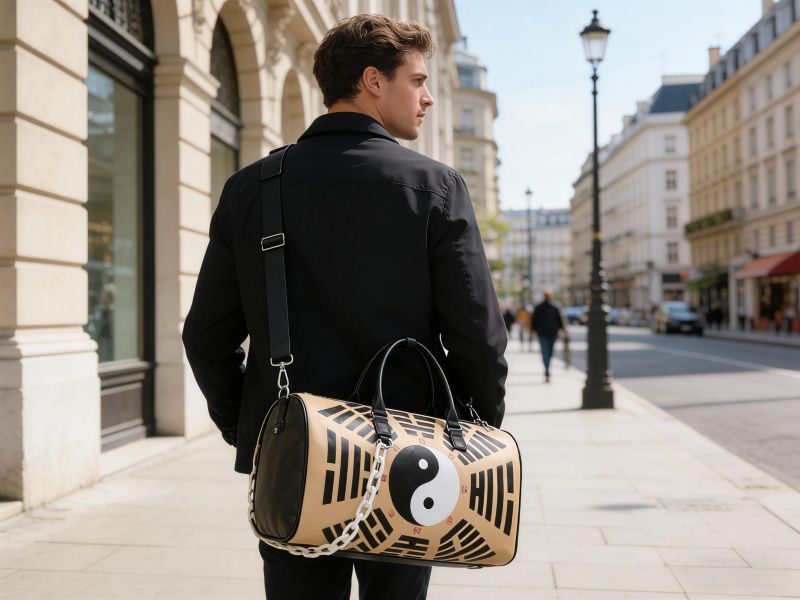
Crossbody & Shoulder Bags — Check precision in constrained print zones
Crossbody bags typically have smaller print areas and more complex curvature. A gusset is the side panel that gives the bag depth. You should confirm placement tolerance and how printing aligns with stitching and strap zones.
We lock artwork scale, logo placement, and pattern layout early to avoid distortion during leather printing. When buyers provide their own artwork, scale, line thickness, and logo positioning must be finalized before sampling to ensure repeatability.
During sampling, we confirm the final position after full assembly and wear testing.
Mini Bags and Fashion Bags — Check clarity on compact surfaces
Compact surfaces make small defects and distortions more visible. Confirm whether printing is applied to a support board during component preparation before final assembly.
Match artwork complexity to surface stability. Confirm durability using abrasion checks and repeated-use simulation for printed leather products. Similar considerations apply to small leather goods such as wallets, where printing defects are highly visible.
Table 2 — Print Risk Map by Bag Category
| Bag category | Typical print risk | What to verify in sampling |
| Handbags | Tension shifts after shaping/hardware | Post-assembly alignment + edge finish impact |
| Tote bags | Batch-to-batch visibility on large panels | Color consistency + curing consistency |
| Crossbody/Shoulder | Distortion on curved panels | Placement tolerance + gusset/strap zones |
| Mini/Fashion | High visibility of small defects | Clarity on compact panels + wear simulation |

Screen Printing Built into Leather Bag Manufacturing
Screen printing works best on leather when printing techniques, including custom silk-screen printing, are integrated into the OEM/ODM manufacturing flow.
This approach aligns printing with structural reference points and reduces the risk of stitching or finishing shifting the final logo placement. This becomes especially important for custom leather bags produced across multiple SKUs.
Silk screen printing can deliver stable color output when the frame setup is matched with the right leather finish. Placement options include exterior panels, flaps, trims, gussets, and interior branding elements.
You can verify durability through abrasion checks, flexibility assessment, and repeated-use simulation. During pre-production review, we confirm whether the ink layer is too thick, along with ink layering and curing.
In many OEM programs, water-based ink is selected to balance adhesion, flexibility, and air drying requirements when printing on leather.
Printed leather must be tested for abrasion and flexibility to ensure thinner ink layers remain durable before bulk approval. For a clear overview of how curing works in screen printing, Printwear Magazine provides a step-by-step tutorial.
OEM/ODM Workflow: What a Buyer Should Validate
A reliable workflow is a step-by-step risk-control sequence for review. The objective is to create a repeatable printing process that performs consistently from sample to bulk. If you’re aligning stakeholders internally, it can help to reference what OEM manufacturing typically means.
During technical review, we confirm logo size and placement zones using tape markers against seams, reinforcements, and hardware.
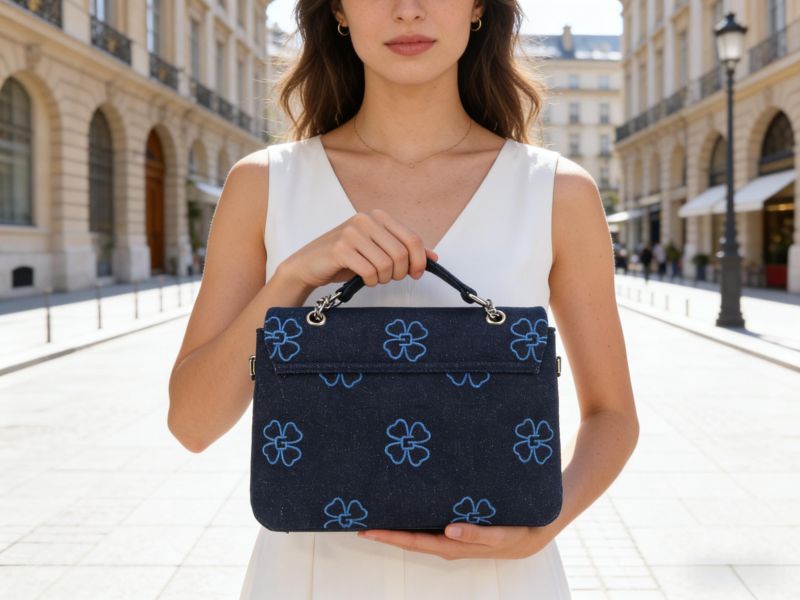
During sampling, you validate print clarity, color accuracy, and stability after full assembly.
We build printing at a defined stage before final assembly. We set QC checkpoints for alignment, color consistency, curing integrity, and post-assembly stability.
Table 3 — Workflow Checkpoints (Decision View)
| Stage | What you evaluate | What can go wrong if skipped |
| Technical review | Placement zones + structure conflicts | Misalignment discovered after assembly |
| Material selection | Finish compatibility + batch stability | Inconsistent adhesion/color drift |
| Sampling & approval | Post-assembly stability + durability | “Good sample, drifting bulk” |
| Print integration | Print timing before assembly | Distortion or shifted placement |
| QC checkpoints | Alignment + curing + post-assembly checks | Defects propagate across batch |
| Bulk delivery | Lead time + repeat parameters | Unstable supply planning |
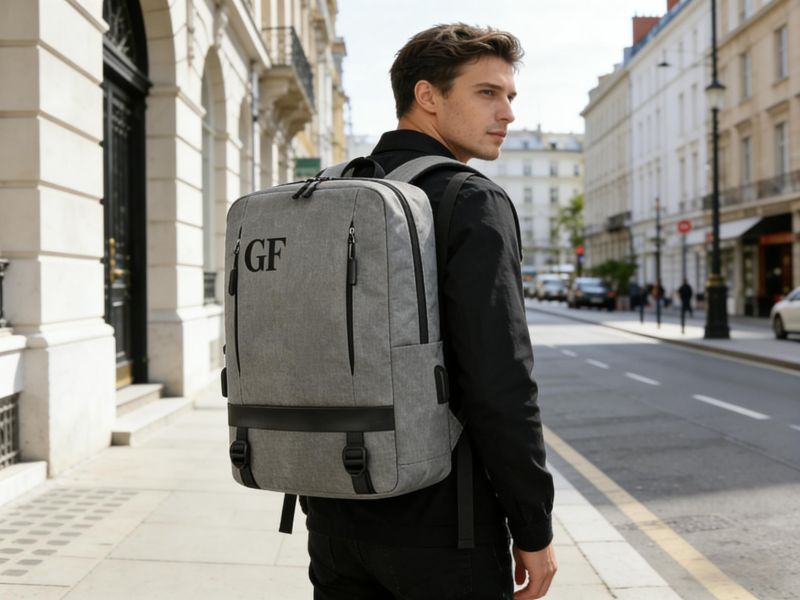
Materials & Leather Options: How to Choose for Repeatability
Leather printing performance varies depending on the leather finish and surface treatment. Material choice affects print repeatability more than many buyers expect. The goal is consistent ink behavior and durable curing at scale. Different leather materials and finishes respond differently to leather printing, affecting print clarity, adhesion, and long-term durability.
Full-grain leather can look premium but may introduce natural variation due to surface oils. This variation is common in natural leather and can affect ink absorption and edge clarity during leather printing. Corrected-grain leather often supports sharper print details and more uniform print results.
Other options include saffiano leather, nappa leather, woven leather, canvas, TPU, and coated fabrics. Always validate print compatibility with the exact finish used in production.
Table 4 — Material Selection (Print Compatibility Lens)
| Material/finish | Typical print behavior | Buyer note |
| Full-grain leather | Natural variation; needs tighter batch control | Confirm batch standardization |
| Corrected-grain leather | Smoother surface; more uniform edges | Often easier to repeat at scale |
| Saffiano texture | Textured; may soften fine detail | Validate line thickness in sampling |
| Nappa leather | Soft; can flex more | Validate cracking resistance |
| Treated leather | Can improve protection | Confirm adhesion + curing method |
| TPU / coated fabrics | More uniform | Validate abrasion resistance |

Quality Control: What to Look For in Print + Assembly Inspections
Quality control uses defined tools to prevent batch drift. It should verify alignment, color consistency, and print durability, not only appearance. The durability of printed leather depends on curing consistency, temperature control, and the material finish.
During assembly, stitching, and hardware installation, the parts can shift. We confirm stability after construction, not just before.
Final inspection should verify durability, surface protection, and packaging. Documented checkpoints improve traceability and long-term supplier accountability.
Production Scalability & Long-Term Consistency
For B2B buyers, scalability is not only about capacity. It is repeatability at scale and repeat orders.
For repeat orders, we use the same inks, curing conditions, and inspection logic. This supports multi-season collections and private-label expansion while maintaining lower brand exposure.
Risk Management for B2B Buyers
Integrating printing into manufacturing reduces common production variability. Early coordination between design, materials, and production helps prevent misalignment at scale.
An in-house-built approach also improves accountability because a single system owns the outcome. This can reduce delays and simplify quality assurance across stakeholders.

Who We Work With
This manufacturing setup fits buyers who need consistent results at scale. Typical programs include fashion brands, boutique retailers, corporate gifting, and private-label/wholesale buyers who source bags and related leather accessories through our integrated OEM system.
FAQ
Can you do custom screen printing on leather bags?
Yes. Custom screen printing on leather bags is a standard OEM process when printing is integrated before final assembly.
How do you print logos on leather bags?
Logos are printed on panels or components and incorporated into the assembly and finishing steps.
Is screen printing durable on leather?
It can be durable when curing is controlled, and the leather finish is compatible with the ink system.
What is the difference between screen printing and other leather printing methods?
Compared with digital printing, screen printing is often preferred for repeatable color coverage, cost efficiency, and stable production in OEM leather bag manufacturing.
Do you manufacture the bags in-house?
When evaluating suppliers, confirm whether printing and assembly are managed within a single production system to avoid gaps in responsibility.
What is the minimum order quantity for custom-printed leather bags?
MOQ and price depend on bag structure, materials, and printing specs. Confirm MOQ during sampling.

Conclusion
Printing on leather is a production decision, not a decorative step. For B2B sourcing, the key is not whether screen printing is possible. It is whether printing remains stable at scale when aligned with structure, materials, and QC checkpoints.
We build screen printing into the OEM/ODM plan and validate it during sampling, so you get consistent logo quality on repeat orders.
Call to Action
We’re GORFIA—an OEM/ODM leather bag manufacturer with in-house screen printing, sampling, and QC so that you can scale with predictable results.
Explore our manufacturing capabilities and see how we handle complex builds, such as patchwork bag production. When you’re ready, contact us for a practical quote, lead time, and sampling plan.