
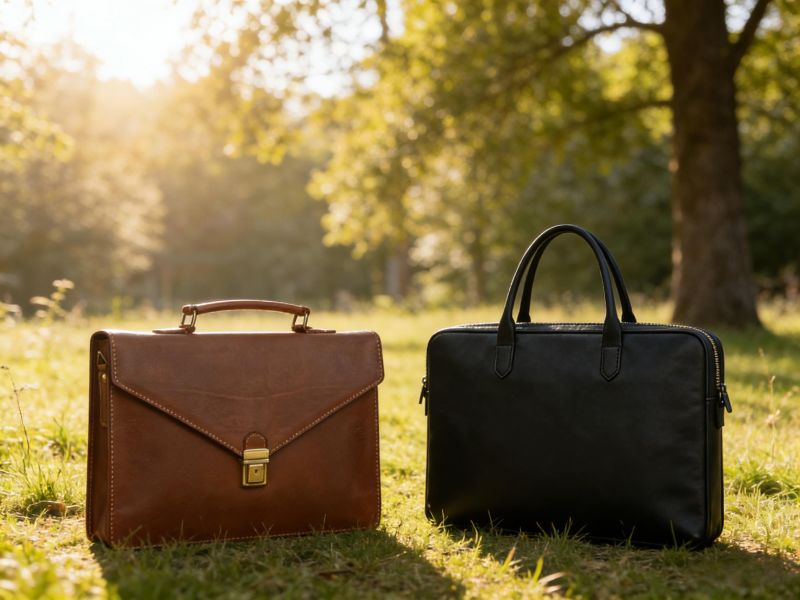
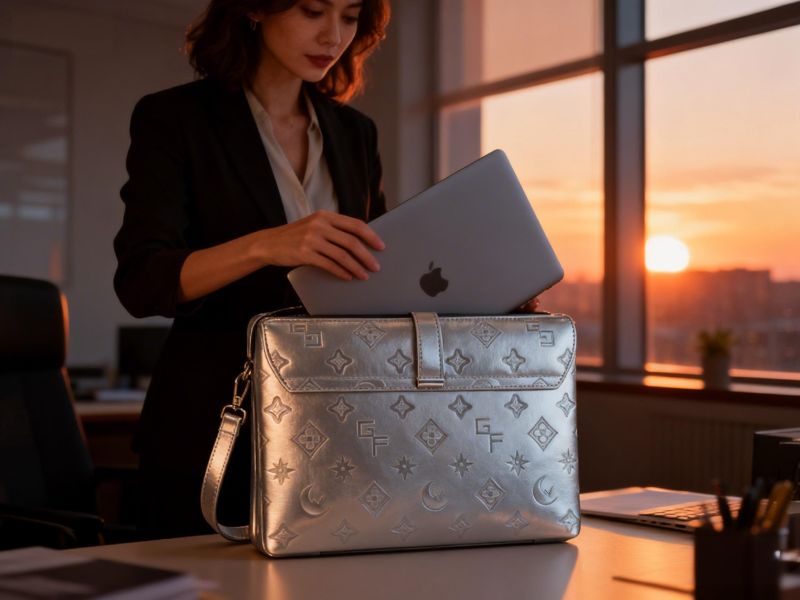
Are you searching for leather laptop cases that offer both style and protection? Many businesses struggle with issues such as inconsistent materials, design differences, and production errors, which can result in costly returns or damaged equipment. Procurement teams also face risks related to cost fluctuations and delivery delays.
Based on working with multiple corporate clients and bulk procurement programs, we’ve found that setting clear specifications and closely monitoring production processes helps prevent quality issues and ensures durable, high-quality leather sleeves.
This guide will walk you through the key factors to consider when choosing leather sleeves, including material consistency and production standards. You’ll find out how to pick cases that keep your devices safe and look good for daily use. Let’s get started.
How Leather Protects Your Device
Leather can be used for laptop covers not only because it looks good, but also because it provides protection. In good condition, with internal linings such as felt and leather layers, it can be resistant to surface damage, have moderate water resistance, and withstand pressure during daily transport. These characteristics make it the best choice for shielding laptops in both individual cases and large-scale sourcing.
The mass production of leather, however, can lead to greater variation in its protective performance. Bulk sourcing needs to be very specific in material specifications, such as:
- Thickness tolerance: As a rule, leather thickness should be between 1.0 mm and 1.4 mm to provide maximum flexibility.
- Quality: Full-grain leather is considered the most durable, while top-grain leather may wear over time.
- Production defect rate: The defect rate is expected to be below 2 percent, and the inspections are to be strict, with tracking improvements by batch.
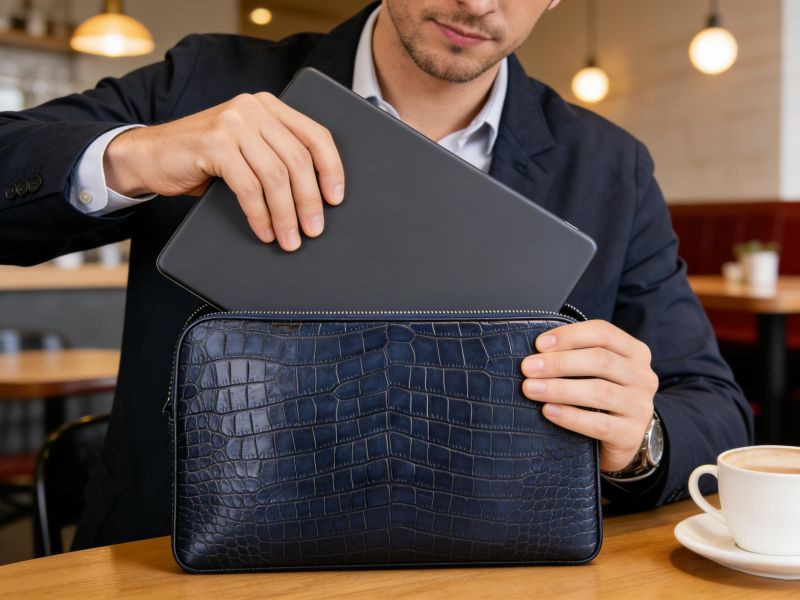
Tanning and finishing processes are critical to the long-term reliability of leather. This is because proper tanning improves its stability, prevents cracks, and makes it more resistant to moisture. A controlled finish enables the leather surface to retain the same strength. Unless these processes are carried out uniformly, what may appear to be similar products will not perform the same way.
Types of Leather Laptop Covers and How Cases are Designed
Laptop cases are usually divided into three types: sleeves, folios, and thin laptop cases. In bulk sourcing, it is necessary to consider each type, considering the complexity of production, the risk of quality control, and consistency.
| Type of Leather Laptop Case | Production Complexity | Key Production Considerations | Quality Control Factors | Benchmark Data |
| Leather Laptop Sleeves | Simple | Few components, standardized size | Leather quality, lining placement, edging | Defect Rate: ≤ 1% |
| Leather Folios for Light Carry | Medium | Additional pockets, document compartments, closures | Stitching placement, pocket alignment, and strength | Defect Rate: ≤ 1.5% |
| Slim Leather Laptop Bags | High | Multiple compartments, padding, zippers, handles, straps | Structural integrity, padding alignment, and load-bearing areas | Defect Rate: ≤ 2% |
The evolution framework changes during the bulk sourcing. There is no way to judge cases as isolated products. It is a complete collection that works across all environments, teams, and regions.
Key Factors That Actually Matter When Choosing Leather Laptop Sleeves
When purchasing leather laptop sleeves in bulk, several factors should be considered to help ensure consistency, reliability, and long-term performance.
Leather type is often inconsistent across different production batches. This variation may lead to differences in durability and appearance, ultimately affecting product consistency. To address this, suppliers should maintain clear and stable standards for material selection, typically using either full-grain or top-grain leather. With proper control, full-grain leather generally offers stronger durability and may last over 10 years, while top-grain leather often performs within a 5–7 year range under similar conditions.
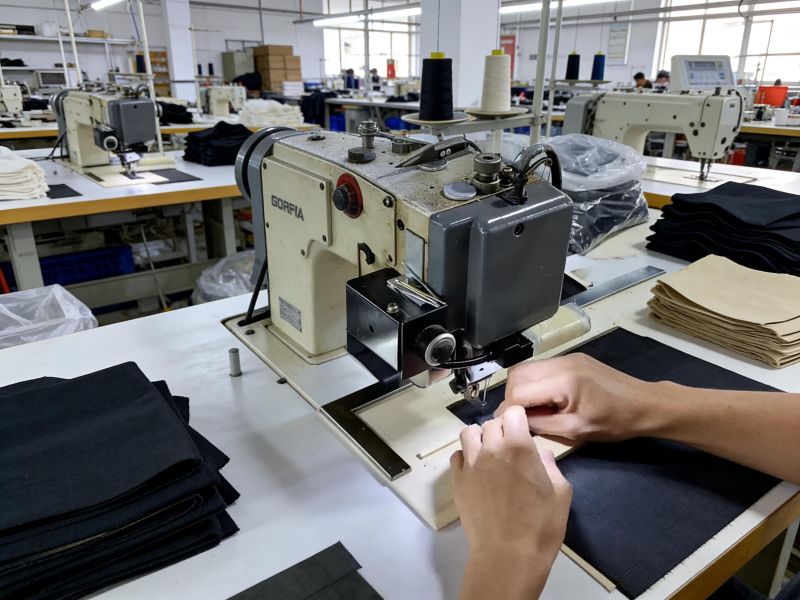
Edge finishing and stitching quality can also vary in large-scale production. Uneven stitching or poorly finished edges may result in premature wear and reduced structural integrity. Maintaining consistent craftsmanship standards—such as a stitch density typically around 6–8 stitches per inch—can help mitigate these issues. As a result, the product is more likely to retain its durability and overall shape over time.
Insufficient shock protection is another common concern. Without adequate padding and lining, laptops may be more vulnerable to impact damage during daily use. A more balanced construction, combining soft lining with protective padding (typically in the range of 3 mm to 5 mm), can help improve protection. This approach allows the sleeve to provide reliable shock absorption while remaining practical in design.
Size inconsistency may affect both fit and usability. If tolerances are not well controlled, the sleeve may fit too tightly—placing stress on zippers—or too loosely, allowing internal movement. By maintaining reasonable and consistent size tolerances, manufacturers can achieve a more secure and functional fit. This helps reduce material stress and improves overall user experience.
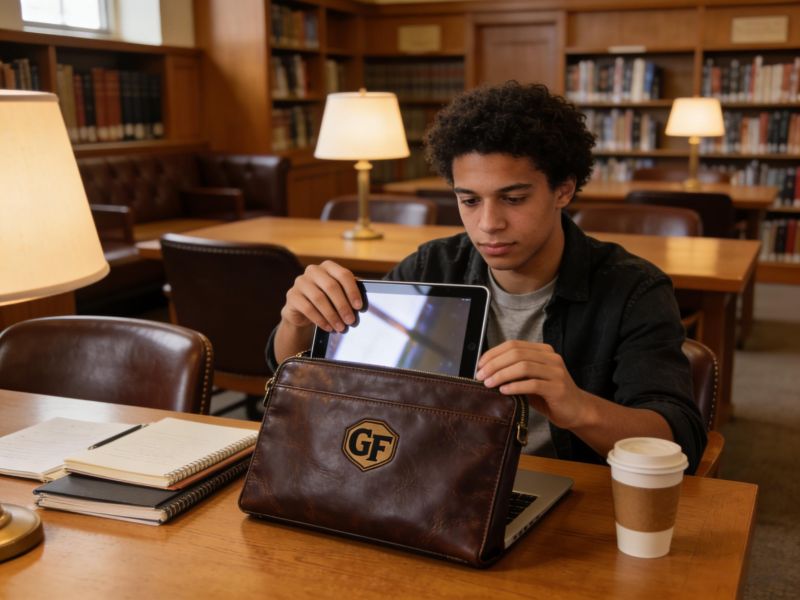
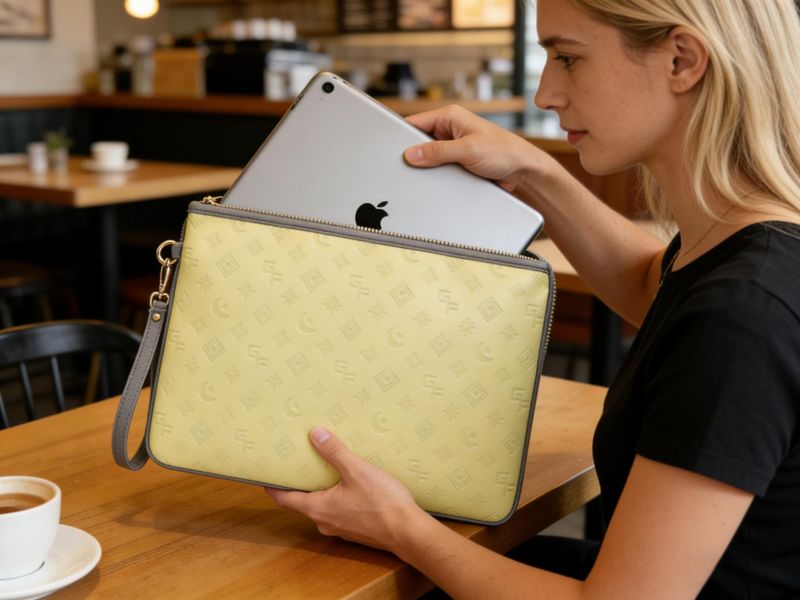
Leather laptop cases are crafted with carefully sourced materials and a transparent production process, providing reliable protection for larger systems, not just individual devices. Make sure your leather laptop lock accommodates gadgets of 15 inches or so, making it both the best protective and fitting option.
From Personal Style to Business Orders: What Customers Evaluate Differently
In the individual buyer case, selecting a leather laptop case may lean toward personal preferences in terms of style, portability, and usability. Yet, system reliability, material consistency, and cost predictability are the primary concerns of B2B customers, particularly those sourcing in large quantities.
When sourcing in large quantities, the buyer must emphasize the homogeneity of materials, design, and protection across thousands of units. Aspects such as defect rates, production stability, and even lead-time management are far more significant than the slightest aesthetic variations.
Even the smallest change in production may lead to returns or substitutes, and procurement decisions should focus on the disciplines of production, quality control, and long-term consistency to ensure smooth operation.
How to Evaluate a Reliable Leather Laptop Case Supplier
For B2B buyers, choosing the right supplier is just as important as selecting the right product. Even with clear specifications, we’ve seen projects run into issues when suppliers interpret materials or tolerances differently during production.
From our experience working with bulk orders, the difference usually comes down to how well the factory controls details during each stage.
Here are a few practical areas buyers should pay attention to:
1. Material Control Capability
Inconsistent leather is one of the most common issues in bulk production. For example, even within the same “top-grain” category, differences in thickness or finish can affect the final look and durability.
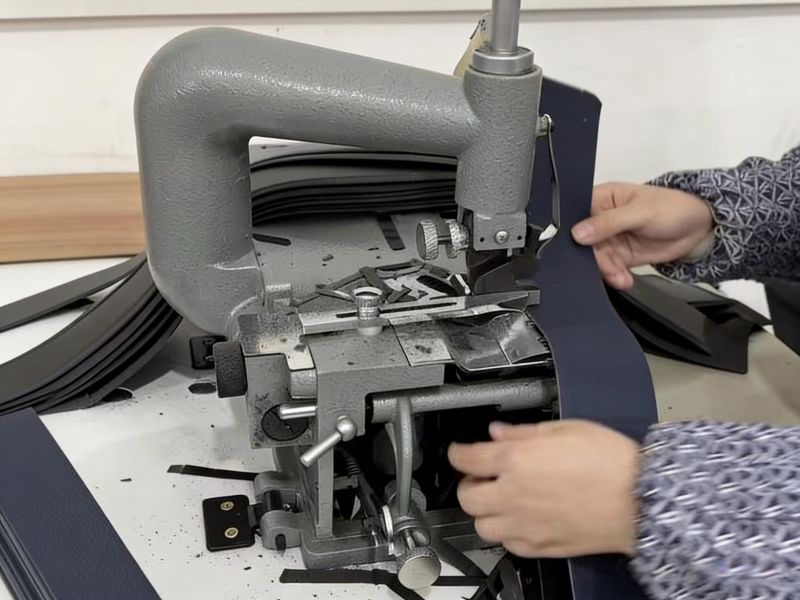
In our production, we normally define acceptable thickness ranges (e.g., 1.2–1.4 mm) and confirm material samples before bulk cutting to avoid batch variation.
2. Process Transparency
Many issues don’t come from design, but from how it’s executed. Stitching alignment, edge painting, and lining placement can vary if there is no clear process control.
Reliable factories should be able to show how products move from cutting → stitching → finishing → inspection, rather than treating production as a “black box.”
3. Batch-Level Quality Control
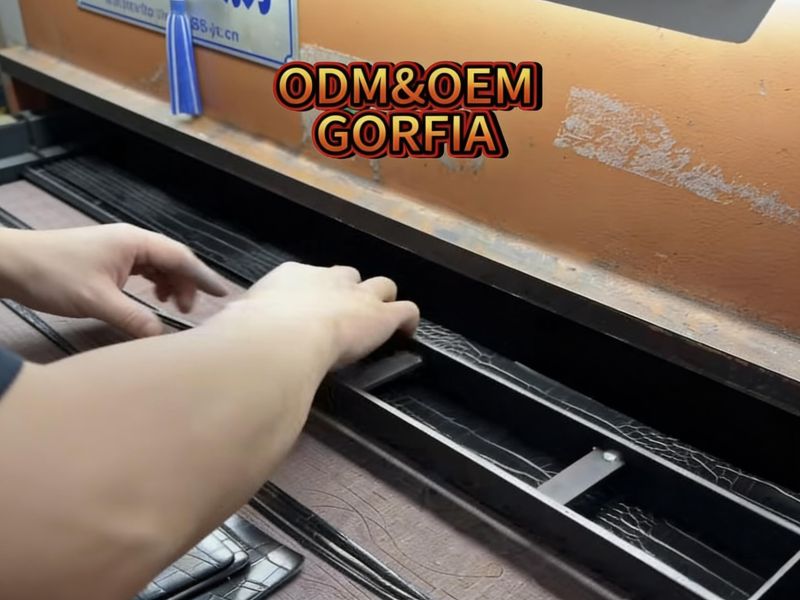
Instead of only checking finished goods, experienced manufacturers monitor quality throughout production.
For example, in our workflow, we check:
- Incoming leather before cutting
- In-line stitching consistency
- Final inspection before packing
Keeping defect rates within 1–2% is achievable, but only when issues are identified early, not at the end.
4. Sampling and Pre-Production Validation
A confirmed sample is not just for appearance—it sets the standard for the entire batch.
We’ve seen cases where skipping detailed sample confirmation led to logo misalignment or sizing issues across hundreds of units. That’s why we recommend locking key tolerances (e.g., ±0.5 mm for logo placement) before production starts.
5. Stable Lead Time Management
Lead time issues are often caused by poor production planning rather than capacity.
In practice, stable suppliers will break down timelines into material preparation, production, and inspection stages, so delays can be identified early instead of accumulating at the end.
As an OEM/ODM leather bag manufacturer, we’ve built our production system around these controls—from material selection to final inspection—to help clients reduce unexpected issues in bulk orders and maintain consistent quality across batches.

Procurement Scenario Example: Custom Leather Laptop Covers for Corporate Programs
When sourcing leather laptop sleeves in large quantities for corporate programs, several key challenges should be considered to ensure consistency, protection, and overall execution.
Reliability may vary across bulk orders. This can lead to inconsistent product quality and higher defect rates. Suppliers should maintain stable production and quality control to keep defects within a reasonable range (such as below 1.5%). This helps ensure consistent performance across all units.
Protection may be insufficient if the structure is not properly designed. As a result, devices may be more vulnerable during transit. A construction with appropriate pressure absorption—such as supporting a 5–7 kg load without deformation—can help address this issue. This allows the sleeve to better protect devices in daily use.
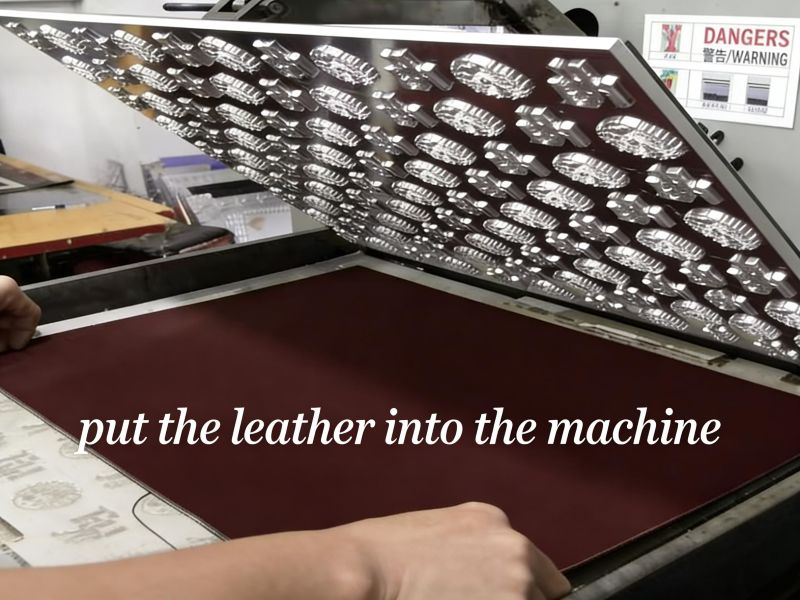
Brand compatibility may be affected by inaccurate customization. Misaligned logos can weaken brand presentation. Suppliers should control logo application processes, such as debossing or embossing, within a defined tolerance (e.g., ±0.5 mm). This helps achieve a more consistent and professional appearance.
Cost planning may become unpredictable due to fluctuations in production. This can affect budget control in bulk procurement. Maintaining stable production costs within a defined range (such as ±5% of the bulk price) can help improve predictability. This supports more consistent procurement planning.
Delivery timelines may be uncertain in large-scale production. Delays can disrupt corporate schedules. A standard lead time (around one month, with a tolerance of ±7 days) should be established and managed. This helps ensure more reliable and timely delivery.
Leather laptop covers are intended not only to protect devices during daily use but also to provide a practical and professional appearance. With appropriate material and customization control, they can better align with corporate program requirements.

Controlled Customization Framework
Common aspects of customization include standardizing sizes, offering a few color options, especially green, and providing logos. These factors allow the optimization of the production process and make all units the same.
We customize leather laptop cases to fit your business needs. Our framework designs them in specific sizes. You can also choose options for 13-inch devices. These cases are designed for comfort and ease of use. They provide a snug fit and a unique look. You can also choose from various colors, like green and brown, and different styles.
Customizations are tested for durability, ensuring each case provides consistent protection and fits seamlessly into your company’s operations. This approach strikes a balance between craftsmanship and practical features, such as room for additional accessories, making it easier for your customers to carry their devices every day.
Manufacturing-Aligned Design and Quality Discipline
A close inspection is needed of leather thickness, stitch density, and dimensional tolerance. The timely use of these checks will help ensure a seamless production process and the timely delivery of schedules.
Among the factors to consider when procuring leather laptop cases are durability, craftsmanship, and device protection. The cases are padded to fit both 13-inch and 15-inch laptops, are reliable at protecting your device, and feature a design that shields it against scratches and other daily wear.

Every case is made to the point to deliver quality, accessories space, and the ideal mix of style and functionality. In any color, be it the day-to-day use or office requirement, you have a choice of colors, such as green or brown, etc., and all have been tested to be water resistant and are created to suit the purpose of your company, therefore also making sure that your devices are safe during the usage process.
FAQs
Q1: How can I ensure the leather quality is consistent for bulk orders?
Define clear leather specifications upfront, including grade, thickness, and surface finish. Use batch-level inspections and material acceptance checks to maintain consistency across production.
Q2: What are the common design pitfalls when ordering sleeves or folios in bulk?
Over-customization increases production complexity and leads to inconsistent quality. Standardizing features helps stabilize lead times and defect rates.
Q3: How should I plan packaging and shipping for large orders?
Use waterproof materials, secure stacking, and protective containers to prevent transit damage. Packaging and container layout should be planned before production begins.
Q4: What customization limits should I be aware of in bulk sourcing?
Customization limits often involve logo placement, color accuracy, and size tolerances. Confirm samples and specifications early to avoid production issues.
Wrap-up & Decision Guidance
For individual buyers, leather laptop cases focus on style and portability—while bulk B2B sourcing prioritizes consistency, material control, and production discipline.
By adhering to precise specifications (e.g., leather type, thickness, and defect-rate thresholds), rigorous quality checks, and standardized production processes, businesses can secure durable, reliable leather laptop cases that deliver consistent protection and fit for bulk orders.
How to Build Reliable Partnerships with Leather Laptop Case Suppliers
Prioritize suppliers that offer transparent production processes, batch-level quality tracking, and reliable lead-time management.
As an experienced OEM/ODM manufacturer specializing in bulk leather sleeves and bags, we help businesses secure consistent quality, control costs, and meet delivery schedules across large orders. Contact us today to request a free quote or download our catalog for your corporate project.