
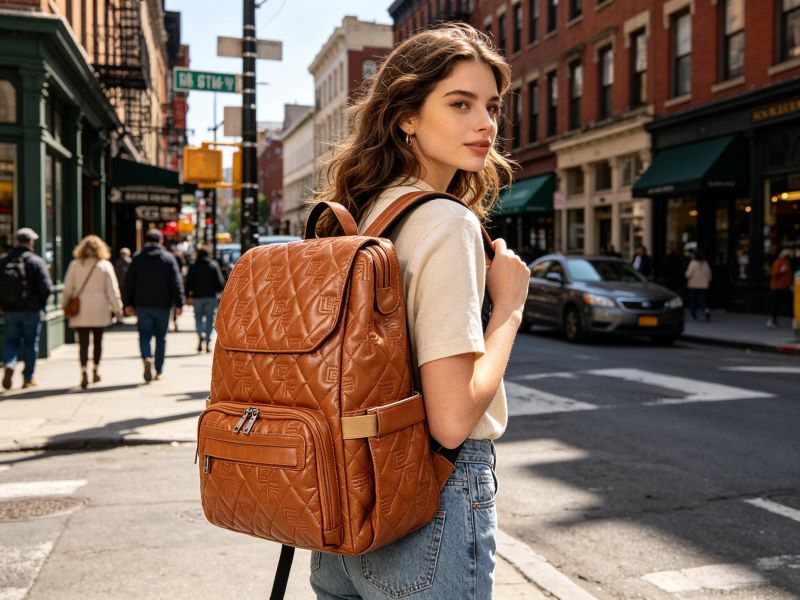
Most backpacks don’t fail in the store. They fail after 30 minutes in an airport.
A lot of women don’t realize the issue isn’t just size. It’s how the main compartment is structured, how the weight sits on your shoulder strap, and whether the padded shoulder straps actually handle proper weight distribution when the bag is fully packed. What looks good online can feel terrible after walking through airport security or navigating crowded city streets.
As a manufacturer with over 20 years of experience in backpack production, we’ve seen where most designs fail—poor structure, unbalanced weight, and layouts that look good but don’t work in use. These issues don’t show in product photos, but they directly affect comfort and usability.
In this guide, we break down how travel backpacks actually perform under load—from structure and weight distribution to layout decisions—so you can avoid common mistakes and choose what really works.
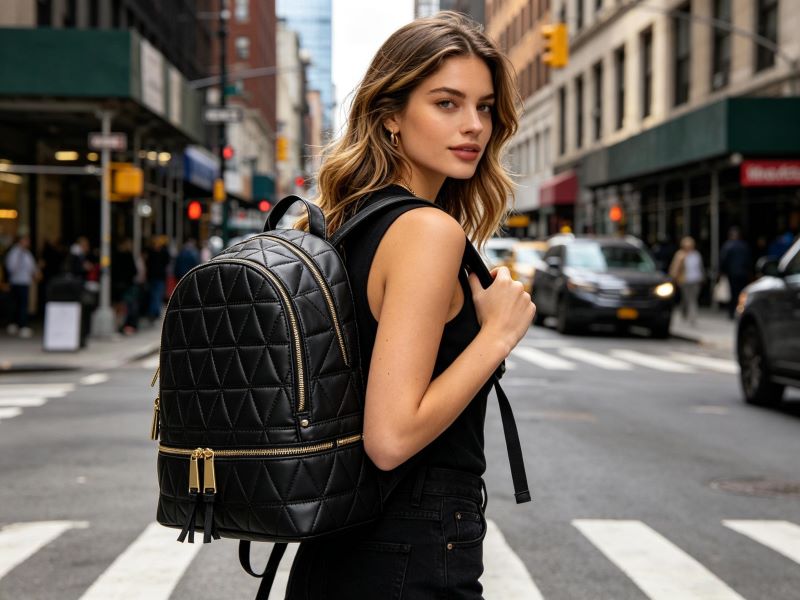
What Makes a Good Carry-On Backpack?
If you rely on a backpack for carry-on air travel, skipping checked luggage comes down to how fast you can access your gear—not just size.
A good backpack should meet the maximum legal carry-on size requirements and remain within carry-on compliance, even when packed tightly. If you have to unpack half the bag to reach one item, the design is already wrong.
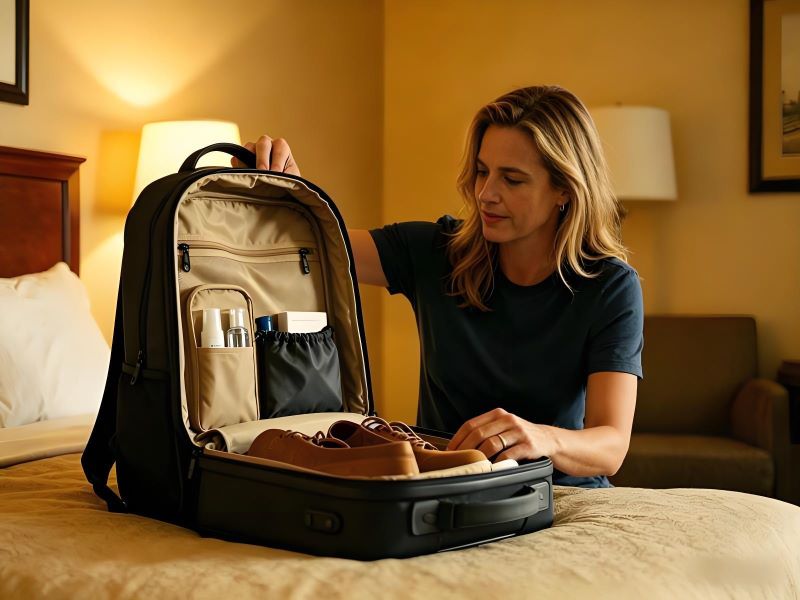
That’s where features like a clamshell opening make a big difference—it lets your bag open like a suitcase, instead of digging through a single deep main compartment. Add in smart internal organization, well-placed interior pockets, and a few zippered compartments for quick access, and that’s usually where cheaper designs start to slow you down.
A smart laptop compartment is essential here. Many designs now include a dedicated laptop compartment, and some ensure the laptop compartment fits most 15” devices securely. Having a well-placed laptop compartment also speeds things up at security checkpoints.
Good vs Poor Travel Backpack Design (Quick Comparison)
| Feature | Good Design | Poor Design |
| Main Compartment | Clamshell opening, easy access | Top-loading, hard to reach |
| Laptop Compartment | Fixed, close to back panel | Loose, shifts during movement |
| Internal Layout | Simple, functional zones | Too many small compartments |
| Access Speed | Items reachable in seconds | Need to unpack everything |
| Carry-On Use | Easy at airport security | Slows down during checks |
Comfort Matters More Than You Think
Most bags feel fine when empty. Problems occur once the load exceeds 6–8kg.
What usually fails first is weight distribution, not storage. When your bag gets heavy or fully packed, small design details become critical.
Features like a sternum strap, hip belt, or waist strap help shift weight off your shoulders. Combined with proper torso length fit and adjustable support systems, they make a huge difference—especially when comparing standard travel bags to more technical hiking backpacks.
Also pay attention to:
- padded straps that don’t dig into your shoulders
- adjustable straps for different body types
- load lifter systems that fine-tune how the bag sits
A proper fit based on your torso length improves balance and reduces fatigue, especially on longer walks or when using larger hiking backpacks.
Everyday Backpacks vs Travel Backpacks
Most daily travel setups don’t need a full travel pack.
A lightweight everyday backpack is often enough for city travel, commuting, or flights where your bag counts as a personal item under the seat in front of you.
These are great when:
- You’re dealing with tight airplane seats
- You just need space for a laptop, a charger, and a water bottle
- You want something simple for walking around all day
Look for a clean layout with a few internal pockets and easy access compartments. Some people prefer structured city backpacks, while others opt for minimalist, lightweight designs, depending on how they use the bag.
One-Bag Travel: Is It Worth It?
If you’ve ever tried traveling with just one travel bag, you know it’s a different mindset.
One-bag setups fail when everything ends up in the same compartment.
A good one-bag setup usually includes:
- a spacious main compartment with access
- packing zones for a toiletry bag, shoe bag, or shoe pouch
- flexible space for different types of travel gear
Some models even include an expansion zipper, giving you extra room when you need it—especially useful for a weekend trip or transitioning into longer extended trips.
The best designs don’t try to include as many pockets as possible—they focus on placing the right compartments in the right places.
Turning Design Ideas Into Real Products
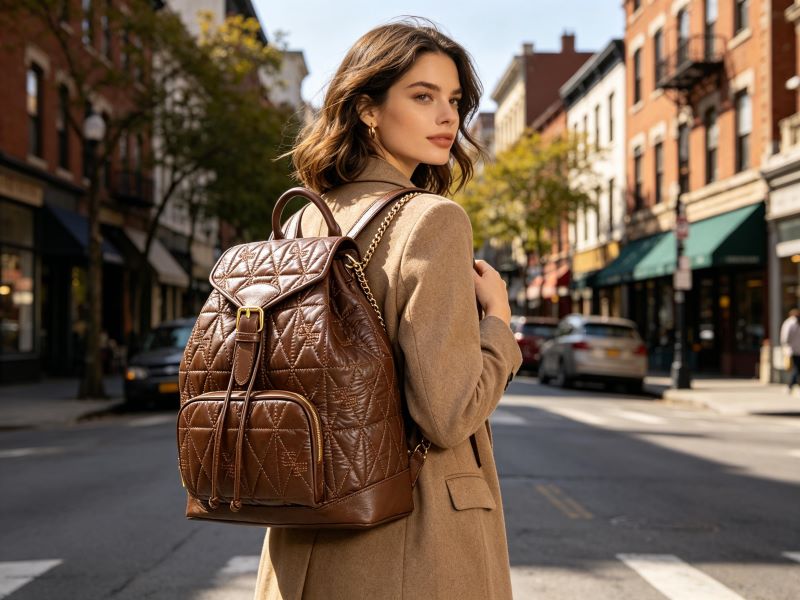
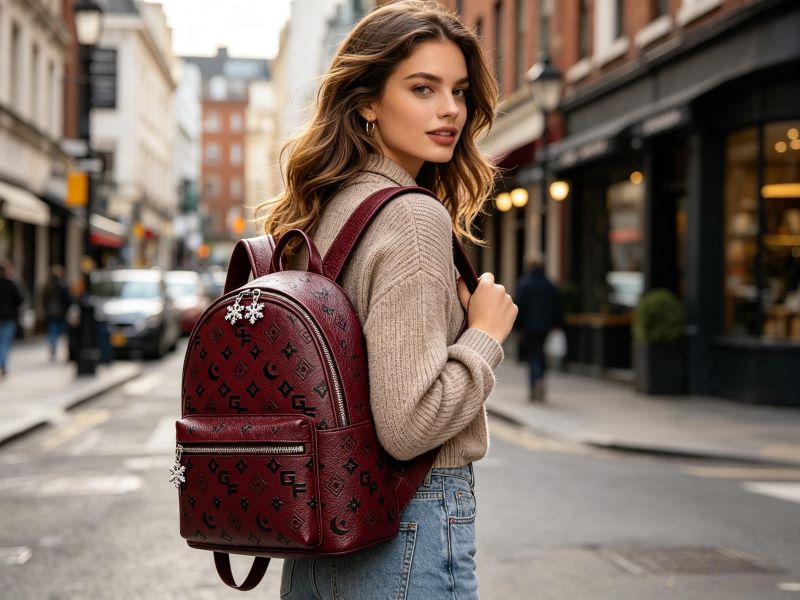
In recent projects, more designs are no longer coming from sketches—they start from AI-generated images.
What matters isn’t how the logo and image looks, but whether it can actually be produced.
In our process, we don’t treat AI designs as final concepts. We break them down into structure, materials, and construction details, then work with clients to adjust what’s realistic and what needs to change. Small details—like how the base is reinforced, how the laptop compartment is fixed, or how the bag holds shape when fully packed—are where most AI concepts need refinement.
This back-and-forth is critical. Without it, designs that look good on screen often fail in production.
We’ve been working with this workflow more frequently over the past few years. In fact, several styles currently in production began as AI-generated concepts, which were later refined and developed into finished products.
The key is not just generating ideas, but knowing how to turn them into something that works in real use.
Materials, Durability & Weather Protection
This is usually where brands cut costs—and where problems start.
Look for durable materials that can handle being tossed around, squeezed into overhead bins, or carried through different environments. A good bag should also be made of waterproof material or at least come with a rain cover for unexpected weather.
The right materials also help control the overall weight of the bag, which becomes important when you’re carrying your backpack for long periods.
Packing Smarter (Not More)
Most packing problems come from where items are placed, not how many you bring.
Start by organizing your items:
- clothes in packing cubes
- shoes in a shoe bag
- liquids in a toiletry bag
Then think about balance. Heavier items should sit closer to your back to improve weight distribution and reduce strain when the bag is fully packed.
Keeping your laptop protected in a separate laptop compartment also improves organization during extended trips, especially when you need quick access without unpacking everything.
Good internal organization helps you avoid digging through everything just to find one item, especially in busy environments like airports.
FAQs About Travel Backpacks for Women
What is the best women’s travel rucksack for carry-on trips?
A good women’s travel rucksack should stay comfortable when fully packed and still fit airline carry-on rules. Look for balanced weight distribution and a layout that’s easy to organize.
Do I really need a laptop compartment or just a laptop sleeve?
For business travel, a dedicated laptop compartment offers better protection than a simple laptop sleeve. Still, many everyday backpacks combine both for flexibility.
What’s the difference between a padded laptop sleeve and a regular laptop sleeve?
A padded laptop sleeve adds shock protection, which matters when your bag is fully loaded. A regular laptop sleeve is lighter but works best for short trips or daily use.
Which travel backpacks have the best organization and pockets?
Look for designs with clean layouts, not just as many pockets as possible. Features like zippered pockets and a water bottle pocket make everyday use much easier.
How important are backpack straps and torso length for comfort?
Very important. Proper backpack straps and the right torso length improve comfort and help maintain better weight distribution on longer trips.
What should I pack in a travel backpack for a short trip?
Keep it simple—clothes, a toiletry bag, and daily essentials. A well-organized everyday backpack makes packing faster and easier.
Final Thoughts
Most backpacks don’t fail on features—they fail under load.
If torso length, structure, and weight distribution aren’t right for carry-on travel, you’ll feel it within minutes.
If you’re evaluating backpacks from a sourcing or product development perspective, it’s worth examining size more closely. We’ve broken this down in detail in our guide on how to choose the right backpack size based on real usage data.
From Design to Production—What We Actually Do
At Gorfia, we specialize in developing and manufacturing backpacks for global brands, retailers, and distributors. With over 20 years of experience in bag production, we support the entire process from concept development to large-scale manufacturing.
Whether you’re starting from a rough idea, a tech pack, or even an AI-generated concept, we help translate that into a product that works in real use—not just on paper.
If you’re exploring new backpack styles or planning your next collection, you can request our catalog to see our latest designs.