
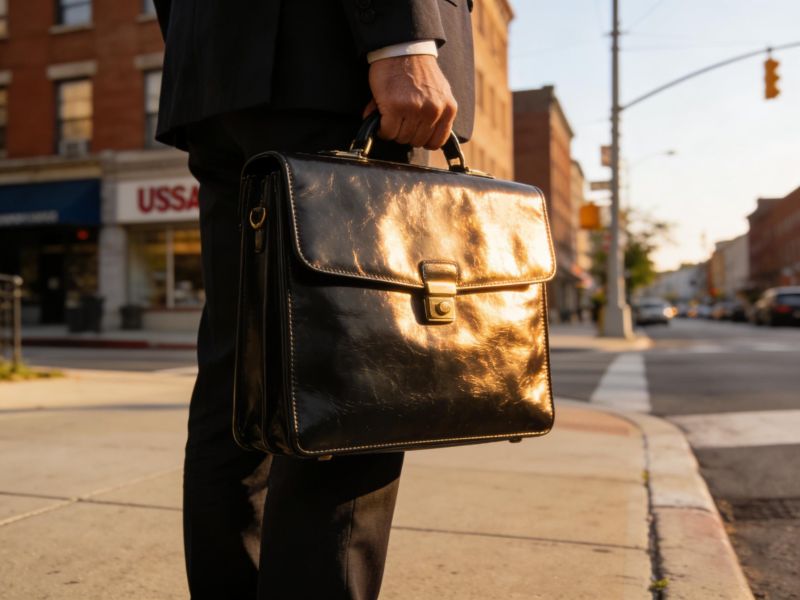
You walk into a meeting with the wrong bag, and something shifts in the room. It’s not dramatic, but it’s real. The briefcase you carry reflects your organization, attention to detail, and how seriously you approach your work.
With years of experience designing and manufacturing professional briefcases for global brands, we understand which features truly impact usability and long-term durability. Choosing a briefcase is more complex than it seems—leather or nylon, hard shell or soft, one compartment or three.
This guide breaks down what actually matters when buying a briefcase for work, including material, size, structure, hardware, and the details most buyers overlook. By the end, you’ll have a clear, practical framework to choose the right briefcase—let’s get started.

Choosing the Right Briefcase: What Actually Matters (and What Most People Get Wrong)
Before choosing a briefcase, start with how your bag is actually used throughout the day—not just what you carry, but how often you access it, how much it expands, and whether your load stays consistent. These factors define the function of the bag and determine which structure will hold up over time, beyond just appearance or colors.
Hard-shell briefcases are often chosen for protection, but they’re only practical if your carry is structured and consistent. In real use, they become limiting when users need to add extra items or adapt to changing daily loads. This is where many buyers misjudge their needs—they prioritize protection but overlook function and flexibility.
Soft-shell briefcases perform better in most day-to-day scenarios because they adapt to varying loads. From a manufacturing perspective, they also handle long-term stress more evenly, especially when users carry both fixed items (like laptops) and variable items (like documents or personal gear).
Messenger-style briefcases are often selected for convenience, but they shift weight unevenly over time. While they work well for short commutes or lighter loads, they’re less suitable for heavier daily use—especially in professional settings where both function and structure matter more than style or colors.
As a practical rule: choose hard-shell only if your carry is fixed and needs protection, soft-shell if your load varies throughout the day, and messenger style only for lighter, short-duration use.
If you’re sourcing bags for a brand or team, the key isn’t just offering different styles—it’s aligning each structure with a specific usage scenario and function. This is where many product lines fail: they offer variety in colors and appearance, but lack clear functional positioning.

Materials: Why the Wrong Choice Costs You Later
Choosing the right briefcase material isn’t just about looks—it directly impacts durability, cost, and long-term performance. With multiple fabric options available, from full-grain leather to nylon and canvas briefcases, the key is to match the material to how you actually use your briefcase.
How to Choose the Right Briefcase Material (Full-Grain Leather vs Nylon & More)
| Use Case / Buyer Type | Recommended Material | Key Advantages | Best For (Business Strategy) |
|---|---|---|---|
| Corporate professionals (finance, law) | Full-Grain Leather | Premium look, structured, ages well | High-end positioning, executive clients |
| Frequent travelers | Ballistic Nylon | Lightweight, water-resistant, highly durable | resistant, highly durable Functional travel product lines |
| Daily commuters (heavy use) | Nylon or Hybrid | Flexible, abrasion-resistant, practical | High-usage, utility-focused users |
| Startup brands / budget market | PU Leather | Cost-effective, scalable, leather-like | Entry-level SKUs, fast turnover |
| Creative / casual professionals | Canvas or Soft Leather | Lightweight, relaxed style | Lifestyle and design-driven markets |
| Brand goal: Premium image | Full-Grain Leather | Strong brand perception | Build margin and brand value |
| Brand goal: Volume sales | PU / Nylon | Lower cost, wider reach | Scale and pricing competitiveness |
While each material has its strengths, leather works best for professional settings and long-term use, while nylon is more practical for travel and daily commuting.
For brands or bulk buyers, combining multiple materials across different price tiers is often the most effective strategy to meet diverse market needs.
A Common Mistake We See in Briefcase Material Selection
In one recent project, a client initially chose PU leather briefcases to reduce costs for their entry-level product line. While the bags looked similar to genuine leather at first, issues began to appear after extended daily use—especially around handle joints and corners, where the material started to crack and peel.
After reviewing usage patterns, we helped the client adjust their material strategy. They introduced full-grain leather for their premium line and switched to nylon for high-frequency users who prioritized durability and lighter weight.
As a result, product returns decreased, and customer satisfaction improved significantly across both segments. This also helped the brand better position its products based on real user needs rather than price alone.
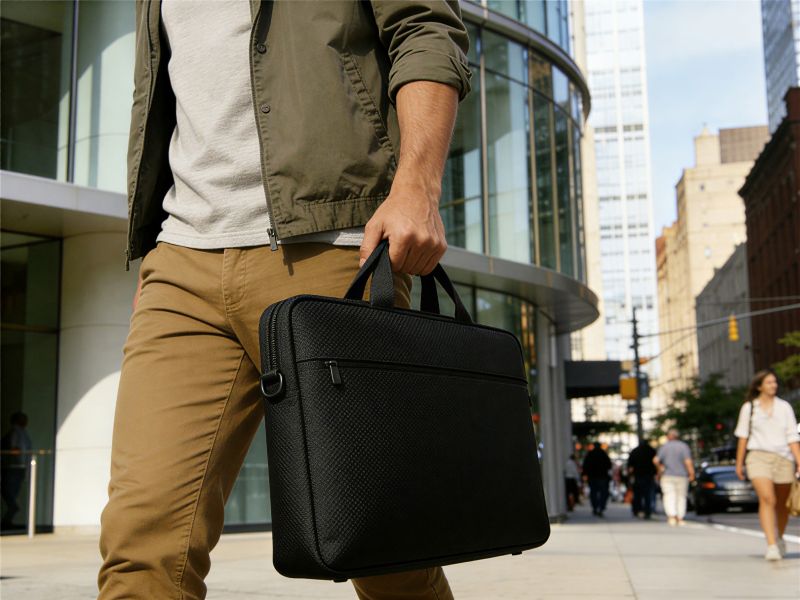
Size and Capacity: Most People Pick the Wrong One
A briefcase that’s too large can feel bulky and wear unevenly over time, while one that’s too small quickly becomes overstuffed and puts stress on the seams.
A practical way to choose the right size is to start with your laptop and build from there. Make sure it fits comfortably, then think about what else you carry day to day—chargers, documents, pens, and a few personal essentials.
Choosing the right size keeps everything organized, reduces unnecessary strain on the bag, and helps it hold up better with regular use.
As laptops have become more standardized, most modern briefcases are now designed to fit up to a 15.6-inch device. This shift also reflects broader industry trends, with the global luggage and bags market continuing to grow steadily in recent years, according to global luggage and bags market data.

Hardware and Build: Where Cheap Bags Fail First
Hardware quality is often overlooked—even the best leather won’t matter if the zippers or fittings fail.
Zippers
High-quality zippers are one of the first indicators of how well a briefcase will perform over time. The best options are smooth, durable, and resistant to snagging or splitting under load—features typically found in premium-grade zippers used by established manufacturers.
If a briefcase doesn’t specify its zipper quality or standard, it’s often a sign that lower-grade components are being used. For B2B buyers sourcing at volume, defining zipper specifications at the purchase order stage is a common practice to ensure consistent quality.
Handles and Straps
Handles should be stitched, not just glued. Run your thumb under the seam. If it feels hollow or the stitching is loose, the handle will fail under load. Rolled leather handles tend to be more comfortable over long carries than flat ones. If the briefcase includes a detachable shoulder strap. Check that the attachment hardware (D-rings, swivel clips) is metal, not plastic.
Stitching and Reinforcement
Double-stitched seams at stress points are a must. Corner reinforcement, either leather gussets or metal feet. Protects the bag’s base from daily wear. If the briefcase doesn’t have feet on the bottom. It will sit directly on floors and wear through faster at the base corners.
For brands looking at how these construction details translate to OEM production standards. Leather laptop case sourcing covers the key questions to ask before placing an order.
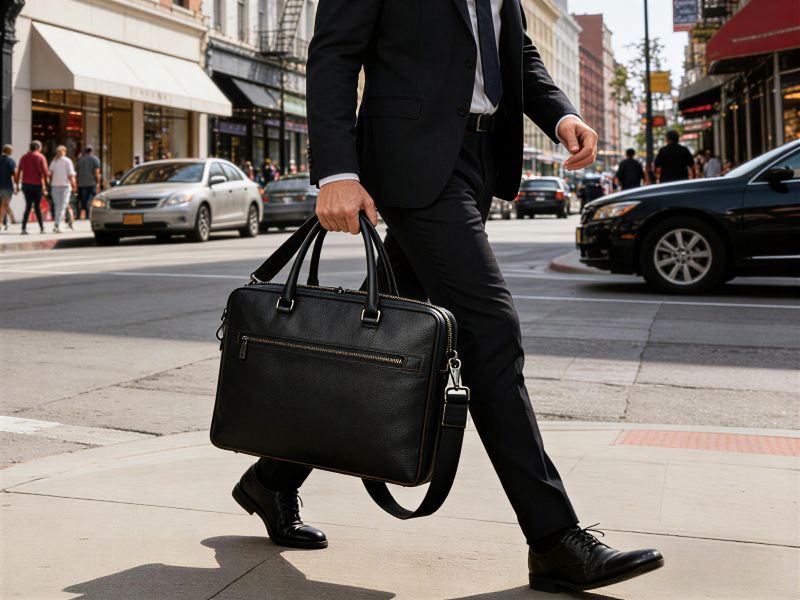
Style and Context: When Your Bag Works Against You
In finance, law, and traditional corporate settings, a structured leather briefcase in black or dark brown is still the clearest signal of professional seriousness. In tech, media, or creative fields, you have more flexibility. Canvas, nylon, and hybrid styles all work well.
Black works across most settings. Tan and cognac leather suits are appropriate for creative or consulting environments but can feel too casual in more formal ones. Navy and dark grey are versatile choices for tech and travel-heavy roles.
One factor that often gets overlooked is organization. A briefcase with no internal structure quickly becomes a mess after daily use. Look for a dedicated laptop compartment and a file section for documents (or folders). At least two small pockets for cables and accessories, and one exterior slip pocket for items you need to reach quickly.
For brands developing products targeting professional buyers, brand solutions are worth exploring if you need custom structure and organization layouts built into your design from the start.
Briefcase vs. Backpack: When Does a Briefcase Make Sense?
Backpacks are widely used for daily commuting because they distribute weight better and carry more, but they don’t fit every context.
A briefcase makes more sense when you’re meeting clients or entering formal environments. Or need to carry thin flat items like documents and folders that don’t pack well in a backpack. It also reads as more intentional in formal settings. A backpack in a board meeting is fine in some industries; in others, it reads as under-prepared.
If you frequently switch between both contexts. A convertible bag or a slim briefcase that fits inside a larger travel bag can solve the problem without requiring two separate bags. For context on how bag structure decisions play out in manufacturing. The fanny pack vs. crossbody guide covers a similar structural trade-off.

FAQs
What size briefcase do I need for a 15-inch laptop?
Look for an internal compartment of 15.5″ to 16″ to ensure a proper fit. Always check actual dimensions instead of relying on “15-inch compatible” labels.
Is leather or nylon better for a work briefcase?
Leather is more formal and durable but heavier and requires maintenance, while nylon is lighter, easier to clean, easier to care for, and more weather-resistant. Choose leather for formal settings and nylon for travel or everyday use.
How do I know if a briefcase is well-made?
Check the zipper brand (YKK is the standard) and examine the stitching at the handles and seams. Look for metal rather than plastic hardware, and see whether the base has protective feet. A good-quality briefcase should feel structured and solid, not floppy, when held by the handle.
How long should a briefcase last?
A well-made, well-maintained full-grain leather briefcase can last 10 to 20 years. PU leather typically lasts two to four years before showing wear. Nylon and ballistic nylon, if properly constructed, can last five to ten years of heavy use.
Can I customize a briefcase for my brand?
Yes. Many manufacturers offer OEM and ODM options for custom briefcase development. Including material choice, hardware specs, branding elements, and internal organization layouts. The designer solutions page is a good starting point if you’re exploring custom development.
Choose Better Now, Avoid Problems Later
Now that you understand what really matters when choosing a briefcase, the next step is to apply these principles to your own needs—especially making sure the size matches what you actually carry day to day.
Getting the right size, structure, and materials in place early helps you avoid common issues like poor organization, premature wear, or choosing a bag that doesn’t fit your routine.
If you’re planning to develop or source professional bags, you can also explore our guide to sourcing and procuring leather laptop cases to better understand how material and construction decisions impact long-term product performance.
Work With Us
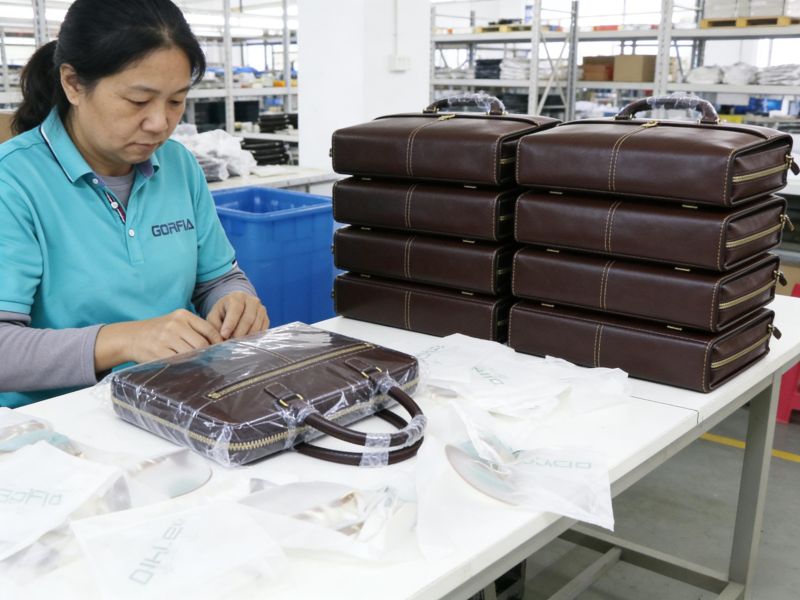
With over 20 years of experience in leather goods manufacturing, Gorfia supports global brands with OEM and private label development—from material selection to scalable production.
Ready to move forward? Contact our team for a free consultation or request a quote to get started on your next briefcase project.