
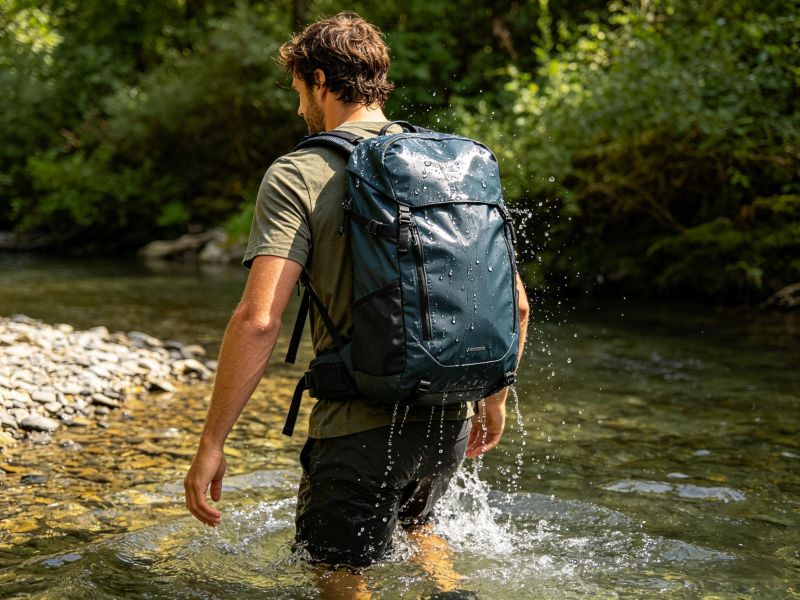
You usually find out whether a backpack is truly waterproof at the worst possible moment — during an unexpected downpour on your commute or a river crossing that didn’t go as planned. And that’s when the difference becomes clear: a bag that claims water resistance is not the same as one that actually keeps your gear dry.
After years of testing packs across daily commutes, extended hikes, and real-world manufacturing evaluations, we’ve seen how small differences in materials and construction directly impact whether a bag holds up when it matters most.
This guide breaks down the real difference between waterproof and water-resistant backpacks, how to choose the right one for your use, and which construction details actually matter. Whether you’re commuting, hiking, or sourcing for a brand, the key factors are the same—material, closure, seams, and carry comfort. Here’s what to look for.
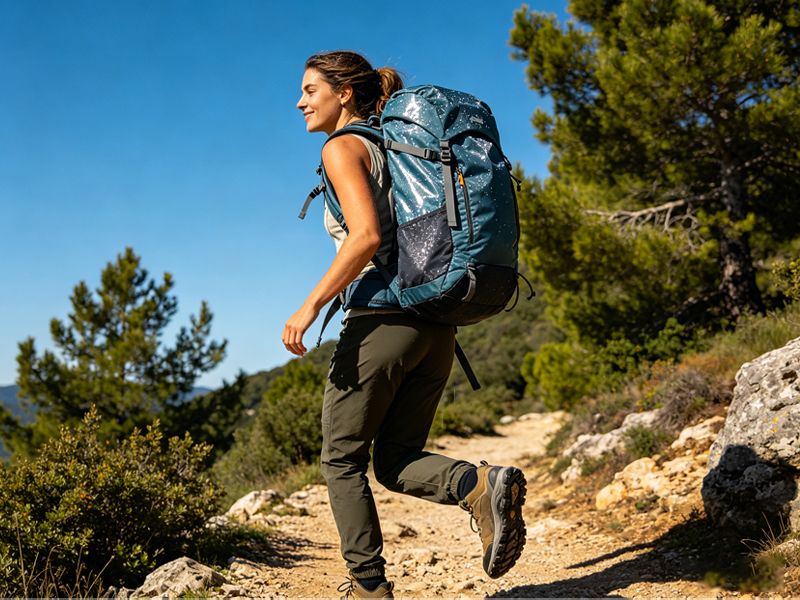
Best Waterproof Backpacks: Tested Picks
How We Define the Best Waterproof Backpack
The best waterproof backpack is not always the one with the highest waterproof rating. A reliable choice needs the right balance between water protection, durability, comfort, and everyday usability.
During evaluation, we focus on five key factors:
- Waterproof performance: How effectively the material, seams, and closure system prevent water penetration.
- Construction quality: Whether stitching, welded seams, zippers, and reinforcement areas can withstand repeated use.
- Comfort under load: How the shoulder straps, back panel, and weight distribution perform when the backpack is fully packed.
- Practical organization: Whether compartments and access points match real carrying needs.
- Use-case suitability: Whether the design fits commuting, travel, hiking, or water activities.
A backpack can only be considered one of the best options when its features match the environment where it will actually be used.
| Category | Waterproof Level | Capacity | Weight | Best For |
| Everyday carry | Water-resistant | 20–25L | Light | Daily commute, errands |
| Roll-top commuter | High (roll-top seal) | 20–30L | Medium | Urban commuting, cycling |
| Fully waterproof | Submersible | 20–30L | Medium | Kayaking, water sports, heavy rain |
| Lightweight hiking | Water-resistant+ | 18–25L | Very light | Trail running, fast hiking |
| Tech-friendly | Water-resistant | 20–30L | Medium | Office, laptop carry, urban use |
Best Everyday Waterproof Backpack
Most people don’t need a fully waterproof backpack; they need something that can handle unexpected rain on the commute and the occasional downpour without turning into a soggy mess.
A 20–25L pack hits the sweet spot for daily use: enough space for a laptop, a change of clothes, and essentials, without feeling bulky on public transport. Materials like TPU-coated nylon or PU-laminated fabric are ideal here, especially when paired with a coated YKK zipper and a lining that wipes clean if something spills.
In real-world use, this kind of bag is built for typical conditions—rain, splashes, and daily exposure.
Quick verdict: For typical urban conditions, a well-built, water-resistant backpack with a coated zip and a structured base is generally adequate for handling rain and everyday use.
Best Roll-Top Backpack for Commuting
If you regularly commute in heavy rain, especially on a bike, roll-top backpacks start to make a lot more sense.
By replacing zippers with a roll-top closure and adding welded seams, these bags offer significantly better protection in sustained rain.
The only real downside is access. You won’t be opening it one-handed while walking or digging things out quickly mid-journey. But for most commuters, that’s a minor trade-off.
Quick verdict: If your routine includes consistent rain or cycling, a roll-top with welded seams is the most reliable option you can get without going fully technical.
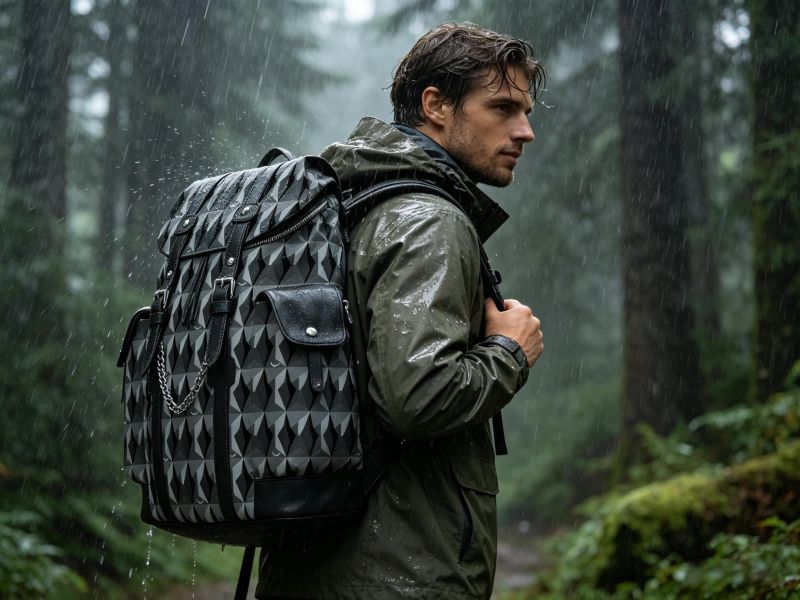
Best Fully Waterproof Backpack (Submersible)
This is where “waterproof” actually means waterproof.
Submersible backpacks are built with welded or RF-bonded seams, no stitching, no weak points, and use either a roll-top closure or a waterproof zipper rated for immersion. Materials like PVC and TPU dominate here, with TPU being the lighter, more flexible option (and easier to handle in colder conditions).
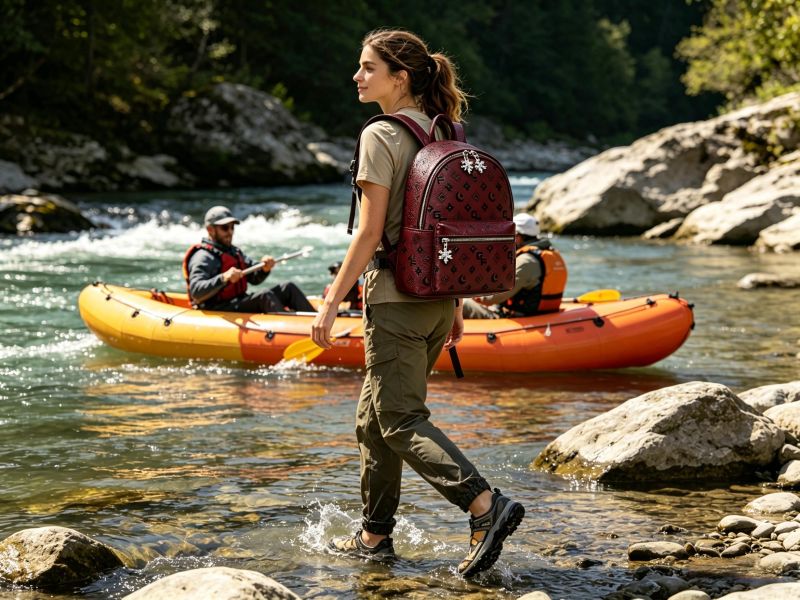
These are designed for situations where your bag might genuinely end up in the water, such as kayaking, rafting, or sailing. That level of protection comes at a cost, though; they’re heavier, less breathable, and not particularly comfortable for long carries.
Quick verdict: Only go this route if your bag is likely to be submerged. Otherwise, it’s unnecessary weight and compromise.
Best Lightweight Waterproof Backpack for Hiking
For hiking, especially faster or longer-distance days, weight matters more than absolute waterproofing.
Ultralight packs made from coated nylon or silnylon (typically in the 40–70D range) keep things light while still offering decent rain resistance. You’re usually looking at under 700g for a 20L pack, which makes a noticeable difference over a full day on the trail.
The trade-off is durability; lighter materials will wear faster, especially on rough terrain. That’s why many hikers pair these packs with small dry bags inside for electronics and essentials.
Quick verdict: A lightweight, water-resistant pack plus internal dry bags is usually a better system than carrying a heavy, fully waterproof pack all day.
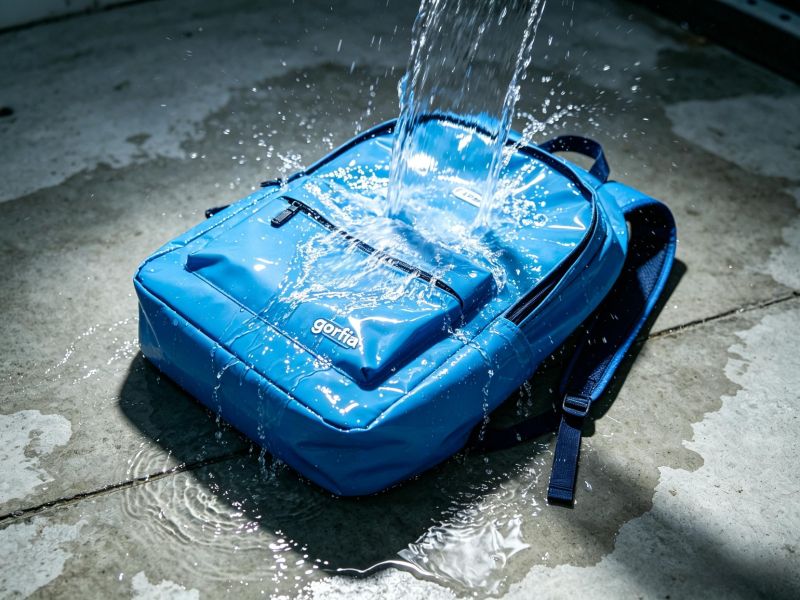
Best Tech-Friendly Water-Resistant Backpack
For everyday office use, waterproofing isn’t the priority; organization is.
A good tech backpack focuses on things like a suspended laptop sleeve (so your device doesn’t hit the ground when you drop the bag), smart internal layout for cables and accessories, and easy-access pockets for daily items. Features like USB passthroughs can be useful, but layout matters more than gimmicks.
Most of these bags use water-resistant materials, which are fine for getting caught in the rain on the way to and from work. But they’re not built for sustained exposure.
Quick verdict: Prioritize laptop protection and organization. Water resistance is enough for city use, and adding a sleeve gives you an extra layer of security when the weather turns.
How We Tested Waterproof Backpacks
Rain Simulation and Water Exposure
Bags were loaded with electronics and paper items and exposed to sustained simulated rainfall for 30 minutes, then checked for interior moisture. Zippered bags were tested with and without rain covers; roll-top and welded-seam bags were tested without covers.
Comfort Under Load
Each bag was carried fully loaded (approximately 8kg) for a minimum of 2 hours across varied terrain. Strap padding, back panel ventilation, hip belt (where present), and weight distribution were evaluated at the end of the carry, not at the start, when everything feels acceptable.
A poorly balanced or uncomfortable bag shifts as you move, creating stress on seams, zippers, and fabric junctions—common failure points over time. Consistent load distribution helps maintain the integrity of these high-risk areas during prolonged use in wet conditions.
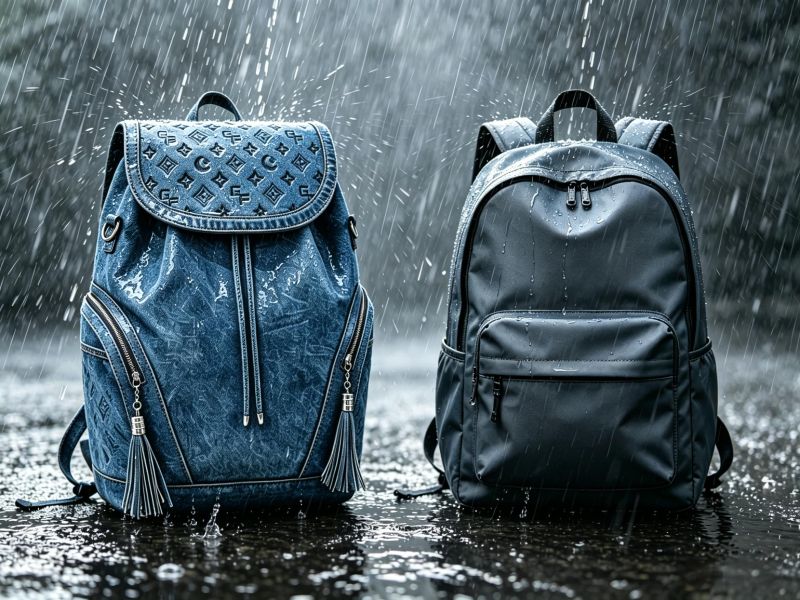
Organization and Usability
Pocket layout and access speed were tested under realistic conditions, reaching for a phone while moving, locating a cable at the bottom of the bag, and accessing a water bottle one-handed.
In wet conditions, usability directly affects exposure. The longer a bag stays open in the rain, or the more frequently it’s opened, the higher the chance of water getting inside. Designs that allow quick, intuitive access reduce unnecessary exposure and help preserve internal dryness without relying solely on material performance.
Durability and Abrasion Testing
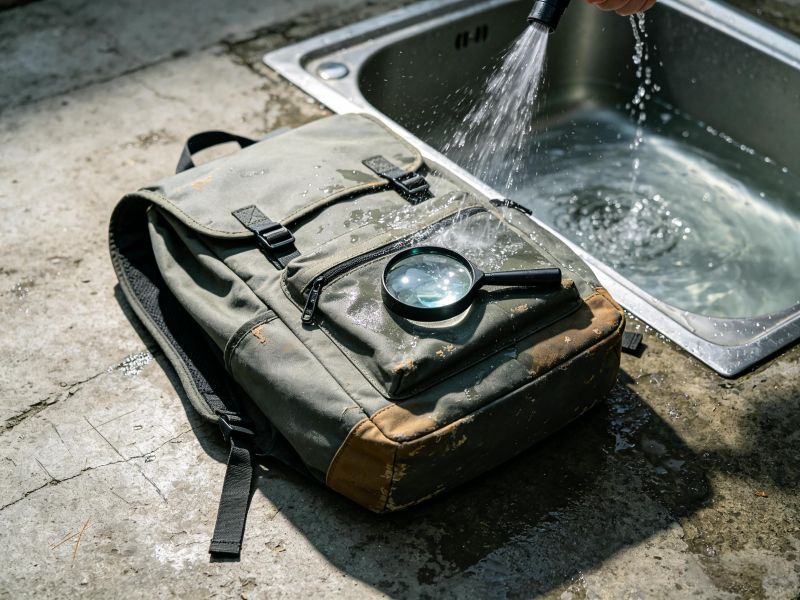
Bag bases and corners were dragged across concrete and rough surfaces to simulate everyday wear. Coating integrity was assessed after abrasion, followed by repeat waterproof testing to identify any performance loss.
This is where many “waterproof” claims fall apart. Surface coatings and laminated layers are what provide water resistance, and once they wear down, the fabric underneath can absorb moisture quickly. Testing after abrasion shows how well a bag maintains its protective barrier over time, not just when it’s new.
Waterproof vs. Water-Resistant: What Actually Matters?
These terms are often confused, and most bags on the market are water-resistant rather than fully waterproof.
Water-resistant means the fabric slows water penetration under light rain or brief exposure. The coating eventually saturates, and once it does, moisture gets through, particularly at seams, zippers, and stress points where the coating wears first.
Waterproof means the bag keeps water out under sustained exposure or immersion. True waterproof construction requires welded or taped seams (not stitching), a waterproof closure (roll-top or rated zipper), and a fabric that does not absorb water, typically TPU-laminated nylon or PVC.
When water-resistant is enough: Daily commuting, hiking in predictable conditions, travel, casual outdoor use. The bag will handle typical rain without issue, and the lighter weight and better organization options are practical advantages.
When full waterproofing is necessary: kayaking, rafting, sailing, coastal hiking, where wave exposure is likely, or any situation where the bag may come into direct contact with water. According to Verified Market Research, the global waterproof bags market was valued at $20.12 billion in 2023 and is projected to reach $29.8 billion by 2031, growth driven largely by rising participation in water sports and outdoor activities where waterproof performance is non-negotiable.
How to Choose the Best Waterproof Backpack?
Materials and Construction
TPU-coated nylon is the current standard for performance waterproof backpacks. It’s lighter and more flexible than PVC, handles cold temperatures without cracking, and maintains waterproof integrity across a wider range of conditions. PVC is heavier but highly durable and more affordable at entry price points.
PU-coated nylon is common in water-resistant (not fully waterproof) bags. The coating wears over time and can be reapplied with a DWR (Durable Water Repellent) spray, but it is not a substitute for welded seam construction. Recycled nylon and rPET fabrics are increasingly used across both water-resistant and waterproof categories as brands respond to sustainability demand.
Seam construction is where many bags fail. Stitched seams have needle holes; water gets through them regardless of how waterproof the fabric is. Taped seams apply waterproof tape over stitching to seal the holes. Welded seams use heat bonding and have no holes. For fully waterproof performance, welded seams are the correct construction; for water-resistant performance, taped seams at critical points are adequate.
Closure Types: Roll-Top vs. Zipper vs. Dry Bag
Roll-top closures create a watertight seal by folding the bag opening three to five times and securing it with a buckle. They have no zippers to fail, no teeth to corrode, and, when combined with welded seams, they deliver the best waterproof performance available in a backpack format. The limitation is access; you cannot open a roll-top quickly.
Zippered closures are faster and more convenient for daily access, but require a waterproof-rated zipper (such as Aquaguard or similar) to maintain any meaningful water resistance. Standard zippers allow water penetration in sustained rain; coated zippers slow it. No zipper closure matches the performance of a roll-top seal.
Dry bag style construction, full-welded seam body, roll-top closure, no exterior pockets, provides the highest possible waterproof performance and is standard for kayaking and water sports bags. Everything sacrificed (exterior access, ventilation, ergonomics) for watertight integrity.
Capacity and Use Case Fit
15–25L covers everyday and commuting use. Fits a laptop, daily essentials, a change of clothes, and lunch. Right for most people most of the time.
25–40L covers travel and multi-day hiking. Enough for a weekend’s worth of gear or a serious day pack with camera equipment, layers, and food for a long outing.
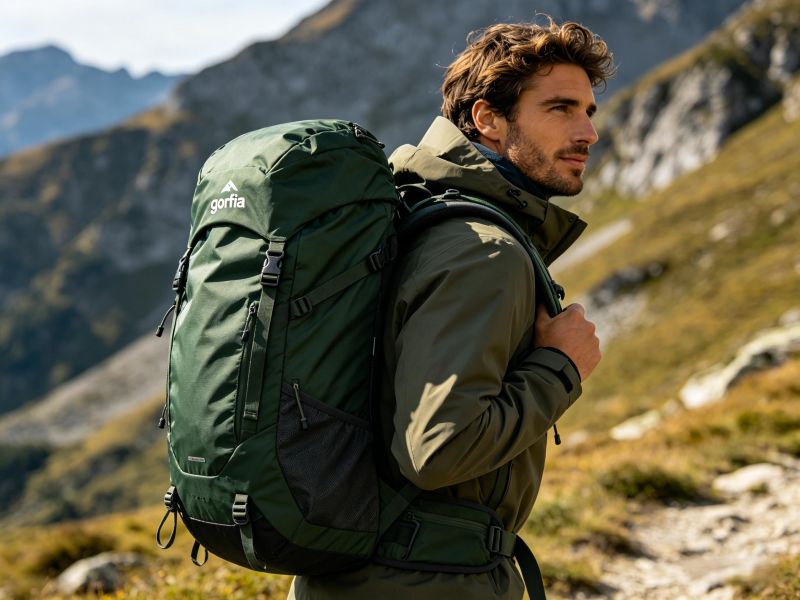
40L and above covers extended outdoor trips and expeditions. At this capacity, weight and back system design matter as much as waterproof performance; a heavy bag with poor hip transfer becomes physically difficult to carry over distance.
Comfort and Carry
Shoulder strap padding degrades faster than people expect. Foam density matters; cheap foam compresses within a season and loses its cushioning. Wider straps distribute load better than narrow ones, and S-curve shaping reduces friction across the chest and underarm.
Back panel ventilation is a genuine comfort factor on longer carries in warm conditions. Mesh-suspended back panels (sometimes called tensioned mesh or trampoline systems) keep the bag off the spine and allow airflow. The trade-off is that these systems add weight and reduce packability.
Weight distribution is determined by where the heaviest items sit in the bag. Heavier items should sit close to the back panel and as high as possible in the main compartment. This keeps the center of gravity close to your body rather than pulling you backward.
Waterproof Ratings and Real Performance
IP ratings (Ingress Protection) are the standard for electronics, but are inconsistently used in the backpack industry. An IP67 rating means protected against dust and immersion up to 1 meter for 30 minutes, but this rating applied to a bag means very little without context about seam construction and closure type.
What matters more than specs: Seam construction (welded vs. taped vs. stitched), closure type (roll-top vs. zipper), fabric lamination quality, and how the coating holds up after abrasion. A bag with a high IP rating and stitched seams will leak. A bag with no rating, welded seams, and a roll-top closure will not.
Best Use Cases: Match the Right Backpack
Commuting: Water-resistant or high-performance roll-top. Organization and comfort for daily carry matter more than full waterproof performance for most commuters. A rain cover stored in the bag’s base pocket provides waterproof protection without requiring you to buy a heavier bag.
Travel: Water-resistant with solid organization. At 25–35L, a travel backpack needs to handle overhead bins, fit under seats, and organize documents, electronics, and a few days of clothing. Full waterproof construction adds weight without meaningful benefit for airport-to-hotel travel.
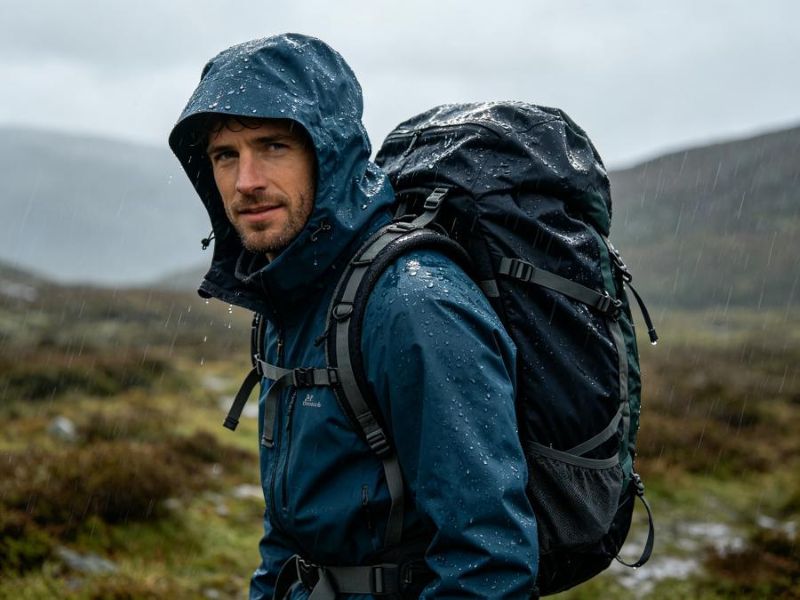
Hiking: Depends on the conditions. For day hikes in variable weather, water-resistant with taped seams is adequate. For multi-day trips in consistently wet environments, such as the Scottish Highlands, the Pacific Northwest, or tropical trekking, a higher-performing bag or a fully waterproof option is worth the extra weight.
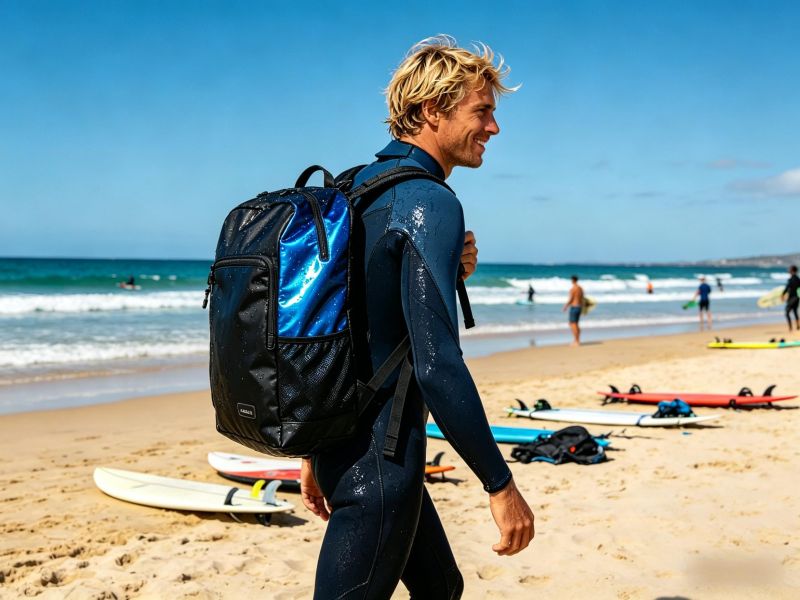
Water sports: Fully waterproof only. For any activity where the bag enters water, a welded-seam roll-top or dry-bag-style pack is the only appropriate option. Everything else will fail eventually, and electronics do not recover from submersion. Our article on ballistic nylon for travel bags covers material performance in detail, helping buyers make spec decisions across outdoor bag categories.
Care, Maintenance, and Waterproof Tips
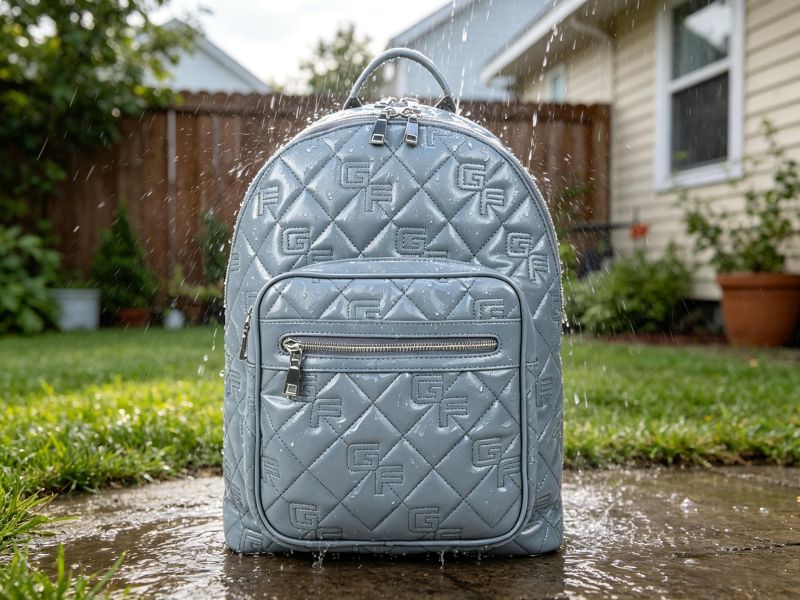
Cleaning coated materials requires care. Avoid machine washing bags with DWR or PU coating; heat and agitation degrade the coating faster than normal use. Hand wash with mild soap, rinse thoroughly, and air dry away from direct heat. For TPU-welded bags, a damp cloth wipe-down is sufficient for most cleaning.
Maintaining waterproof performance over time means re-applying DWR spray to water-resistant bags once the coating begins to wet out (when water no longer beads off the surface and instead soaks into the fabric). Tumble drying on low heat after DWR application reactivates the treatment. Welded seam bags require no coating maintenance but should be checked annually for seam separation.
Packing for better protection: Keep electronics and valuables in the part of the bag closest to your back panel. This area stays driest in a water-resistant bag, since rain typically hits the outer face and top. Use interior dry sacks for anything that cannot get wet. Do not overfill the bag so that the closure cannot seal properly; a roll-top needs at least 10cm of folding material to create a proper seal.
For brands sourcing waterproof backpacks at volume, construction choices at the sampling stage determine long-term performance and return rates. Gorfia produces custom backpacks in nylon, coated nylon, recycled materials, and TPU constructions, with welded-seam options available for fully waterproof specifications.
Logo execution across embossing, screen printing, woven labels, and custom metal hardware is available alongside OEM and private-label production. Our men’s bag category includes backpack formats across multiple constructions, and the brand solutions page covers how we support custom development from brief through production.
According to Straits Research, the global backpack market was valued at $19.11 billion in 2024 and is projected to reach $29.73 billion by 2033, with waterproof and weather-resistant categories among the fastest-growing segments, driven by increased outdoor activity and urban commuter demand.
FAQs
Is a waterproof backpack really waterproof?
Not always, many are only water-resistant and designed for rain, not immersion. True waterproofing requires welded seams, a sealed closure (roll-top or rated zipper), and non-absorbent fabric.
Can a waterproof backpack be submerged?
Only bags specifically built for submersion can handle it. Look for welded seams, roll-top closure, and TPU or PVC construction with an immersion rating.
How do I test a backpack for leaks?
Fill the bag with paper towels, seal it, and run it under a shower for about 10 minutes. Any damp spots inside will show exactly where water is entering.
How long do waterproof materials last?
TPU-welded bags typically last 5–10 years, while PU coatings may degrade in 2–4 years. Water-repellent treatments on standard bags need periodic reapplication to maintain performance.
What’s the difference between TPU and PVC in waterproof bags?
TPU is lighter, more flexible, and performs better in cold conditions. PVC is heavier and cheaper, but both offer similar waterproofing when properly constructed.
Can brands customize waterproof backpacks?
Yes, materials, capacity, seams, closures, and branding can all be tailored. Common branding methods include screen printing, heat transfer, and embossed patches.
Final Recommendation and Quick Checklist
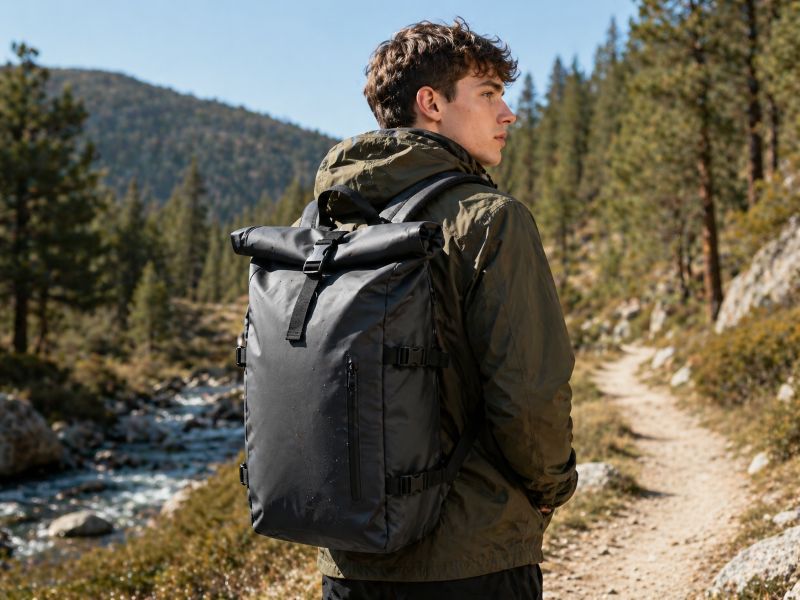
Best overall: A 20–25L roll-top with welded seams and coated nylon construction handles the widest range of use cases, commuting, travel, hiking, and occasional outdoor use, without being overbuilt for everyday carry.
Best for commuting: A roll-top or water-resistant zippered bag with solid organization, a padded laptop compartment, and a coated YKK zipper. Comfort under daily load matters as much as waterproof performance here.
Best for outdoor use: Depends on activity. Water-resistant for hiking in variable conditions; fully waterproof with welded seams for anything involving water immersion. Match the bag to the actual conditions, not the worst-case scenario.
Checklist Before You Buy
Waterproof level: Does the seam construction (welded, taped, or stitched) match the waterproof claims? Does the closure type (roll-top, coated zipper, or standard zipper) meet the claimed waterproof level? Is the fabric TPU-laminated, PU-coated, or simply treated nylon, and does that match your actual use conditions?
Capacity: Does the volume match your typical load, not your maximum possible load? A bag that fits your daily carry comfortably performs better than one that is half-empty most days or overfilled on busy ones.
Comfort: Are the shoulder straps padded with dense foam, not hollow-feeling padding that will compress within a season? Is the back panel ventilated for warm-weather carry? Is there a sternum strap for stability under load?
Durability: What is the fabric’s denier rating? Is the base reinforced, or is it the same weight as the rest of the bag? Are the hardware components (buckles, zippers, D-rings) made of metal or plastic, and does the answer align with the price point?
Takeaway
A waterproof backpack isn’t about chasing the highest spec; it’s about choosing the right level of protection for how you actually move through the world. Staying dry comes down to a few key decisions made upfront.
Get those right, and your bag disappears into the background, doing its job quietly, no matter what the weather throws at it.
To find your ideal fit and capacity, explore our detailed backpack size guide here.
Work With Us
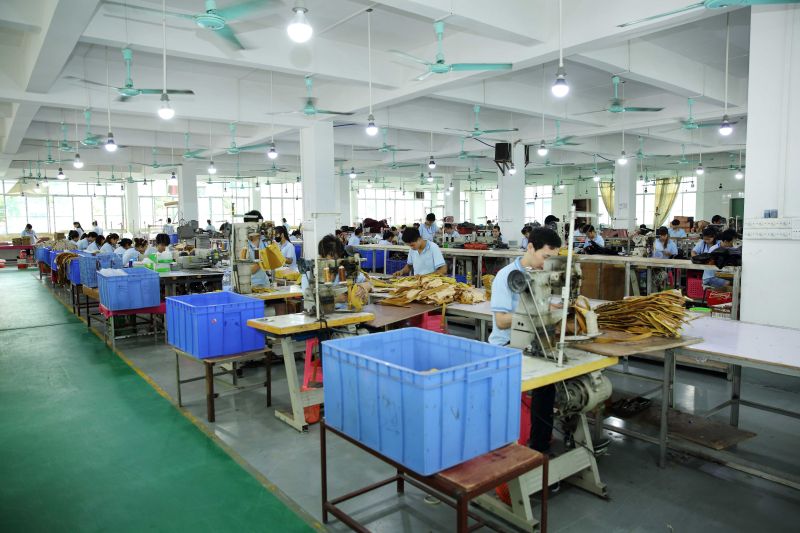
Gorfia manufactures custom backpacks and carry products for brands at every scale, from initial sampling through to full production runs with an annual capacity of 1.2 million pieces. We work with coated nylon, TPU constructions, recycled materials, genuine leather, vegan leather, and canvas, with welded seam options available for fully waterproof specifications.
Custom branding is supported across emboss, deboss, screen printing, embroidery, hot stamping, woven labels, and custom metal hardware logos. We accept both small-batch and large-scale orders, with door-to-door DDP delivery available for international buyers. If you’re ready to discuss your backpack development requirements or request a quote, get in touch with our team.