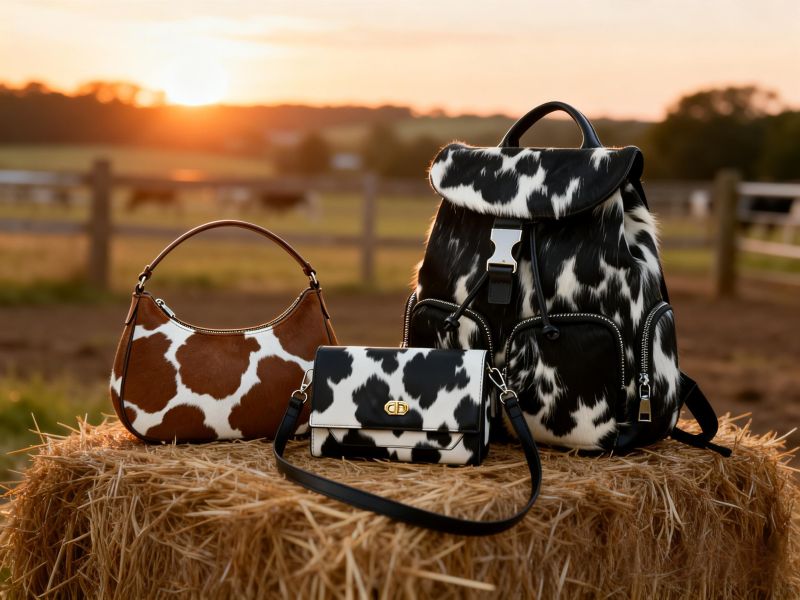
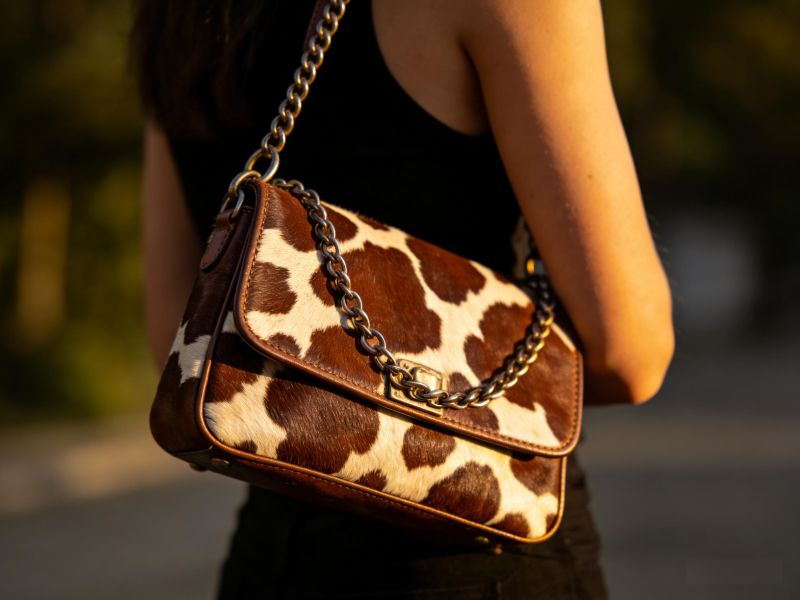
As specialty prints like cow print bags surge in popularity, the global leather goods market is projected to grow at a 5.2% CAGR. This boom, however, brings greater production risks: rising customization demands and tighter timelines often compromise pattern consistency and material quality.
This guide is built for sourcing managers, brand teams, and wholesale buyers launching or evaluating cow-print bag collections. Backed by real OEM/ODM experience, it breaks down the key challenges that most brands overlook in production.
You’ll learn the most common production risks, how customization affects timelines and costs, and when cow-print bags work best for your orders. Ready to build a more reliable and profitable cow-print bag line? Let’s begin by looking at the pressures shaping this trend in 2026.
Rising Cowhide Bag Demand and Production Pressures
The growing popularity of cowhide-print accessories excites the market but poses production challenges: consistent pattern reproduction, material selection, and meeting high consumer expectations at every stage.
Pattern Consistency Challenges
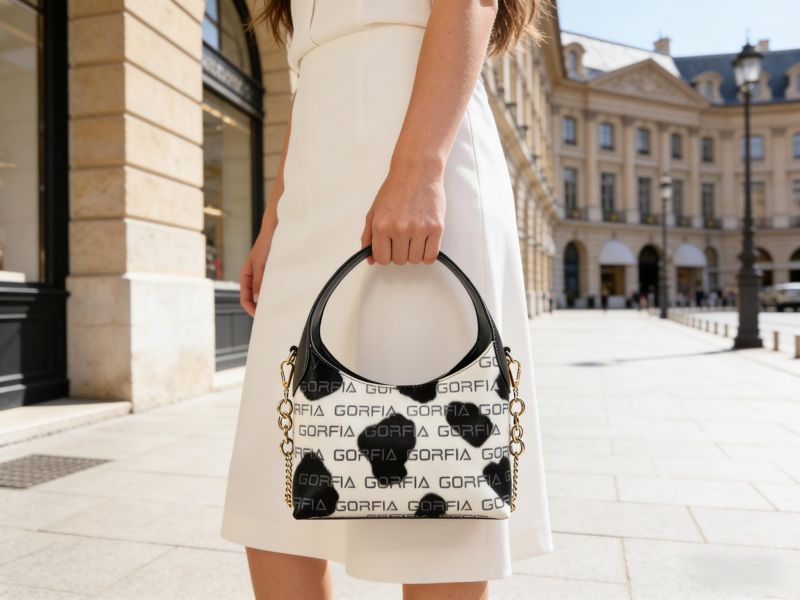
Maintaining consistent patterns is tougher than most OEM (Original Equipment Manufacturer) and ODM (Original Design Manufacturer) customers assume. Unlike geometric prints, cow-print bags are asymmetrical, organic, and high-contrast. If you don’t use carefully calibrated printing equipment—machines set for precise ink placement—even slight failures in registration (print alignment) or ink control can lead to visible batch-to-batch differences.
Material Compatibility Issues
Printing cowhide patterns on PU leather, canvas, or real leather requires different temperature ranges, adhesion techniques, and ink densities.
If your cowhide purse supplier lacks the tools or experience to handle all materials correctly, you may see patterns misalign, colors shift, or textures peel during quality checks on the product.
Customer Sensitivity to Visual Flaws
End consumers notice even subtle differences in pattern placement between bags. With fashion and gifting items like a cow-pattern purse for corporate gifts, inconsistent output risks the aesthetics and perceived quality of the collection.
High-volume cow-print bag buyers must address pattern-reproduction issues, as these can delay launches, increase defects, and disrupt rollouts.
Manufacturing Challenges with the Different Cow Print Bag Categories
Manufacturing difficulty also depends on the style of bag you’re producing. Some styles are more challenging than others.
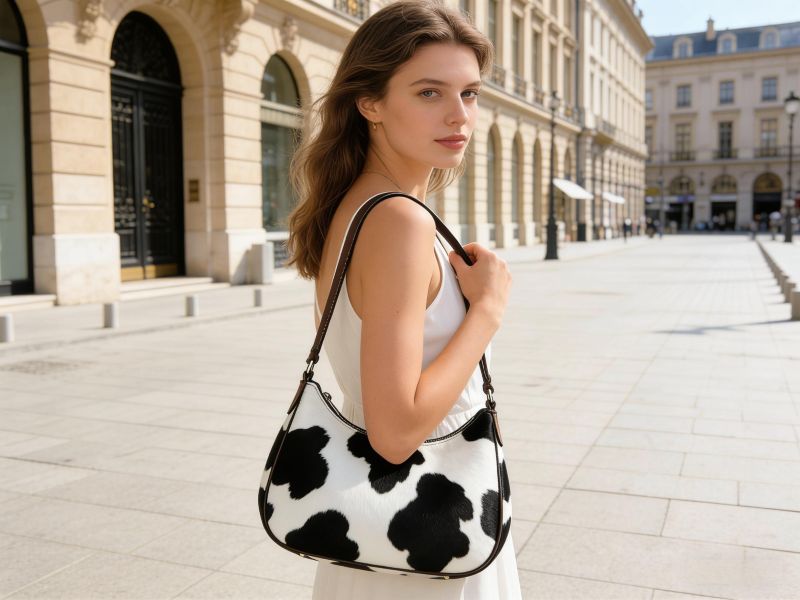
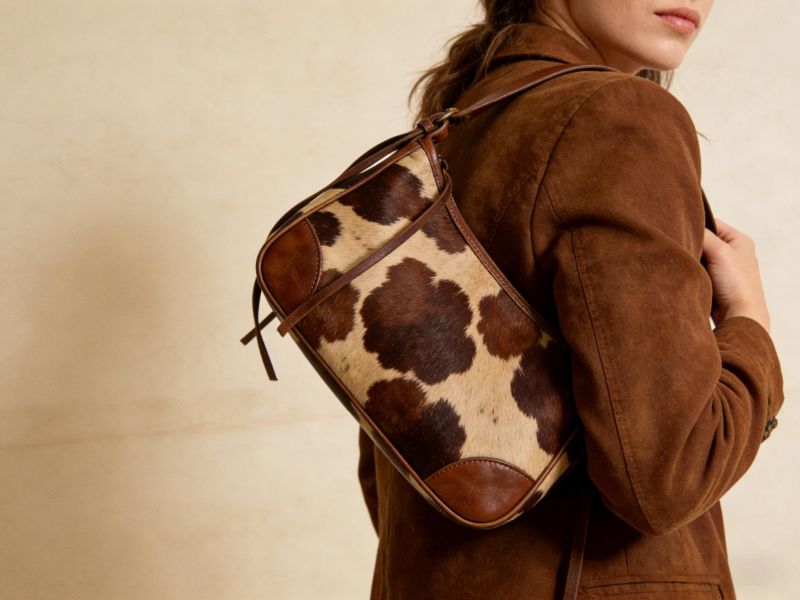
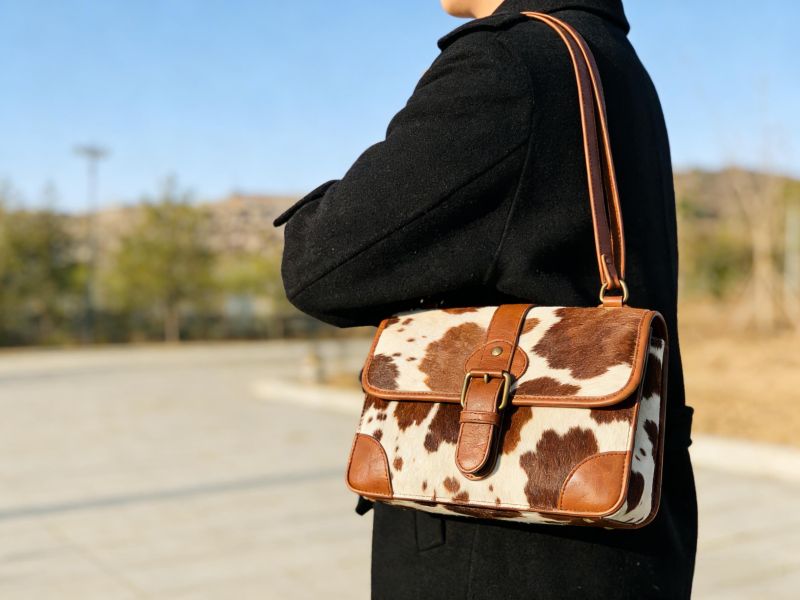
Cow Print Shoulder Bag
Hide print shoulder bags usually feature simpler shapes and fewer panels, making them easier to pattern-match in bulk.
The risk of shoulder bags, however, is that strap placement often interferes with the cow print if not aligned exactly right. Misalignment at this stage breaks the visual flow of the pattern, making even a well-constructed shoulder bag look flawed.
Cow Print Tote Bag
The advantage of cow print tote bags is that the large flat panels on totes make it easier to conceal minor print inconsistencies. They’re usually the most forgiving for cowhide-print purses.
However, the hidden risk is the bottom seam. If your manufacturer doesn’t plan for how the print flows through the side and bottom panels, you could end up with cow print tote bags with awkward breaks in the pattern, especially in gusset or box-style constructions.
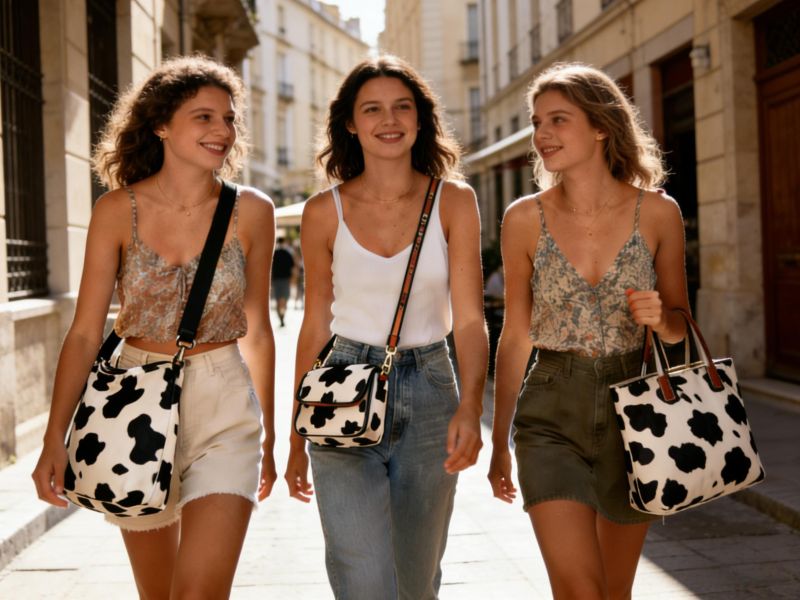
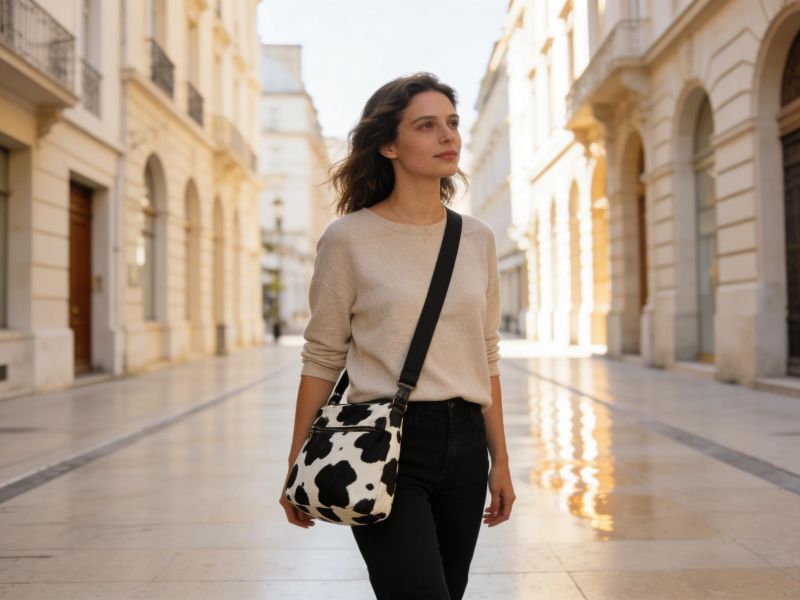
Cow Print Crossbody Bag
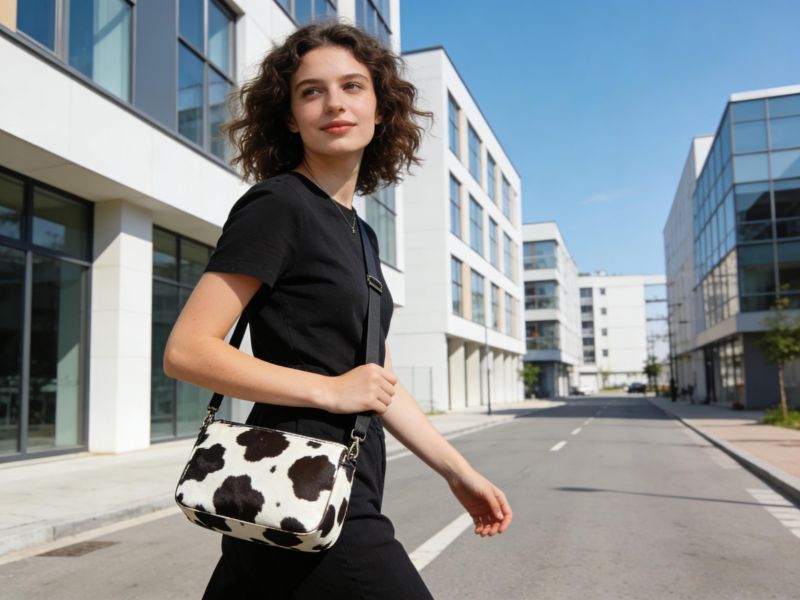
Smaller cow-print crossbody bags offer greater control over visual details and reduce material waste.
The risk is that crossbody bags often have more pieces: a back, front, flap, sides, and if the cow print is not planned digitally across all panels, you’ll end up with mismatched spots. It’s easy to get this wrong even with good cutting accuracy.
If you’re unsure which category fits your brand goals and can be produced at scale, this is usually a good place to start discussions with your supplier.
How Customization Decisions Affect Cow Print Purse Production Timeline and Cost
Planning a custom cow-print bag line or looking to buy cow-print bags in bulk? Some of the most appealing features, including full customization, branded hardware, and unique patterns, can slow down the production process if not managed carefully.
Here’s how certain customization choices could impact your cost, lead time, or quality when looking to order cowhide pattern purses in volume:
| Customization Type | Production Impact | Timeline Addition | Cost/Quality Risk |
| Pattern Adjustments | Factory must develop new printing templates if you want to lighten or darken spots, reduce contrast, or make the print unique to your brand | +2–3 weeks to pre-production phase | Testing and calibration required; pattern inconsistency risk if rushed |
| Material Switching | Changing from PU to real cowhide print handbag may triple your quality control steps. Not all printers work cleanly on leather. | Variable (depends on factory capabilities | Risk of ink bleed, fading, wrinkling, stretching, or heat damage if processed incorrectly |
| Custom Hardware | Branded zippers, D-rings, and rivets require factories to change assembly tools or modify stitching sequences | Minimal timeline impact, but setup complexity increases | Labor costs increase by 15–20%, especially for orders with logo production |
| Non-Standard Sizes | Larger-than-standard cow skin bag designs require new cutting dies and fabric planning | Variable (depends on die production lead time) | Increases material waste and setup time; potential for fitting/construction errors |
The more unique your design, the more the production process must adapt. If your factory isn’t equipped or doesn’t communicate clearly, mistakes occur quickly.
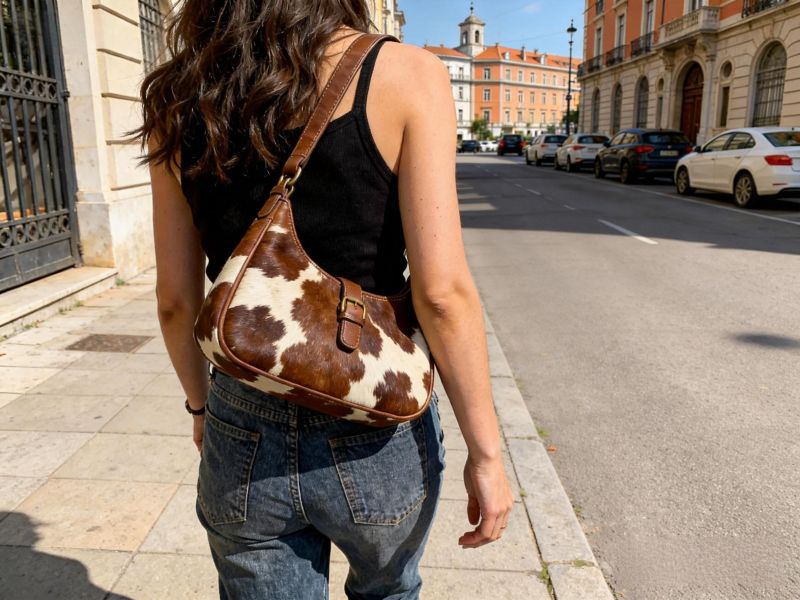
Common Cow Print Bag Manufacturing Pitfalls to Avoid
Sourcing managers often think print quality is the only challenge, yet many other hidden risks—each with buyer consequences—exist.
Inconsistent print between batches
Without a standardized printing protocol, factors such as humidity and machine temperature can skew results. We’ve seen some facilities ship batch-printed cow-print bags that were custom, and the black spots actually turned brown due to incorrect color settings. When batches are inconsistent, buyers are forced to split SKUs or reject entire lots.
Inadequate sampling
If your sample looks perfect but the bulk run does not, your supplier likely used different methods for the sample and production, which often leads to quality mismatches or material errors appearing post-deposit. Requesting new samples can delay timelines by 3–4 weeks.
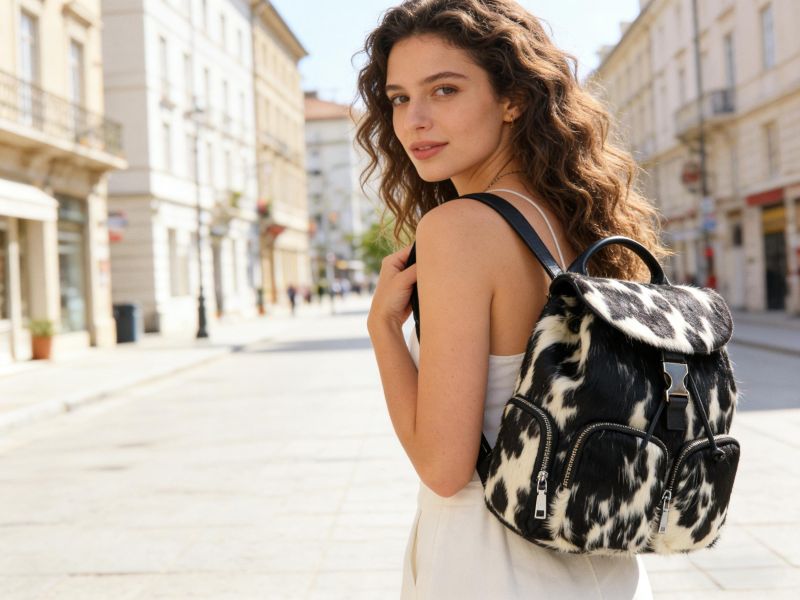
Final QC failures
Without stage-wise QC for seam strength, hardware, and fabric, defects may only surface during final checks, raising rejection rates to 15–25% and impacting delivery and inventory.
As the American Society for Quality notes, relying on post-production inspections instead of staged quality assurance can lead to significant rework, increased costs, and missed deadlines.
When Wholesale Cow Print Orders Make Sense—and When They Don’t
A stylish cow-print purse can be a strong identity marker for your line. But not every product mix or timeline is suited for cow print.
Research from McKinsey’s State of Fashion report shows that specialty print accessories have 15-20% higher return rates when production timelines are compressed, primarily due to quality inconsistencies that become visible after retail placement.
When It Might Be a Good Fit:
- You have flexible launch timelines (10–12 weeks or more)
- Your order is more than 1,000 units
- You’re placing the bag in premium or gifting channels, such as a cow pattern purse for corporate gifts
- Your team can support a 2–3 week proofing/sampling stage
How We Support Bulk and Custom Orders
Our factory is set up to manage large-volume and complex orders efficiently:
- Orders Follow-Up: Dedicated account managers track every milestone to keep production on schedule.
- Supplier Sourcing: Access to specialized materials and hardware to match your design requirements.
- Storage in China: Flexible warehousing solutions to facilitate timely delivery for bulk or seasonal orders.
When It Might Cause More Problems:
- You’re working with an unproven cow print bag wholesale supplier
- Your timeline is under 8 weeks
- You need small, custom runs under 300–500 units
- You’re looking for cheap cow print bags in bulk
- You’re launching during a short retail cycle (e.g., holiday season with fixed dates)
Like many design-led products, cow bags work better when you build slack into the development cycle. It does not always go smoothly on the first try.
How to Reduce Risk With Your Cow Print Supplier
A supplier’s experience with cowhide handbags isn’t just a bonus; it should be a key requirement.
If you’re launching a cow print line, these steps may help reduce production risk:
- Ask for samples made using cowhide-print bag OEM production methods, not studio or hand-assembled versions.
- Set pattern tolerance specs early. These might include spot-size deviation (%), placement ranges, and color-consistency requirements.
- Review their printing equipment setup. Is it digital or screen? Can it manage leather and PU? Do they have inline QC for print registration?
- Request batch QA reports, not just visual photos. You’ll want to see mechanical testing, seam tension, and colorfastness data.
- Build protections into your contract. These might include rework clauses or penalties for deviation.
Achieving high-quality bovine leather bags at scale isn’t simple. Success requires careful technical planning, not just capitalizing on trends, and strong factory collaboration at every stage.
Our Factory’s Key Services to Reduce Production Risk
- Factory & Goods Inspection: Our team performs on-site and batch-level checks to ensure pattern consistency, material quality, and assembly precision.
- Customization Support: We tailor materials, hardware, and linings to meet your brand specifications.
- After-Sales Support: Our factory provides prompt resolution of any issues to minimize delays and defects.
From maintaining pattern consistency to managing material challenges and QC failures, there are several ways production can go off-track, and each can cost you time, money, or inventory.
But with the right supplier, careful sampling, and clear production specs, a cow-print clutch bag can deliver high-margin success for your next product line. Whether you’re thinking about a bulk cow print bags launch or a custom logo cow print leather bag as part of your brand identity, it’s worth slowing down to get the production decisions right.
FAQs About Cow Print Handbags
What’s the minimum order quantity (MOQ) for cow print bags?
Most OEM factories require 300–500 units per style, and for fully customized designs, MOQ depends on complexity; our team can confirm exact numbers with you.
How long does it take to produce cow print bags?
Including sampling, expect 10–12 weeks from design approval to delivery, with complex customizations adding 2–3 weeks.
Can I create my own custom hide pattern?
Yes, you can submit your own design or work with our factory to develop a custom cow print. We provide detailed video and photo updates throughout production to ensure expectations are met.
Can the bags include logos or brand elements?
Absolutely, our factory can integrate embossed logos, custom hardware, printed linings, or embroidered tags while maintaining high-quality production and timely delivery.
Conclusion
Producing custom cow-print bags at scale requires more than following a trend. Manufacturing cow skin bags in large quantities demands technical precision, the right manufacturing partner, and careful planning at every stage.
From maintaining pattern consistency across batches to managing material compatibility and avoiding costly QC failures, each decision impacts your timeline, budget, and product quality.
With clear communication, thorough supplier vetting, and realistic timelines, cow print bags can become a high-margin, standout addition to your product line.
Ready to Launch Your Custom Cow Print Bag Collection?
If you’re exploring the idea of personalized cow-pattern handbags or looking for a supplier who can manage wholesale orders without compromising quality, the next step is simple: Contact us for a FREE technical consultation.
We’ll help you assess the complexity of your design and the feasibility of your timeline, and recommend a best-fit production strategy for your brand.
Let’s help your next faux cow print bags production run smoother and risk-free.