
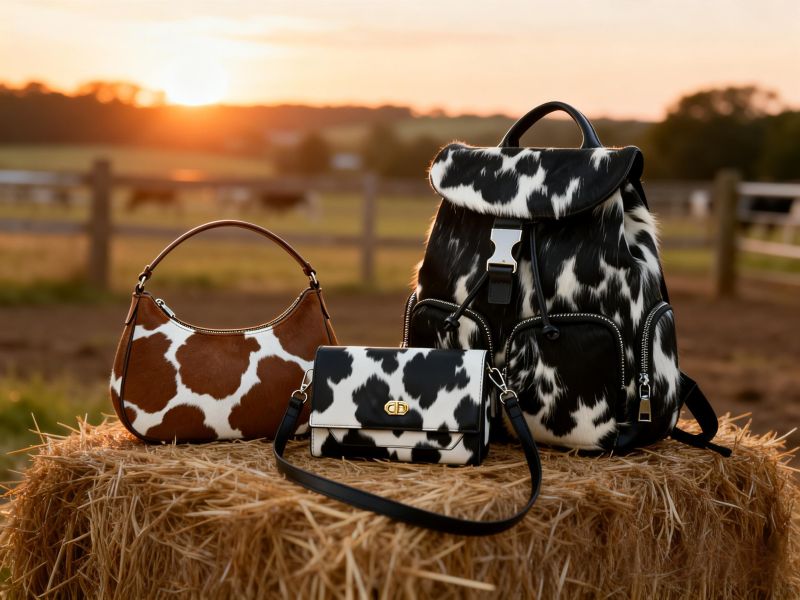
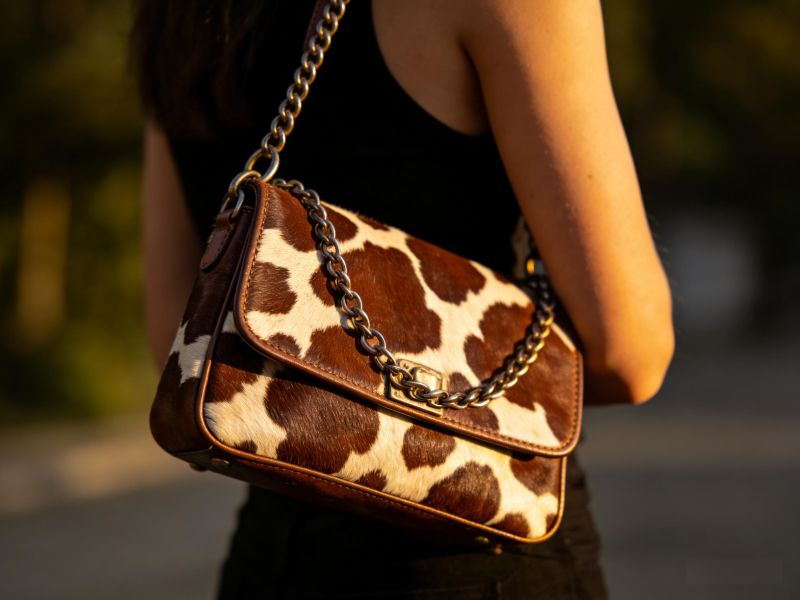
Cow print bags may seem simple at first glance, but producing them consistently is often far more difficult than most buyers expect.
Unlike solid-color bags, cow print styles put much more pressure on pattern placement, material compatibility, and batch consistency. Small production issues that barely show up on basic bags can become immediately noticeable once high-contrast prints are involved.
In real OEM and ODM production, many delays, sampling issues, and quality disputes actually begin long before final assembly starts — especially during printing, cutting, and material testing.
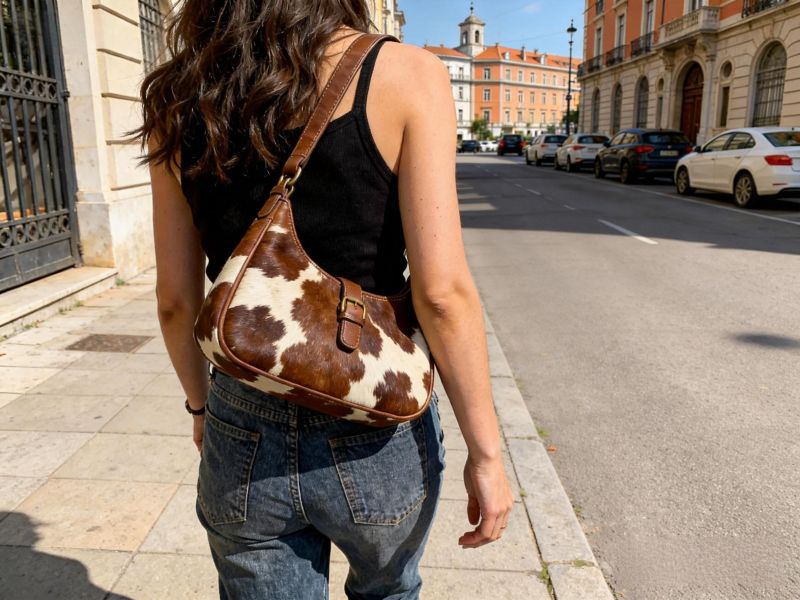
Rising Cow Print Bag Demand and Production Pressures
As demand for cow print bags grows, the real challenges start to show up in production.
Pattern Consistency Challenges
Keeping patterns consistent is harder than most OEM and ODM buyers expect. Cow print isn’t like geometric designs—it’s asymmetrical, organic, and high-contrast, which makes even small variations easy to spot. As a result, minor issues in production can quickly turn into visible batch-to-batch differences.
Material Compatibility Issues
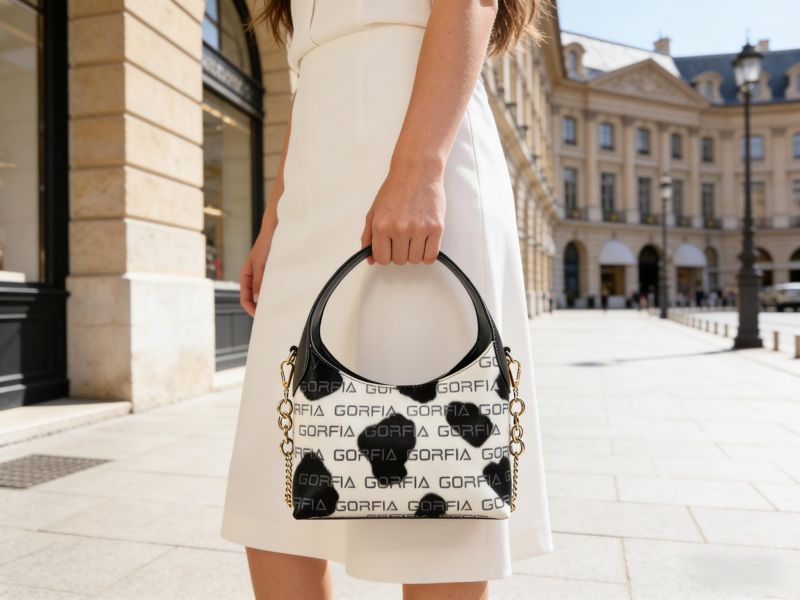
One of the main reasons behind these inconsistencies is material compatibility. Printing cow print patterns on PU leather, canvas, or real leather requires different temperature settings, adhesion methods, and ink densities. Without the right setup, patterns can misalign, colors may shift, or textures can start to peel during quality checks.
Customer Sensitivity to Visual Flaws
What makes this even more critical is how easily customers notice these inconsistencies. Even small differences in pattern placement can affect how a product is perceived—especially for fashion and gifting items like cow print bags. For high-volume buyers, this often leads to delayed launches, higher defect rates, and disrupted rollouts.
Manufacturing Challenges with the Different Cow Print Bag Categories
Manufacturing difficulty also depends on the style of bag you’re producing.
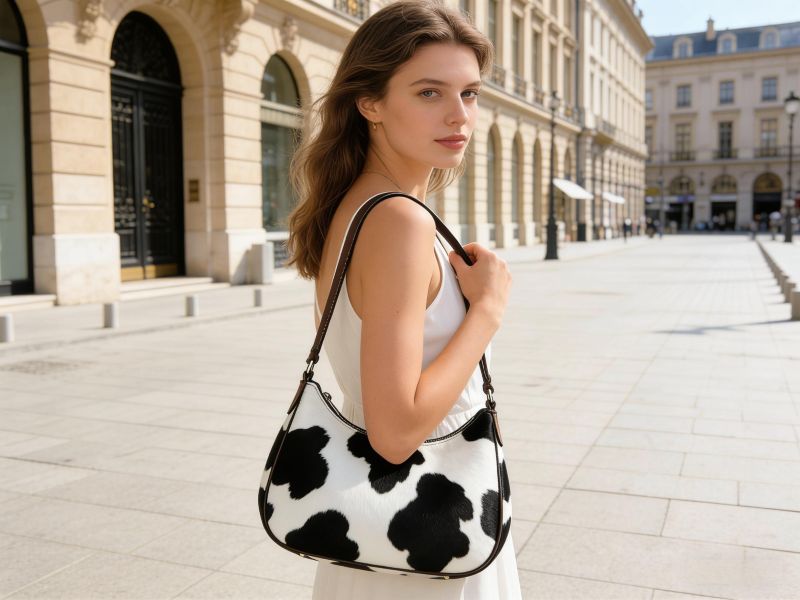
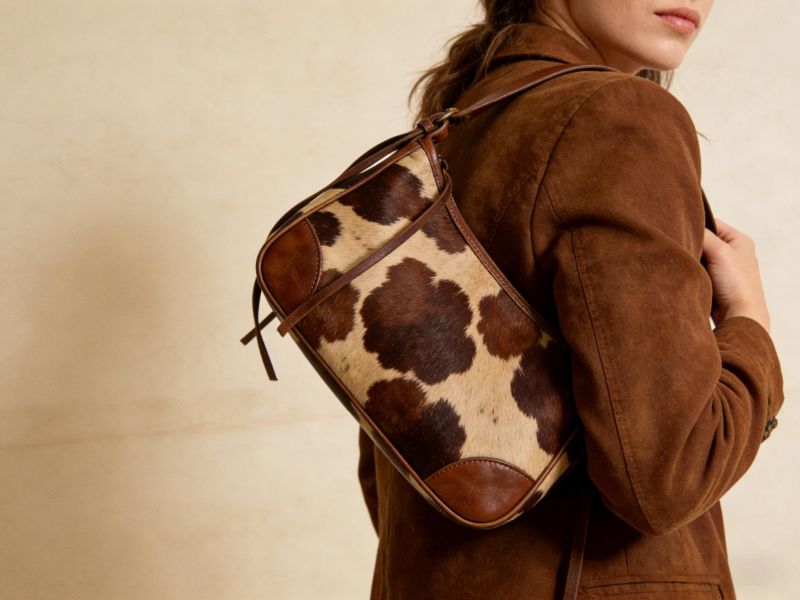
Cow Print Shoulder Bag
Cow print shoulder bags usually have simpler shapes and fewer panels, which makes them easier to pattern-match in bulk.
Where things get tricky is strap placement. If it’s not aligned carefully, it can disrupt the flow of the print. Even a well-made bag can end up looking off if the pattern is broken at this stage.
Cow Print Tote Bag
Tote bags are generally more forgiving when it comes to cow print. Their large, flat panels help cow print minor inconsistencies, making them one of the easier styles to produce.
The real challenge tends to show up at the bottom seam. If the print isn’t planned across the side and base panels, you can end up with awkward breaks—especially in gusset or box-style constructions.
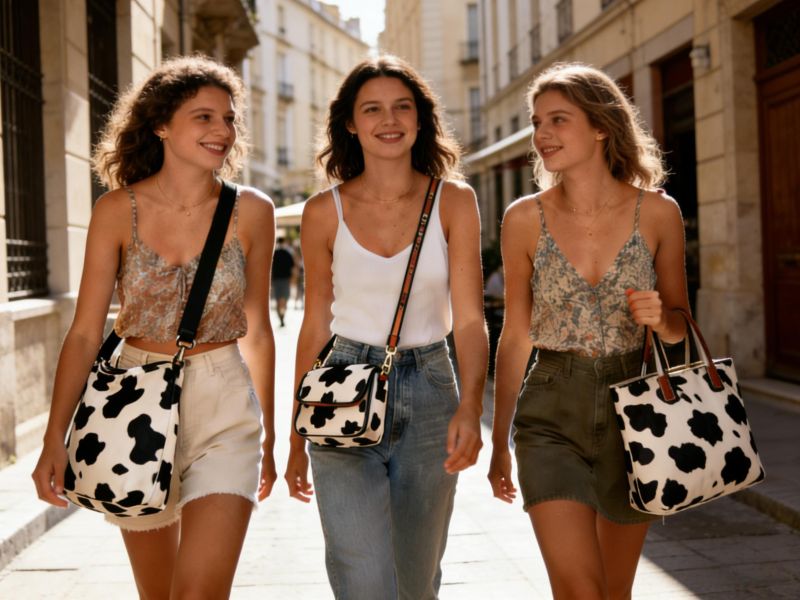
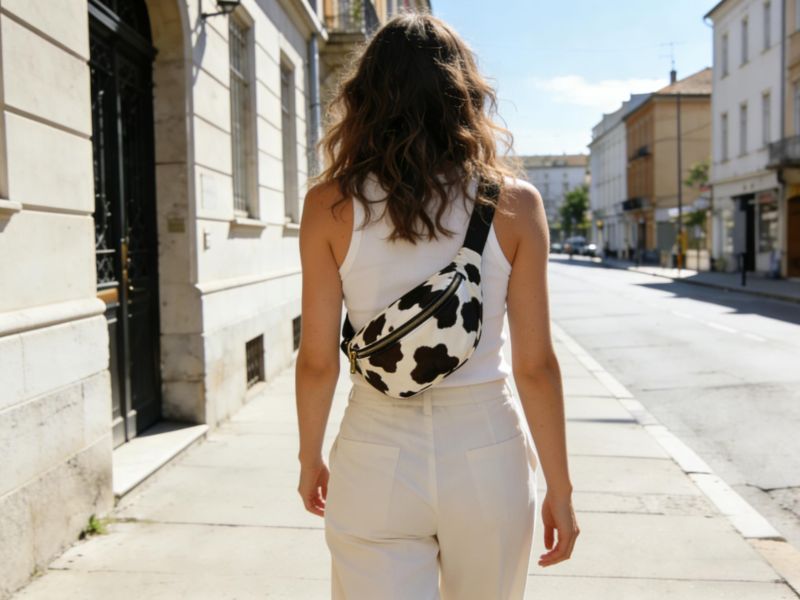
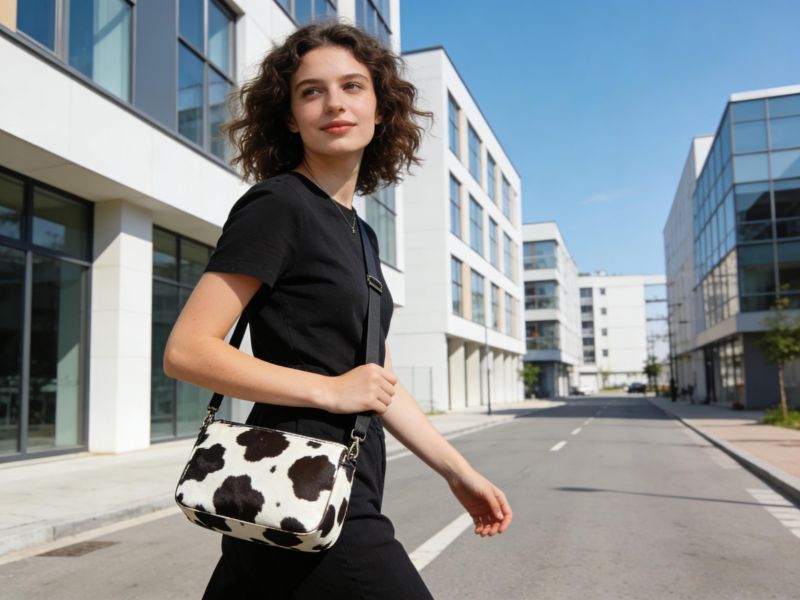
Cow Print Crossbody Bag
Crossbody bags tend to be more complex to get right. Unlike totes or shoulder bags, they’re made up of multiple panels—front, back, flap, and sides—which makes pattern alignment much harder to control.
Without proper digital planning across all pieces, mismatched spots are almost inevitable, even if the cutting itself is accurate. The smaller size also means these inconsistencies are easier to notice.
Common Cow Print Bag Manufacturing Pitfalls to Avoid
Sourcing managers often focus on print quality, but many of the real risks show up elsewhere in production.
Inconsistent print between batches
Without a standardized printing protocol, factors such as humidity and machine temperature can skew results. We’ve seen some facilities ship batch-printed cow print bags for custom orders, and the black spots actually turned brown due to incorrect color settings. When batches are inconsistent, buyers are forced to split SKUs or reject entire lots.
Inadequate sampling
If your sample looks perfect but the bulk run does not, your supplier likely used different methods for the sample and production, which often leads to quality mismatches or material errors appearing after production begins. Requesting new samples can delay timelines by 3–4 weeks.
Final QC failures
Without stage-wise QC for seam strength, hardware, and fabric, defects may only surface during final checks, raising rejection rates to 15–25% and impacting delivery and inventory.
As the American Society for Quality notes, relying on post-production inspections instead of staged quality assurance can lead to significant rework, increased costs, and missed deadlines.
When Wholesale Cow Print Orders Make Sense—and When They Don’t
Cow print bags can be a strong identity marker for your product line—but they don’t work for every timeline or product mix.
Research from McKinsey’s State of Fashion report shows that specialty print accessories have 15-20% higher return rates when production timelines are compressed, primarily due to quality inconsistencies that become visible after retail placement.
When It Might Be a Good Fit:
- You have flexible launch timelines (10–12 weeks or more)
- Your order is more than 1,000 units
- You’re placing the bag in premium or gifting channels, such as a cow print bag for corporate gifts
- Your team can support a 2–3 week proofing/sampling stage
When It Might Cause More Problems:
- You’re working with an unproven cow print bag wholesale supplier
- Your timeline is under 8 weeks
- You need small, custom runs under 300–500 units
- You’re looking for low-cost bulk production
- You’re launching during a short retail cycle (e.g., holiday season with fixed dates)
How to Reduce Risk With Your Cow Print Supplier
If you’re launching a cow print line, these steps may help reduce production risk:
- Ask for samples made using cow print bag OEM production methods, not studio or hand-assembled versions.
- Set pattern tolerance specs early. These might include spot-size deviation (%), placement ranges, and color-consistency requirements.
- Review their printing equipment setup. Is it digital or screen? Can it manage leather and PU? Do they have inline QC for print registration?
- Request batch QA reports, not just visual photos. You’ll want to see mechanical testing, seam tension, and colorfastness data.
- Build protections into your contract. These might include rework clauses or penalties for deviation.
How We Support Brands in Real Production
In our case, this is built into how we work with brands day to day.
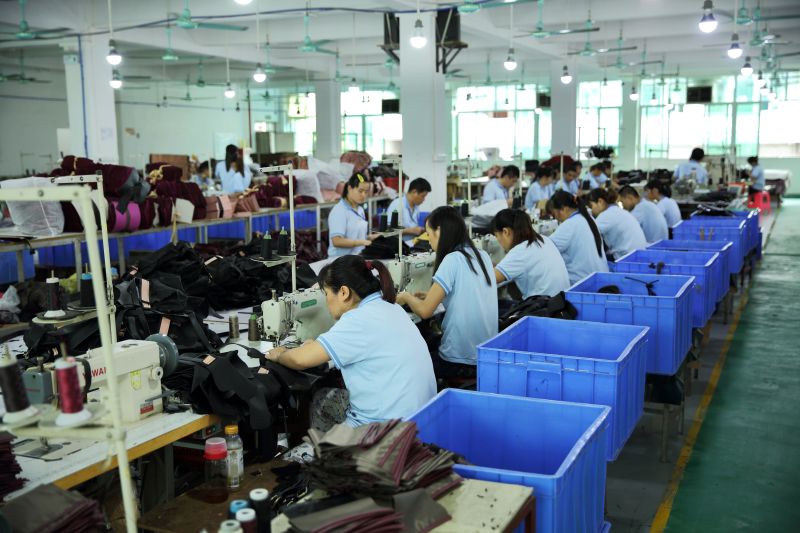
We support small-batch, fast-turnaround production (starting from 100 units), which allows brands to test trend-driven products like cow print bags with lower risk before scaling. Once a design is validated, we’re able to transition smoothly into bulk production, supported by our in-house factory and stable annual capacity of 1.2 million units.
Material flexibility is another critical factor. We regularly work across genuine leather, vegan leather, nylon, canvas, recycled materials, and newer options like fruit leather, ensuring that design intent can be maintained without running into compatibility issues during production.
On the branding side, we handle a wide range of logo applications—from embossing and debossing to screen printing, hot stamping, woven labels, and more complex techniques like embroidery, beaded embroidery, and crystal or stone hot pressing—while keeping production consistency under control.
For international buyers, we also support DDP delivery, helping simplify logistics and reduce the operational burden on your team.
From early sampling through final delivery, the focus is always the same: making sure design, production, and timelines stay aligned, so issues don’t show up when it’s already too late.
FAQs About Cow Print Handbags
What’s the minimum order quantity (MOQ) for cow print bags?
Most OEM factories require 300–500 units per style, and for fully customized designs, MOQ depends on complexity; our team can confirm exact numbers with you.
How long does it take to produce cow print bags?
Including sampling, expect 10–12 weeks from design approval to delivery, with complex customizations adding 2–3 weeks.
Can I create my own custom cow print pattern?
Yes, you can submit your own design or work with our factory to develop a custom cow print. We provide detailed video and photo updates throughout production to ensure expectations are met.
Can the bags include logos or brand elements?
Absolutely, our factory can integrate embossed logos, custom hardware, printed linings, or embroidered tags while maintaining high-quality production and timely delivery.
Conclusion
Producing custom cow-print bags at scale requires more than following a trend. Manufacturing cow print bags in large quantities demands technical precision, the right manufacturing partner, and careful planning at every stage.
From maintaining pattern consistency across batches to managing material compatibility and avoiding costly QC failures, each decision impacts your timeline, budget, and product quality.
With clear communication, thorough supplier vetting, and realistic timelines, cow print bags can become a high-margin, standout part of your product line.
Ready to Launch Your Custom Cow Print Bag Collection?
If you’re exploring the idea of personalized cow-pattern handbags or looking for a supplier who can manage wholesale orders without compromising quality, the next step is simple: Contact us for a FREE technical consultation.
We’ll help you assess the complexity of your design and the feasibility of your timeline, and recommend a best-fit production strategy for your brand.
Let’s help your next faux cow print bags production run smoother and risk-free.