
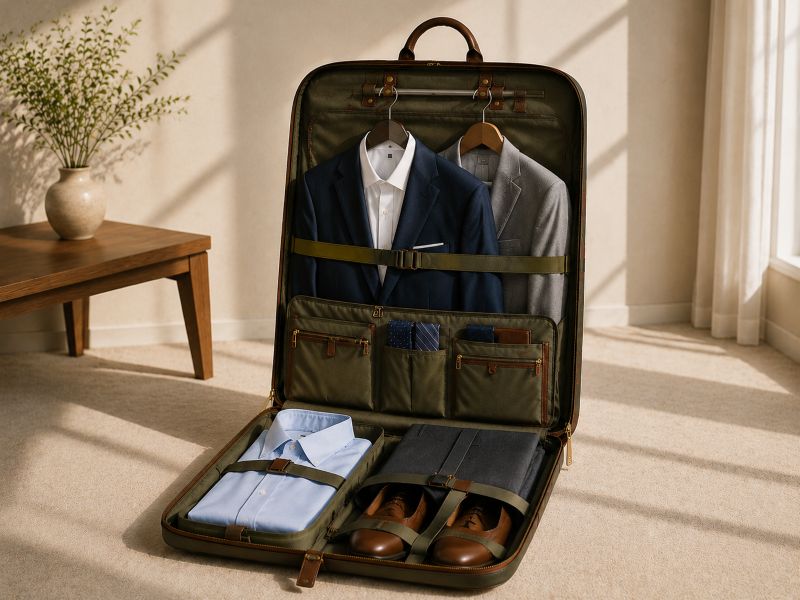
A garment bag becomes useful when the clothes matter as much as the trip.
You may need one for business travel, short trips, a destination wedding during wedding season, a formal event, or seasonal storage at home. For frequent flyers, the right garment bag can make it easier to move formalwear between destinations. In each case, the goal is the same: keep hanging clothes protected, organized, and easy to move without crushing their shape.
A garment bag usually carries suits, jackets, dresses, or other clothes on hangers. But the best option isn’t simply the longest or most padded model. You should also consider the folding method, carrying style, material, storage layout, and the strength of the top section.
What a Garment Bag Needs to Protect
Keep Clothing Supported, Not Just Covered
A garment bag protects clothing from dust and surface contact, but support matters as much as coverage.
If the hanger moves, the jacket shoulders can shift. If the bag folds too tightly, hard creases may form across a suit or dress. The aim is to reduce pressure, movement, and unnecessary folding to prevent wrinkling and help formalwear arrive in a more wrinkle free condition.
Match the Bag to the Clothing Length
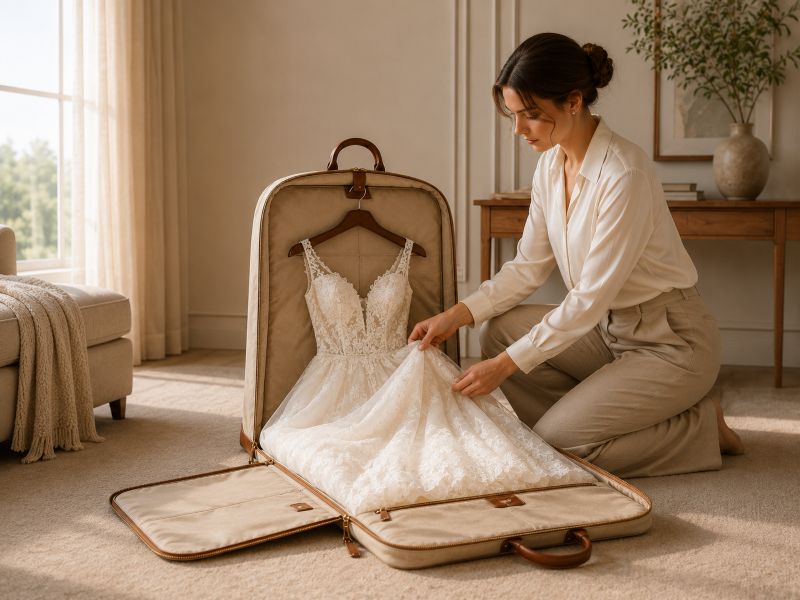
Suits and dress shirts usually work with shorter folding designs. Long dresses, coats, and gowns need more internal length and fewer sharp fold points.
For a destination wedding, check the full dress length, skirt volume, embellishments, and where the hanger sits. If you need to carry two dresses, confirm that the internal width and folding points provide enough protection. A bag that works for one suit may be too short or too narrow for formalwear.
Choose the Right Garment Bag Format
Classic Garment Bag for Formal Clothing
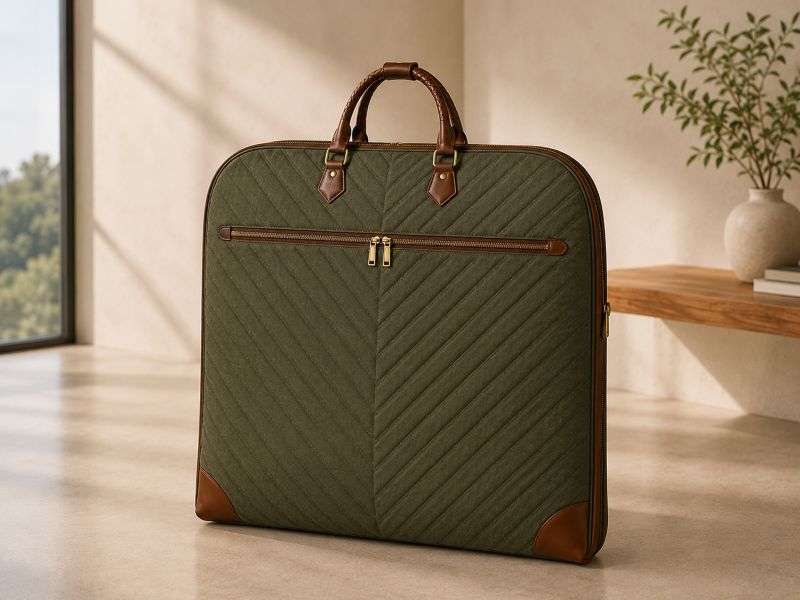
A classic garment bag opens flat or vertically and keeps clothing close to its hanging position.
It works well for suits, jackets, uniforms, and event clothing. A great garment bag for formal clothing should keep garments supported while maintaining a simple interior with fewer curved folds. The limitation is that it may not cover all travel needs, requiring an additional bag for certain situations.
Garment Duffel for Mixed Packing
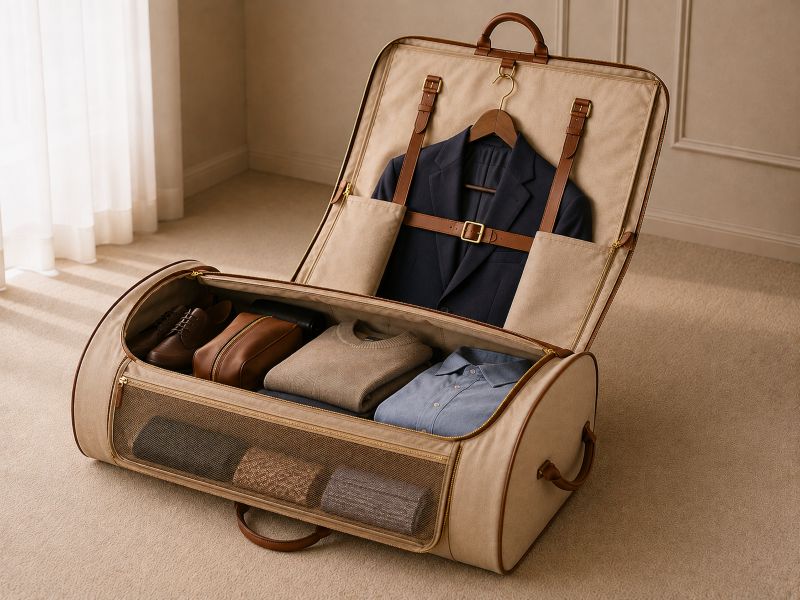
A garment duffel combines a clothing panel with a central duffel compartment.
This format suits weekend trips because you can carry formalwear and regular clothing together in one duffel bag. However, larger packing needs can affect the bag’s weight distribution and overall carrying experience. The wrapped garment section can also create pressure around curved areas.

Foldable Garment Bags for Carry-On Travel
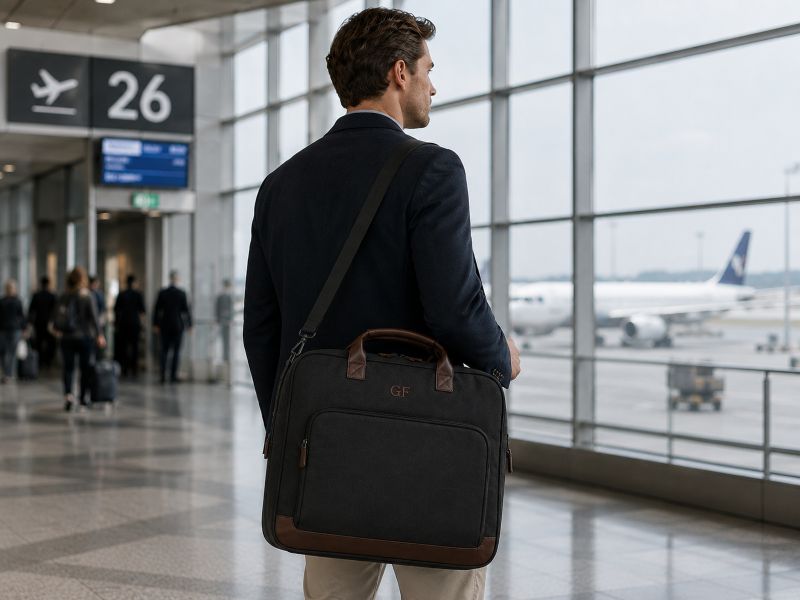
Bi-fold and tri-fold designs reduce the open length, making the bag easier to move through airports. Some travel-focused designs combine a garment bag with a carry on bag format, while a rolling garment bag with wheels can provide easier movement for heavier loads.
However, “carry on” is not a universal size. Airline baggage rules differ, so brands should verify target market requirements before finalizing product specifications.
Quick Comparison of Garment Bag Formats
| Format | Best Use | Main Strength | Storage Level | Main Limitation |
| Classic garment bag | Suits and formal events | Keeps garments flatter | Low to moderate | Often needs a second travel bag |
| Garment duffel | Weekend and mixed-purpose trips | Combines garment and general storage | Moderate to high | Can become heavy when full |
| Foldable carry on design | Short business travel | Compact after folding | Moderate | Airline acceptance varies |
| Full-length garment bag | Long dresses and gowns | Reduces sharp folds | Clothing-focused | Less convenient in tight spaces |
Match the Size and Layout to Your Trip
For Suits and Dress Shirts
Look for enough width around the jacket shoulders, a secure hanger point, and internal straps that stop the clothing from sliding.
If you carry more than one suit, such as two suits or a suit with extra shirts, check whether the zipper closes without compressing the lapels. A smooth lining also helps reduce friction when you remove the garments.
For Business Travel
A business travel design needs quick access and clothing protection.
Accessory pockets can hold ties, belts, cuff links, chargers, and other small items. A dedicated power pocket can also help organize electronic accessories when needed. A laptop compartment may be useful, but its padding should not press a hard rectangle into the folded suit area.
Large pockets are practical only when they remain balanced. If all the storage sits on one side, the bag may twist or pull unevenly while you walk.
For Long Dresses and Formal Events
Review the bag’s construction and protection features before use. Delicate garments need sufficient protection to avoid damage during transport.
Recent garment bag testing for business trips and destination weddings also highlights the differences between garment bag designs and their practical performance.
Features and Materials That Matter in Daily Use
Hanger Support and Top Structure
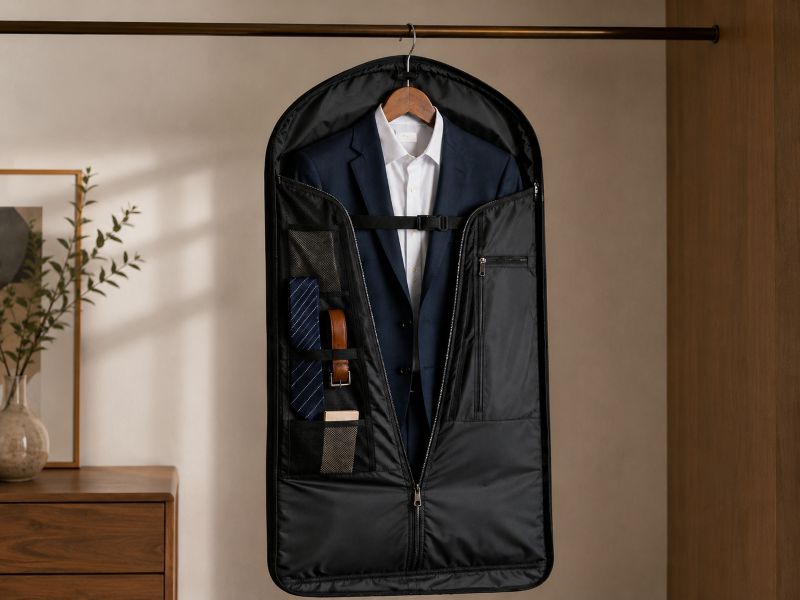
The hanger section carries concentrated weight from the clothing below it.
If the top panel is weak, the shoulder area can sag, and the garments may slide out of position. A stable hanger opening, reinforced upper panel, and balanced handles help the bag keep its shape while hanging or being carried.
Folding Points and Zipper Paths
Every fold creates repeated movement in the same area.
Check whether the zipper turns smoothly around corners and whether the fabric bunches when the bag closes. Internal straps can reduce movement, but they should not press hard lines into the clothing.
Canvas, Nylon, and Polyester
A canvas garment bag can feel substantial and hold its shape well, but it may weigh more and need moisture protection.
Nylon and polyester are often lighter and easier to clean. Their performance still depends on fabric specification, coating, lining, seam construction, and reinforcement.
If you are comparing tougher travel fabrics, Gorfia’s ballistic nylon guide explains why the material name alone isn’t enough.
Factory Case: When a Lightweight Sample Started to Sag
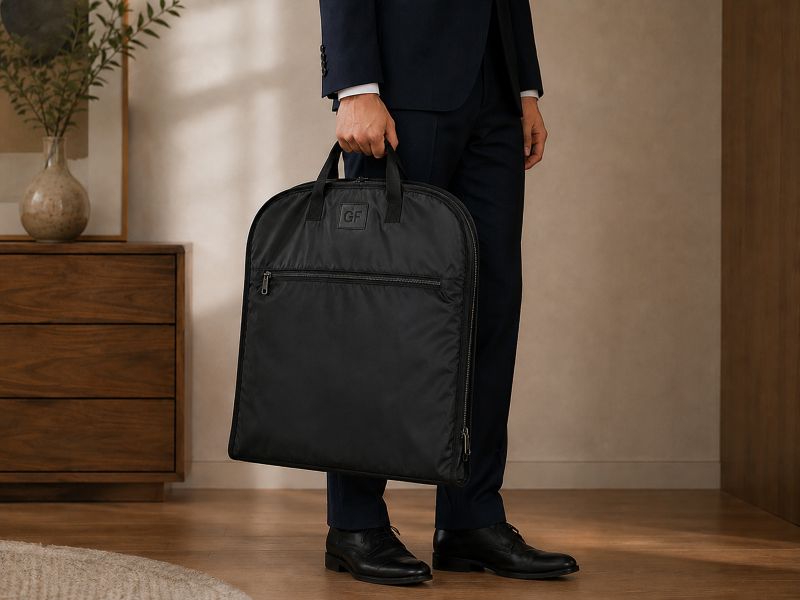
We once developed a lightweight garment bag for business travel. The first sample looked clean and met the visual brief while empty.
When our team loaded it with a suit on a hanger and repeated the lift-and-fold cycle, the upper structure began to lose shape. The shoulder area sagged, and the handle attachment points pulled more than expected.
Instead of replacing the outer fabric with something much heavier, we adjusted the reinforcement around the hanger section and top panel. We also reviewed the handle attachment and the balance between the outer fabric and lining.
The revised sample kept the lightweight feel while supporting the clothing more reliably. For us, a visual review is only the start.
Three Decisions Brands and Buyers Should Confirm
1. Define the Clothing and Travel Scenario First
If the product is for suits, long dresses, airline travel, or home storage, confirm that purpose before sampling. The intended use affects how users will be packing formalwear, choosing the open length, folded size, hanger system, pocket layout, material, and carrying method.
The intended use affects the open length, folded size, hanger system, pocket layout, material, and carrying method. A clear brief prevents unnecessary features.
2. Approve a Fully Loaded Sample
If you review a sample only when it’s empty, important structural problems may remain hidden.
Ask the supplier to test it with the intended number of garments, shoes, and accessories. Then check the top shape, hanger position, handle balance, folding points, and zipper movement.
3. Lock the Reinforcement and Inspection Standard
If the sample passes testing, record the reinforcement material, size, and exact placement.
Your approval file should also confirm fabric specification, zipper type, pocket dimensions, handle attachment, folded size, and packaging method.
Gorfia’s brand solutions and designer solutions show how design details can move from sampling into controlled production.
Production Quality Checks Before Shipping
During production, inspect materials and components before closing them inside the bag.
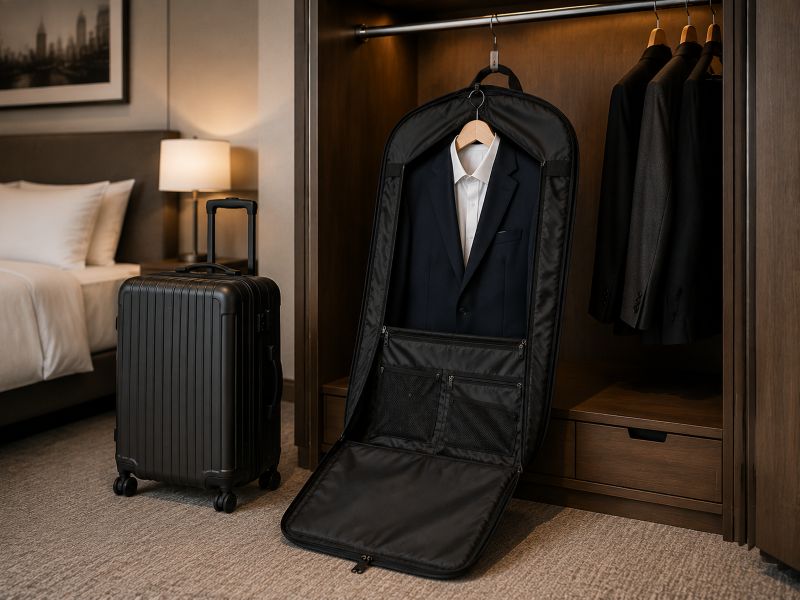
Check fabric consistency, lining, zippers, webbing, hardware, and reinforcement placement. Pay special attention to the hanger opening, upper panel, handles, strap attachments, and recurring fold lines.
Before packing, load a finished unit and confirm that it folds correctly, carries evenly, and opens without zipper resistance. Packaging should protect the top structure and visible panels without creating permanent creases.
FAQs
Does a garment bag count as a carry-on?
It may count as your main cabin bag if the folded dimensions and weight meet the operating airline’s rules. Check with the airline before departure, as limits vary.
How do you pack a suit with fewer wrinkles?
Empty the pockets, align the jacket shoulders on a suitable hanger, fasten internal straps gently, and avoid overfilling nearby pockets. Unpack and hang the suit soon after arrival.
What size garment bag works for long dresses?
Choose according to the full dress length, skirt width, decoration, and number of acceptable folds. Floor-length or embellished dresses often need a longer, smoother interior than suits.
Is a garment duffel better than a classic garment bag?
A garment duffel or rolling garment bag is useful when you want clothing and general luggage in one bag. Some designs also include space to store shoes or carry an extra pair for travel. A classic garment bag is often better when flatter garment storage matters more than extra capacity.
Is canvas suitable for a garment bag?
Yes, especially when you want a more structured appearance. Check its weight, coating, lining, seam strength, and moisture performance before deciding.
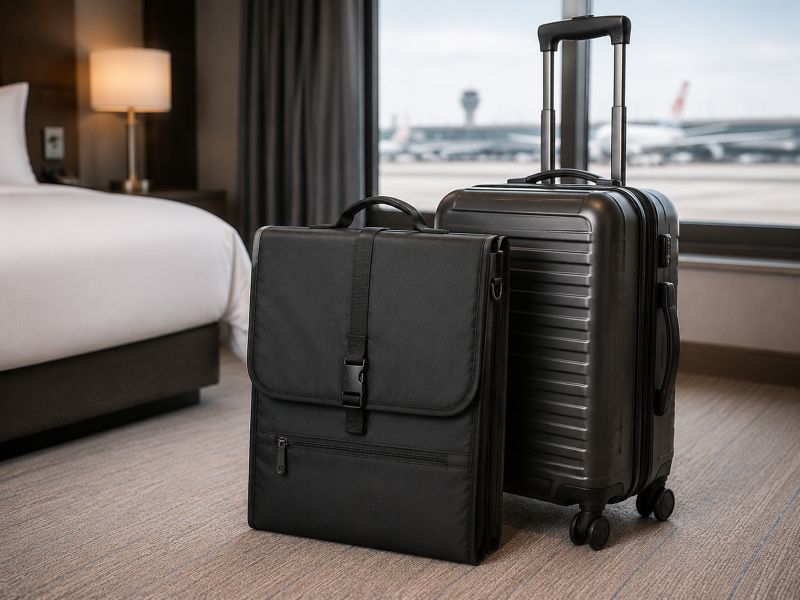
A Garment Bag Proves Its Quality on the Next Trip
A garment bag can look simple when it is hanging empty. Its real value appears when it is loaded, folded, transported, opened, and reused.
For brands and buyers, these real-world conditions should guide product development. Load testing and structural approval are essential steps, not final checks after production begins.
CTA
If you are developing a classic garment bag, garment duffel, or custom travel collection, Gorfia can support material selection, sampling, reinforcement planning, customization, quality control, and scalable production.
Explore our lifestyle bags or discuss your project through the Contact Us page.