


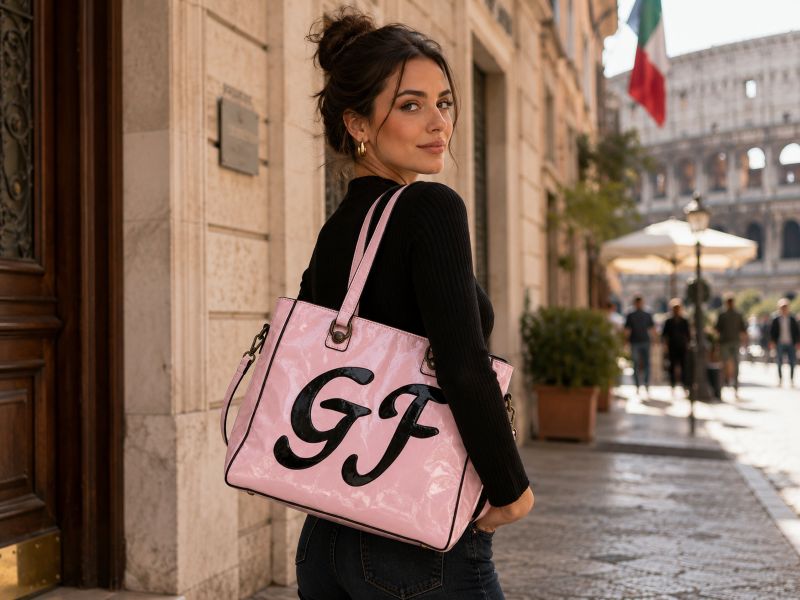
Patent leather is instantly recognizable for its smooth, mirror-like shine, which gives it a distinctive and polished appearance.
While many people recognize patent leather bags’ glossy appearance, confusion often remains about what patent leather actually is and whether it is always made from genuine leather.
This guide explains how patent leather is made, how to identify it, and what to look for when evaluating finished products.
What Is Patent Leather?
Patent leather is a material with a smooth, high-gloss finish that gives it a distinctive mirror-like appearance. The shine comes from a transparent coating applied to the surface, not from the leather itself.
This glossy finish creates a polished look long associated with formal footwear, handbags, wallets, and other fashion accessories.

Is Patent Leather Real Leather?
The answer depends on the material beneath the glossy finish. Traditionally, patent leather was made by applying a high-gloss coating to genuine leather, so the finished material remained real leather with a patent finish.
Today, however, glossy materials are also produced using synthetic substrates such as PU or other coated materials. These products may look almost identical to traditional patent leather, even though the base material is different. For this reason, a shiny surface alone cannot confirm whether the product is made from genuine leather.
It’s also important to distinguish patent leather from patent-look synthetic leather. Both have a reflective finish, but only products made with a genuine leather substrate can accurately be described as genuine patent leather.
Patent Leather vs. Genuine Leather
| Feature | Patent Leather | Uncoated Genuine Leather |
| Surface | High-gloss and smooth | Natural grain or texture |
| Finish | Coated | Less heavily coated or natural finish, sometimes with oil-based tanning or finishing |
| Breathability | Not porous or breathable | Porous and generally more breathable |
| Flexibility | Often stiffer | Generally more flexible |
| Water Resistance | High surface resistance | Depends on finish and treatment |
| Aging | Does not develop traditional patina in the same way | Can develop patina |
| Visible Wear | Scratches, coating changes, cracking | Scratches, patina, natural wear |
Patent leather and genuine leather are not separate categories. Genuine leather can receive a patent coating to create a glossy finish, while some synthetic materials only imitate this appearance. Therefore, consider both the surface finish and the underlying material when identifying patent leather.
Properties of Patent Leather
Glossy Appearance
The high-gloss coating reflects light evenly, creating a polished appearance that enhances the product’s visual impact. However, the smooth surface also makes imperfections more noticeable than on textured leather.
Water Resistance
The glossy coating creates a protective barrier that reduces surface moisture absorption, making patent leather easier to clean after light spills or rain. However, it is water-resistant rather than fully waterproof, as seams and edges can still allow moisture penetration.

Flexibility and Breathability
The protective coating makes patent leather less breathable and slightly firmer than uncoated leather, with flexibility depending on the coating system and underlying material.
Scratches, Cracking, and Yellowing
Patent leather wear usually appears on the glossy coating first. While the finish offers some scratch resistance, marks become more visible because they interrupt the reflective surface.
Repeated bending may cause cracks around folds, while prolonged heat, sunlight, or poor storage can cause yellowing or a loss of clarity over time.
Common Uses of Patent Leather and Patent Leather Shoes
| Product | Why Patent Leather Works Well |
| Handbags | Creates a polished statement piece for everyday or formal outfits. |
| Clutches | Adds elegance and a refined finish for evening occasions. |
| Wallets | Provides a sleek appearance while resisting light surface moisture. |
| Formal Shoes | Popular for dress shoes because of their mirror-like shine. |
| Belts | Complements formal footwear and tailored outfits. |
| Fashion Accessories | Used for small accessories where a glossy finish enhances visual impact. |
Understanding the appearance and performance of patent leather is only the first step. For brands developing finished products, the next consideration is how they produce, test, and evaluate the material during manufacturing.
How Is Patent Leather Made? The Role of Plastic Coating
Historically, traditional patent leather production relied on layers of oil-based treatments and varnish to create its glossy finish. Today, modern coatings are commonly used to create the reflective surface of patent leather.
Factory Experience: Identifying the Base Material
In production, we never rely on a glossy appearance alone to identify the base material. Instead, we examine the backing, exposed cut edges, and material specifications before approving production.
Genuine leather usually reveals a natural fibrous structure along unfinished edges, while synthetic materials often show a textile backing or more uniform layered construction.

How Patent Leather Performs When Made Into Bags
A glossy material that looks flawless as a flat sheet may behave very differently once cut, stitched, folded, and shaped into a handbag.
During production, stress points become key indicators of how well the material will perform in the finished product.
Rather than judging patent leather by its appearance alone, manufacturers evaluate how it responds to repeated bending and everyday use. A material that performs well as a finished bag should retain its shape, maintain an even glossy surface, and resist visible stress marks in areas exposed to frequent movement.
A patent leather bag’s performance depends not only on the coating but also on the material’s ability to maintain its quality throughout production.

Factory Experience: What Sampling Reveals
During sampling, some glossy materials look flawless before construction but develop fine stress lines once folded and stitched into a bag. These changes usually appear first in high-stress areas before becoming visible across the main body.
For this reason, factory evaluations extend well beyond inspecting a flat material swatch. We assess the material after cutting, stitching, shaping, and repeated bending to understand how it will perform throughout the product’s intended use.
How to Check the Quality of a Patent Leather Bag
A glossy finish can make a bag look flawless at first glance, so inspection should focus on areas that experience the greatest stress during everyday use rather than the large flat panels.
Check high-stress areas for early signs of surface damage or coating issues. Then inspect the construction points to ensure overall quality.

Factory Experience: Finished-Bag Inspection
During factory inspections, we spend less time looking at the large front panel and more time examining areas exposed to repeated stress. Flap folds, corners, zipper openings, and handle bases often reveal potential problems long before the main body shows visible wear.
Viewing the bag from different angles under direct light also helps identify subtle pressure marks, uneven coating, and surface distortions.
How to Clean and Care for Patent Leather Bags?
Step 1: Remove Surface Dust
Use a soft, dry microfiber cloth to gently wipe away dust and loose dirt before cleaning.
Step 2: Wipe with a Damp Cloth
For routine cleaning, use a slightly damp cloth to remove fingerprints, smudges, and light stains. Avoid soaking the material or allowing water to sit on the surface.
Step 3: Avoid Harsh Cleaning Methods
Do not use abrasive brushes, aggressive scrubbing, or harsh chemical cleaners, as they can damage the glossy coating.
Step 4: Use Suitable Care Products
If you need deeper cleaning, choose products designed for patent leather to maintain the finish without affecting the coating.
Step 5: Store It Properly
Keep the patent leather bag away from prolonged heat and direct sunlight.
FAQs
Is a patent leather bag real leather?
Not always. Traditional patent leather uses genuine leather as the base, but many modern glossy materials use synthetic substrates.
Is all shiny leather patent leather?
No. Some leather products have a polished or semi-gloss finish without using a true patent coating. A glossy appearance alone does not identify patent leather.
Is patent leather the same as PU leather?
No. Patent leather refers to the glossy finish, while PU leather refers to the base material. Some PU products have a patent finish, but not all patent leather is made from PU.
Why do patent leather bags turn yellow?
Some coatings may yellow over time from prolonged exposure to sunlight, heat, or the finish aging.
How can you tell if patent leather is real leather?
The surface alone isn’t enough. Checking the cut edges, backing, or manufacturer specifications is the most reliable way to identify the base material.

Takeaway
If you’re choosing a patent leather product for developing a new collection, understanding the material, finish, and construction helps you make better decisions.
Looking for more handbag inspiration?
Explore our guide to Handbag Trends To Know: Shapes, Colors, and Styling to discover the latest designs, colors, and styling trends.
Find a Manufacturer Who Understands Patent Leather Bags
Whether you’re sourcing patent leather bags for a retail collection or developing a custom design, understanding how the material performs after production is essential.
At Gorfia, we help brands select suitable materials, refine prototypes, and manufacture patent leather products that balance appearance, durability, and consistent quality.
Explore our product collection or contact our team to discuss your next patent leather project.