
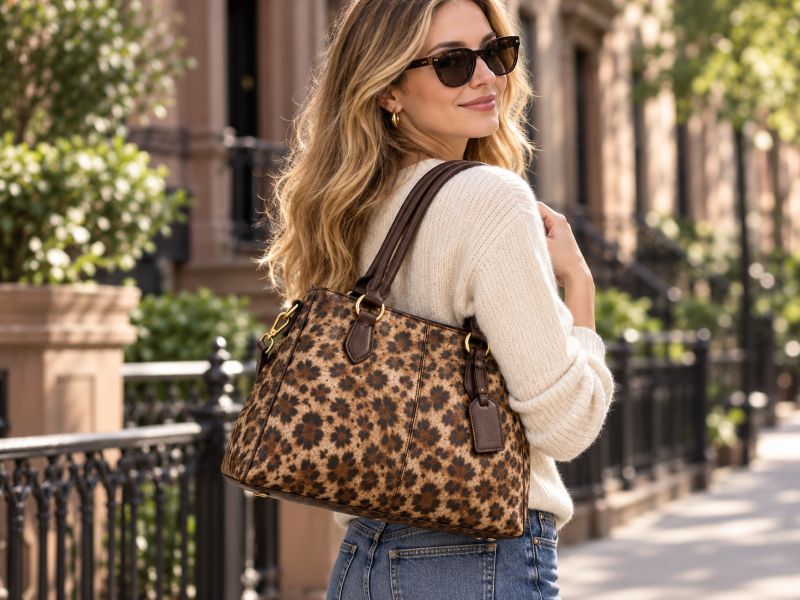
A leopard bag can feel understated or bold depending on how the print works with the bag’s shape and surface. That is what makes the pattern eye-catching, but also why the finished result needs careful development.
Leopard print has also moved beyond clothing and footwear, with leopard-print bags becoming an increasingly visible choice for adding pattern to everyday outfits. But translating this popular pattern into an actual bag isn’t always straightforward: our material sampling shows the same artwork can change noticeably when transferred from a digital image to a real bag surface.
This guide explains how print scale, material, and bag design affect the final look. It also explains what brands should approve before a leopard print design moves into production.
Why Leopard Print Works Like a Neutral
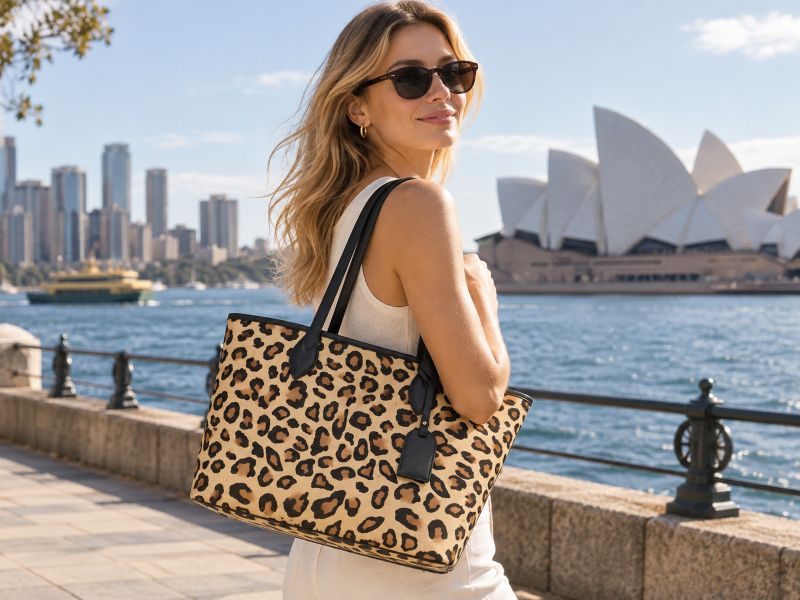
Leopard print can work like a neutral because most versions use colors already common in everyday wardrobes: tan, camel, brown, black, and cream. Instead of introducing a completely new color, a leopard print bag often repeats or connects shades already present in denim, black clothing, beige tailoring, or brown leather.
The pattern itself is visually active, but the palette is surprisingly flexible. A leopard print purse can add contrast to an all-black outfit, warm up cream and beige, or sit naturally alongside denim without needing other printed pieces to feel coordinated. This is what gives leopard print its “neutral” quality: not that the pattern disappears, but that its colors are easy to integrate into many color combinations.
How to Choose a Leopard Bag You’ll Actually Wear
Start With Print Intensity
Look at more than whether you like the spots. Compare the contrast between the background and markings, spot size, and how tightly the pattern is packed.
A pale base with large black markings feels more graphic. Warm brown tones and softer edges create a quieter effect. Partial leopard panels or trims can also add personality without covering the whole design.
Consider your wardrobe before choosing a trend. If most of your clothing is simple, a stronger pattern may be easy to wear. If you already wear bold colors or prints, a lower-contrast leopard print may blend in more naturally.
Match the Pattern to the Bag Size
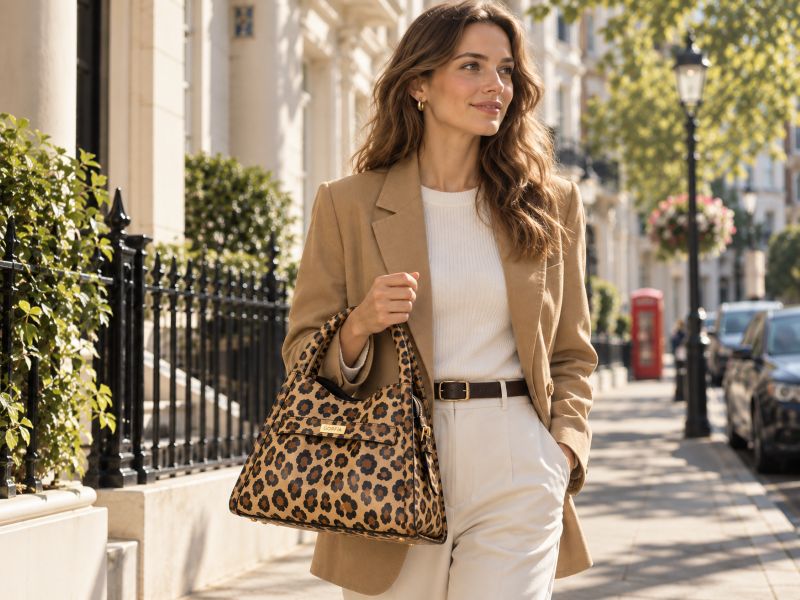
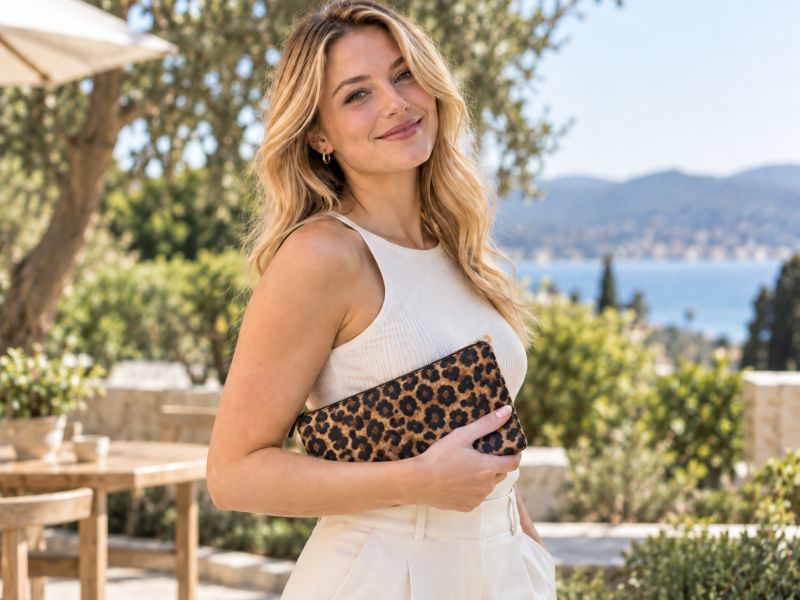
The same leopard print can look quite different depending on bag size. On a small leopard print purse, you only see part of the pattern, so it tends to work more like a visual accent. On a larger leopard print tote bag, more of the pattern is visible, which makes the size and spacing of the spots much more noticeable.
That is why a print that looks well balanced on a small bag may feel too busy or tightly packed when used on a larger tote. When choosing a pattern, it is better to look at how it works with the bag’s actual size and shape rather than judging the material on its own.
Whenever possible, check a sample or finished bag before confirming the print. Seams, pockets, panels, and other construction details can interrupt the pattern, so the final result may look different from what you see on a flat material swatch.
How Material Changes Leopard Print
Leopard print can look surprisingly different depending on the material underneath it. Even when the artwork stays the same, the surface can change how sharp the spots look, how strong the colors appear, and even the bag’s overall style.
On smooth leather or PU, leopard spots usually have cleaner edges and more defined color blocks, giving the print a sharper, more polished look. Canvas has a visible woven texture, so fine details may appear slightly softer, and the same leopard pattern can feel more relaxed and casual.
This is for a technical reason. Fabric construction and yarn characteristics can affect both print color and print quality, and the way we see color can also shift with fabric structure, material, and lighting. In other words, changing the material does more than change the feel of a leopard print bag—it can change how the print itself looks.
That is why you should always check leopard artwork on the actual production material. A digital file can confirm the pattern and colors, but a material sample shows how the leopard print will look on the finished bag.
| Surface | Visual effect | Good fit for | What to check |
| Smooth leather or PU | Crisp, graphic pattern | Polished handbags | Edge clarity and finish |
| Canvas | Softer, casual appearance | Totes and everyday bags | Weave visibility |
| Brushed fabric | Deeper, less-flat effect | Shoulder and hobo styles | Pile direction |
| Long-pile material | Strong texture and movement | Statement pieces | Pattern readability |
Leopard Handbag Styles and How to Wear Them
Small Shoulder and Crossbody Bags
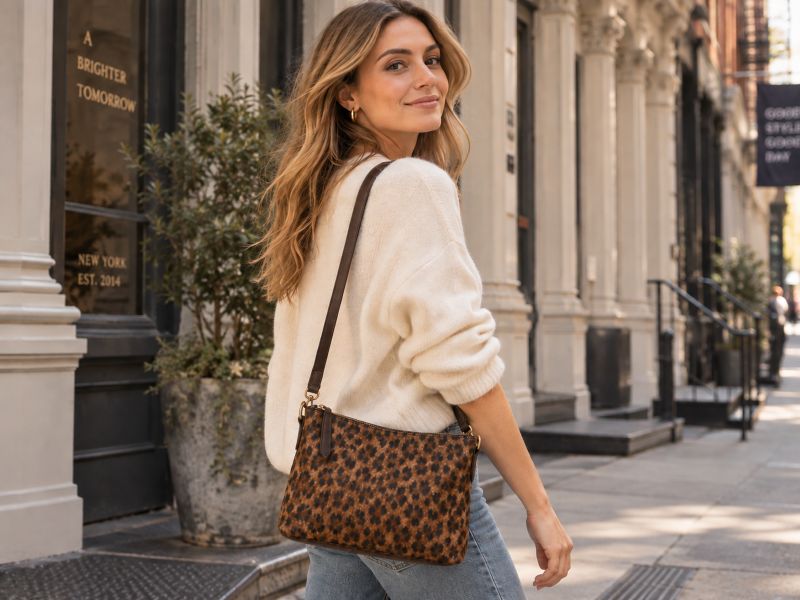
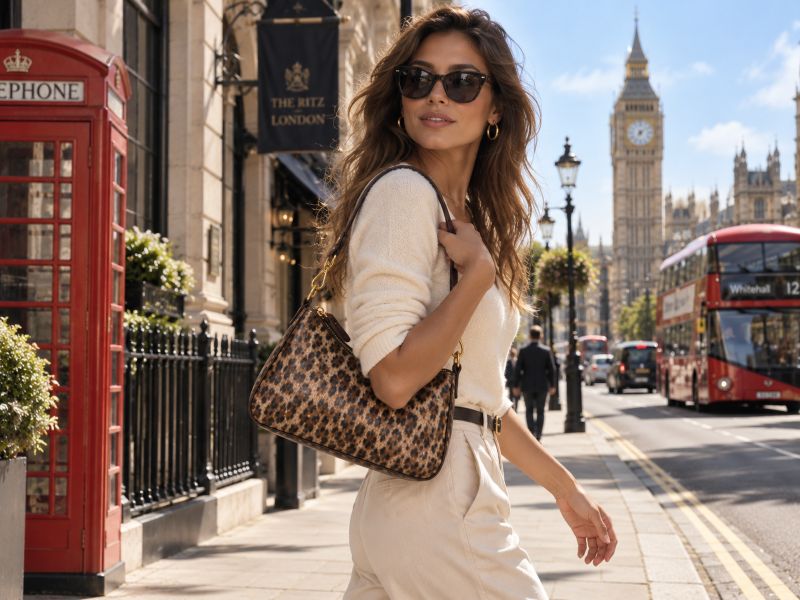
A small leopard print crossbody bag keeps the pattern in a relatively compact area, so it adds interest without dominating the outfit. That makes it an easy option for everyday wear when you want to introduce leopard print more subtly.
Wear it with simple denim, solid-color tops, neutral knitwear, or an understated dress. A compact shoulder bag can also work into the evening because the smaller print scale is easier to pair with a cleaner, more polished outfit. For fit and carrying position, our crossbody bag guide covers size and strap choices in more detail.
Totes and Larger Handbags
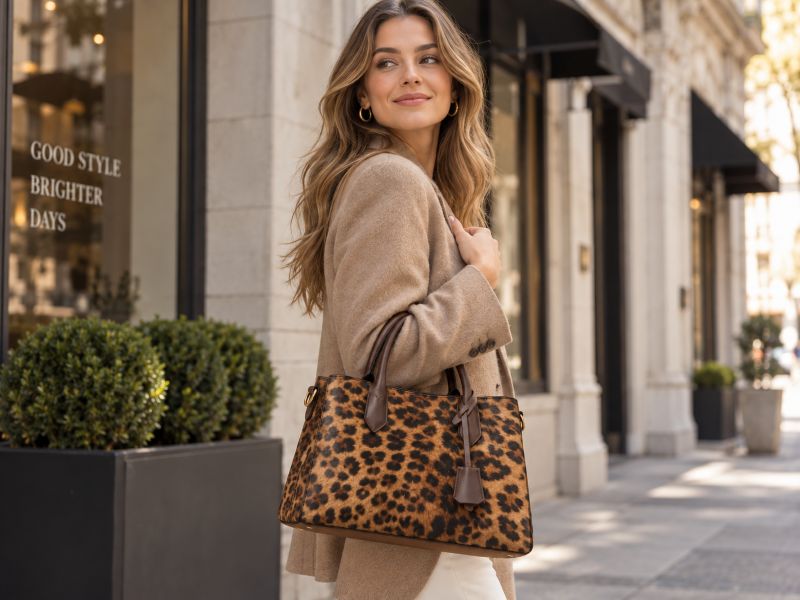
A leopard print tote bag shows off much more of the pattern. Because the printed surface is larger, the bag naturally takes on a stronger visual role and can become a main feature of the outfit.
This is where simpler clothing usually works best. Solid colors and clean silhouettes give the larger leopard pattern enough space to stand out without competing with other strong prints. If the tote is already large and visually busy, you generally do not need many other statement pieces.
Soft and Slouchy Designs
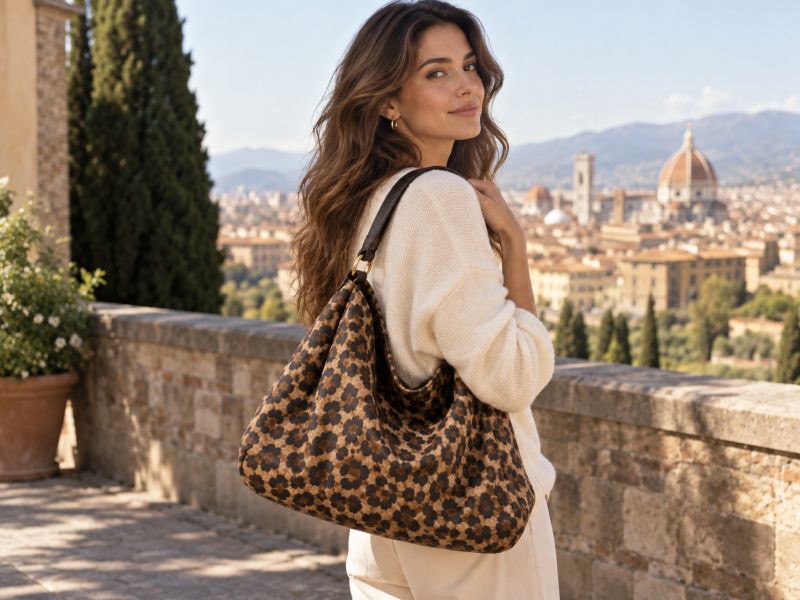
A soft hobo or slouchy bag changes the way leopard print appears through folds, curves, and movement. Instead of showing the pattern across one flat surface, the shape breaks it up, making bold markings feel softer and less graphic.
That effect works especially well with brushed surfaces, soft canvas, and other materials with visible texture. Pair these bags with relaxed outfits such as loose shirts, knitwear, denim, or simple casual layers. Compared with a structured leopard handbag, a slouchy version usually gives the print a more laid-back feel.
What Brands Should Check Before Production
For brands, approving leopard artwork is only one step. Before production starts, the bigger question is whether the print still looks balanced once it is cut, sewn, and turned into a finished bag.
Confirm the material with a physical sample, but focus final approval on the complete product rather than the print in isolation.
Check the Finished Bag, Not Just the Artwork
A leopard pattern that looks balanced in a digital file or on a flat swatch can read differently once it is divided across a real bag.
Review the finished sample from the front, back, sides, and bottom. Pay particular attention to seams, pockets, flaps, gussets, and other construction lines that interrupt the pattern. A dark marking landing awkwardly on a center seam or pocket edge, for example, can draw more attention than it did in the original artwork.
Also look at the bag as a whole. The leopard print scale should feel appropriate for the finished size and shape, while handles, trim, hardware, and other details should work with the pattern rather than compete with it.
Gorfia’s Designer Solutions can support sample development and refinement before the design moves into bulk production.
Review Pattern Placement and Natural Variation
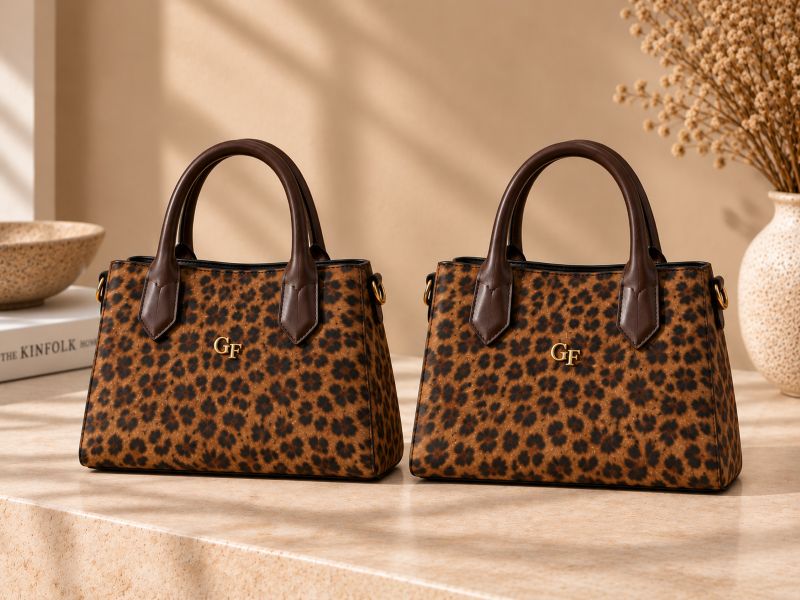
With a repeating leopard print, not every finished bag needs to show the same spots in the same positions. Cutting different areas of the printed material naturally creates some variation.
What matters is controlling placement in areas where it has a strong visual impact. Check whether major seams create distracting breaks, whether large panels show obvious repeat lines, and whether important front-facing areas remain visually balanced.
For larger orders, compare several samples or finished pieces rather than approving only one bag. This gives the production team a clearer idea of what variation is acceptable and what to correct.
Set Clear Standards for Bulk Production
Once the sample is approved, turn it into a practical production reference. Keep the approved sample, or golden sample, with the correct artwork version, print scale, key placement requirements, and any limits on acceptable variation.
If the selected material has a directional surface or pile, add its orientation to the specification without making the material the main focus again.
These references give sampling, cutting, sewing, and quality teams the same standard to follow. They also make later quality checks more objective because the production bags can be compared against an agreed reference rather than judged from memory.
Brands developing a larger printed collection can use Gorfia’s Brand Solutions to align sampling, approval standards, and bulk production requirements.
FAQs
Are leopard print bags still in style in 2026?
Yes. Vogue highlighted leopard-print bags in 2026 fashion coverage, showing that the pattern remains current across handbag styles.
Can you carry a leopard print purse to work?
Yes. A clean silhouette and moderate print scale can make leopard easier to combine with polished work clothes.
Can you mix a leopard print bag with other patterns?
Yes, but keep one pattern visually quieter. A shared color can help the two prints feel more deliberate together.
Should a leopard bag match your shoes?
No. Treat the bag as its own accent rather than trying to match every accessory. Repeating one neutral tone elsewhere is usually enough.
How do you care for a leopard print bag?
Follow the care method for the base material. Test cleaners on a hidden area and avoid aggressive rubbing on printed or brushed surfaces.
Conclusion
When choosing a leopard print bag, check the finished bag, not just the print. Look at whether the spot size suits the bag and whether seams or pockets interrupt the pattern awkwardly.
If you are also considering other animal-inspired designs, our Snakeskin Bags: How to Shop, Style & Care for Them guide explains what to look for when choosing, wearing, and caring for snakeskin bags.
Develop a Leopard Print Bag with Gorfia
A leopard print can look right on a swatch but change once it is scaled, cut across panels, or applied to the final material. Those small differences can become much more noticeable across a full production run.
Gorfia helps brands test print scale, material performance, pattern placement, and finished samples before bulk production. Contact our team to catch these issues at the sampling stage—not after hundreds of bags have already been made.