
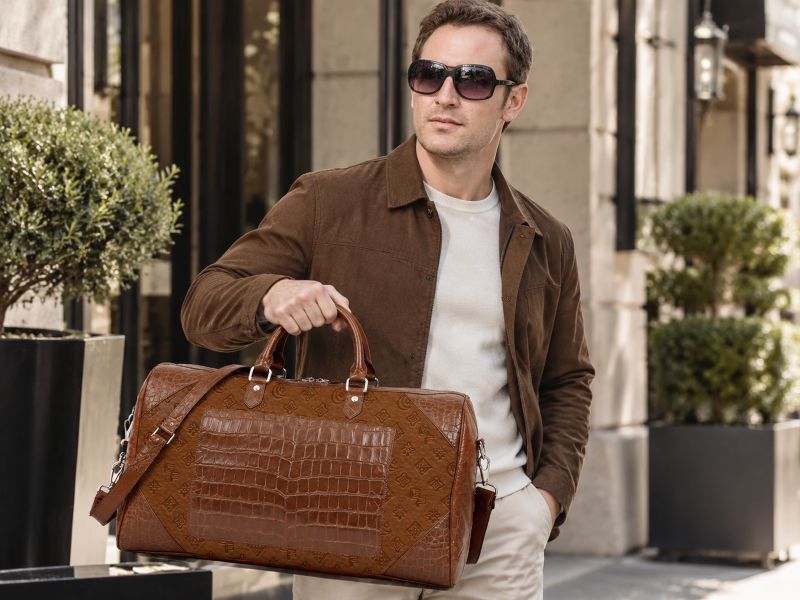
Choosing the right duffel bag involves more than finding an attractive design. The best option depends on how you travel, what you need to carry, and how often you use it. Comparing different styles, usable capacity, and construction details can help you find a bag that balances comfort, practicality, and long-term durability.
We’ve spent years working with bag manufacturers and testing hundreds of duffel constructions. With the global duffel bag market projected to reach $6.4 billion by 2034, understanding these details is increasingly important.
In this guide, we’ll explore duffel bag styles for different trips, explain how to assess usable capacity, and examine the construction features that influence comfort and durability.
Travel Better with a Duffel Bag That Fits Your Needs
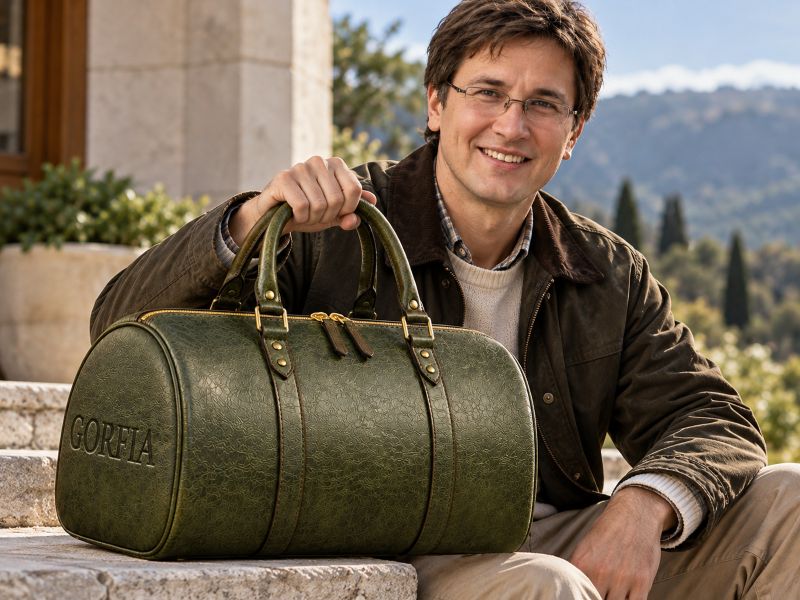
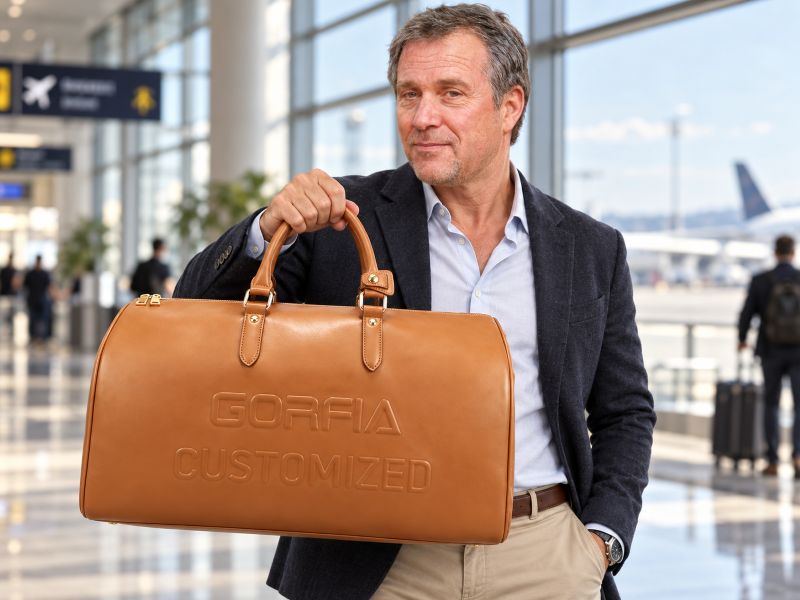
A duffel bag is no longer limited to gym sessions or short trips. Its versatile design makes it suitable for airport travel, business meetings, weekend getaways, and everyday use. Different styles offer varying levels of storage, organization, and structure, allowing men to choose a bag that matches both their travel needs and personal style.
The key is finding a design that suits each occasion. Many men prefer a versatile bag that transitions easily between business settings and casual use. A bag that works perfectly for the gym, for example, may not offer the organization or professional appearance needed for a business weekend.
The weekend getaway (1–3 Nights)
We suggest 30–45 liters of space, which typically qualifies as a carry-on personal item. A wide opening and single main compartment let you pack clothes, toiletries, and shoes fast. A traditional duffle with a garment section helps prevent wrinkling if clothing matters.
Canvas or water-resistant materials age well, as do larger suitcases. Packing cubes simplify organization and free up room for weekend essentials.
The business trip (2–4 Nights)
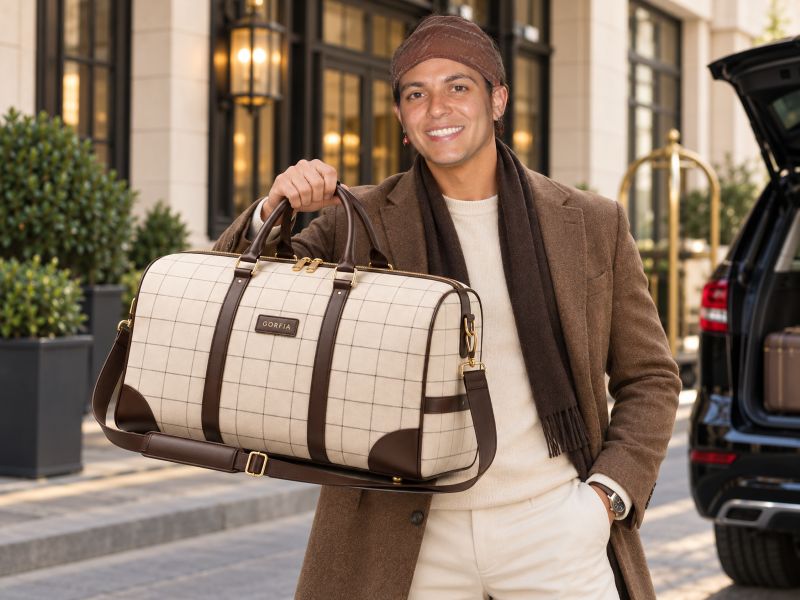
We can’t stress this enough: structure matters. A slouchy duffle looks out of place in a hotel lobby, while a structured duffel bag reads more professional than backpacks or travel backpacks. For business, we recommend a semi-structured design with a padded laptop compartment, internal pockets for daily essentials, and an accessible layout.
An everywhere bag style with a trolley sleeve is more convenient than a suitcase handle. Ballistic nylon or leather keeps the construction durable week after week. Stick to 35–50 liters.
The gym and daily carry-on
We’d say keep it lightweight. 20–30 liters covers workout gear, shoes, a towel, and a water bottle. Ventilated compartments stop odor. Quick-access pockets hold your phone, keys, and wallet. Water-resistant materials handle sweat on the go.
A secure shoulder strap and enough storage for your essentials mean you don’t need a second bag.
The adventure or multi-day trip (5+ Nights)
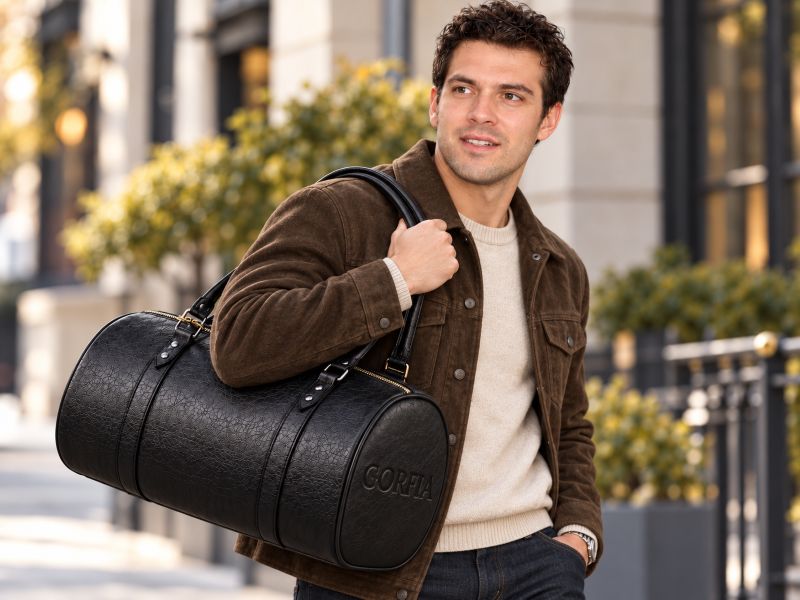
We recommend 50–70 liters and super-durable construction with thick, reinforced bottom panels. Look for heavy-duty zippers and multiple straps: a shoulder strap for crossbody carry, grab handles, and stowable backpack straps to handle heavier loads.
Ripstop nylon or Cordura withstands rough terrain anywhere. Weather-resistant duffles protect gear from wind and rain. For massive loads on smoother ground, a rolling duffle bag with wheels lets you roll instead of carry.
Find the Right Duffel Bag for Your Next Trip at a Glance
| Trip Type | Ideal Capacity | Best Materials | Must-Have Features |
| Weekend getaway | 30–45L | Canvas, waxed cotton | Wide opening, shoe compartment |
| Business trip | 35–50L | Ballistic nylon, leather | Laptop sleeve, structured shape |
| Gym / daily carry | 20–30L | Coated nylon, polyester | Ventilated pocket, lightweight |
| Adventure / multi-day | 50–70L | Cordura, ripstop nylon | Reinforced base, multiple carry options |
As a quick guide to common sizes, 40L is a familiar benchmark seen in the Patagonia Black Hole Duffel Bag. Garment-focused options like the Halfday Premium Garment Duffel often come in at 45L.
Duffel Bag Capacity: What Affects Usable Space?
Duffel bag capacity depends on its dimensions and internal layout. Compartments, dividers, and opening designs all affect usable space. From compact 6L bags to large 150L travel bags, different sizes serve different packing needs.
Internal compartments can reduce the space available in the main section. A shoe compartment keeps footwear separate but takes up room, while a narrow opening makes bulky items harder to pack. Clamshell designs provide wider access and make packing easier.
Pocket placement also affects storage efficiency. Too many compartments can limit room for larger items, while too few make smaller essentials harder to organize. A practical design balances organized storage with enough main compartment space.
When choosing a duffel bag, check its internal dimensions, compartment layout, and opening width. Make sure the main compartment can accommodate your travel essentials without restricting access.
For Brands: Consider how compartment proportions and opening designs affect usable space. During sampling, test the bag with typical travel items to evaluate storage capacity and accessibility. This helps identify design issues before bulk production.
What Makes a Bag Comfortable to Carry
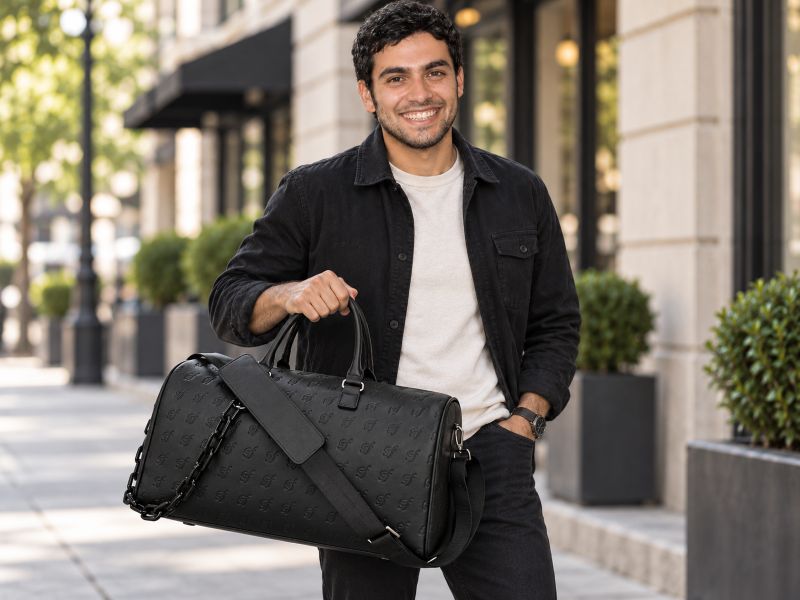
A wide, padded shoulder strap can make a duffel bag more comfortable to carry, but strap design involves more than just width and padding. For heavier bags, ergonomic shaping and proper weight distribution also matter. A detachable crossbody strap offers another carrying option and can help spread the load more evenly.
A versatile bag should also feel comfortable whether you carry it by hand, over your shoulder, or across your body.
Strap Placement
The attachment position on the bag body determines how the load hangs against your hip, whether you carry it crossbody or over one shoulder. A strap mounted too close to the center makes the bag swing with every step and feel less stable across your body.
Support the Bag’s Base
A duffel with no reinforced base will sag under weight, pulling the strap into your neck and making it less comfortable to carry by hand over longer distances.
Choose Firm Padding
Soft foam feels great in the shop. Under a 12-kilo load, even thick, dense padding holds its shape better than soft foam, which can compress to almost nothing within twenty minutes. Dense, moulded padding holds its shape far longer.
Secure Buckles
If the adjustment buckle doesn’t grip the webbing properly, the strap will slowly loosen as you walk.
We advise you run this simple test. Load the bag with realistic weight. Walk around for five minutes. Watch for excessive swinging, bottom sag, or strap creep.
For Brands and Buyers: When evaluating a duffel bag sample, check whether the adjustment buckle holds the strap securely under load. Ask your supplier to demonstrate how the buckle, strap attachments, and base panel perform when the bag is fully packed. Look for strap slippage, uneven weight distribution, or bottom sag before approving the sample for bulk production.
Durability over features: what actually makes a bag last
We know from experience that more pockets, heavier hardware, and complex designs increase production costs. They don’t necessarily make the bag tougher. What matters more is durable construction, and heavy-duty hardware mainly helps by preventing blowouts at stress points when the bag is packed to capacity.
Three structural details that matter most
- Reinforced strap attachments. These should spread stress across a wider area of fabric, not concentrate it at a single stitch point.
- Reliable zippers. Zippers from proven suppliers like YKK won’t split under pressure. Cheap zippers are the number one failure point in budget duffels.
- Abrasion-resistant bottom panels. The bottom is where the bag drags across concrete, airport floors, and car boots. Reinforce it.
Good organization does not require lots of pockets; bags like the Mission Workshop Transit Duffle use a focused layout well, while the TOM BIHN Aeronaut 45 adds two diagonal pockets inside to separate small gear.
Check Stitching and Reinforcement Before Approval
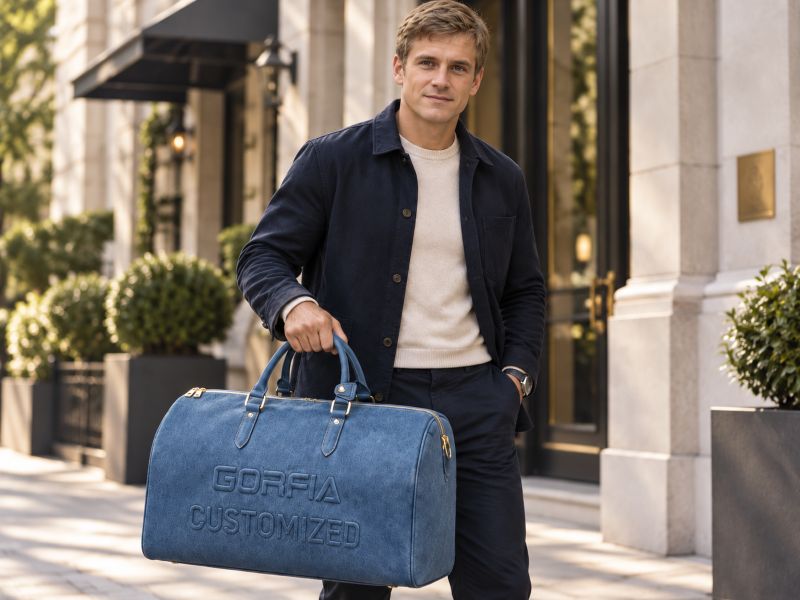
For Product Developers and Buyers: When reviewing a duffel bag sample, inspect the stitching around strap attachments, handles, and other high-stress areas. Look for loose threads, uneven seams, and visible damage around needle holes. Ask your supplier to explain the reinforcement method and provide relevant test results where available. Confirm that the construction meets your quality requirements before approving bulk production.
The simple rule
When you compare duffel bags, prioritize construction over feature count, especially since duffel bags are often more budget-friendly than other luggage. However, a high price doesn’t automatically mean high quality.
A bag with three well-placed pockets and solid construction will always outlast a bag with twelve pockets and flimsy zippers.
For Brands: When planning a duffel bag collection, evaluate each pocket and decorative feature based on its practical value. Extra compartments can increase production costs without necessarily improving the customer experience. Work with your manufacturer to prioritize useful storage, durable construction, and a price point that fits your target market. This helps you balance product quality, profitability, and customer expectations.
Materials that determine how long your duffles survive
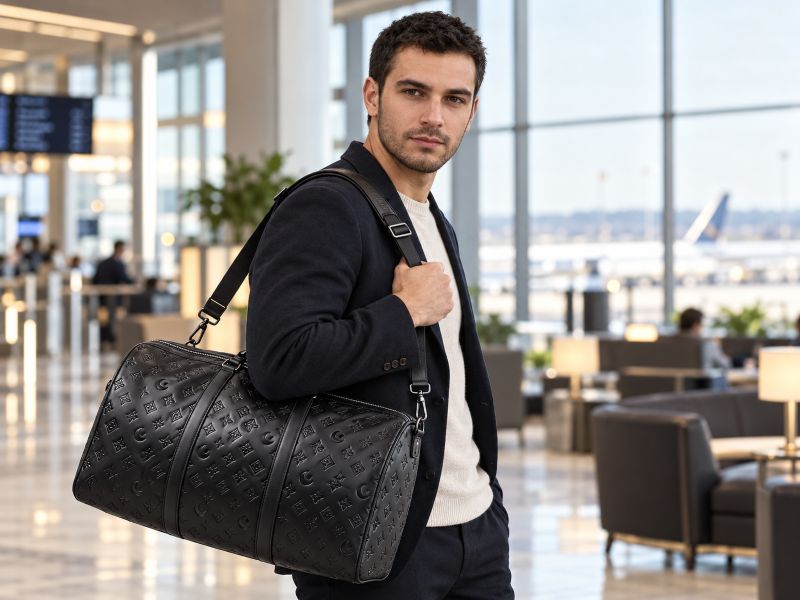
Material choice affects weight, water resistance, appearance, and lifespan, and it also determines how durable a bag is over time. We recommend prioritizing quality materials such as ballistic nylon and treated leather, which usually offer the best longevity and weather resistance. Here’s a quick breakdown.
Canvas and waxed cotton
Classic look and solid durability. Heavier than synthetics but develops character over time. Best for weekend and lifestyle duffels.
Ballistic nylon
Resists tears and abrasion better than standard nylon. High-denier ballistic nylon also helps keep gear drier in the rain, making it a strong material for high-use business travel. The go-to for business travel bags that need to look professional and handle frequent use.
Cordura and ripstop nylon
The toughest options for adventure travel. They handle rough surfaces, moisture, and heavy loads without breaking down, and ripstop nylon helps stop a puncture from spreading into a larger tear.
Coated polyester
Lightweight, affordable, and water-resistant. Ideal for gym bags and daily carry where weight matters more than long-term ruggedness.
Full-grain leather
Ages beautifully and lasts decades with proper care. Heavy and expensive. But for a premium business duffel, nothing matches its presence.
For travelers short on space, our guide to choosing a foldable travel bag that works for your tripis a useful next read.
For Brands and Sourcing Teams: Choose duffel bag materials based on your target market, expected performance, and retail price. Ask suppliers to provide fabric specifications and samples, then compare abrasion resistance, water resistance, weight, appearance, and cost. Confirm that the selected material meets your product requirements before approving the final sample. This helps you balance material quality, product positioning, and sourcing costs.
FAQs
What size duffel bag works best as a carry-on?
Most airlines accept duffels up to 55 × 35 × 25 cm; roughly 35–45L. Budget carriers often enforce smaller limits, so check before you fly.
Can I use the same duffel for the gym and weekend travel?
You can, but you’ll compromise. Aim for a 30–35L design with a removable shoe compartment to cover both without sacrificing space or portability.
How do I know if a duffel bag is well-constructed?
Check three things. Tug the strap attachments; they shouldn’t shift. Test the main zipper under tension. Press the bottom panel for a reinforcement layer.
Are expensive duffel bags worth the investment?
We’d say not always. Cheap duffels cut corners on zippers and stitching, but price alone doesn’t guarantee quality. We always encourage buyers and brands to focus on structural details over the price tag.
Final thought
Use this knowledge to choose a bag that fits your actual travel habits, not just your aesthetic preferences.
If you’re a brand owner, retailer, or product developer looking to launch a duffel line that gets these structural details right from the first sample, the conversation starts here.
Let’s Bring Your Duffel Bag Ideas to Life
Gorfia is a travel bag manufacturer specializing in duffel bags. We handle everything from material sourcing and pattern development to bulk production and quality control, focusing on structural integrity that keeps customers coming back and return rates low.
Tell us about your duffel line. We’ll respond within 24 hours with a production timeline and cost estimate.