
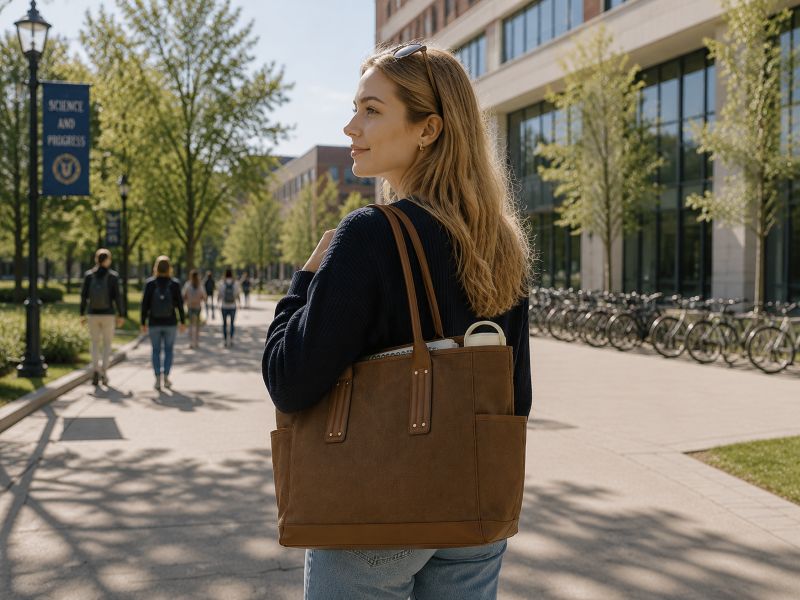
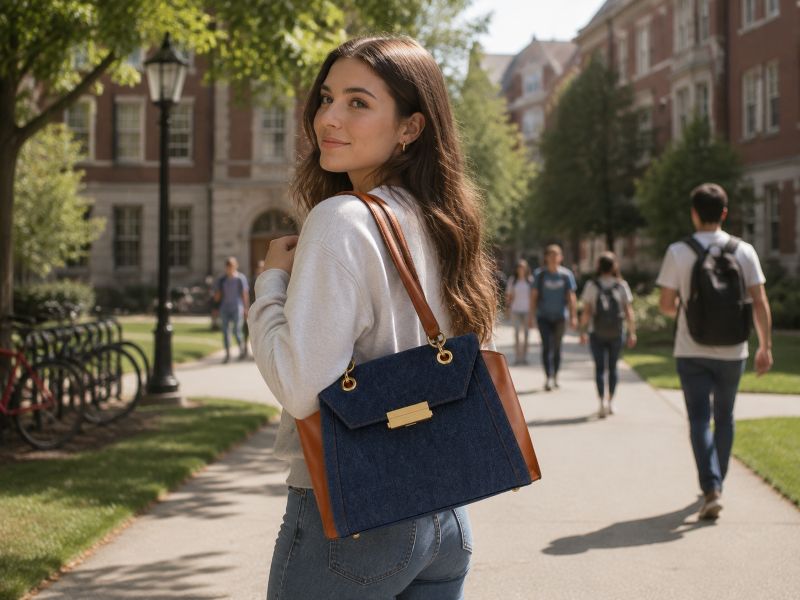
From carrying notebooks between classes to bringing laptops for study sessions, school tote bags have become a practical choice for many students. They offer the space, comfort, and style needed for everyday campus life.
As student needs continue to change, the best school tote bags are no longer just about appearance—they need to balance capacity, durability, and everyday usability.
In this post, we’ll explore what makes a great school tote bag, from design features and material choices to the details brands should consider when developing their collections.
Let’s take a closer look at what makes school tote bags work for today’s students.
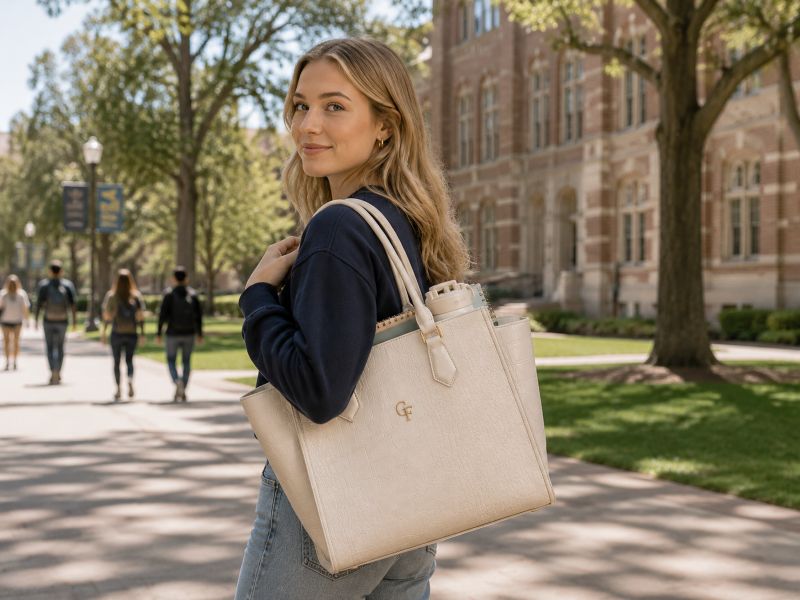
Why Students Are Choosing Tote Bags for School
The popularity of school tote bags reflects a change in how students view everyday carry items. They are no longer choosing bags based only on storage needs, but also on comfort, versatility, and personal expression.
Students Want Bags That Feel as Light as They Look
There is a growing pushback against carrying heavy, oversized bags, especially among college students who move between classes, libraries, and social spaces throughout the day.
Tote bags answer that demand. They are lighter than most structured school backpacks and easy to transition between settings without looking out of place.
This changing preference is a good purchase signal. Brands responding with intentional, lightweight tote bags for school designs are seeing more repeat orders than those that still default to more rigid constructions.
Aesthetics First. Function Follows
Search terms like “cute tote bags for school” and “aesthetic tote bag for college” are not niche queries. They reveal a mainstream shift in how students discover and choose products.
The aesthetic and fashion direction comes first. Although functionality follows and is very important, it rarely drives students’ decisions.
For brands, this means collection planning can no longer start with materials or dimensions. It has to start with the visual direction that speaks to the student buyer and work backward from there.
Aligning with this shift in thinking currently sets strong collections apart from others.
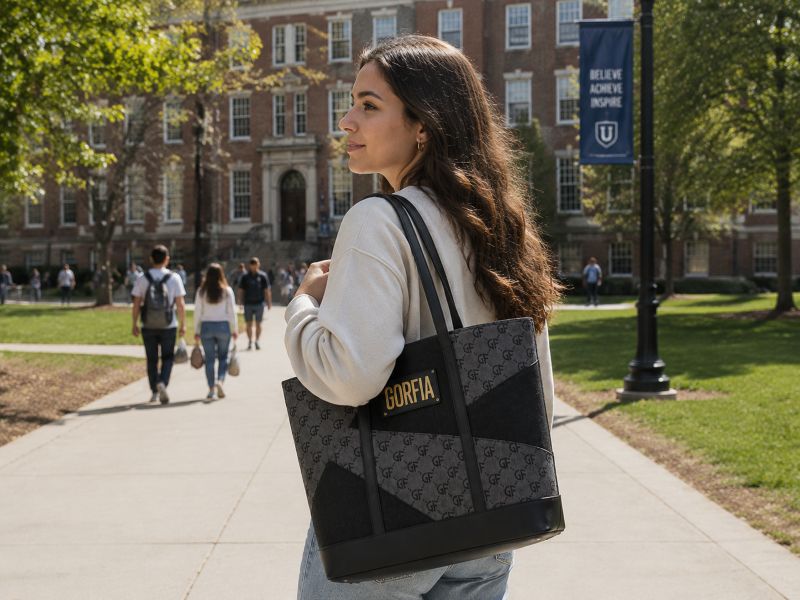
What Students (and Parents) Seek in a School Tote Bag
If you are shopping for a school tote bag, whether for yourself or your child, the options can feel overwhelming.
Here is how to narrow down your list:
What You Carry Every Day
Not every student carries the same load. A middle school student with a few textbooks and a pencil case has different needs than a college student hauling a laptop, charger, water bottle, and a week’s worth of printed readings and books.
Before choosing a bag, think honestly about what goes in it every single day. That daily carry determines the right size, structure, and strap setup.
A bag that looks pretty but collapses under a laptop will frustrate you in no time.
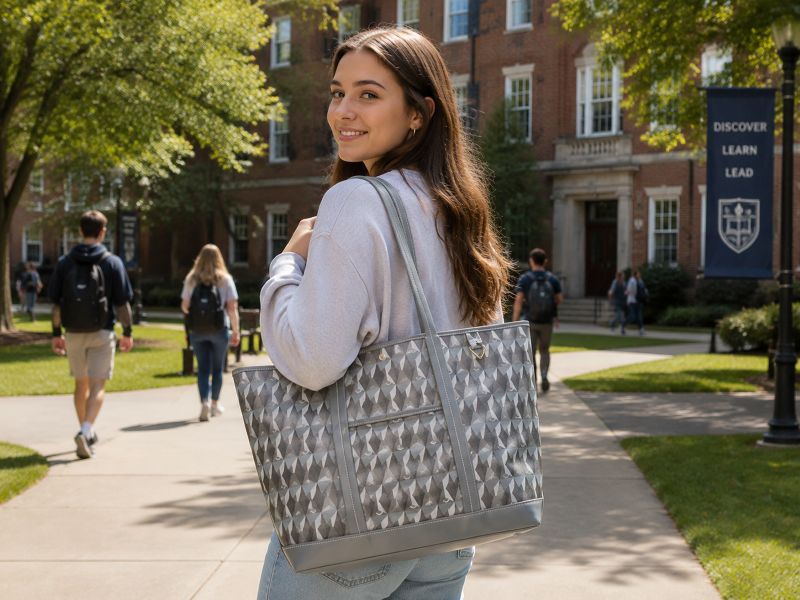
Think Beyond the Classroom
School tote bags work across multiple settings: classrooms, libraries, cafes, commutes, and social spaces. The best choice is one that transitions between those settings without looking out of place in any.
Neutral tones like black, white, and tan tend to fit best across contexts. Bold prints and statement designs in pink or blue work well if you are comfortable committing to them as a consistent part of your look and personal fashion style.
Construction Over Looks
A tote bag might look great on a product page but feel flimsy in person. When shopping, check how the bag is constructed at the stress points — the handles, the base, and any seams that carry weight. Pay attention to the quality of the fabric and straps as well.
A bag used five days a week needs to hold up across a full school year, not just a few weeks.
What Different Students Are Looking for in a School Tote Bag
| Student Type | Top Priority | Typical Daily Carry | What Drives the Purchase |
| Middle school student | Cute, fun design | Textbooks, stationery, water bottle | Parent and peer influence |
| High school student | Style and self-expression | Books, phone, laptop, essentials | Aesthetic and social identity |
| College student | Practicality and style | Laptop, charger, water bottle, books | Personal relevance and daily function |
| Parent buying for child | Durability and value | Varies by grade level | Quality, price, and longevity |
How Smart Brands Plan School Tote Collections
This section is for the brands, buyers, and product developers watching this space.
The school tote bag category is currently competitive, and the brands gaining ground are not simply reacting to trend reports. They are reading consumer behavior and making product decisions that reflect where the market is heading, not where it has been.
Collection Built Around Student’s Daily Life
The most effective school tote collections are built around a clear view of how a student actually moves through their day.
So you may have to ask questions like, “What do they carry between 7 am and 6 pm?” When does the bag need to look casual? When does it need to look put-together? What do they carry it alongside — a water bottle, a jacket, a phone, her wallets and essentials?
Products developed from that starting point tend to fit naturally into real student life.
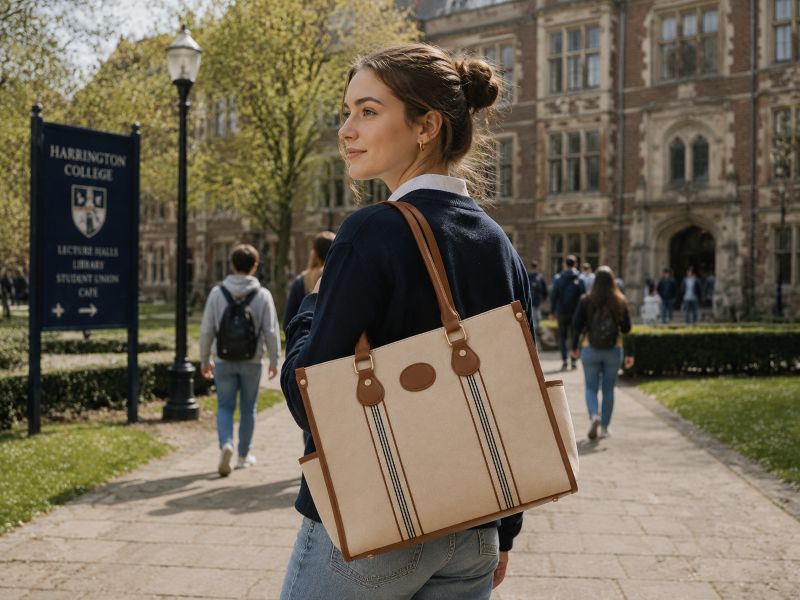
The strongest school tote designs are not only visually appealing but also built around how students actually carry, organize, and use their bags every day.
Market Positioning Before Product Development
One mistake brands make in the school bag space is treating positioning as an afterthought; something to figure out in the marketing phase after the product is already built.
Your best bet is to start with a positioning decision. Is this bag for the style-forward high school student who wants something she has not seen everyone else carrying? Is it for the practical college student who needs reliability across a heavy academic schedule? Is it for the budget-conscious parent who wants something durable, well-made, and worth the purchase price?
That decision shapes everything: silhouette choices, color direction from black and white to pink and blue, price point, and which retail channels make sense. It also determines what to stock and how to source the right fabric and materials.
How to Use Trends Without Being Controlled By Them
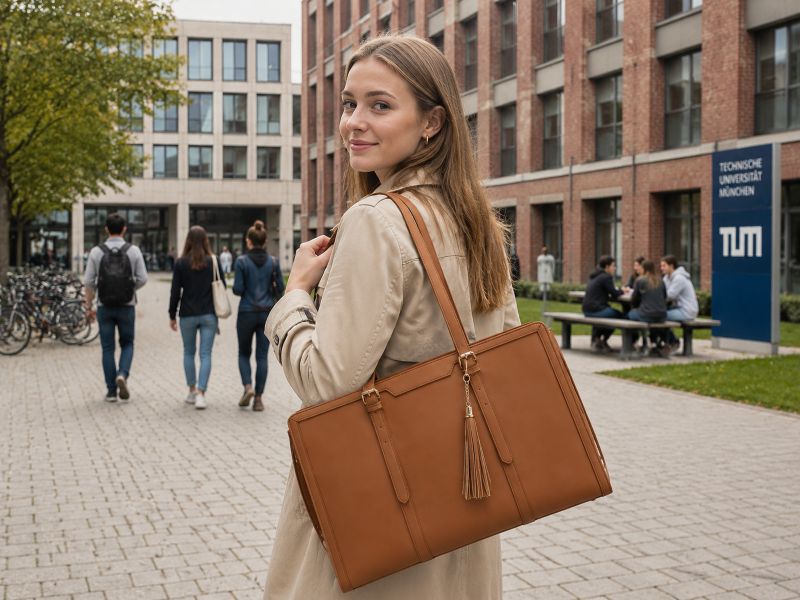
The aesthetic school bag trend is real and commercially significant. But brands that chase trends without anchoring them in a clear product vision often end up with collections that feel dated by the time they ship to buyers.
The smarter approach is to identify the underlying behavior (in this case, the student who treats their bag as a fashion and style statement) and build a collection that serves that behavior across multiple seasons rather than reacting to a single trend cycle.
Your longevity in this category would come from how much you understand the student, not merely copying some trend.
Factory Insight: Why Real Usage Testing Matters
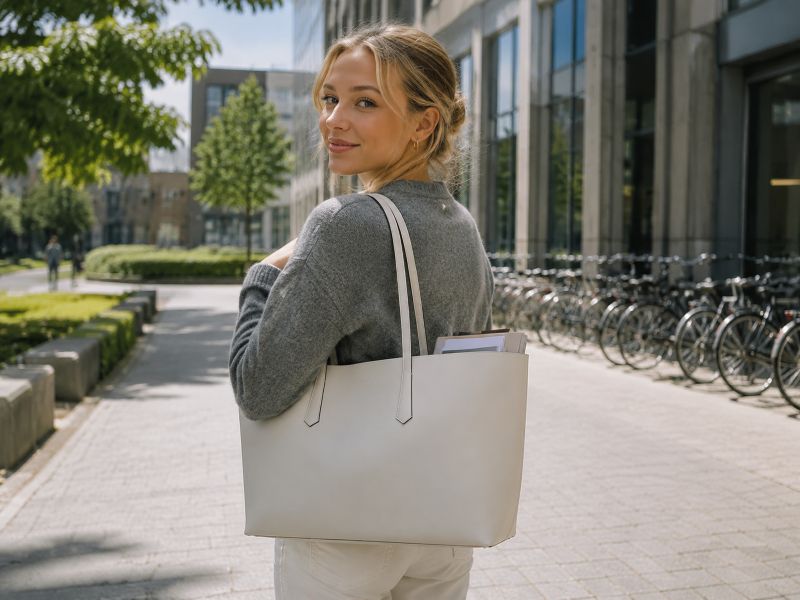
From our experience developing school tote bags, we found that the biggest challenges often come from everyday usability rather than design appearance.
In one project, a customer initially requested a larger tote to maximize storage capacity. After sampling, we found that the oversized structure became uncomfortable under full load and placed extra stress on the handles. We adjusted the dimensions, reinforced key stress areas, and improved the structure to create a better balance between capacity, comfort, and durability.
We have also seen that some fabrics perform well in samples but lose shape after daily use. In one canvas tote project, we recommended stronger fabric support and additional reinforcement after testing showed that the original material was too soft for long-term school use.
These cases highlight why product decisions should be tested against real usage conditions before production.
How Gorfia Helps Build School Tote Collections
Most manufacturers will produce whatever brief you hand them. At Gorfia, we push back when a brief runs counter to the brand.
We’ve deliberately built this over more than 20 years of working with brand owners, importers, and e-commerce sellers who needed more than a production facility.
Here is what that looks like specifically in the school tote bag category:
- We challenge size decisions before sampling
- We match fabric to school-year durability, not just aesthetics
- We help brands make color and print decisions with production in mind
- We support sample approval in as little as 10 days
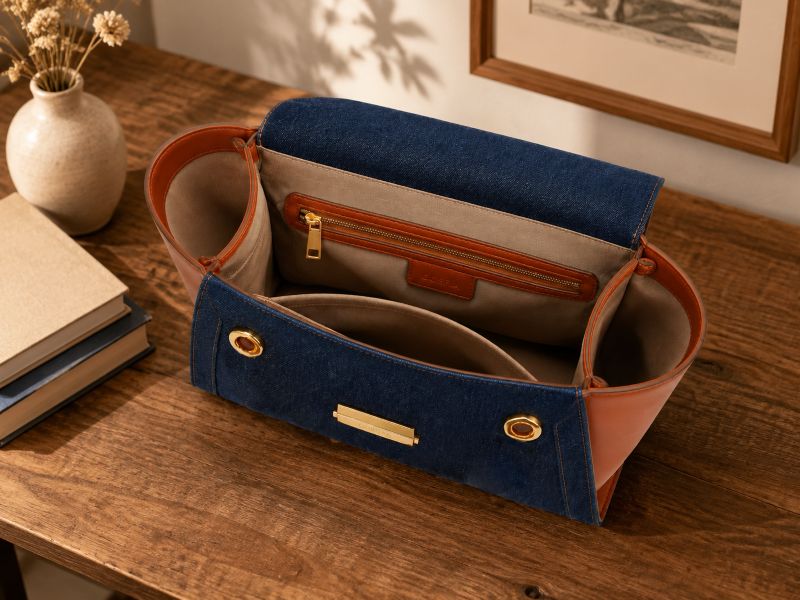
- We offer full customization across materials, lining, structure, hardware, and packaging
For school tote brands building a distinct identity, these details can make or ruin your production.
Tote Bag For Student Checklist For Brands
Before you build a tote bag for students, run through these quick questions:
- Does it fit what students carry on a typical school day, including my books, laptop, and essentials?
- Are the handles and straps long enough to wear comfortably on the shoulder?
- Is the base sturdy enough to hold its shape when full?
- Does it work with more than one outfit or setting?
- Will the fabric hold up across a full school year of daily use?
If you can answer yes to all five, you are ready for the school tote bags category.
FAQs
What size tote bag is best for school?
It depends on your daily carry. Middle and high school students typically do well with a medium-sized tote. College students carrying a laptop and heavier loads may want something larger with a reinforced base.
Are tote bags practical for school every day?
Yes, for many students. The key is choosing one that fits your actual load and is well-constructed enough to handle daily use without wearing out quickly.
What makes a tote bag good for college?
A college tote bag should be large enough to hold a laptop and daily essentials, comfortable to carry for extended periods, and versatile enough to transition between academic and social settings.
Are tote bags better than backpacks for school?
Neither is universally better. Tote bags suit students with lighter loads who prioritize style and versatility. Backpacks work better for heavier loads or longer commutes. Many students use both.
What materials hold up best for school tote bags?
Canvas and coated fabrics tend to offer the best balance of durability and everyday practicality for school use. Some shoppers may also weigh the environment when comparing materials.
Final Thoughts
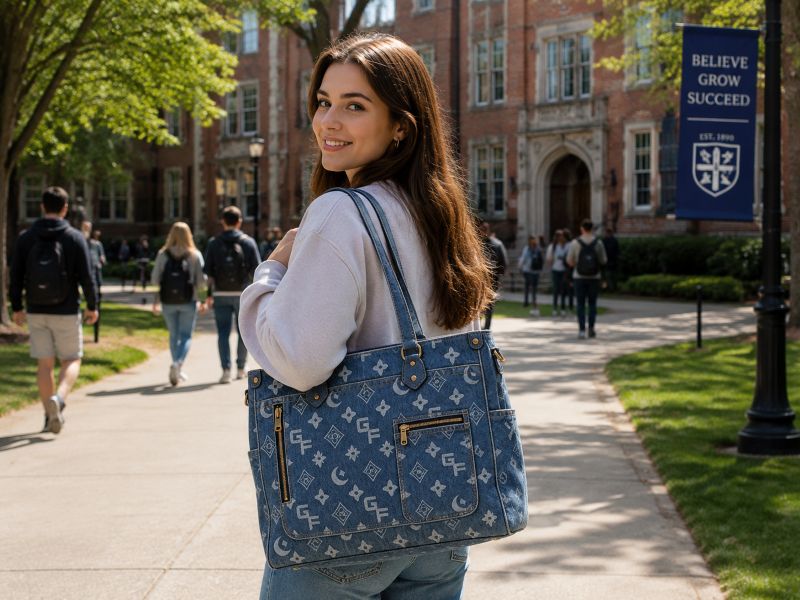
The school tote bag is a product space shaped by real shifts in how students dress, shop, and carry their daily lives.
For shoppers, the right bag is the one that fits your actual school day. For brands, the opportunity is in understanding what is driving these changes and building collections that reflect those decisions with clarity and intention.
Looking to develop a tote bag collection that performs? Check out our guide on Tote Bag Dimensions: A Procurement Guide for Strategic Sourcing.
Find a Manufacturer Who Understands This Market
Planning a school tote bag collection? Get a manufacturing partner who understands both the product and the market behind it.
At Gorfia, we’ve spent years helping brands translate market insight into product collections that sell. We would love to hear about your project. Request a quote or schedule a consultation with our team today.