
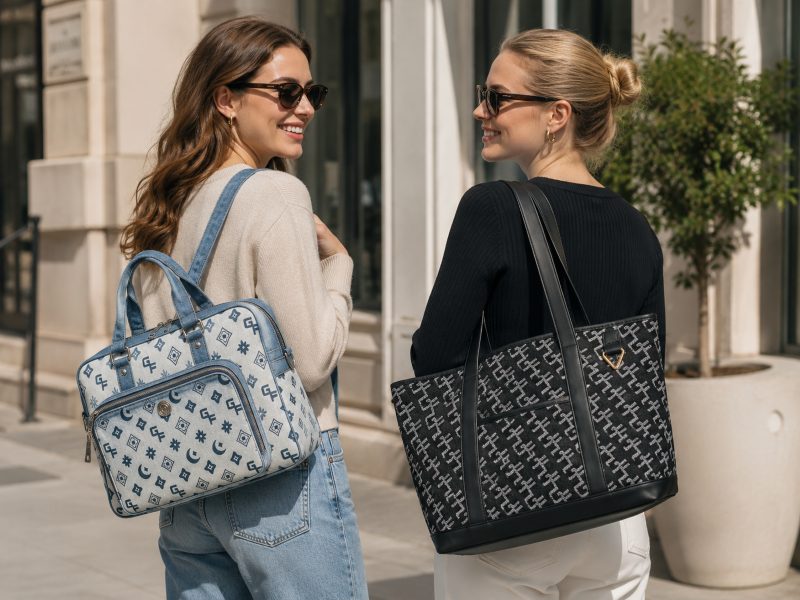
A purse that makes you dig for your phone every time is a purse you’ll eventually stop using. Outside pockets keep essentials within easy access while commuting, traveling, or running errands — no digging through the main compartment or putting the bag down. The difference becomes obvious when you’re rushing through the airport, carrying coffee, or managing a stroller with one hand.
The market is moving in the same direction. According to Mordor Intelligence, totes priced between $250 and $500 led unit sales in 2024 as more shoppers focused on everyday usability and long-term value instead of just brand names. Features like well-designed exterior pockets are also one of the biggest reasons people keep using — and regularly repurchasing — the same bag styles.
In this guide, we’ll break down the most practical types of outside pockets, which purse styles use them best, how materials and construction affect durability, and what to look for whether you’re buying for yourself or sourcing for a product line.
Keep reading to find the outside pocket design that best fits your daily routine or business needs.
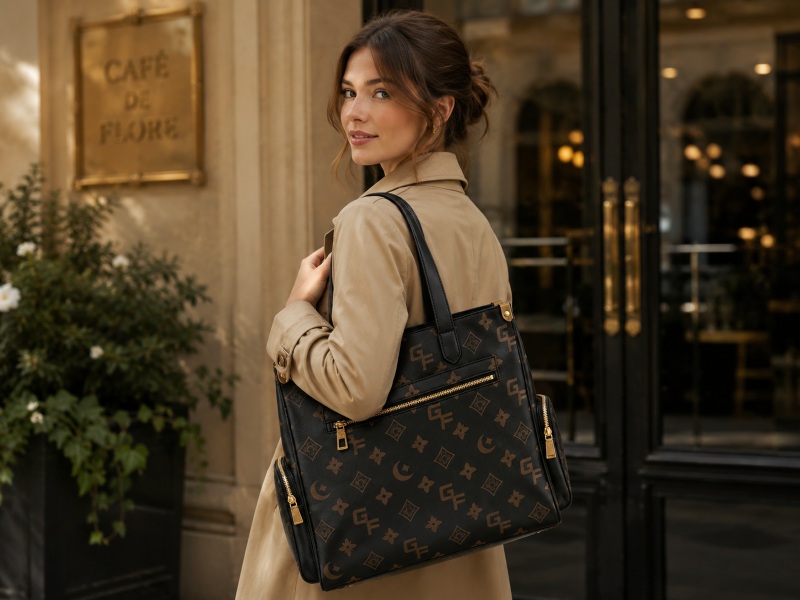
The Rise of Purses With Outside Pockets in Everyday Fashion
Exterior pockets have become increasingly common as more consumers prioritize convenience and organization in everyday bags. Quick-access storage for items like phones, keys, cards, or earbuds is now viewed as a practical feature rather than just a design detail.
This shift is also reflected in the broader handbag market. According to industry reports, the global handbag market was valued at $56.48 billion in 2024 and is projected to reach $81.79 billion by 2030, with functionality and multi-pocket organization becoming increasingly important purchase factors alongside aesthetics.
Why Choose Purses With Outside Pockets?
Quick-Access Convenience
The biggest advantage of an outside pocket isfast access. Items like phones, transit cards, keys, or lip balm can be reached immediately without opening the main compartment and searching through everything inside.
Muscle memory matters more than people expect. Once you get used to keeping certain items in the same pocket, reaching for them becomes automatic — especially while commuting, traveling, or carrying other things at the same time.
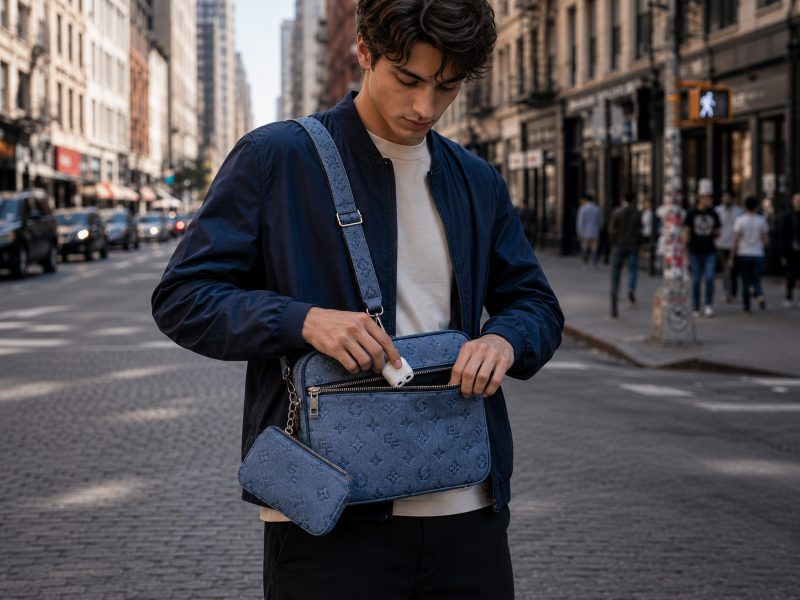
Better Organisation
Outside pockets create a clearer separation between frequently used items and larger belongings stored inside the bag. A back-panel pocket for transit cards or a front zip pocket for keys reduces unnecessary searching and keeps the main compartment more organized throughout the day.
Better for Real Daily Carry
Many bags look clean visually but become less practical once used daily. Exterior pockets make a noticeable difference during daily routines like commuting, running errands, or traveling with multiple items at once.
Types of Outside Pockets and What They’re Best For
Patch Pockets
Patch pockets are sewn flat onto the bag’s outer surface without a gusset or frame. They work best for slim items that need quick access but not high security. The limitation is retention — without a closure, items can slip out during movement.
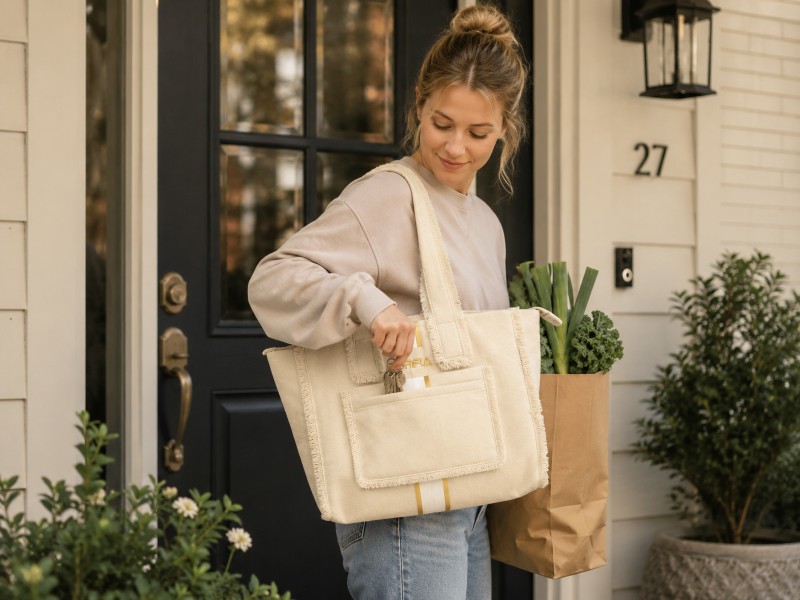
Zippered External Pockets
Zippered external pockets are one of the most secure options for everyday carry. Reinforced zipper construction and clean stitching help the pocket hold up to daily use, while lower-quality zippers are more likely to snag or wear out over time.
Slip Pockets
Slip pockets are perfect for quick-access items like phones, receipts, or transit cards. They’re commonly used for items like water bottles, umbrellas, or phones that need to be grabbed quickly throughout the day.
Because there’s no closure to manage, they work especially well during commuting, shopping, or airport travel where repeated access and ease of use matter more than maximum protection.
Gusseted Pockets
Gusseted pockets have added fabric panels on the sides that allow the pocket to expand and hold three-dimensional items. They can comfortably hold bulkier items like water bottles, notebooks, or small toiletry bags. They’re less common on fashion-forward purses but standard on travel bags and structured totes designed for functional daily carry.
A gusseted exterior pocket is significantly more useful than a flat one when the bag is expected to carry varied loads.
Comparing Different Types of Outside Pockets
| Pocket Type | Best For | Security Level | Common Bag Types |
| Patch Pocket | Cards, receipts, slim items | Low | Casual totes, canvas bags |
| Zippered Pocket | Phones, wallets, valuables | High | Travel bags, commuter purses |
| Slip Pocket | Quick-access essentials | Medium-Low | Everyday totes, shoulder bags |
| Gusseted Pocket | Bottles, bulkier items | Medium | Travel bags, work totes |
Best Use Cases for Outside Pocket Purses
Daily Commuting
Commuters benefit most from a back panel zip pocket and at least one front exterior pocket for keys and earbuds. Crossbody bags and structured totes with back-panel pockets are the strongest format for this use case.
Travel and Airport Use
At airports, keeping your most-used items — passport, boarding pass, and phone — easily accessible is key, while the rest of your bag stays closed and secure. A dedicated exterior zip pocket on the back panel or front face handles this perfectly.
Travel-oriented shoulder bags and anti-theft crossbody bags are typically designed around this specific access pattern.
Shopping and Errands
During shopping runs, you’re managing a phone, a payment card, and often a list — and your hands are occupied with other bags or products. A front slip pocket handles payment cards; a side gusseted pocket holds a water bottle. The bag’s main compartment stays closed and clean throughout.
Parenting and Hands-Free Needs
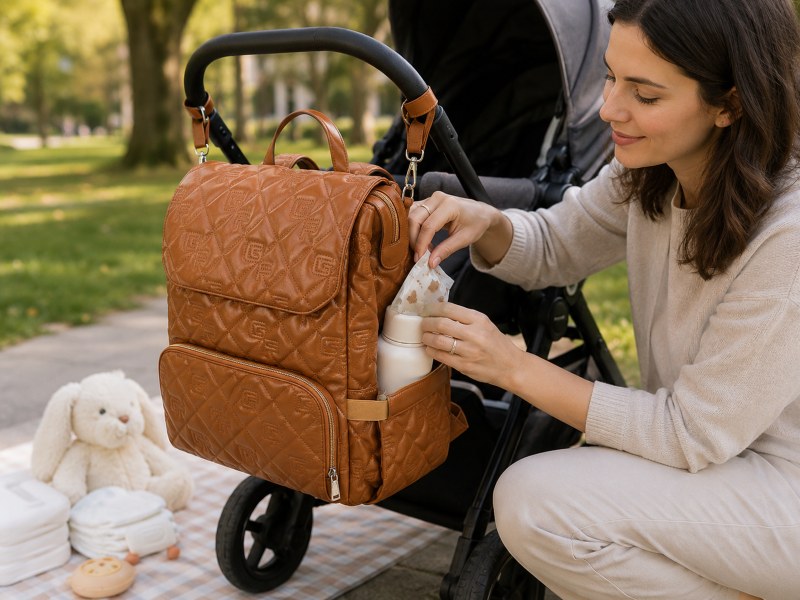
Parents carrying a child have zero free hands. Outside pockets on a shoulder bag or crossbody — properly organised before leaving. Allow retrieval of a pacifier, a snack, or a phone without putting anything down. For carry solutions designed for active parents, our mom crossbody bag guide covers the features that matter most.
How the 2026 Miami Grand Prix Is Shaping Outside Pocket Bag Design
Industry Trends Driven by the Event
The 2026 Formula 1 Miami Grand Prix took place on May 3 in Miami Gardens, Florida. Like previous Miami F1 events, it blended motorsport with luxury fashion and lifestyle culture. In this setting, the most suitable bags balance style and function rather than leaning fully formal or purely practical.
F1 events in North America have consistently driven demand for lightweight crossbody bags and small top-handle bags that move from daytime race viewing to an evening setting without requiring a bag change.
Venue regulations limit bag dimensions, which rules out oversized totes and pushes buyers toward compact, well-organised designs with exterior pockets for essentials. Many brands are expanding their outside-pocket handbag collection to meet changing consumer habits.

Core Features of Best selling Bags and Market Demand
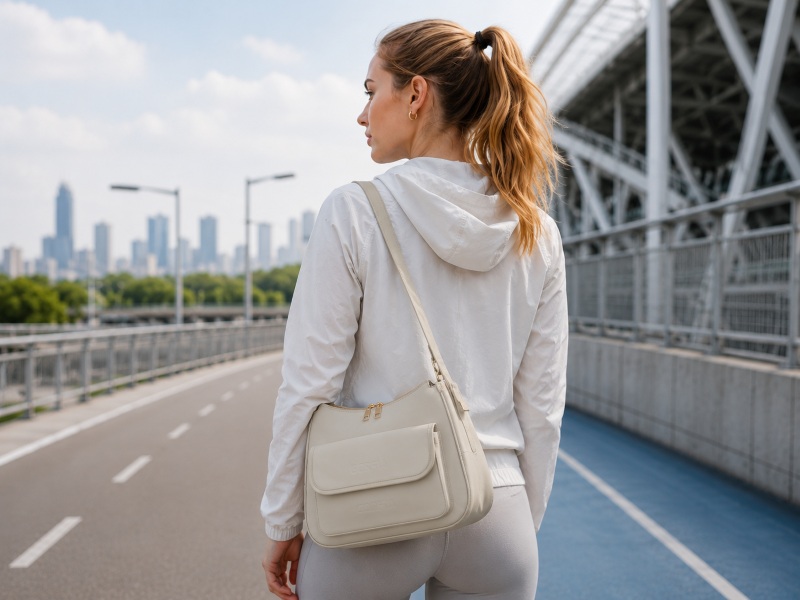
The Miami event highlights a clear direction for sporty-luxury bags: neutral and earth-tone colors, subtle metallic hardware, and versatile styles that work from day to night. Hands-free crossbody and structured top-handle bags remain especially popular for their practical use and social-media-friendly look without oversized logos.
Water-resistant materials suited to Miami’s humid climate are now a practical expectation rather than a selling point. Around event weekends, mini clutch bags, vacation totes, and venue-compliant travel backpacks tend to see the strongest demand.
At the B2B level, the event creates two clear sourcing opportunities. Brands launching limited-edition or co-branded collections need original designs, low-MOQ production, and fast sampling to test demand quickly. Corporate buyers, meanwhile, look for understated sporty-luxury styles with custom metal logos, mixed-material construction, and sizes that meet venue entry requirements.
Industry Insight
The biggest opportunity is not in high-end luxury collaborations dominated by major fashion brands. It is in the mid-range market: understated sporty-luxury bags with functional exterior pockets, custom hardware, and compact designs that work across travel, events, and daily use.
Brands do not need expensive sponsorships to benefit from event-driven demand. By aligning product development with these consumer moments and trends, they can turn short-term attention into long-term sales. Features like practical exterior pockets, suitable materials, and venue-friendly sizing also continue to drive repeat purchases beyond the event itself.
For brands developing co-branded or limited-edition collections, our brand solutions page explains how we support the process from concept to production.
How to Choose the Right Purse With Outside Pockets
Based on Storage Needs
Before buying, think about the items you use most often. If you mainly carry a phone and keys, one exterior pocket is usually enough. If you also carry cards, earbuds, or small daily essentials, two or three exterior compartments work better. Too few pockets often leads to overstuffing and reduced convenience.
Based on Security Level
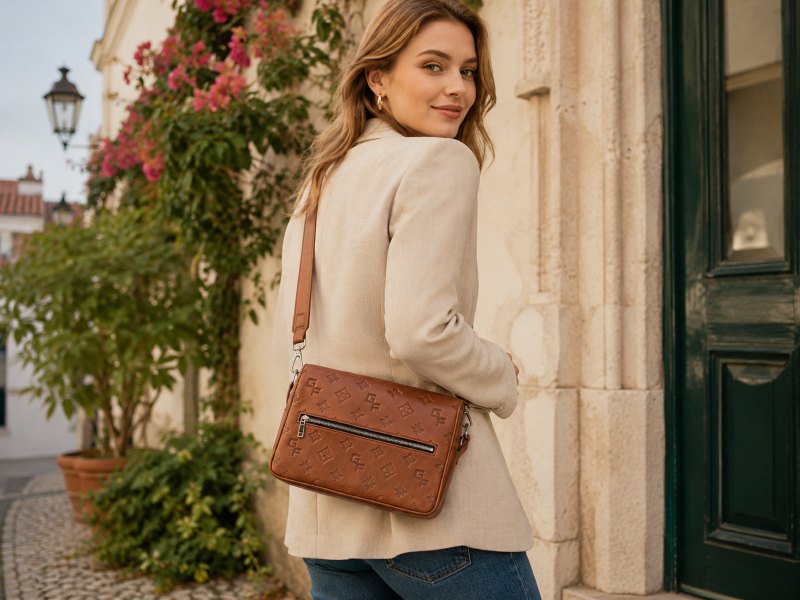
Open slip pockets are acceptable for low-value items. Zippered exterior pockets are appropriate for phones, cards, and anything with personal data. Back-panel placement adds a further security layer in crowded spaces — it’s harder to access without your awareness than a front or side pocket.
Based on Usage Scenarios
Different uses require different pocket layouts. Travel bags benefit from passport and transit card pockets, work bags need structured compartments for notebooks or documents, and casual daily bags usually work best with a simple zip pocket and bottle slot. The key is choosing pockets based on real usage, not just the idea of “better organization.”
Materials and Durability Considerations
Exterior pockets see more wear than the bag’s main compartment. They’re opened and closed more frequently, exposed to abrasion at the pocket mouth, and subject to stretching. Material choice at the pocket level matters as much as the overall bag material.
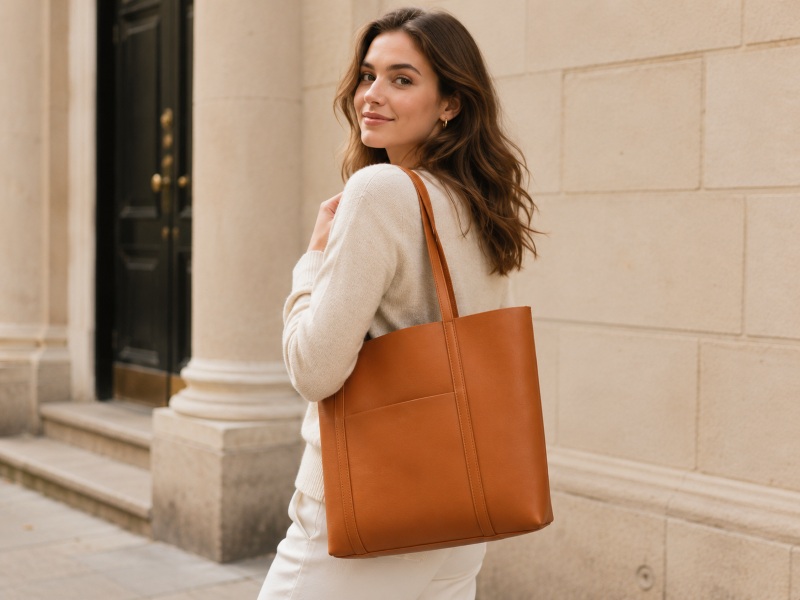
Leather exterior pockets hold their shape well and wear attractively over time. Full-grain leather resists abrasion at pocket edges and develops a patina rather than degrading. For brands building premium product lines, our article on leather laptop case sourcing covers material selection principles that apply across leather carry products.
Nylon and coated canvas are lightweight, durable, and easy to clean, making them practical for everyday and travel bags. Reinforced stitching and strengthened pocket corners also matter, since these details affect how well the pocket holds up over long-term use.
B2B Sourcing: Building Purses With Exterior Pockets at Scale
For brands developing purse lines with exterior pocket specifications, the design decisions above translate directly into manufacturing requirements. Pocket placement, closure type, seam reinforcement, and hardware selection all need to be confirmed at the product brief stage. Not during sampling, where changes become expensive.
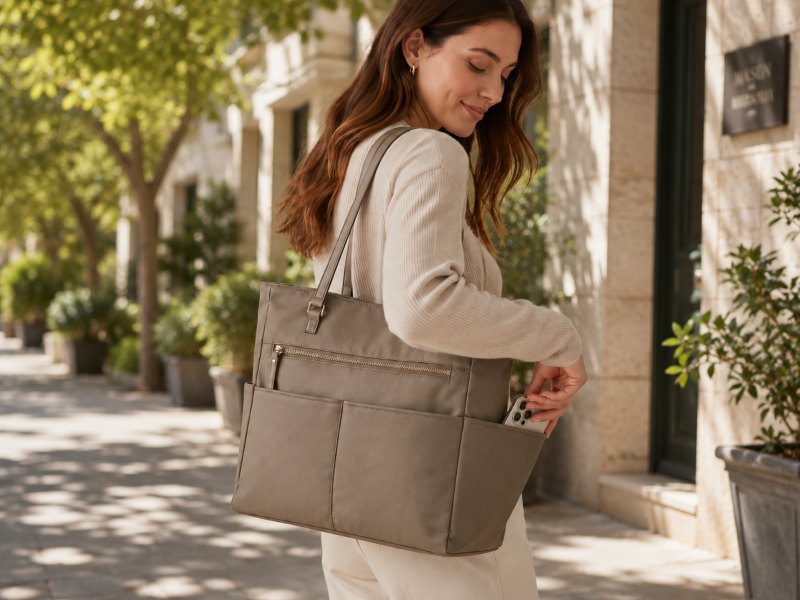
According to Mordor Intelligence, totes priced between $250 and $500 led unit sales in 2024 as consumers focused more on long-term practicality and cost-per-wear. Functional features like durable exterior pockets increasingly influence buying decisions.
For brands entering this category, a dual product strategy works well: a premium line with mixed materials and custom hardware for the sporty-luxury market, alongside a more accessible coated nylon or canvas line for broader procurement budgets. Both benefit from the same practical exterior pocket design, with the main difference being materials and hardware quality.
Flexible low-MOQ production and quick reorders also help brands test new styles with lower risk. Custom branding options — including embossing, debossing, screen printing, embroidery, woven labels, and custom metal logos — can be applied across different material types. For brands developing women’s bags with specific exterior pocket layouts, our women’s bag range covers multiple construction and pricing tiers.

FAQs
Are outside pockets safe?
Yes — outside pockets can be safe when designed correctly. Zippered pockets placed against the body are generally secure for daily carry, while open front or side pockets are better for quick-access items instead of valuables.
How many outside pockets are ideal?
For most people, two to three outside pockets are ideal. A combination of one secure zip pocket and one or two quick-access pockets usually covers everyday carry needs without making the bag bulky.
Can exterior pockets replace interior storage?
No. Exterior pockets work best for small, frequently used items, while the main compartment is still needed for larger belongings and better protection. Too many large exterior pockets can also affect the bag’s structure and balance.

Conclusion
A good exterior pocket depends on placement, closure type, and construction quality. The best bags treat outside pockets as part of the overall carry design, not just an added detail.
Choose a pocket layout based on how you actually use your bag day to day. Use zippered pockets for valuables, and check the stitching around pocket attachment points before buying.
These same organization principles also apply to other hands-free bag styles. For more ideas on practical everyday carry layouts, our mom crossbody bag guide explores how crossbody designs handle daily access and storage in a different format.
Work With Us
Exterior pockets work best when the bag structure and pocket layout are designed together from the start. At Gorfia, we help brands develop custom purses and shoulder bags with practical exterior pocket designs built for real daily use.
We support custom pocket layouts, logo customization, and flexible production across leather, nylon, canvas, and recycled materials. If you are planning a new bag collection or testing exterior pocket designs for an upcoming season, contact our team early to secure sampling and production capacity.