
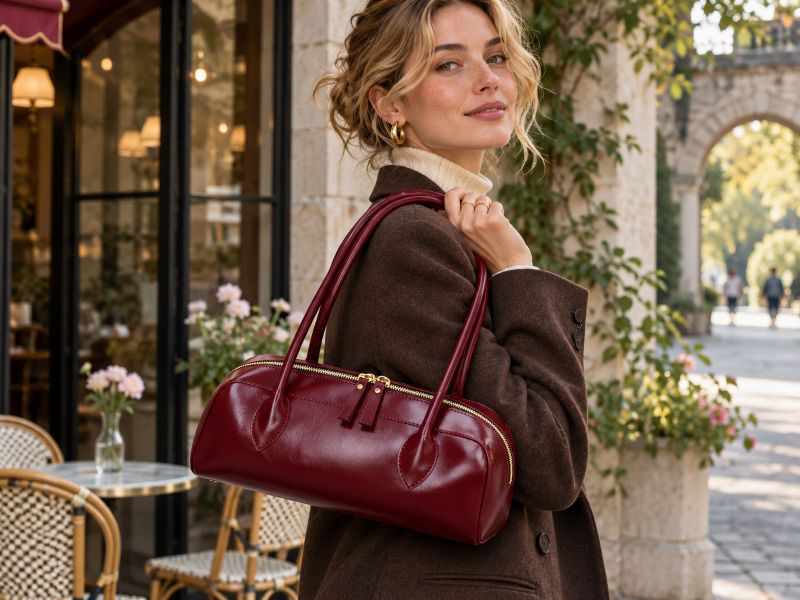
A baguette shoulder bag may look simple, but getting the fit, proportion, and capacity right takes more thought than the shape suggests. Whether you are selecting one for daily use or developing one for a collection,understanding these details helps you make the right design decisions.
Beyond appearance, the right design choices can improve comfort, functionality, and product quality. Understanding these factors helps you make better decisions before choosing a bag or moving into production.
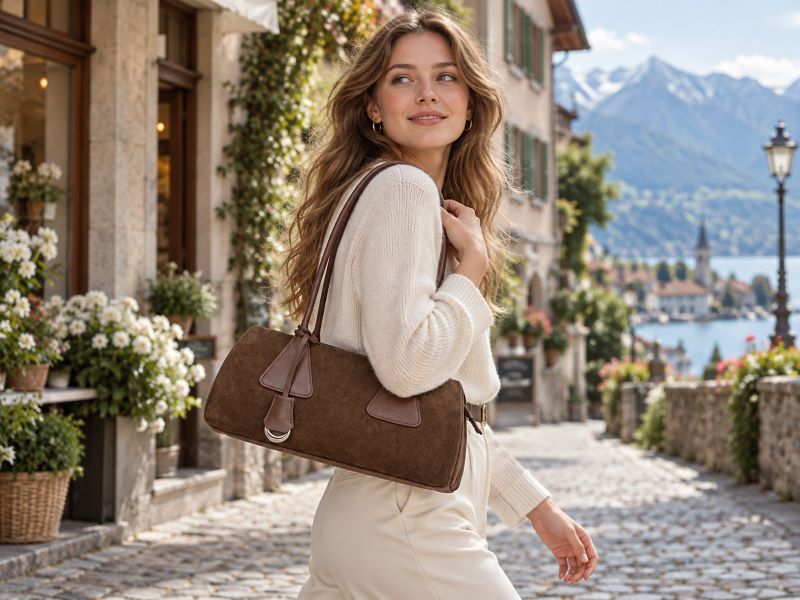
You will also see how leather, suede, vegan leather, hardware, and internal support influence the finished result, along with the checks brands should make before approving a sample. Start with the fit and proportions because those decisions shape almost every material and production choice that follows.
What Is a Baguette Bag?
A baguette bag is a small elongated shoulder bag designed to sit close under the arm. Its defining features are a horizontal body, shallow depth, short strap, and compact silhouette.
Fendi created the Baguette in 1997 with an underarm design inspired by the French baguette. That combination of proportion and carrying position helped establish the shape people now recognize as a baguette bag.
Its place in modern handbag history is also reflected in the inclusion of a Fendi Baguette in a major museum exhibition about bag design, alongside handbags and functional bags from different periods.
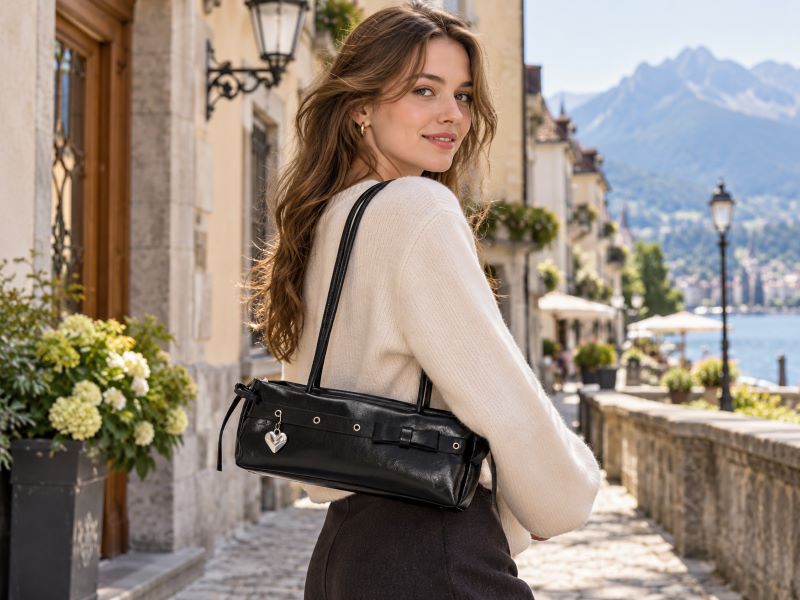
Today, the style comes in leather, suede, embellished finishes, and lightweight synthetic materials. Some versions stay close to the original shoulder format while others add removable crossbody straps.
Baguette Bag Fit: How to Choose the Right Proportions
Strap Drop and Underarm Fit
Strap drop means the vertical distance between the top of the strap and the top edge of the bag. On a baguette shoulder bag, it determines whether the body sits neatly beneath your arm or hangs like a conventional shoulder bag.
A fixed short strap gives the most defined baguette look. An adjustable strap offers more flexibility for different body sizes, coats, and styling preferences.
An easy way to judge fit is to carry the bag both empty and loaded. If it tilts outward or presses tightly into your arm, you may need to adjust the strap length or attachment position.
Size and Proportion
There is no single correct baguette size. What matters is the relationship between width, height, and depth.
A small baguette may be very shallow while a larger design can add capacity without losing its horizontal character. Too much depth makes the shape bulky, while too much height can make it look like a regular shoulder bag.
Baguette Bag Styles for Everyday Wear
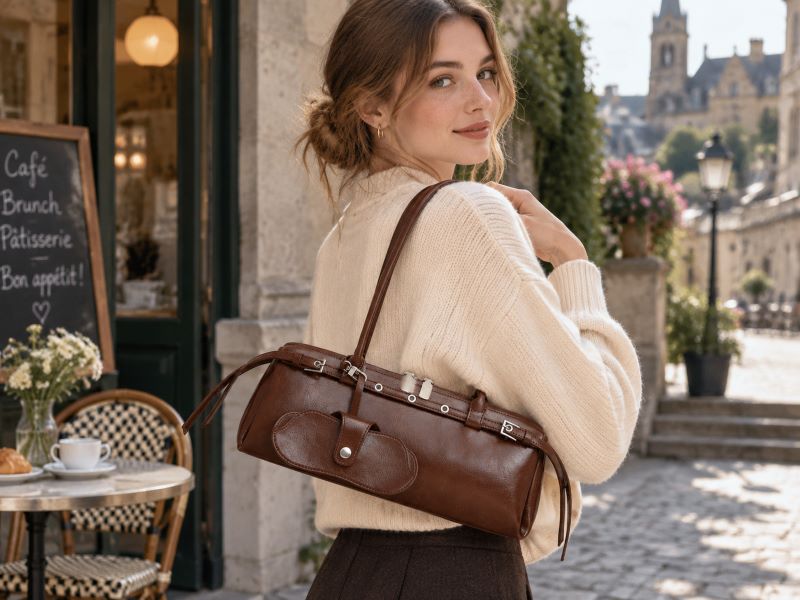
Classic Leather Baguette Handbags
Leather gives baguette handbags a clean outline and works well for a polished everyday style. Smooth leather emphasizes the long body, while pebbled leather adds more texture.
A structured leather baguette also tends to hold its outline better when lightly loaded.

Small Baguette Handbags
Small baguette handbags work well when you only need a phone, cardholder, keys, and a few personal items. Their size makes them useful for evening events and lighter city use.
Check the opening rather than relying only on exterior measurements. A phone may fit inside the body but still be difficult to pass through a narrow zipper or flap opening.
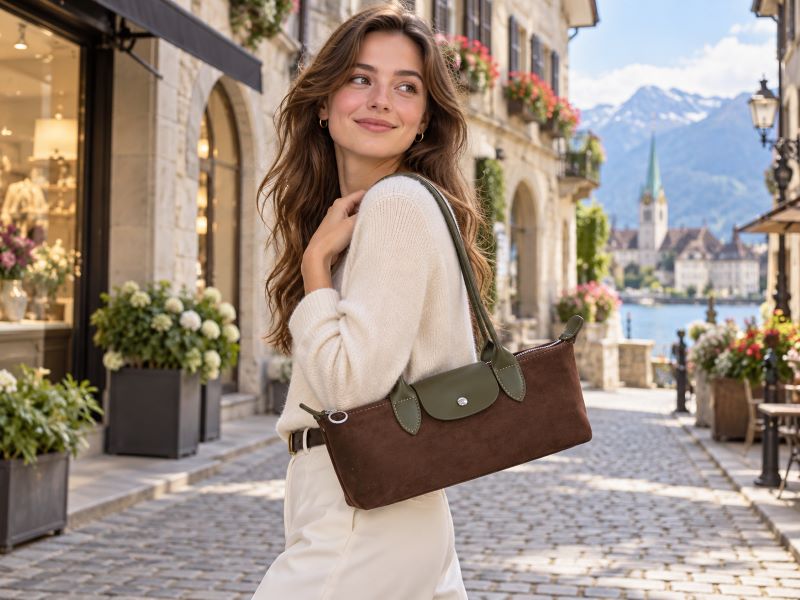
Soft Suede Baguette Bags
Suede adds a softer touch and makes the silhouette feel more relaxed. It can also sag more easily once the bag is loaded.
If this is your favorite style, look for enough internal support to preserve the top edge and corners without making the body stiff.
Embellished Evening Bags
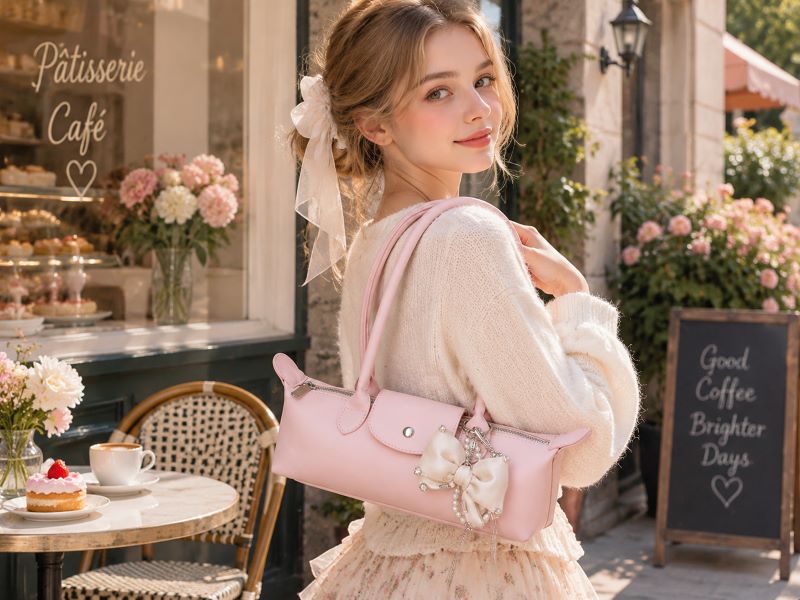
Beading, embroidery, sequins, and metallic finishes turn a baguette into a stronger statement accessory. The smaller body helps keep decorative styles manageable for evening use.
Check added weight, snagging, and whether decoration around the opening affects access.
| Style | Best Use | Typical Capacity | Check First |
| Structured leather | Work and daily wear | Phone wallet keys cosmetics | Empty weight |
| Small baguette bag | Evening and city use | Phone cardholder small items | Opening width |
| Soft suede | Casual use | Daily essentials | Loaded shape |
| Embellished | Events | Light essentials | Snagging and weight |
Best Materials for Baguette Bags
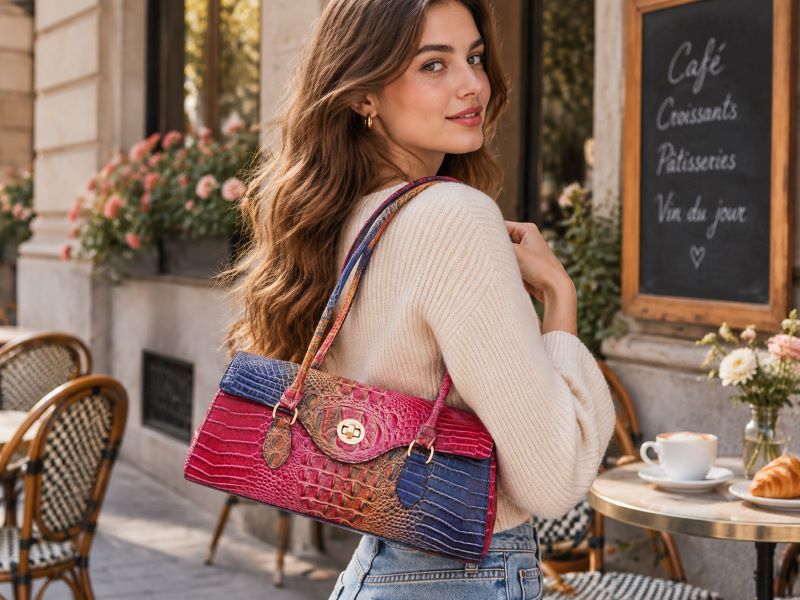
Material selection plays a key role in defining a baguette bag’s overall appearance. Its elongated silhouette makes surface finishes, color combinations, and decorative details especially noticeable. Discover how matte finishes, glossy textures, embossed patterns, contrasting color panels, and different material treatments can give the same baguette bag design a completely different look.
For brands developing custom baguette bag collections, coordinating materials with colors, hardware finishes, and decorative elements helps create a consistent design identity. Gold-tone chains, metallic accents, matching trims, or contrasting panels can add character without changing the bag’s signature silhouette. These design choices allow you to develop distinctive baguette bags that stand out in retail collections and reflect your brand’s aesthetic.
Baguette Bag Capacity: How Design Affects Usable Space
A baguette can look roomy from the front but still offer limited capacity because of its shallow depth. Opening width matters as much.
For everyday use, test the items you actually carry. A phone, wallet, keys, sunglasses, and cosmetics should fit without forcing the closure or making the sides bulge.
Too many interior pockets can also reduce usable space in a compact bag. If you want more organization, choose pockets that sit flat rather than dividing the interior into several tight sections.
The same principle applies to development. For compact baguette bags, interior design should balance structural support with usable space, as explained in our guide to handbag lining and pocket construction.
Baguette Bag Development: From Reference Image to Sample
A reference image tells us what a customer likes visually, but not necessarily what they need from the product. Before making a baguette bag pattern, we confirm the silhouette, capacity, strap length, structure, material, and target cost.
Baguette bag pattern making involves creating accurate templates for each bag component. These patterns guide cutting the front and back panels, gussets, base, and other parts to match the intended design. Proper pattern preparation also helps establish consistent cutting shapes and material usage, making it easier to reproduce the same baguette bag design across multiple production units.
For example, a client may send a photo of a very slim baguette but also expect it to hold a large phone wallet and sunglasses. Copying the visible proportions would create a sample that looks right but fails the storage requirement.
We also ask whether the desired result should feel structured or slouchy. That decision changes material thickness, lining reinforcement, and construction from the beginning.
Custom Baguette Bag Production Cost Planning
When a budget does not cover the original design, we first identify the main cost drivers. These may include genuine leather, custom hardware decoration, or labor-intensive finishing.
If leather is too expensive, we may compare PU leather microfiber or another suitable alternative. We assess texture, softness, thickness, durability, and appearance rather than simply choosing the cheapest material.
We also protect functional components. Removing necessary reinforcement may reduce the quotation but can cause sagging or attachment problems once the bag is carried.
For custom baguette bag production, test any replacement material in a completed sample before final approval.
Baguette Bag Changes After Sample Approval
Even a small revision can affect production. Changing a lining color may require a new material purchase, while a custom zipper pull can affect price, minimum quantity, and lead time.
When a client requests a change, we review its impact and update the approved specification. If the change affects the core product specifications, we may recommend another sample.
This is an important part of the baguette bag manufacturing process. Purchasing, sampling, and production teams need to work from the same final version to avoid rework and delays.
Baguette Bag Sample Approval Checklist
Before bulk production, review the finished product rather than approving each component separately.
- Shape: Check the width, height, depth, and silhouette when loaded.
- Strap: Review strap drop, comfort, balance, and attachment.
- Capacity: Make sure intended items fit without bulging.
- Material: Check texture, thickness, color, and flexibility.
- Interior: Review lining, pockets, and usable space.
- Hardware: Check weight, finish, and functionality.
- Specifications: Record every approved change in the final specifications.
If you’re moving from sampling to bulk production, explore our custom women’s bag production services for additional manufacturing support.
FAQs
What Makes a Baguette Bag Durable for Daily Use?
Durability depends on secure stitching, sturdy strap attachments, and reliable hardware. These details help prevent loose seams and premature wear during everyday use.
What Is the Difference Between a Baguette Bag and a Hobo Bag?
Baguette bags offer a more structured, streamlined look, while hobo bags provide a casual style and often more interior space.
Are Small Baguette Bags Practical?
Yes, if you carry light essentials. Check phone size, opening width, and depth before buying, because exterior width alone does not show usable capacity.
What Fits Inside a Baguette Bag?
Most designs can hold a phone, wallet, keys, and several small items. Larger versions may also fit sunglasses or a compact cosmetic case.
Is PU Leather Material Best for a Baguette Shoulder Bag?
Leather suits cleaner structured designs while suede creates a softer look. PU and other vegan leather options can offer a lightweight, lower-cost alternative depending on material quality.
Can Brands Customize Baguette Handbags?
Yes. Brands can adjust proportions, strap length, materials, hardware, lining colors, branding, and internal layout. Clear specifications before sampling make development easier.

Baguette Bag Final Takeaways
The right baguette bag should balance proportion, underarm comfort material, and usable capacity. For brands, the next step is to review dimensions, strap drop material specifications, and sample test results before approving bulk production.
It also helps to test the finished bag with real everyday items rather than judging an empty sample. For further guidance, see our guide on testing bag structure before production to learn how loaded-sample checks, reinforcement planning, and production references can reduce avoidable issues.
Develop Your Baguette Bag Collection
Turning a baguette bag design into a finished product requires careful material selection, sampling, and production planning. Gorfia is a custom bag manufacturer in China supporting global brands with product development, material sourcing, sampling, quality control, and scalable OEM/ODM production. If you are developing a baguette bag collection, our custom bag manufacturing services can support the process from initial design refinement through production.
When your concept is ready, contact our manufacturing team to discuss your target style, materials, price point, and production requirements.