
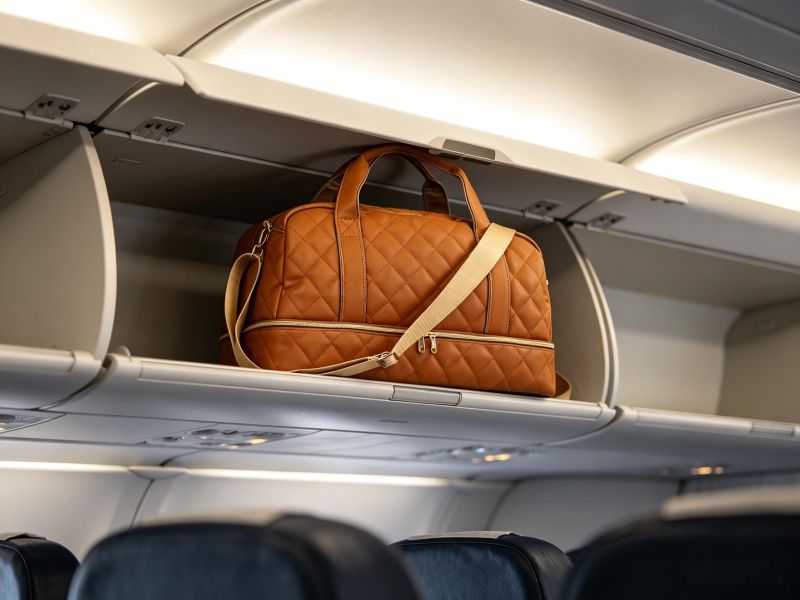
Trying to figure out if your duffel bag qualifies as a personal item before your next flight?
This guide breaks down exactly what most airlines allow, what size limits actually count, and how to avoid surprise fees at the gate.
Based on real airline policies and common check-in scenarios we’ve seen across different routes, even small differences in bag dimensions or structure can determine whether it’s accepted or charged.
We’ve pulled together airline-specific size rules, practical packing tips, and the key features that make a duffel bag genuinely travel-friendly — all in one place.
So before you pack, here’s what actually matters (and what most travelers get wrong). Let’s get into it.
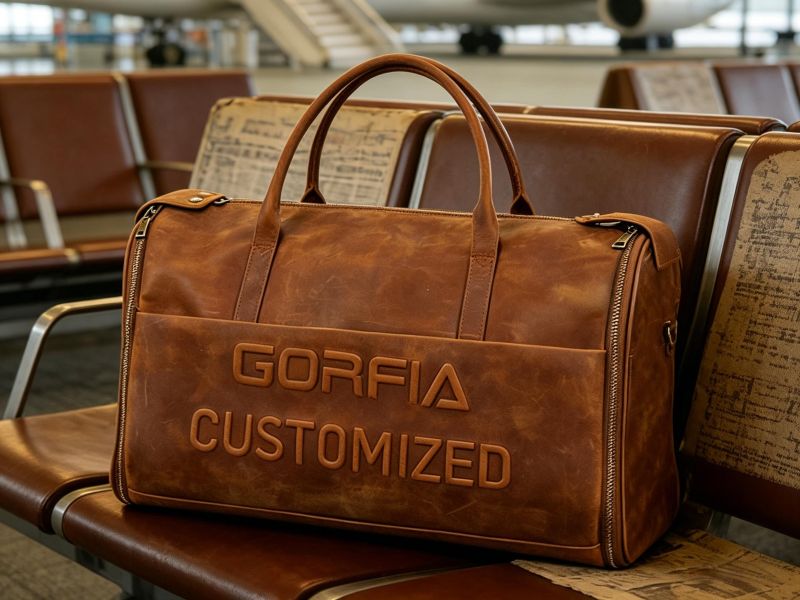
What Actually Counts as a Personal Item on a Plane?
Most airlines let you bring two free onboard bags: a standard carry-on and a smaller personal item.
Your carry-on stows in the overhead bin, while a personal item tucks under the seat directly in front of you.
Common approved personal items include handbags, small backpacks, totes, laptop bags, shoulder bags, crossbody purses and mini duffels.
Many airlines also allow diaper bags, though policies vary slightly across carriers.
Size is the key rule.
Under-seat storage is far more compact than most travelers expect.
Most carriers follow a typical under-seat limit of 18 × 14 × 8 inches, with small variations by airline and aircraft.
Common Personal Item Size Limits by Airline
| Airline | Personal Item Size (inches) | Notes |
| American Airlines | 18 x 14 x 8 | Standard guideline |
| Delta Air Lines | No fixed size | Must fit under seat |
| United Airlines | 17 x 10 x 9 | Basic Economy limit |
| Southwest | No fixed size | Must fit under seat |
| Ryanair (Basic) | 15.7 x 7.8 x 9.8 | Strict limit |
Size limits may vary by aircraft and fare class. Always check your airline’s official policy before flying.
So, Can a Duffel Bag Be a Personal Item?
Yes. But with conditions.
You can use a duffel bag as your in-flight personal item on nearly all carriers, provided it stays within regulated dimensions. Its bendable, soft-sided design makes it easy to fit under seats. Its flexible shape works in your favor here.
Unlike hard-shell luggage, a soft duffel bag can be compressed to fit under the seat in front of you, even when it’s close to the size limit, making it a smart choice for travelers who want to carry more without paying extra baggage fees.
However, if your duffel bag is overstuffed or clearly too large to fit under the seat, the gate agent may ask you to check it, and that’s where unexpected fees come in. The bag’s shape when packed matters just as much as its empty dimensions.
Different airlines set their own personal item dimensions, and they don’t always advertise them clearly.
Double-check your airline’s rules before departure. Baggage policies change frequently and vary by fare class. Many basic economy fares allow only a single personal item, with no additional carry-on. Reviewing these rules ahead of time helps you avoid unexpected gate fees and pick the right travel bag.
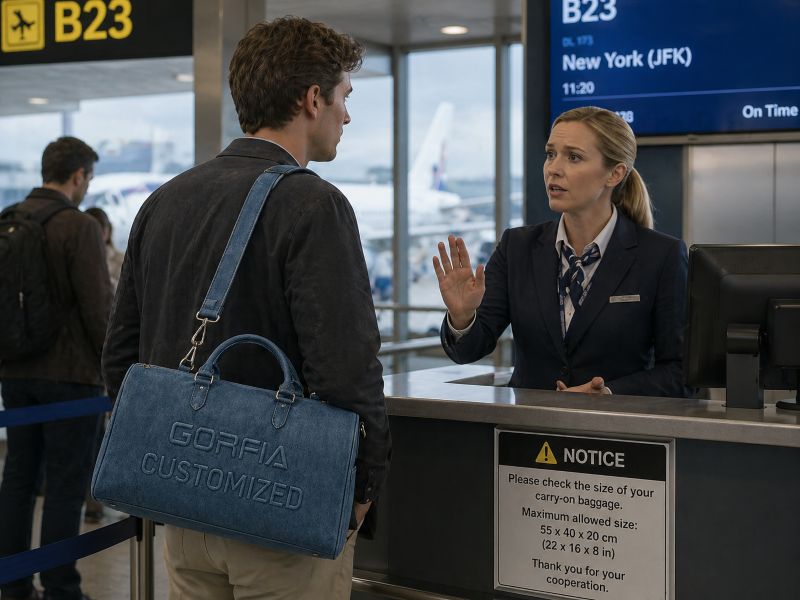
Personal Item vs. Carry-On: Where Does Your Duffel Bag Fit?
This is one of the most common points of confusion for travelers.
A personal item is typically stored under the seat and is included at no extra cost on most airlines. In contrast, a carry-on bag is placed in the overhead bin and may come with additional charges, especially on low-cost carriers.
A duffel bag can be either, depending on its size:
Compact duffels measuring up to 18 × 14 × 8 inches easily slide under airplane seats and satisfy most airlines’ personal item rules. Mid‑size and large duffels typically count as full carry-on luggage, which may incur extra charges on low-cost carriers. Oversized duffel styles may require last-minute gate checking, resulting in standard checked baggage fees.
If your goal is to travel with one bag and avoid all fees, a compact duffel that fits under the seat is your smartest option.
What Makes a Duffel Bag Travel-Friendly?
Since not all duffel bags are built equally for air travel, here’s what to look for when choosing one as your personal item bag.
Size and Dimensions
When traveling by plane, your duffel must comply with your airline’s personal item size restrictions. Most major carriers enforce a standard size limit of 18 × 14 × 8 inches or smaller for personal carry-on items. Choosing a duffel that stays comfortably within these measurements lets you skip airport delays, unnecessary stress, and unexpected extra fees during your trip.
Soft, Compressible Shape
A soft-sided duffel compresses more easily than a structured bag, making it easier to fit under the airplane seat. If a bag feels too rigid when packed, it may struggle to fit, especially on smaller regional flights where under-seat space is tighter.
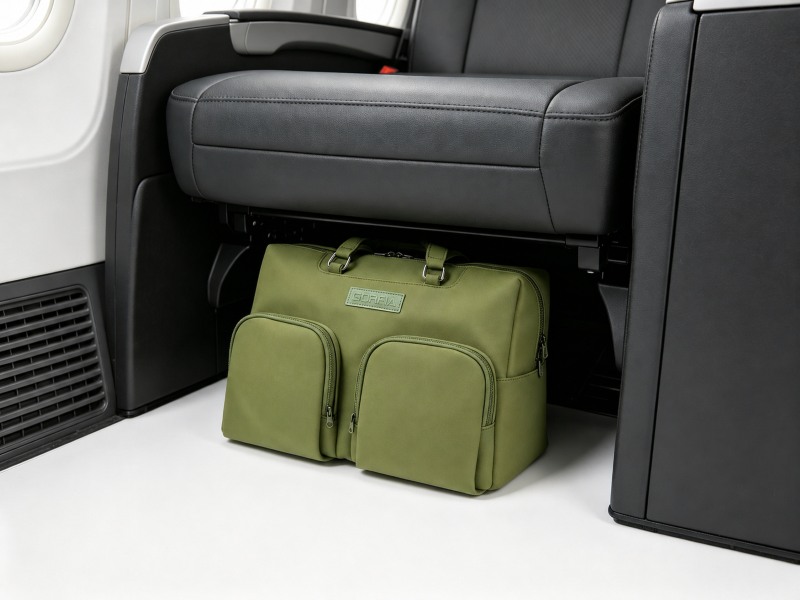
Compartments and Organization
Quick access to travel essentials matters at airport security. Look for a roomy main compartment for enough clothes, a jacket, and shoes. A front pocket for your wallet, passport, and boarding pass keeps your essentials within reach. A toiletry bag pocket and a dedicated space for laptop bags or a small camera add real practical value on any trip.
Carry Options and Material
A duffel with both a top handle and a shoulder strap gives you flexibility through the airport. Some travel duffels include a trolley sleeve that slides over luggage with wheels, which comes in handy when you’re carrying more on longer trips.
For material, nylon and polyester are the most practical choices; lightweight, water-resistant, and easy to clean. Canvas offers a casual look, while vegan leather gives a more refined appearance without the weight of genuine leather.
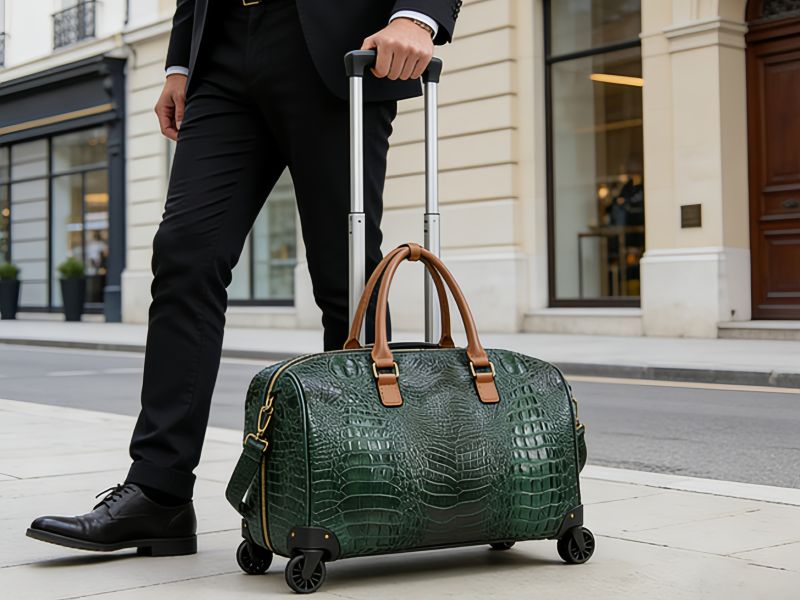
Tips for Fitting a Duffel Bag Into Personal Item Limits
Fitting your belongings into a compact duffel takes a little strategy. Here’s what works:
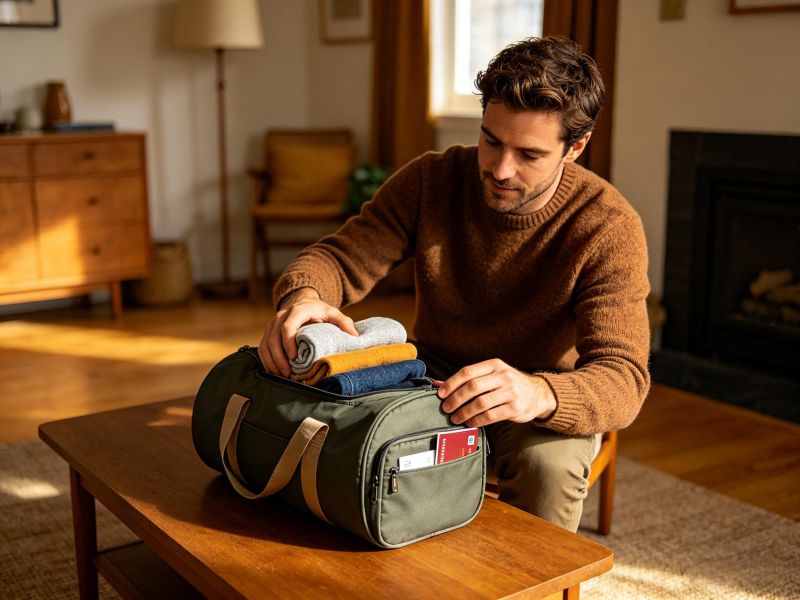
- Rolling garments rather than folding them flat creates extra usable space inside your bag. You can pack many more pieces into the same area—critical when confined to standard personal-item luggage limits.
- Packing cubes can help compress your items while keeping everything neatly organized. They also make it easier to move through airport security without unpacking everything.
- Pack heavy items like shoes and toiletry bags at the bottom of the bag to keep it balanced on your shoulder through the airport.
- Keep your wallet, passport, and boarding pass in an outer pocket for quick access — you’ll need them multiple times between check-in and boarding.
- Don’t overstuff it. A stuffed duffel loses its shape and won’t fit under the seat as easily. Leave a little space so the bag can compress when needed and protect your belongings during the flight.
How Premium Travel Trends Shape What Travelers Expect
Consumer expectations around travel bags are shaped by what they see at the top of the market, and that influence filters down to every price point.
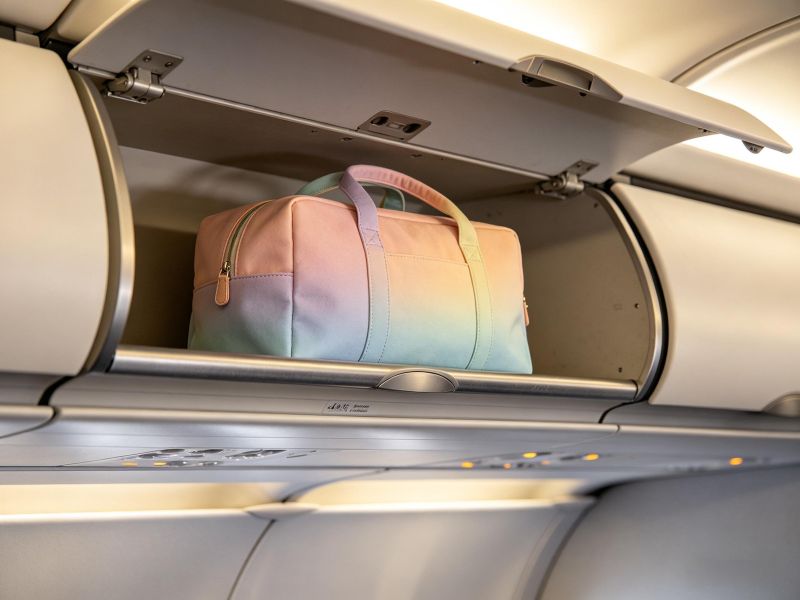
The Louis Vuitton Speedy 40 is a useful benchmark here. Known for its spacious interior, clean top-zip construction, double carrying handles, refined hardware details, and soft gradient tone coloring, it represents a format that resonates across the market — a structured, carry-everything travel bag that balances generous capacity with a polished silhouette.
Travelers want something roomy enough for their clothes, shoes, and travel essentials, but structured enough to look intentional rather than bulky; whether it’s used as a carry-on, a personal item, or an everyday shoulder bag. They also favor modern bags with subtle gradient fabric finishes that elevate everyday travel style without looking overly flashy.
For brands developing travel duffel bags, this trend is worth building around. Travelers are drawn to bags with compartments in the right places, hardware that feels solid, material that holds its shape, and understated gradient color blocking that adds visual sophistication.
An experienced manufacturer can help you develop original duffel bag designs that respond to this demand (structured silhouettes, quality materials, refined branding, and tasteful gradient tone layouts) without reproducing any protected brand elements such as signature patterns, monograms, or trademarked design features.
Gorfia Turns Bag Manufacturers’ Brief Into a Bag That Sells
We know what travelers want in a duffel bag.
With over 20 years of manufacturing experience, Gorfia operates its own production facility and supports both small trial runs and large-scale orders, with annual output exceeding 1 million units.
We work with retail brands, private label buyers, and OEM/ODM clients to develop travel duffel bags that meet real airline dimensions, organize essentials the way travelers actually need, and carry a brand identity that stands out.
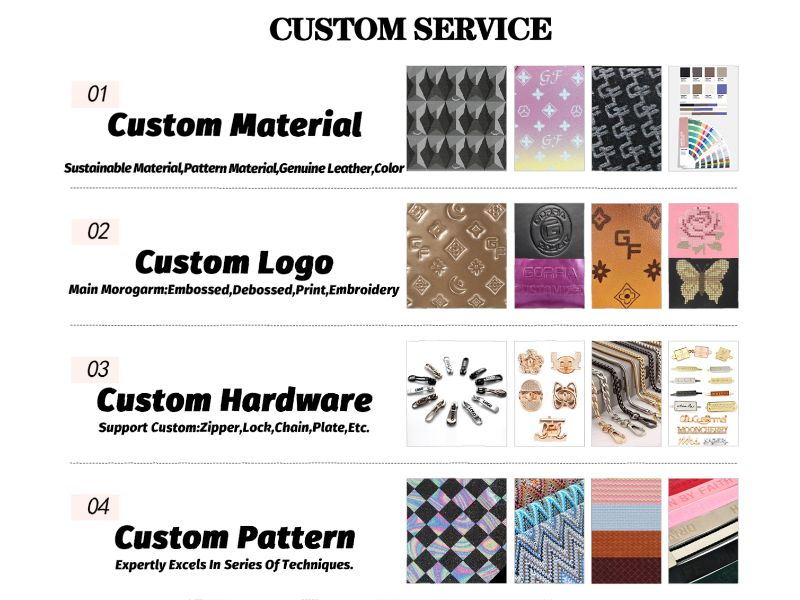
We support the full range of materials; commonly used materials include genuine leather, vegan leather, canvas, nylon, polyester, and a range of recycled options. and offer a complete branding toolkit including Emboss, Deboss, Screen Printing, Embroidery, Hot Stamping, Woven Labels, and Custom Metal Hardware Logos.
We also offer small-batch fast production and door-to-door DDP service for brands that need speed and simplicity.
If you have a material preference and a rough quantity, that’s enough to start.
FAQs
Q1: Is a duffel bag accepted as a personal item by most airlines?
Compact duffels are airline-approved as personal items if they meet standard size rules. Most airlines cap measurements at 18 × 14 × 8 inches, and compliant bags fit easily under the front seat.
Q2: What separates a personal item from a carry-on bag?
Personal items stow beneath your front seat, whereas carry-on luggage goes in the overhead bin. Nearly all airlines let passengers bring one of each bag type.
Q3: What size should a duffel bag be to count as a personal item?
Keep your bag measurements no larger than 18 × 14 × 8 inches, and double-check your airline’s exact size policy before departure.
Q4: Can I bring a duffel bag and a carry-on on the same flight?
Yes. Major full-service carriers allow travelers to bring both a personal item and a carry-on, provided both bags comply with official size regulations.
Q5: What is the best material for a travel duffel used as a personal item?
Nylon and polyester are the most practical, lightweight, water-resistant, and durable enough for frequent flying without adding unnecessary weight.

Sourcing Smarter Starts With What You Do Next
Whether you’re a traveler choosing your next personal item bag or a brand developing a travel duffel line, the right size, material, and features make all the difference. Use the size guidelines and packing tips in this article to choose a duffel that works with most airlines, avoiding surprises at the gate.
You might also want to check other helpful guides on how retailers choose the right suitcase mix and how to choose the right ballistic nylon for travel bags.
Ready to Develop a Travel Duffle Bag That Sells?
We can help you develop a travel duffel bag that fits real airline rules and traveler needs. We can turn your AI design renders into real, finished travel bag products, supporting you from AI image concept creation all the way to official sampling and mass production. Get in touch with Gorfia today to request a sample or discuss your custom travel duffel bag program.