
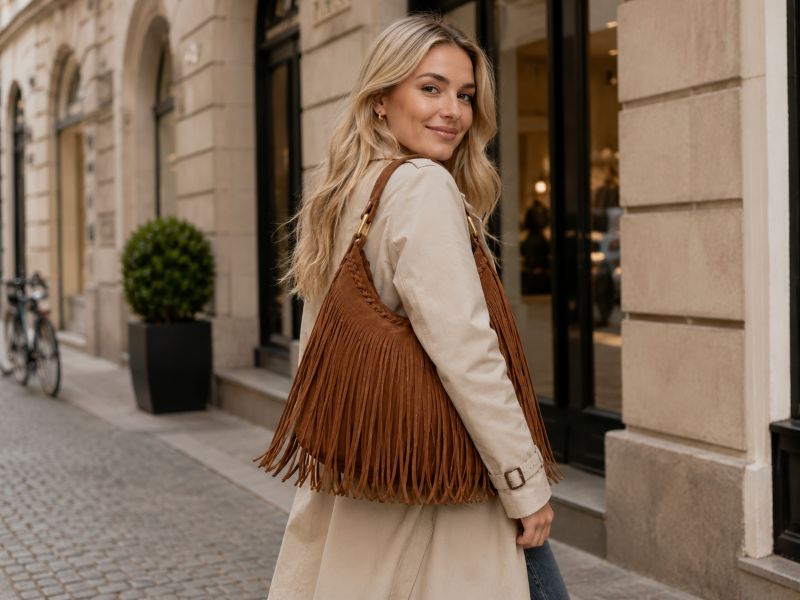
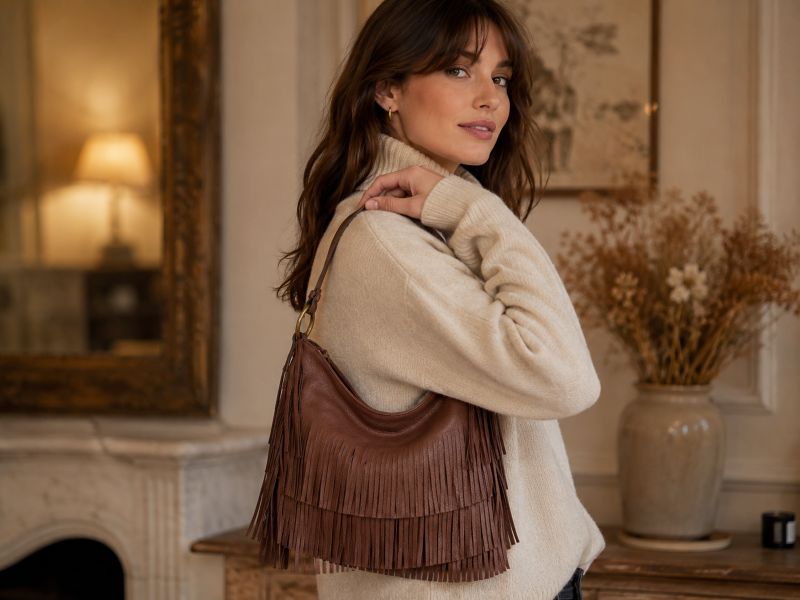
A fringe bag can make a simple outfit feel more expressive. The movement, texture, and playful detail can turn one piece into the focus of a whole wardrobe. That is why fringe keeps returning in fashion, especially in boho, Western, festival, and vintage-inspired looks.
But a good bag needs more than visual drama. It should hold daily items, stay comfortable while carrying, and avoid tangling during normal wear.
This guide explains how to judge fringe bags by style, material, construction, usability, and production quality. Whether you are choosing a fringe bag for everyday use or developing one for a brand collection, understanding the details behind the design can help you make a better decision.
Why Fringe Bags Are Back in Fashion
Fashion is moving toward texture and personality again. Vogue’s Spring/Summer 2026 handbag trend report noted a rise in practical yet distinctive shapes, including bohemian-spirited crossbody bags and soft suede designs in the handbag market.
That makes fringe a natural detail. It adds motion when you walk, creates visual depth, and makes a bag feel less flat than a plain design. A fringe bag also gives shoppers easy outfit ideas. A brown suede crossbody can feel Western. A black leather shoulder bag can feel modern. A soft fabric fringe tote can feel relaxed and summery.
For brands, fringe creates a clear style identity. It helps a product stand apart on a product page, in a boutique store, or in an online shop without changing the entire bag structure.
What Makes a Fringe Bag Different?
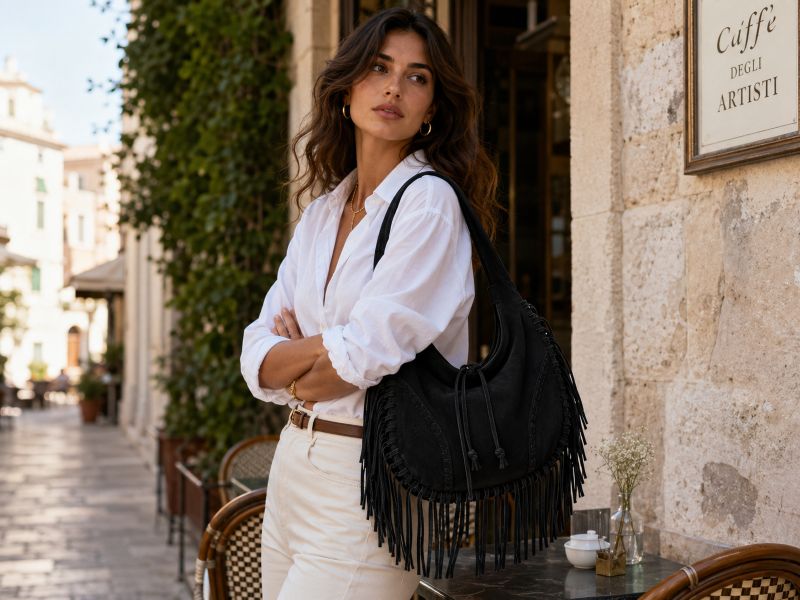
A fringe bag uses loose hanging strips, cords, tassels, or cut material as part of its design. From a production view, the key decisions are fringe length, density, attachment method, and placement, because these details affect movement, weight, tangling risk, durability, and daily usability.
In bags, that trim may sit on the front panel, side seam, bottom edge, flap, handle, or full body. Some fringe is subtle. Some is long, layered, and dramatic.
Common categories include fringe tote bags, fringe shoulder bags, fringe crossbody bags, small purses, and clutch bags. The important thing is balance. If the fringe is too long, too dense, or placed in the wrong area, the bag may look exciting but feel hard to use.
Fringe Bag Pros and Cons at a Glance
| Factor | What It Means for Users | What Brands Should Consider |
| Strong visual identity | The bag stands out quickly | Good for trend collections |
| Movement | Fringe adds energy while walking | Length must be tested |
| Styling range | Works with boho, Western, and casual looks | Match the target market |
| Tangling risk | Long fringe can catch or twist | Check placement and density |
| Added weight | Dense fringe may feel heavier | Control material thickness |
| Cleaning difficulty | More edges collect dust | Provide realistic care guidance |
| Production complexity | More parts to cut, align, and attach | QC standards must be clear |
Choose the Fringe Bag Style by Use Case
Not every fringe style works for every customer. A boho fringe bag usually has soft lines, natural tones, and relaxed movement. It is often designed for festivals, resort styling, weekend outfits, and casual shopping.
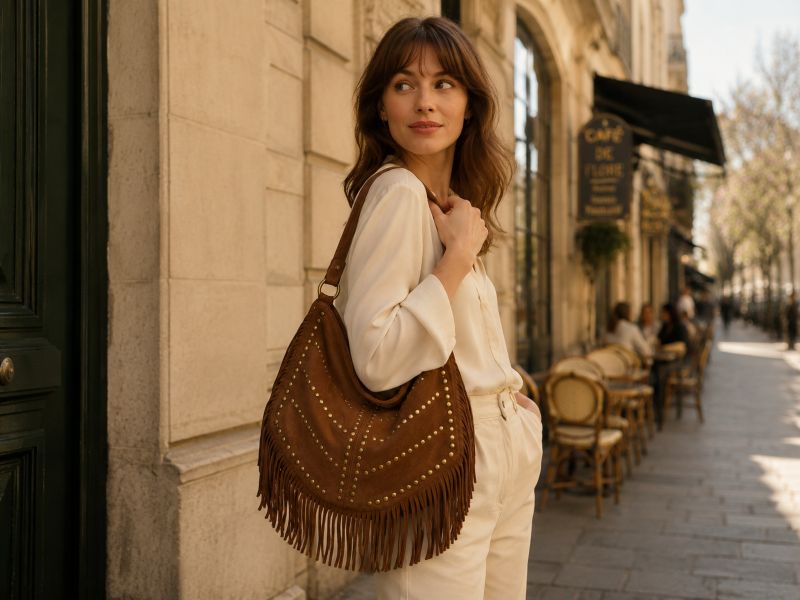
A Western fringe bag often uses suede or leather, longer strips, metal hardware, and richer tones like tan, camel, or brown. It gives a stronger statement look.
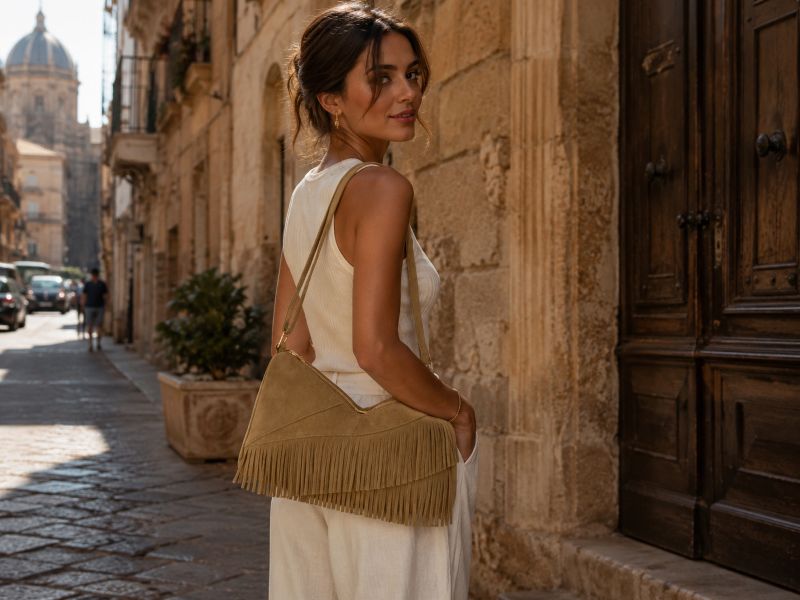
A modern minimal fringe bag uses shorter trim, cleaner placement, and lighter construction. This kind of design is easier for everyday customers because it feels stylish without getting in the way.
Smaller crossbody and shoulder handbags are often the easiest way to use fringe. They add movement but still leave the hands free for travel, shopping, or event styling.
Material Choices That Change the Look and Feel
Material decides how the fringe moves, ages, and feels in use. Suede is popular because it has a soft surface and natural movement. It works well for boho and Western styles, but it requires care because moisture and dirt can damage the surface.
Leather creates a stronger and more premium look. It is flexible and durable, and leather is generally known as a strong, flexible material made by treating animal hides to prevent decay. For fringe bags, thickness control matters because strips that are too thick can feel heavy.
PU and synthetic materials help with cost control, color options, and stable production. They are useful for seasonal fashion brands, trend collections, and larger-volume programs.
Canvas, denim, and mixed-material bags can also use fringe as contrast. This can make the design feel less formal and more casual.
What Makes Fringe Bags Harder to Produce Consistently
A fringe bag looks simple from the outside, but its production is more detailed than that of many plain handbags.
- The first challenge is length. Long fringe creates more drama, but it can add weight, twist during use, or cover the pocket, zipper, or closure if placement is not controlled.
- The second challenge is density. More strips mean more material, more cutting, more attachment work, and more time in production.
- The third challenge is strength. If the attachment point is weak, fringe can loosen, pull away, or deform after repeated use.
That is why we always test fringe movement, pull strength, alignment, and overall comfort before confirming bulk production.
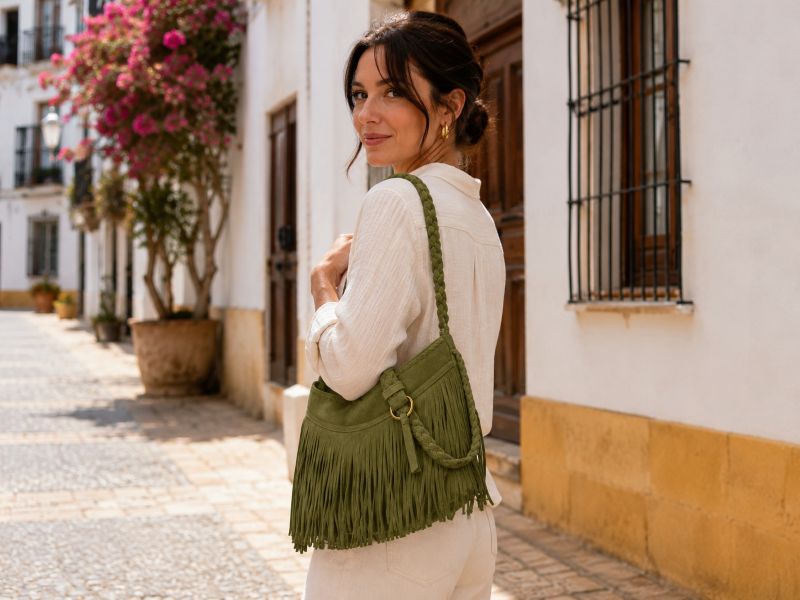
Factory Case: Balancing Fringe Aesthetics With Everyday Usability
From our years of manufacturing experience, we have learned that fringe design requires a balance between visual appeal and commercial usability.
In one client project, the initial design used longer and denser fringe to create a dramatic look. The sample looked strong in photos, but once we tested it, the extra fringe added unnecessary weight.
It also increased the risk of tangling, especially when the customer opened the bag, placed items inside, or used the strap for carrying.
We worked with the client to optimize the fringe length and placement. The final design was easier to use, more stable for bulk production, and better suited for everyday customers.
The lesson is simple: the most dramatic version is not always the most commercial version.
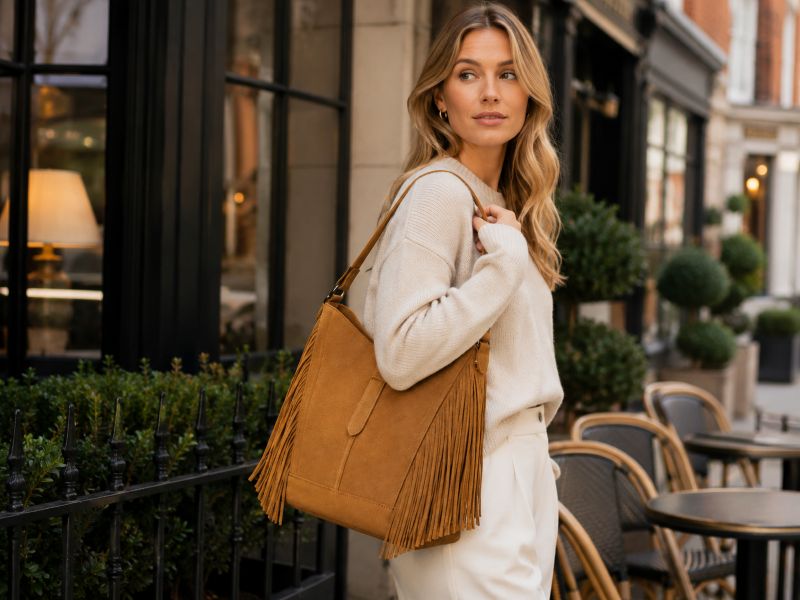
Technical Checks for Fringe Material and Construction
For B2B buyers, fringe quality starts with material control.
Check material thickness, flexibility, surface durability, and color consistency. Even small variations can make one batch look neat and another look uneven.
Edge finishing also matters. Raw-cut suede may look natural, but PU or leather fringe may need cleaner edge control to reduce peeling, fraying, or roughness.
Attachment strength is another key point. The stitching line, backing, bonding, seam allowance, and reinforcement area should be checked before sample approval.
Spacing is just as important. Uneven fringe alignment can make a bag look cheap, especially when products are displayed together in a store or photographed for Amazon.
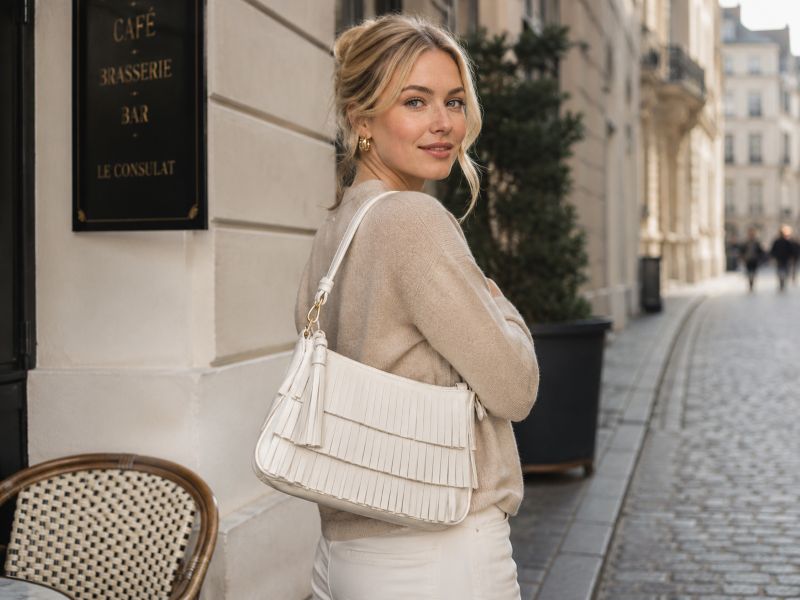
QC Standards That Matter for Fringe Bag Production
For brands and buyers, QC should cover appearance, strength, usability, and shipping before bulk production.
For appearance, check fringe length, alignment, color consistency, and overall balance to ensure stable quality across batches.
For strength, inspect stitching, pull resistance, and reinforcement points, especially around straps and fringe attachments.
For usability, test whether fringe tangles, snags, blocks closures, or affects daily use.
Before shipment, check packaging to prevent flattening, creasing, and tangling during transportation, ensuring bags arrive in good condition.
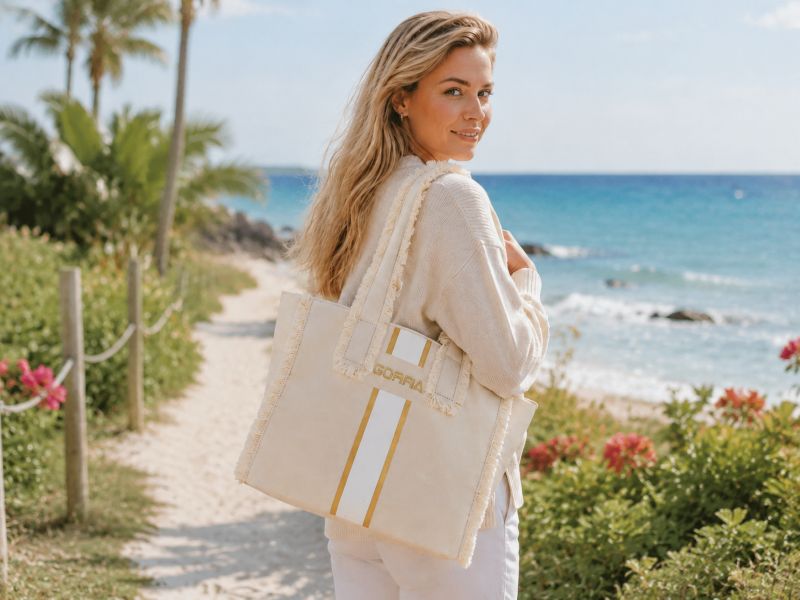
Customization Options for Fringe Bags
When developing a fringe bag collection, you can customize the structure, fringe details, materials, and branding to match your target market.
Bag styles such as totes, shoulder bags, crossbody bags, and clutches require different structures. Fringe can be adjusted in length, density, color, placement, and shape. Shorter fringe is better for daily use, while longer fringe creates a stronger statement look.
Material choices like suede, leather, PU, canvas, and denim affect the style and price level. Branding options, including embroidery, logos, labels, and custom packaging, can help build product identity.
For seasonal collections, bolder fringe designs can attract attention. For long-term SKUs, practical designs with balanced fringe details are usually easier to sell.
What Brands Should Confirm Before Ordering
Before you buy a custom fringe design, ask for more than a nice photo.
- First, confirm the material. Check thickness, flexibility, surface durability, color, and hand feel. If the material changes, the fringe movement may also change.
- Second, confirm the sample. Check weight, tangling risk, placement, opening access, inside space, pocket use, and strap comfort.
- Third, confirm production. Ask about MOQ, sample time, lead time, QC process, packaging method, and how the goods will ship.
A serious supplier should help you discover problems before production, not after the goods have been shipped.
Fringe Bags vs Other Fashion Bags
| Fringe Style | Visual Impact | Daily Practicality | Production Considerations | Suitable For |
| Full Fringe Bags | Very high | Medium-low | More fringe attachment points and higher control requirements | Festival, statement collections |
| Partial Fringe Bags | High | High | Easier to balance design and production stability | Everyday fashion, boutique brands |
| Long Fringe Bags | High | Medium-low | Requires more attention to tangling, weight, and packaging | Trend-driven collections |
| Short Fringe Bags | Medium-high | High | Easier for bulk production and daily use | Commercial collections, long-term SKUs |
| Layered Fringe Bags | Very high | Medium | More complex cutting and assembly | Premium fashion collections |
The best fringe design depends on the collection’s purpose. Bold fringe styles create stronger visual impact for trend-focused products, while simpler fringe details are often more suitable for everyday and long-term commercial collections.
FAQs
Are fringe bags still in style?
Yes. Fringe continues to appear in fashion because it connects with boho, Western, vintage, and texture-led styling. Vogue’s recent coverage of handbag trends also shows that expressive shapes, rich textures, and statement accessories remain part of the fashion conversation.
What materials are best for fringe bags?
Suede, leather, and PU are the most common choices. Suede gives soft movement, leather supports premium positioning, and PU works well for color flexibility and cost control.
Are suede fringe bags durable?
They can be durable if the suede quality, thickness, attachment, and care instructions are suitable. Moisture protection and careful storage are important.
Can fringe bags be customized with logos?
Yes. Brands can use embroidery, embossing, metal logo plates, woven labels, hang tags, and custom packaging. Logo placement should not interfere with fringe movement.
How can brands ensure consistent fringe quality in bulk production?
Approve final materials, confirm fringe length and density, test attachment strength, inspect alignment, and use protective packaging before shipment.
Conclusion
A fringe bag works best when style and usability are balanced.
The right design should look expressive but also feel comfortable, open easily, avoid tangling, and withstand normal use. For brands, the key is to control material, fringe length, density, attachment strength, QC, and packaging before bulk production.
Dramatic fringe may catch attention, but commercial fringe must be wearable, durable, and repeatable.
CTA
If you are developing fringe bags for fashion retail, seasonal collections, private-label lines, or wholesale programs, Gorfia can help turn your design into a production-ready product.
Gorfia supports custom bag development, material selection, sample testing, logo customization, QC, packaging, and scalable production. You can also explore women’s bags, lifestyle bags, brand solutions, and designer solutions.
Need help reviewing a fringe sample or planning a bulk order? Contact Gorfia to discuss your project.