
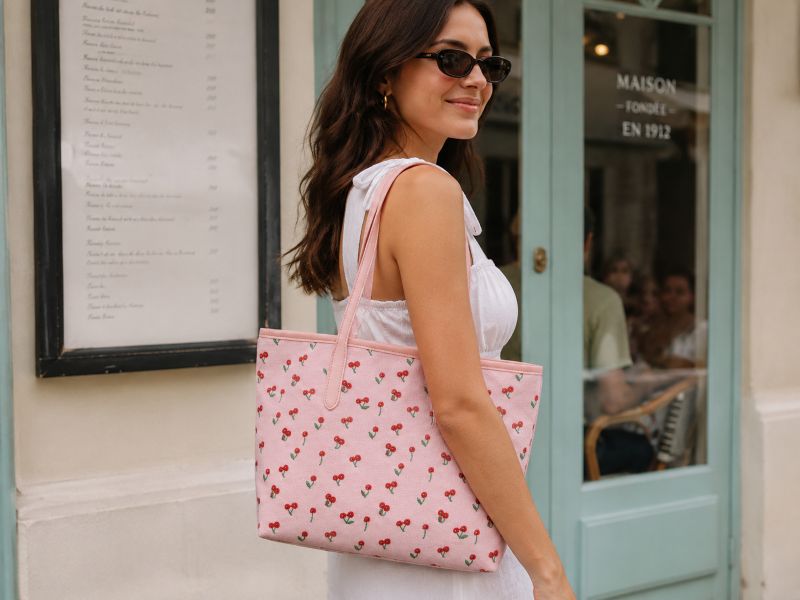
An embroidered tote bag can look charming at first glance. But a good tote bag should do more than look pretty in a photo. It should feel comfortable, hold daily items, keep its shape, and stay useful after repeated use.
The tricky part is that embroidery changes how a bag behaves. A beautiful design can make the panel stiff, pull the fabric, or rub against clothing if the placement is wrong.
This guide will help you choose an embroidered tote by looking at fabric, embroidery coverage, placement, comfort, durability, and real-life usability together.
Choose the Embroidered Tote Bag by Intended Use
Before choosing an embroidered tote bag, consider how you plan to use it. The intended use affects the embroidery style, pattern size, and overall design.
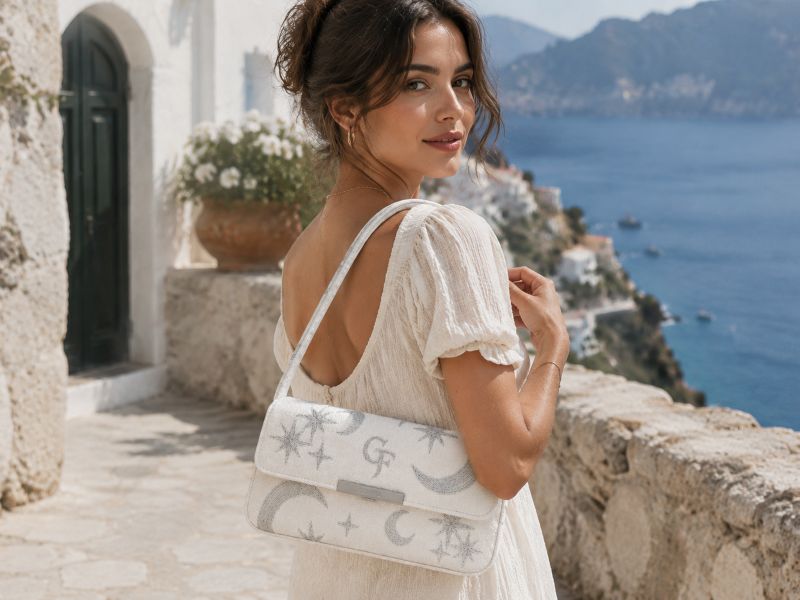
For everyday use, simple embroidery with balanced coverage is often more practical because it keeps the tote soft and easy to maintain. Work totes usually suit clean logo embroidery or structured designs, while resort and gift totes can use more decorative patterns for a stronger visual impact.
For promotional or branded totes, clear logo placement and readable embroidery details are important to create a professional look.
The best embroidered tote bag combines the right design style with practical daily use.
Choose the Right Fabric and Embroidery Design
Not all fabrics and embroidery designs work the same on an embroidered tote bag. Material selection, pattern complexity, and placement all affect how clear, comfortable, and durable the final product will be.
| Fabric Type | Best For | Embroidery Performance | What to Watch |
| Medium-weight canvas | Everyday embroidered tote bags, retail totes | Supports moderate embroidery well | Dense stitching may make panel stiff |
| Thin cotton | Soft lightweight totes | Works best with small motifs | Dense embroidery may cause puckering |
| Terry cloth | Resort and seasonal bags | Larger shapes work better | Fine details may disappear |
| PU leather | Premium logo bags | Simple motifs work best | Needle holes are permanent |
Choose the Right Fabric for Embroidery
Not all fabrics perform the same once they are used for an embroidered tote bag. The fabric surface, thickness, and texture can affect how clear and stable the embroidery looks.
Medium-Weight Canvas
Medium-weight canvas is a popular choice for embroidered totes because its stable surface helps stitches stay clear and keeps the bag from looking too soft.
Thin Cotton
Thin cotton creates a lighter and softer tote, but it usually works better with smaller motifs or lighter embroidery to reduce the risk of a wavy panel.
Terry Cloth and Textured Fabrics
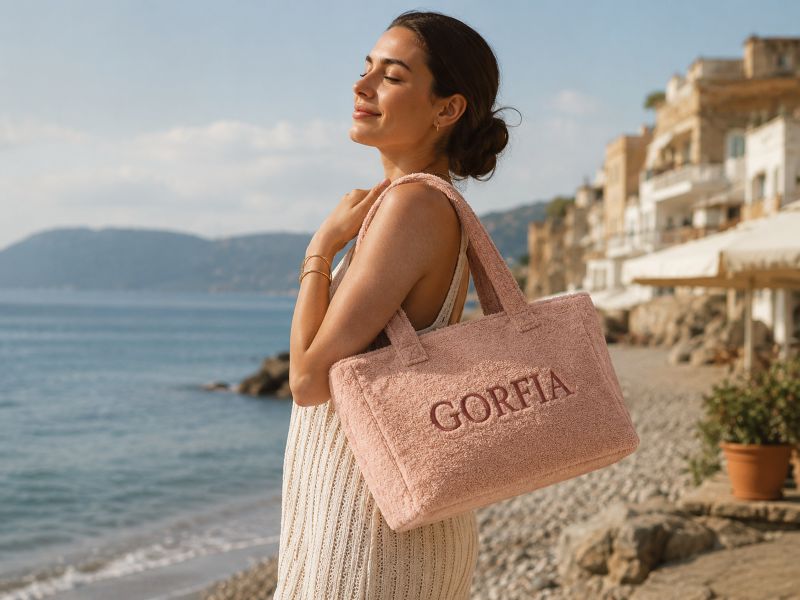
Terry cloth and other textured fabrics create a relaxed seasonal style. They are better suited for larger shapes and bold designs because small lettering or fine details may disappear into the texture.
PU Leather and Coated Materials
PU leather and coated materials offer a clean, premium appearance, but they require simpler embroidery designs because needle holes are permanent and dense stitching can affect the surface.
Select Embroidery Details That Work With the Material
Look closely at the artwork before you buy an embroidered tote bag.
Small lettering, thin outlines, dense overlapping stitches, fine floral lines, and closely spaced colors can lose clarity on textured fabrics. The digital artwork may look better than the stitched result.
The number of thread colors also matters. More colors can create a rich look, but too many similar shades may make the design busy.
A focused palette is often easier to style with outfits. It also helps the embroidery look cleaner on an everyday tote.
Choose the Right Embroidery Placement
Placement matters as much as artwork.
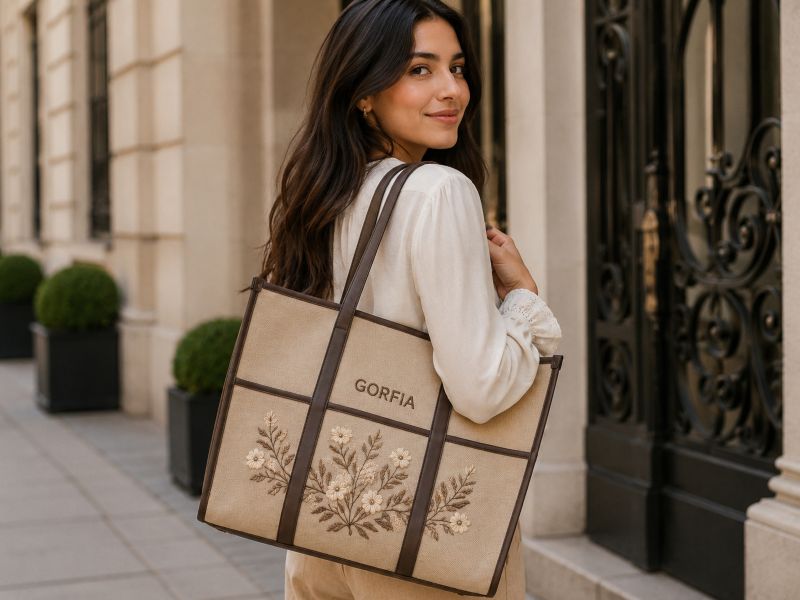
Good positions include center-front motifs, lower-side florals, upper-corner details, partial borders, and small repeated motifs. These areas can make the design visible without hurting comfort.
Avoid dense embroidery near bag bottoms, corners, fold lines, zippers, thick seams, and handle attachment points. These areas already face stress or friction.
If you want to add a brand tag, patch, or small logo, keep it away from heavy rubbing zones. A small detail can look premium when placed well.
For a practical example, a floral motif on the lower side can make the tote feel special while leaving the top panel soft and flexible.
Choose Embroidery Coverage That Keeps the Tote Comfortable
A larger embroidery area does not automatically make a tote more useful.
Full-panel embroidery can look eye-catching, but it may also make the tote bag feel stiff, heavier, or harder to fold.
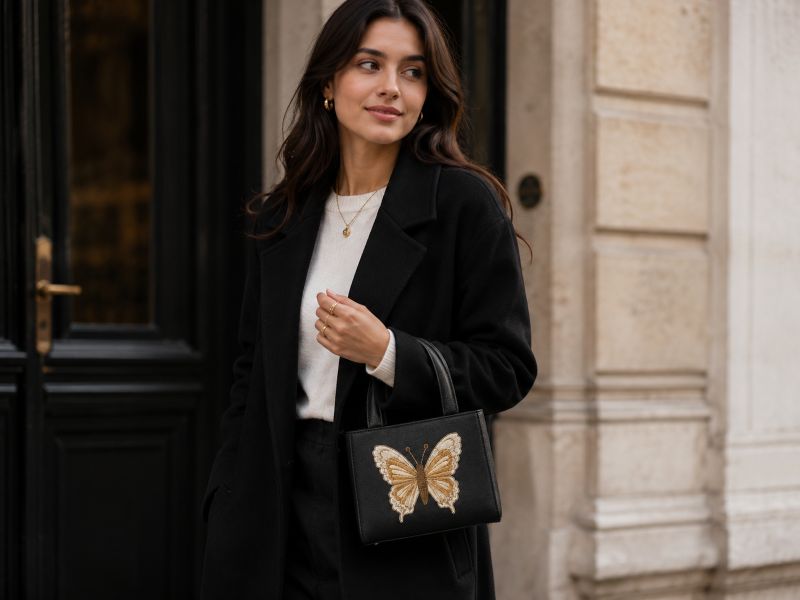
For an everyday embroidered tote bag, focal embroidery often feels more practical. A center motif, lower-side floral detail, or partial border can make the bag distinctive without making it uncomfortable.
This matters when shoppers add the item to a cart after seeing product photos. The tote may look rich online, but if it feels rigid in hand, reviews can suffer.
The best embroidered tote bag keeps its visual charm while staying soft enough to carry, fold, clean, and use often.
Ensure Embroidered Tote Bags Are Ready for Production
Now let’s shift from shopper use to buyer approval.
For brands and sourcing buyers, we do not recommend approving an embroidered tote from artwork alone. A digital mockup can help you see the idea, but it cannot show puckering, stiffness, backing, or real fabric behavior.
The first sample should use the final fabrics, approved thread colors, correct stabilizer, actual embroidery size, final lining, and intended bag construction.
Proper stabilizer selection helps reduce bunching, stretching, and distortion during embroidery, especially when working with complex designs or higher-density stitching.
Inspect the complete tote bag, not just the embroidery swatch. Check front-panel flatness, puckering, stitch clarity, needle holes, placement, softness, shape retention, lining, handles, and seams.
A buyer should also compare more than one sample. One sample may look good by chance, but repeatable quality is what matters in bulk production.

How B2B Buyers Can Choose Embroidered Tote Bags for Repeat Orders
Good repeat production often starts with simpler artwork.
You can enlarge important elements, thicken major outlines, reduce unnecessary fill, replace gradients with clear color blocks, and remove tiny internal lines that do not stitch well.
Too many thread colors increase thread-change time, operator error, production time, and batch variation. Use fixed thread references and approved physical samples.
A&E’s embroidery glossary defines puckering as fabric gathered by stitches, often linked to density, hooping, backing, or thread tension issues in embroidery terminology.
Here is one production case. A floral tote design originally covered most of the front panel and used twelve thread colors. The sample looked rich, but the panel became stiff and the embroidery time was too long.
After the team reduced it to six main colors, removed fine leaf lines, and focused the embroidery around the center and lower side, the tote stayed softer. Production consistency improved, and the repeat-order risk was lower.

Decide Whether the Design Can Support Long-Term Sales
Some designs are great for one season. Others can stay in a product line for years.
A long-term embroidered tote bag usually has clear outlines, controlled embroidery coverage, manageable color count, suitable stitch density, and limited manual decoration.
More complex design options may work better for seasonal drops, premium gifting, influencer launches, or small-scale market testing.
This is especially important for sellers on marketplaces like Amazon, DTC shops, boutique websites, or pop-up retail. If customers share photos and reviews, the tote should still look good after real use.
If a product was ordered once and feedback was strong, keep the approved sample, thread references, and placement record. That makes repeat production easier.

Quick Checklist Before Buying or Ordering
Use this checklist before you choose, sample, or order an embroidered tote bag.
For shoppers, check whether the fabric is strong enough for the embroidery, whether the design lies flat, whether the bag still feels soft enough to carry, and whether the placement avoids friction areas.
You should also check the handles, inside finishing, and care instructions. A tote that looks beautiful but feels rough or hard to clean may not work for everyday use.
For B2B buyers, check for skipped stitches, loose threads, embroidery position, sample consistency, and bulk repeatability.
If you are confirming a wholesale order by email, ask for clear sample photos, thread references, final material details, and confirmation that the result can be repeated in bulk.

FAQs
Is an embroidered tote bag good for everyday use?
Yes, an embroidered tote bag can be great for everyday use when the fabric, placement, and stitch density are balanced.
Choose moderate embroidery coverage and avoid rough stitching in high-friction areas.
What fabric is best for embroidered tote bags?
Medium-weight canvas is often a strong choice because it supports embroidery well and keeps a practical structure. Thin cotton, terry cloth, PU leather, and coated fabrics can also work, but they need suitable backing and simpler designs.
Is full-panel embroidery better than small embroidery?
Not always. Large embroidery can create strong visual impact, but it may make the bag stiff or harder to produce consistently. Focal embroidery usually gives a better balance for daily use.
Can I embroider a logo on a tote bag?
Yes, a logo can work well on a tote bag when the size, placement, thread color, and fabric are chosen carefully. For a company or event tote, test the logo on the final fabric before confirming bulk production.
What should brands check before ordering embroidered tote bags?
Brands should check the final fabric, stabilizer, stitch density, thread colors, placement, sample flatness, handle strength, and bulk consistency. A complete finished sample is more reliable than a digital mockup.
Conclusion
The best embroidered tote bag is not the one with the most stitching.
It is the one that balances visual appeal, comfort, durability, and practical use. Fabric, stitch density, coverage, placement, and finishing should all work together.
For daily use, focal embroidery often gives the strongest result. It keeps the tote soft, stylish, and easier to produce consistently. Before you buy or approve production, look beyond the artwork. Check how the embroidery feels, how the bag carries, and whether the result can stay reliable over time.
Gorfia supports custom bag development, material selection, sampling, logo placement, embroidery review, and scalable production. You can also explore lifestyle bags, women’s bags, brand solutions, and Gorfia’s guide to bag embroidery materials and techniques.
CTA
If you are developing embroidered tote bags for retail, gifting, events, or private-label collections, Gorfia can help turn your design into a production-ready product.
Need help reviewing an embroidered tote sample or planning a bulk order? Contact Gorfia to discuss your project.