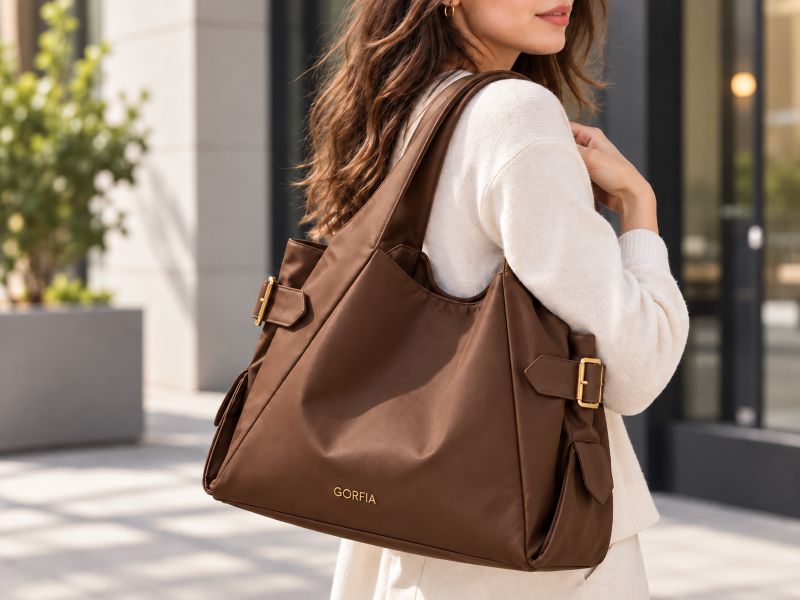
If you need a bag that handles demanding daily commutes while maintaining a sleek, professional silhouette, a nylon tote bag is difficult to beat.
At Gorfia, we’ve engineered and manufactured custom bags and lifestyle accessories across multiple fabric categories, and we’ve seen firsthand why nylon consistently outperforms traditional leather and heavy canvas in daily use.
In this comprehensive guide, you’ll discover why the nylon tote bag has become a modern everyday essential for both men and women, and how true structural quality is built from the inside out.
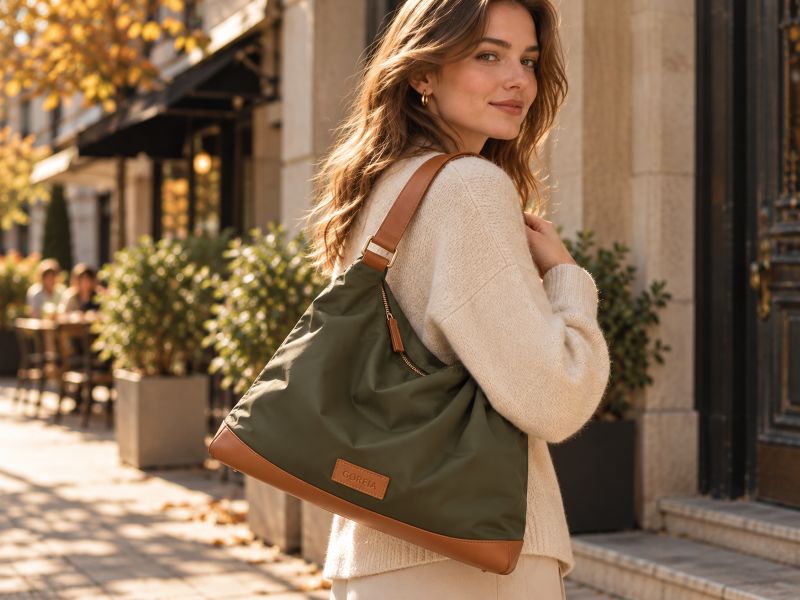
Why Nylon Works Best for Everyday Totes
A dependable everyday tote must handle high-mobility demands, transitioning seamlessly between co-working spaces, gym sessions, and airport terminals while protecting laptops and daily essentials.
Traditional materials struggle to balance this workload. A structured leather work tote can add up to three pounds of dead weight before you even pack it, while classic cotton canvas absorbs moisture, stains easily, and loses its shape under heavy daily use.
For everyday use, nylon’s main advantage is how little weight it adds before you pack the bag. A nylon tote can carry a laptop, water bottle, and daily essentials without the bulk of a heavier bag. Its flexible body also makes it easier to store under a seat or in a travel suitcase.
The experience still depends on the bag’s design. Shoulder strap width, opening structure, pocket placement, and base support all influence how comfortable and practical a nylon tote feels throughout the day.
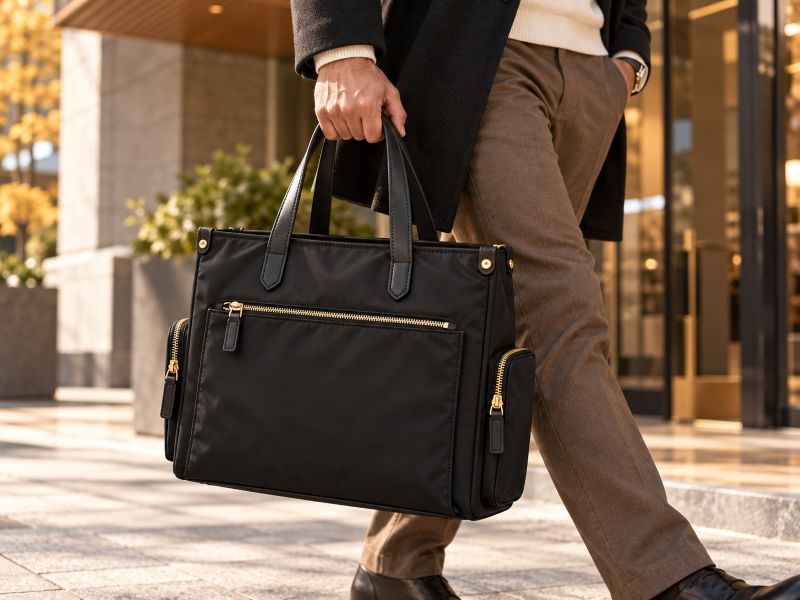
Choosing the Right Nylon Fabric for a Tote
While nylon is increasingly accepted in modern fashion, not all nylon fabrics offer the same tactile feel or structural durability.
When choosing nylon for a tote bag, start with how the finished bag should look and feel. Some nylon fabrics create a smooth, polished appearance suitable for work, while others offer a softer, more casual shape for shopping, travel, or everyday errands. The right choice depends on the tote’s intended use, carrying comfort, and desired silhouette.
Popular Nylon Fabrics for Tote Bags
| Fabric Type | Fabric Characteristics | Best For | Design Considerations |
| High-Density Nylon Twill | Smooth surface, diagonal weave, refined appearance | Work totes, commuter bags | Drape and structure depend on fabric weight and finishing |
| Ripstop Nylon | Reinforced grid pattern, designed to help limit tear propagation | Travel, gym, packable totes | Grid size, fabric weight and coating affect appearance and feel |
| Ballistic Nylon | Typically heavier, tightly woven fabric with good abrasion resistance | Utility totes, reinforced panels | May add unnecessary weight to lightweight totes |
| Crinkle Nylon | Textured, intentionally wrinkled appearance | Casual, fashion and packable totes | Softness and packability vary by construction and finishing |
High-Density Twill: Sleek & Professional
High-density twill offers a refined, lustrous finish that transitions effortlessly into corporate environments.
It provides an elevated drape and sophisticated style while remaining tight enough to repel light rain and workplace spills.
Available in timeless shades like minimalist black or warm beige, it is a great foundation for modern commuter totes.
Diamond Ripstop: Sport & Travel Ready
Ripstop nylon uses a reinforced grid to help limit the spread of small tears. Its lightweight options work particularly well for casual totes designed for travel, gym use, or easy packing.
If your schedule involves outdoor adventures, active gym sessions, or packing varied items, ripstop provides maximum tear defense per ounce.
Ballistic Nylon: Heavy-Duty Protection
Ballistic nylon suits totes designed for heavier daily loads, especially when you need a firmer body or an abrasion-resistant base. However, its heavier feel may be unnecessary for lightweight shopping or casual everyday totes. Choose it when added structure and durability matter more than a soft, packable design.

How Construction Affects Nylon Tote Bag Quality
Nylon’s lightweight, flexible properties make it suitable for everyday totes, but fabric choice alone doesn’t determine how well a bag performs. Base support, handle placement, and sewing consistency can all affect its shape and carrying comfort.
Evaluating these details during sample development helps brands spot design issues, anticipate production challenges, and make adjustments before bulk manufacturing.
How Load Testing Reveals Nylon Tote Design Issues
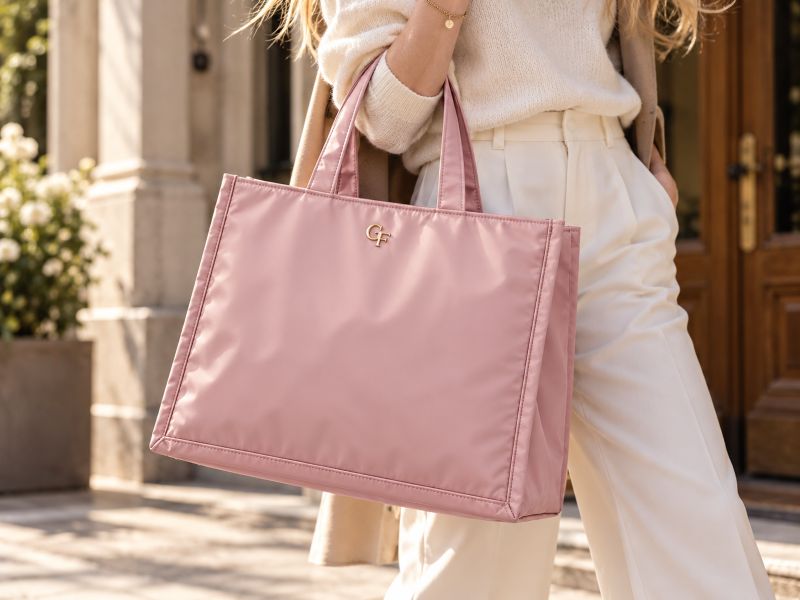
A nylon tote may look balanced when empty but behave differently once filled with daily essentials. During sample evaluation, we look at how the bag sits with a laptop, water bottle, and other common items inside.
This helps reveal whether the base loses its shape, the opening pulls unevenly, or the handles become uncomfortable under load.
How Sewing Stability Affects a Nylon Tote’s Shape
Some smooth nylon fabrics can shift during sewing, particularly when production speeds increase. While this may be less noticeable during slow sample-making, it can affect seam alignment and the finished tote’s shape during bulk production.
For nylon totes, these small differences may become more visible when the bag is filled. Uneven seams can affect how the side panels sit, while inconsistent stitching around the opening may make the bag look unbalanced.
During production preparation, checking how nylon panels feed through the sewing machine can help identify potential alignment issues. Comparing seam positions and panel dimensions between the approved sample and trial production pieces can reveal inconsistencies before full-scale manufacturing begins.

How Gorfia Improves Nylon Tote Construction
Improving a nylon tote starts with identifying which part of the design needs adjustment. A bag that sags at the bottom may benefit from additional base support, while an opening that pulls inward under load may require changes to the handle attachment points or upper-edge construction.
During sample development, you can evaluate these details together rather than treat them as separate problems. Adjusting the base, handle placement, and opening structure helps balance flexibility, carrying comfort, and shape retention.
For brands, the goal isn’t to make every nylon tote more rigid, but to create a structure that fits its intended use. A lightweight shopping tote and a work tote designed for a laptop may need different levels of support.
How to Clean and Care for Nylon Bags
High-grade nylon tote bags require minimal upkeep, making them easy to maintain across years of active use:
- Easy Spot Cleaning: Use lukewarm water and mild castile soap with a soft microfiber cloth to keep the exterior clean; avoid harsh industrial detergents that can strip the water-resistant DWR coating.
- Air Drying Only: Never place a technical nylon tote in a high-heat machine dryer, as extreme heat can delaminate the internal protective membrane.
- Wrinkle Recovery: If high-density nylon becomes creased, hang it in a warm, steamy bathroom rather than pressing it with a hot dry iron.
FAQs
Can you carry a nylon tote bag in the rain?
Yes, but water resistance depends on more than the nylon fabric itself. From a manufacturing perspective, zipper construction, seam placement, and bag openings can affect where rain enters. For everyday use, a well-covered opening often matters more than fabric thickness alone.
How much weight can a well-constructed nylon tote bag hold?
A well-constructed nylon tote with reinforced cross-stitching, wider seam allowances, and internal stay tape can reliably hold 20 to 30 pounds (9 to 14 kg) without seam deformation.
Can you wash a nylon tote bag in a home washing machine?
We don’t recommend machine washing because mechanical agitators can stress the top handle anchors and degrade the protective backing. Gentle spot washing is the best way to keep your bag clean and preserve its lifespan.
What factors determine the wholesale manufacturing price of custom nylon totes?
The final unit price depends on fabric denier, hardware alloy specifications, internal pocket complexity, order quantity, and custom branding methods. Evaluating production value beyond just the initial unit price ensures superior construction and prevents costly warranty returns.
Scaling Your Bag Collection
Whether you’re looking for the perfect daily tote to add to your cart or you are a brand developer designing a line of custom tote bags, prioritizing internal construction over surface aesthetics is the key to lasting product success.
To expand your knowledge of technical bag design, explore our comprehensive guide on The Best Bag Embroidery Materials and Techniques for Your Next Project.
Build Custom Bags with Gorfia OEM & ODM
Gorfia is an industry-leading OEM and ODM bag manufacturer specializing in premium, custom-engineered bags for global brands and lifestyle accessories labels.
From specialized seam reinforcement and stress-point stay tape to custom hardware sourcing, our production team eliminates manufacturing risks before your line goes live.
Ready to build your next market-ready nylon bag collection? Request a technical consultation and factory sample review.